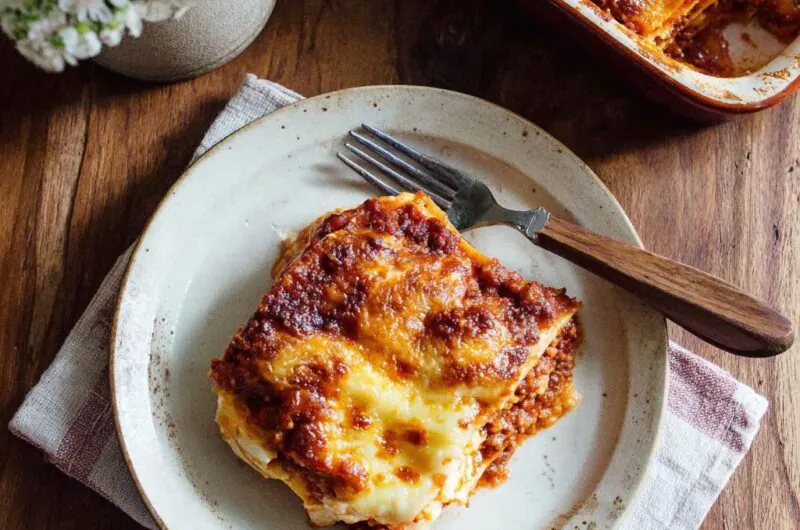
Rich, slow-cooked meat ragù layered with silky béchamel and delicate fresh pasta. This is the authentic Emilia-Romagna classic—no ricotta, just pure, baked perfection.
📋 In This Article
- Introduction
- Why This Recipe Works (The Science of Deliciousness)
- Ingredients for Authentic Lasagna Bolognese
- Directions: How to Make Classic Lasagna Bolognese
- Pro Tips for the Perfect Lasagna
- Common Mistakes to Avoid
- Variations & Personal Touches
- Serving Suggestions
- Frequently Asked Questions (FAQ)
- Conclusion
Introduction
There is a specific kind of magic in a properly made Classic Lasagna Bolognese with Ragù and Béchamel Sauce. It isn’t the cheesy, saucy stack many of us grew up with; it is a study in textures and restraint. Originating from the tables of Emilia-Romagna, this dish swaps the moisture-heavy ricotta for a velvety Béchamel Sauce, allowing the deep, concentrated flavors of the Ragù Bolognese to take center stage.
The first time I attempted this dish, I treated it like a standard lasagna—piling on the cheese and rushing the sauce. It was a mess. Authenticity matters here. The “white” lasagna, as it’s often called, relies on the interplay between the soffritto-base meat sauce and the creamy binder. It is a labor of love, certainly, but the result is a structured, elegant bake that slices cleanly and tastes of history.
Why This Recipe Works (The Science of Deliciousness)
The brilliance of Classic Lasagna Bolognese with Ragù and Béchamel Sauce lies in its physics and chemistry. The absence of ricotta is not just a tradition; it is a structural necessity. Ricotta contains whey, which releases moisture under heat, often leading to a soupy disaster. In contrast, a properly made Béchamel Sauce acts as a setting custard. The starch in the roux gelatinizes in the oven, holding the layers together in a firm, sliceable embrace.
Then there is the Ragù Bolognese. This isn’t a quick weeknight braise. By cooking the meat slowly, we break down tough connective tissues into gelatin, which coats the tongue with a lush mouthfeel that oil-based sauces cannot replicate. The addition of milk towards the end of cooking isn’t just for tenderness; the calcium in milk helps neutralize the acidity of the tomatoes, creating a rounder, mellow flavor profile that doesn’t taste aggressively “tomato-forward.”
Ingredients for Authentic Lasagna Bolognese
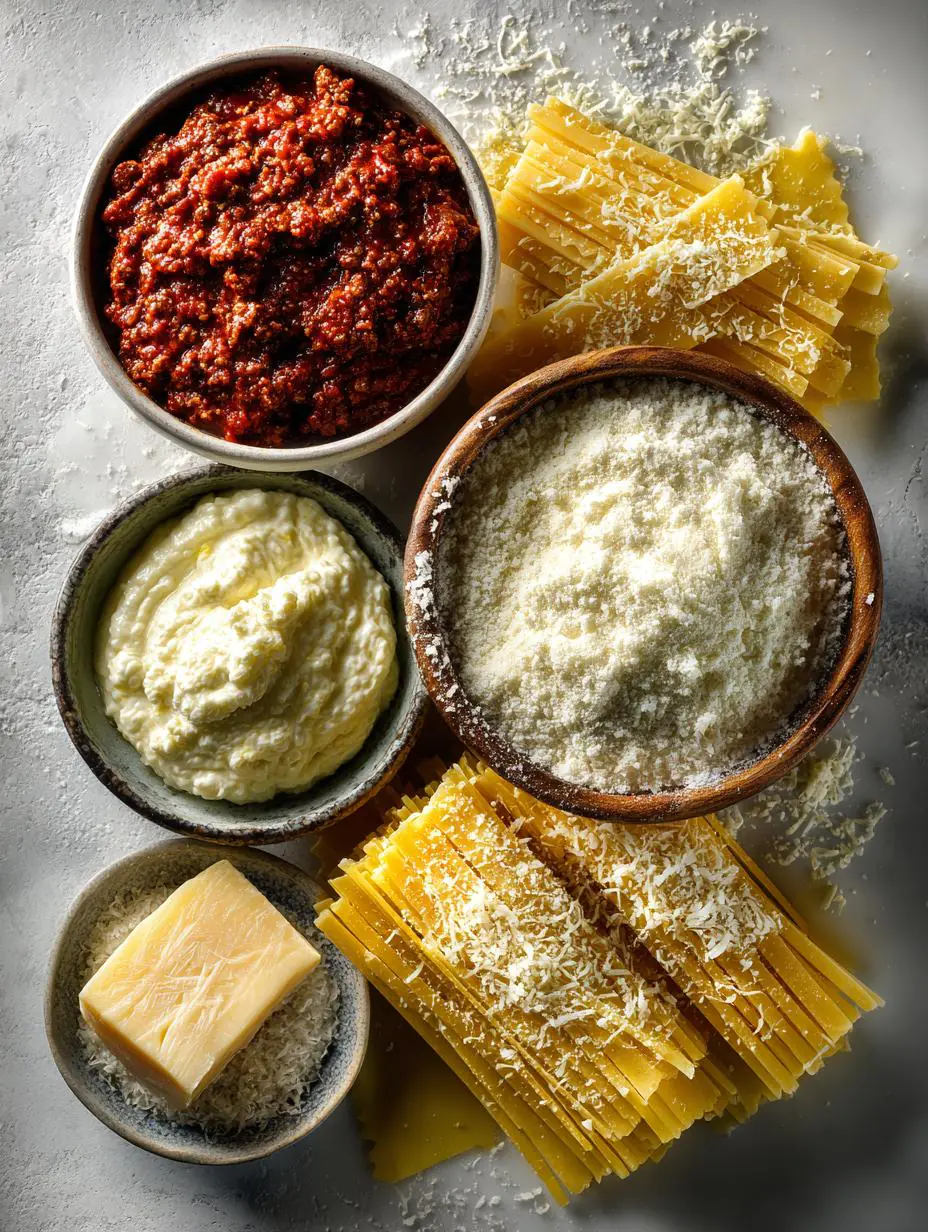
To build this masterpiece, you need specific components. Do not substitute freely here; the balance is delicate.
For the Ragù Bolognese
- Soffritto Base: 1 medium onion (finely diced), 1 medium carrot (finely diced), 1 stalk celery (finely diced).
- Fats: 3 tablespoons olive oil and 3 tablespoons butter.
- Meats: 1 pound ground beef (preferably 80/20), 1/2 pound ground pork, and 1/2 pound ground veal (or a mix of pork and veal).
- Liquids: 1 cup red wine (dry) and 1 cup whole milk.
- Tomatoes: 1 (28-ounce) can San Marzano tomatoes (crushed by hand) or passata.
- Seasoning: Salt, freshly ground black pepper, and 1 bay leaf.
For the Béchamel Sauce (Besciamella)
- Roux: 4 tablespoons butter and 1/4 cup all-purpose flour.
- Liquid: 4 cups whole milk (warmed).
- Seasoning: Freshly grated nutmeg and white pepper.
For the Assembly
- Fresh Lasagna Noodles: Made from semolina flour or all-purpose flour and eggs.
- Cheese: 1 1/2 cups freshly grated Parmigiano-Reggiano.
Directions: How to Make Classic Lasagna Bolognese
Step 1: The Ragù (Low and Slow)
- Start the Soffritto: In a large, heavy-bottomed Dutch oven, heat the olive oil and 3 tablespoons of butter over medium heat. Add the diced onion, carrot, and celery. Cook gently for about 8-10 minutes. You want them soft and translucent, not browned. This builds the aromatic foundation.
- Brown the Meat: Add the ground beef, pork, and veal. Break the meat up with a spoon. Here is the crucial part: you must render the fat and brown the meat thoroughly. This triggers the Maillard reaction, creating hundreds of new flavor compounds on the surface. If the pan gets crowded, do it in batches. Season generously with salt.
- Deglaze: Pour in the red wine. Scrape up the browned bits (the fond) stuck to the bottom of the pan. That is pure flavor. Let the wine simmer until it has almost completely evaporated.
- The Braise: Add the San Marzano tomatoes and the bay leaf. Lower the heat to the barest simmer. You want to see a bubble break the surface only occasionally. Cook for at least 2 to 3 hours, uncovered, stirring occasionally.
- Finish with Milk: About 30 minutes before the end, stir in the whole milk. The proteins and sugars in the milk soften the meat fibers and balance the acidity of the tomatoes. The final sauce should be thick and rich, not watery.
Step 2: The Béchamel (Velvety Smooth)
- Make the Roux: In a medium saucepan, melt the butter over medium heat. Whisk in the flour. Cook this mixture for about 2 minutes, whisking constantly. It should smell slightly nutty but not turn brown. This cooking step removes the raw flour taste.
- Add the Milk: Gradually whisk in the warm whole milk, about 1/2 cup at a time. Whisking constantly is the only way to prevent lumps—trust me, I’ve ruined many a sauce by walking away.
- Thicken: Bring the mixture to a gentle simmer. Continue whisking until the sauce thickens enough to coat the back of a spoon (nappe consistency). Remove from heat and season with salt, white pepper, and a generous pinch of nutmeg.
Step 3: The Pasta
- Prepare the Sheets: If using fresh lasagna noodles (highly recommended), roll them out to the second-thinnest setting on your pasta machine. Cut them into sheets to fit your 9×13-inch baking pan.
- Parboil: Bring a large pot of salted water to a boil. Cook the pasta sheets for just 30 seconds. They will finish cooking in the oven. Transfer immediately to an ice bath to stop the cooking, then lay flat on kitchen towels.
Step 4: Assembly and Baking
- Preheat: Heat your oven to 375°F (190°C).
- Layering: Spread a thin layer of béchamel on the bottom of your baking dish. This prevents sticking. Place a layer of noodles down (slight overlap is fine). Spread a generous layer of ragù, then a layer of béchamel, and finally a sprinkle of Parmigiano-Reggiano.
- Repeat: Continue layering—noodles, ragù, béchamel, cheese—until you run out of ingredients. Aim for at least 4 to 5 layers. Finish with a final layer of noodles topped with béchamel and a heavy dusting of cheese.
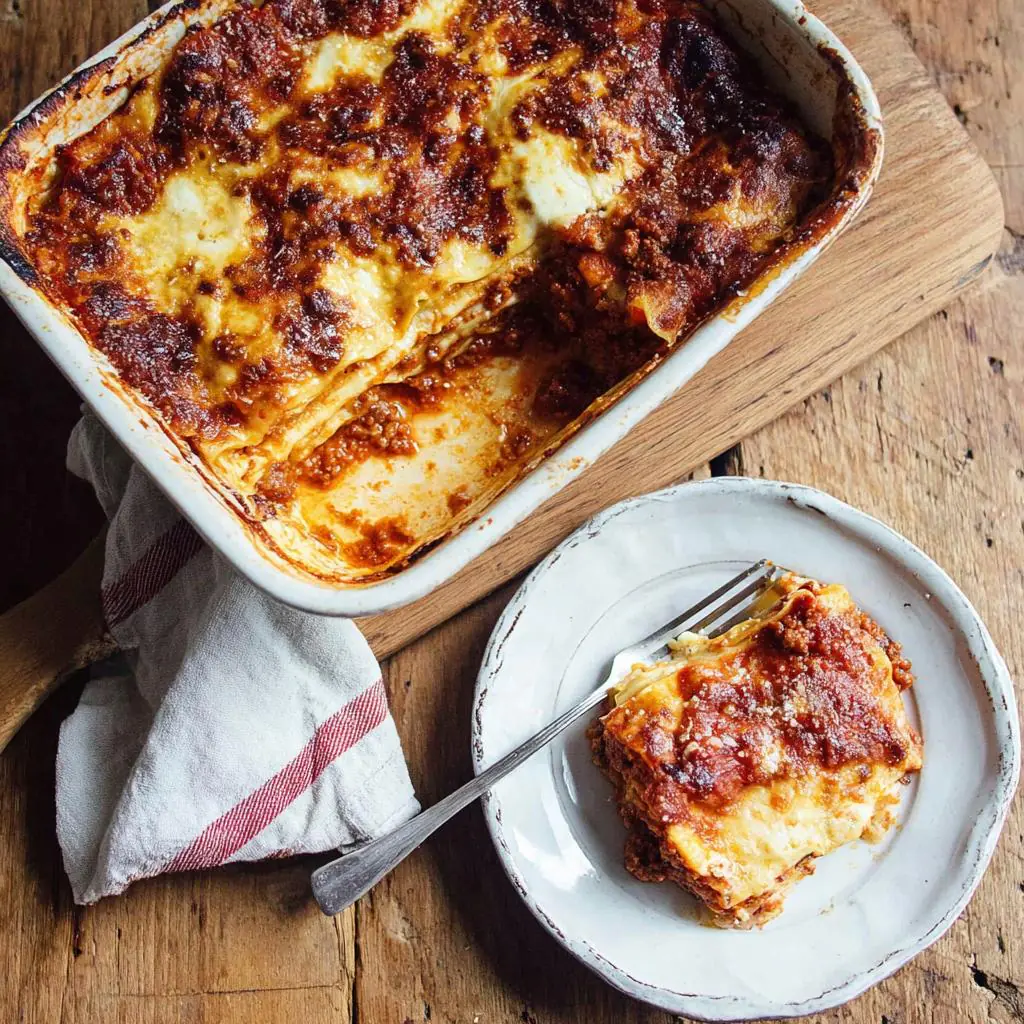
- Bake: Cover loosely with aluminum foil (tent it so it doesn’t stick). Bake for 30 minutes. Remove the foil and bake for another 15-20 minutes, or until the top is golden brown and bubbling.
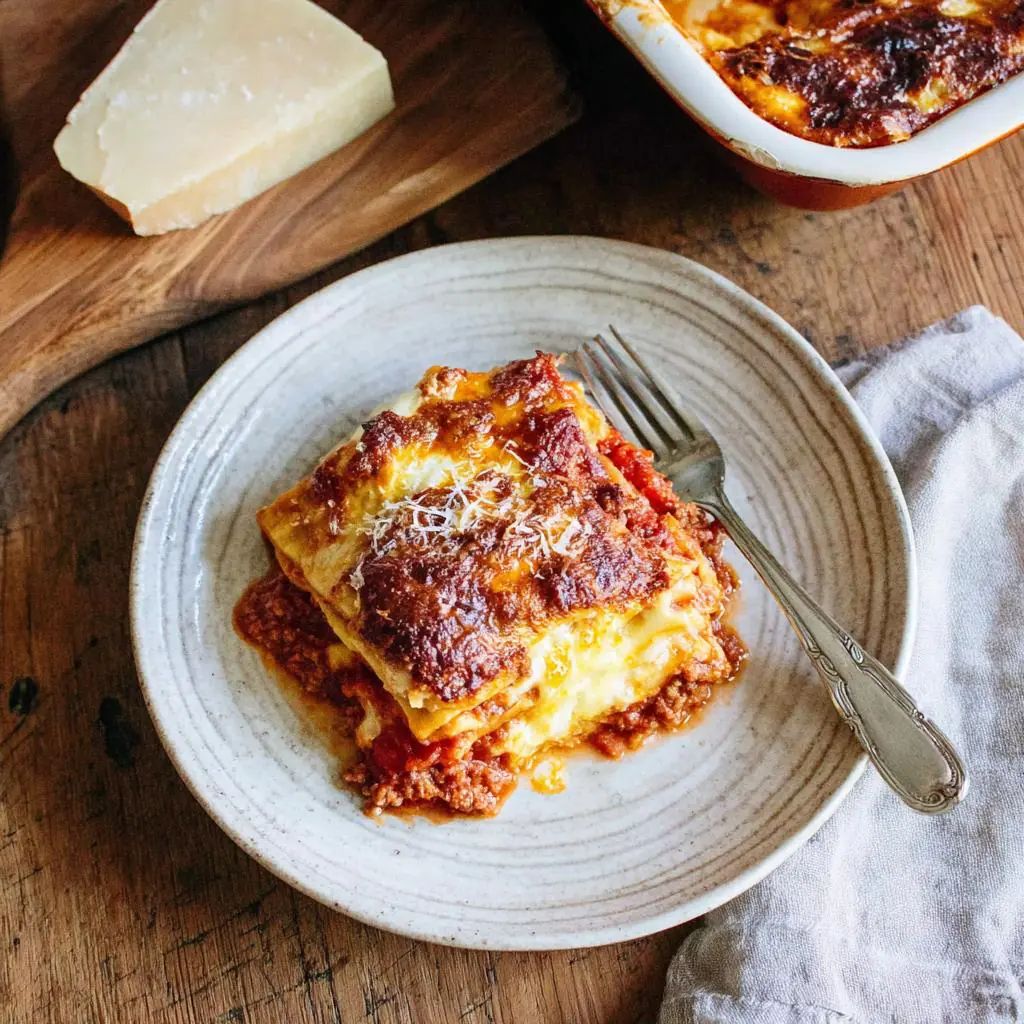
- Rest: This is non-negotiable. Let the lasagna rest for at least 15-20 minutes before cutting. This allows the béchamel to set, ensuring you get clean, distinct layers rather than a sloppy mess.
💡 Pro Tips for the Perfect Lasagna
To elevate your Classic Lasagna Bolognese with Ragù and Béchamel Sauce, consider these insights:
- Make-Ahead Strategy: The ragù and béchamel can be made up to three days in advance. In fact, the ragù tastes better after a night in the fridge, allowing the flavors to meld and marry.
- Noodle Choice: If you must use dried pasta, skip the no-boil varieties; they absorb too much sauce and throw off the moisture balance. Parboil traditional dried sheets for a better texture.
- Freezing: Assemble the lasagna, wrap it tightly in foil, and freeze it before baking. Thaw it completely in the refrigerator overnight before cooking as directed. This makes the moisture retention far superior to reheating leftovers.
⚠️ Common Mistakes to Avoid
Even experienced cooks stumble with Classic Lasagna Bolognese with Ragù and Béchamel Sauce. Here is how to sidestep the pitfalls:
- Watery Lasagna: This usually happens because the ragù wasn’t reduced enough. Your sauce should be thick, almost like a meat stew, before it hits the pan. If your ragù is loose, keep simmering.
- Lumpy Béchamel: This happens when cold milk hits hot roux too fast. Temper the mixture by adding milk slowly and whisking like your life depends on it. If lumps persist, simply strain the sauce through a fine-mesh sieve.
- Overcooking the Pasta: Remember, the pasta cooks twice—once in the water and once in the oven. If you boil it to full doneness, it will turn to mush. Keep it al dente.
Variations & Personal Touches
While authenticity is the goal, subtle tweaks can make this dish your own.
- The Meat Mix: I tested using only ground beef versus the traditional trio. The blend won hands down. The pork adds fat, and the veal adds sweetness. If you cannot find veal, increase the pork ratio slightly.
- Cheese Swap: While Parmigiano-Reggiano is standard, blending in a small amount of Pecorino Romano adds a sharp, salty bite that cuts through the richness of the béchamel. Use a 3:1 ratio of Parmesan to Pecorino.
Serving Suggestions
Serve your Classic Lasagna Bolognese with Ragù and Béchamel Sauce with a simple green salad dressed in sharp vinaigrette to cut the richness. A slice of crusty bread is non-negotiable for sopping up the sauce. For wine, pour a glass of Sangiovese or a Barbera—the acidity matches the tomato notes in the ragù perfectly.
Frequently Asked Questions (FAQ)
+Why is there no ricotta in authentic lasagna Bolognese?
Authentic Classic Lasagna Bolognese with Ragù and Béchamel Sauce uses béchamel because it provides a creamy, stable structure. Ricotta contains whey that releases water during baking, often resulting in a soupy texture that dilutes the intense flavor of the ragù.
+Can I make lasagna Bolognese ahead of time?
Yes, this dish is an ideal make-ahead meal. You can assemble the entire lasagna, cover it, and refrigerate it for up to 24 hours before baking. This rest period actually helps the flavors penetrate the noodles for a more cohesive dish.
+How do I know when the lasagna is done baking?
You should look for two signs: the sauce should be bubbling vigorously around the edges, and the top should be a deep, golden brown. An instant-read thermometer inserted into the center should read 160°F (70°C) to ensure the interior is fully heated.
+Can I use no-boil noodles for this recipe?
I don’t recommend it. No-boil noodles require extra liquid to cook, which can throw off the careful balance of your ragù and béchamel. Fresh pasta or parboiled dried sheets absorb the sauce without making the dish watery.
+How long should lasagna rest before cutting?
You must let it rest for at least 15-20 minutes. This allows the béchamel to cool slightly and thicken back up. If you cut into it immediately, the layers will slide apart and the structural integrity will be lost.
Conclusion
Mastering the Classic Lasagna Bolognese with Ragù and Béchamel Sauce is a rite of passage for any home cook. It requires patience, respect for ingredients, and an understanding of the science behind the layers. But when you pull that golden, bubbling dish from the oven and slice into those perfect, distinct strata, you realize it was worth every minute. This is not just dinner; it is a celebration of Italian tradition. So, pour yourself a glass of wine, take your time with the soffritto, and enjoy the process.
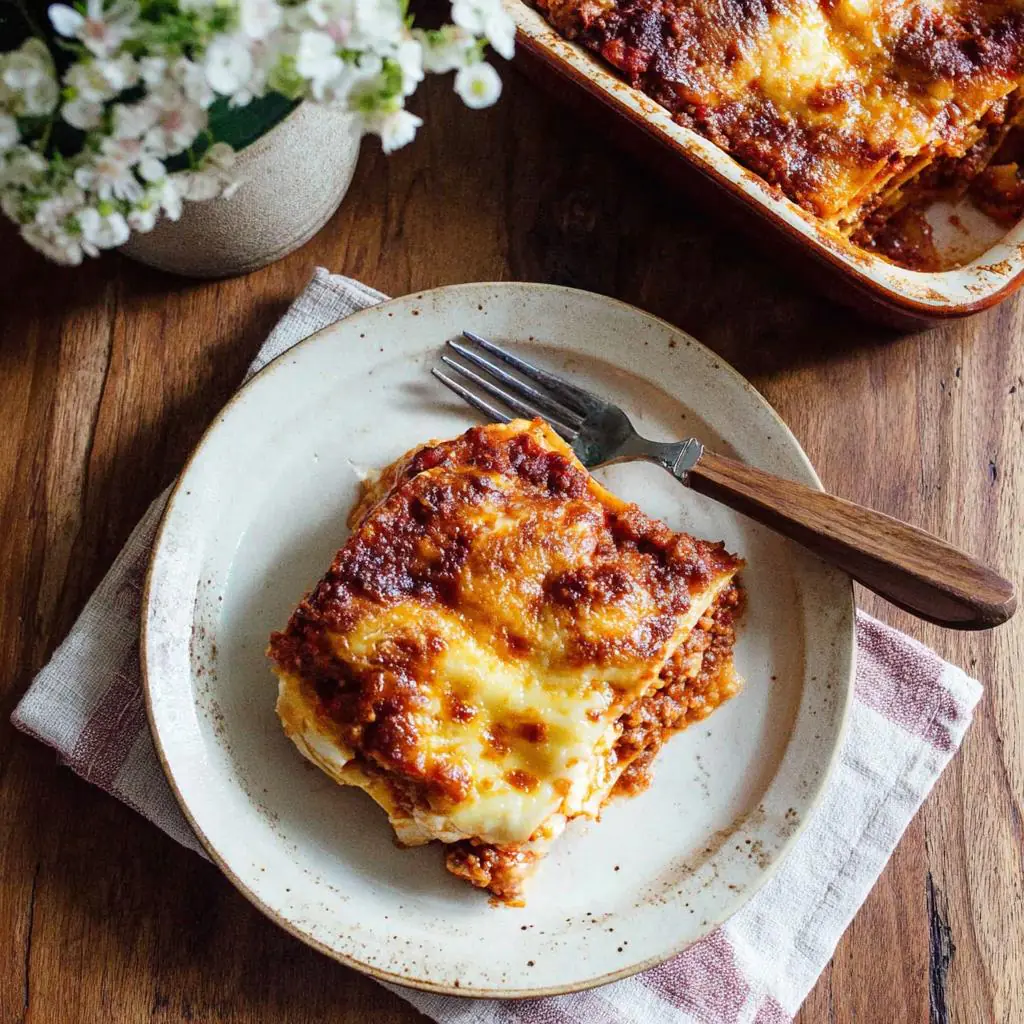
Classic Lasagna Bolognese with Ragù and Béchamel Sauce
Ingredients
Method
- Prepare The Lasagna Components
- Layer & Assemble The Lasagna
- Bake The Lasagna
Nutrition
Notes
- Make your sauces a day ahead; both the ragù and béchamel improve in flavor after resting, and you'll save time on assembly day.
- To prevent your béchamel from becoming grainy, whisk constantly while cooking and ensure it thickens gently over low heat.
- If using store-bought lasagna noodles, choose "oven-ready" varieties for a quick assembly, but be sure they are adequately covered with sauce to prevent dryness during baking.
- To avoid burning the top layer of your lasagna, cover it with foil for the first half of baking, then remove it for the last 15-20 minutes to achieve a golden, bubbly finish.
- Leftover lasagna keeps well in the fridge for up to 4 days; reheat in the oven at 350°F until heated through, covering with foil to retain moisture.