Introduction
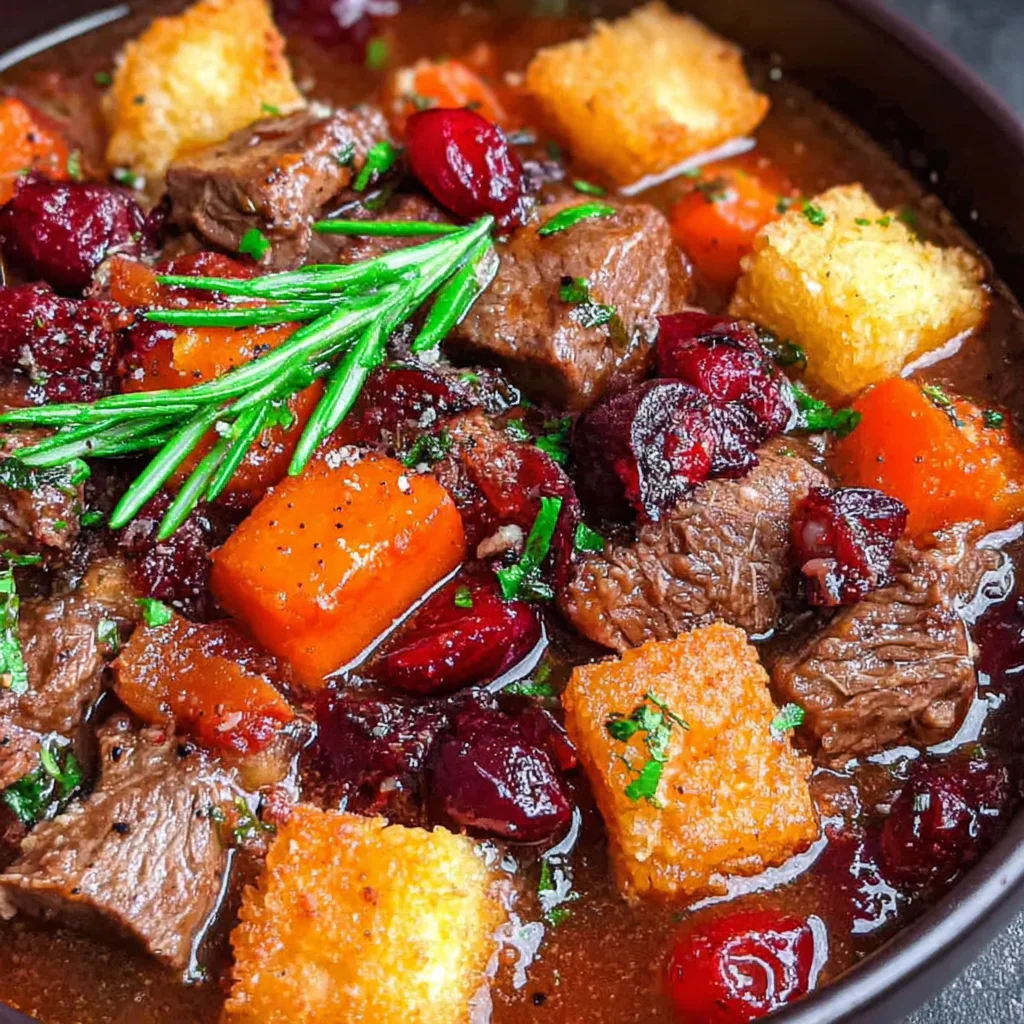
When you think of comforting meals, a hearty beef stew often comes to mind. This Cranberry Apple Beef Stew combines rich flavors with a delightful tartness from cranberries and a hint of sweetness from apples, resulting in a dish that warms both body and soul.
Ideal for chilly evenings, this stew brings together tender chunks of beef with vibrant fruitiness, showcasing the beauty of seasonal ingredients. It’s more than just a meal; it’s an experience that fills your kitchen with tantalizing aromas, sure to make your home feel inviting.
Ingredients
- 2 lbs chuck beef, cut into 1-inch cubes
Chuck beef is well-marbled, making it ideal for slow cooking. The fat renders down during cooking, enriching the stew with flavor and tenderness. - 1 cup fresh cranberries
Cranberries introduce a tart and slightly sweet flavor profile to the stew, balancing the richness of the beef and complementing the sweetness of the apples. - 2 medium apples, peeled and diced
Apples add natural sweetness and a subtle texture contrast. Choosing a tart variety like Granny Smith will enhance the overall flavor. - 4 medium carrots, sliced
Carrots add sweetness and a vibrant color to the stew, enhancing both its visual appeal and nutritional value. - 1 large onion, chopped
Onions are crucial for building the base of flavor in the stew, caramelizing beautifully and adding depth when cooked. - 3 cloves garlic, minced
Garlic provides a fragrant backbone that enhances all the other ingredients. It complements the savory beef and the sweet-tart fruits perfectly. - 4 cups beef broth
Beef broth is the primary liquid in the stew, contributing layers of umami flavor and helping to tenderize the meat during cooking. - 2 tablespoons tomato paste
Tomato paste intensifies the stew's flavors, providing a depth of richness and a slight acidity that balances the sweetness from the fruits. - 1 teaspoon dried thyme
Thyme is an aromatic herb that complements the flavors of both the beef and the fruits, adding an earthy note to the dish. - Salt and pepper, to taste
Seasoning is essential for enhancing the inherent flavors of your ingredients. Adjusting to personal taste can elevate the dish even further.
Directions & Preparation
Step 1: Prepare the beef
Start by trimming any excess fat from the beef chunks and patting them dry. Drying the meat helps achieve a better sear, which locks in juices and adds color. Season generously with salt and pepper before browning in batches.
Step 2: Brown the beef
In a large pot or Dutch oven, heat some oil over medium-high heat. Add the beef in batches and brown on all sides. This step is key for flavor development since the Maillard reaction creates a depth that will enrich the entire stew.
Step 3: Sauté onions and garlic
After browning the beef, remove it from the pot and add onions to the remaining fat. Sauté until translucent, then add minced garlic. This process builds a flavor base crucial for a satisfying stew.
Step 4: Combine the components
Return browned beef to the pot and stir in the tomato paste. The tomato paste needs to cook slightly to enhance its flavor, allowing the ingredients to meld together, setting the stage for a harmonious stew.
Step 5: Add liquids and seasonings
Pour in the beef broth and sprinkle with thyme. Stir well, scraping the bottom of the pot to dissolve any browned bits. This step amplifies the stew's overall flavor and creates a luscious broth.
Step 6: Incorporate fruits and vegetables
Add cranberries, diced apples, and carrots. Their sweetness and acidity will infuse the stew while they cook down. This step is essential for balancing flavors and achieving a cohesive taste profile.
Step 7: Simmer slowly
Bring the stew to a gentle simmer, cover, and reduce the heat. Cooking low and slow allows flavors to develop fully and the beef to become wonderfully tender.
Step 8: Adjust seasoning and serve
After 1.5 to 2 hours of simmering, check the stew for tenderness. Adjust the seasoning with salt and pepper as needed. This final step is an opportunity to fine-tune the stew’s flavor before serving.

The Impact of Seasonal Ingredients
Using seasonal ingredients not only enhances the dish's taste but also supports local agriculture. This stew highlights apples and cranberries, both of which flourish during autumn. The freshness of these fruits amplifies their natural flavors, contributing significantly to the overall profile of the stew.
Experimenting with Flavor Variations
While this recipe offers a beautiful balance of sweet and savory, don't hesitate to experiment. Adding a splash of apple cider vinegar can intensify the tartness, or herbs like rosemary can bring additional dimension. Each tweak can turn this stew into a unique reflection of your culinary style.
Pairing Suggestions for Enjoyment
To complement this stew, consider serving it with crusty bread or over a bed of creamy mashed potatoes. A fresh green salad could add a refreshing crunch, making for a well-rounded meal. These pairings enhance the heartiness of the stew and provide a satisfying dining experience.
FAQs
What if my stew is too thick?
If your stew ends up too thick, simply add a little more beef broth or water, and stir until you reach your desired consistency. Allow it to simmer for a few more minutes for the flavors to meld.
How do I enhance the flavor if it tastes bland?
If your stew lacks flavor, consider adding a splash of Worcestershire sauce or a bit more seasoning, such as salt and pepper. You might also add a hint of sugar to balance the acidity.
What if my beef is tough after cooking?
If the beef remains tough, it likely needs more time to simmer. Keep it on low heat and allow it to cook longer; the connective tissues need time to break down for tenderness.
Can I double the recipe?
Yes, you can double the recipe! Just ensure you have a large enough pot to accommodate the extra ingredients, and adjust the cooking time slightly if necessary.
What type of apples work best for this stew?
For this stew, tart apples like Granny Smith or Honeycrisp work excellently. Their tartness balances the richness of the beef and enhances the overall flavor.
Can I use frozen cranberries instead of fresh?
Yes, frozen cranberries can be used in place of fresh ones. They will release more liquid but maintain the tart flavor, ensuring your stew remains delicious.
Conclusion
Cranberry Apple Beef Stew is more than just a meal; it's a celebration of flavors that are perfectly suited for cooler weather. Each bite combines savory beef with the wholesome sweetness of apples and the tartness of cranberries, making it a truly hearty dish.
By taking the time to prepare this stew, you're not just nourishing your body but also creating a delightful experience for your taste buds. Enjoy this culinary adventure, and don't forget to share it with loved ones around the dinner table.
Recipe Card
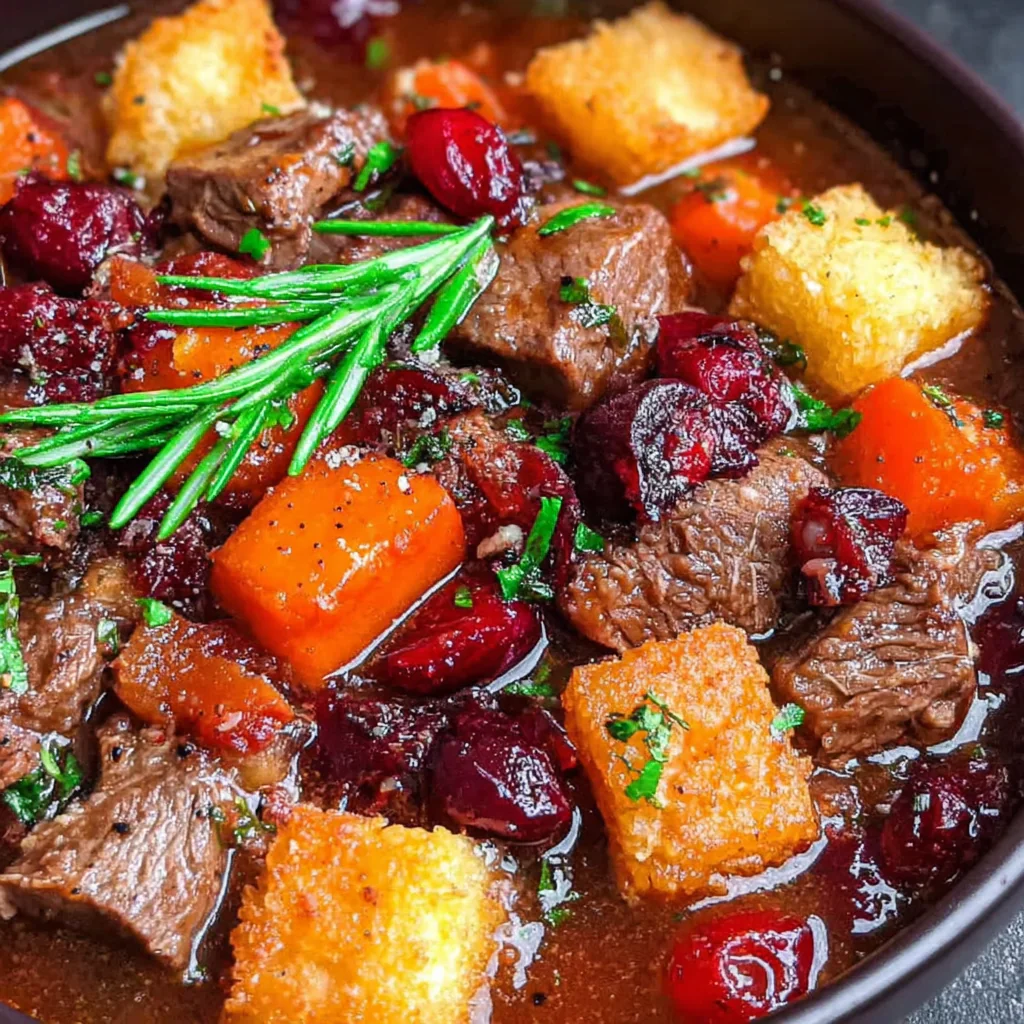
Delicious Cranberry Apple Beef Stew Recipe
Ingredients
Method
- Prepare the beef
- Brown the beef
- Sauté onions and garlic
- Combine the components
- Add liquids and seasonings
- Incorporate fruits and vegetables
- Simmer slowly
- Adjust seasoning and serve
Tried this recipe?
Let us know how it was!Notes
Additional serving suggestions: pair with a crisp salad, garlic bread, or roasted seasonal vegetables for balance.
For make-ahead, prep components separately and assemble just before heating to preserve texture.
Taste and adjust with acid (lemon/vinegar) and salt right at the end to wake up flavors.