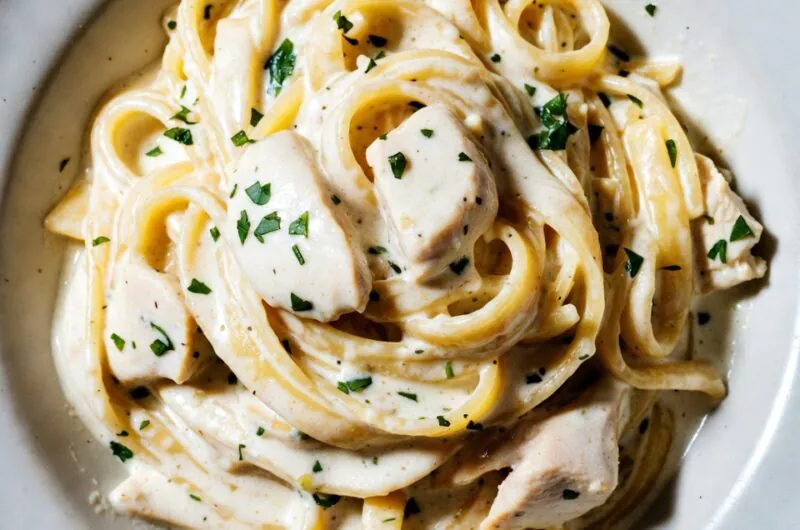
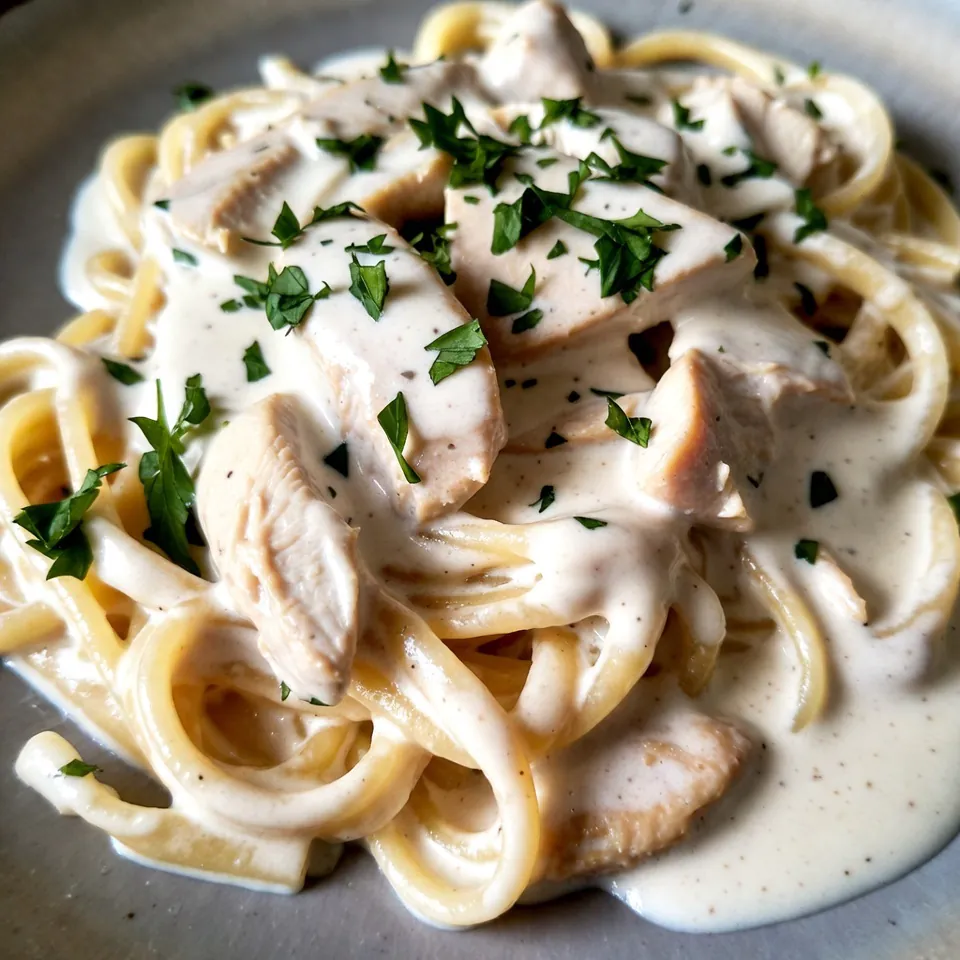
Silky, velvety Alfredo sauce coating tender chicken and perfectly cooked fettuccine — a weeknight dinner that tastes like it came from a restaurant kitchen, not your own.
📋 In This Article
Introduction
Let’s get one thing straight: most chicken Alfredo recipes lie to you. They promise “easy” then have you juggling three pans and a split sauce. This creamy chicken alfredo pasta easy recipe is different. It’s built on technique, not shortcuts — but the techniques themselves are simple once you understand the why behind them.
The real Alfredo? It’s just butter, Parmesan, and pasta water. No cream. That’s the Roman original. But here in America, we’ve fallen in love with the heavy cream version, and honestly? I don’t hate it. The cream adds body and richness that makes this dish the comfort food we crave on exhausted Tuesday nights. Comforting Chicken and Broccoli Alfredo Casserole.
Here’s the thing. This recipe works because every step has a purpose. The chicken gets seared hard to trigger the Maillard reaction — that’s the browning that creates hundreds of new flavor compounds. The sauce comes together in the same pan, capturing all that fond (the browned bits stuck to the skillet). And the pasta water? That’s your emulsifier, your insurance policy against a greasy, broken mess.
Thirty minutes. One pan for the sauce. One pot for the pasta. Done.
Why This Recipe Actually Works
Most Alfredo disasters happen for two reasons: heat that’s too high, and cheese that won’t melt. I’ve made both mistakes. The first time I tried Alfredo, I cranked the heat to rush the process and ended up with a curdled, oily mess that looked like something from a science experiment gone wrong.
This recipe solves both problems. Low and slow for the sauce — we’re talking a gentle simmer, not a rolling boil. And freshly grated Parmesan, always. The pre-grated stuff in the green can? It’s coated in cellulose (anti-caking agent) that prevents it from melting smoothly. You’ll never get a silky sauce with it.
The other key: pasta water. When you cook pasta, it releases starch into the water. That starchy water is liquid gold for sauces. It helps the fat from the butter and the proteins in the cheese emulsify — meaning they stay bound together instead of separating. Add it gradually, and you can adjust the sauce to whatever consistency you want.
Essential Ingredients for Creamy Chicken Alfredo
For the Chicken:
- Chicken Breast (2 large, boneless, skinless): About 1.5 pounds total. Butterflied for even cooking. Thighs work too if you prefer dark meat — they’re more forgiving and stay juicier.
- Olive Oil (2 tablespoons): For searing. High-heat friendly.
- Salt and Black Pepper: Generous amounts on both sides of the chicken.
For the Sauce:
- Butter (4 tablespoons, unsalted): The foundation. Unsalted lets you control the seasoning.
- Garlic (4 cloves, minced): Fresh only. The powdered stuff doesn’t hit the same.
- Heavy Cream (1 cup): The American addition that makes this sauce luxuriously thick. Don’t substitute milk unless you’re adding a thickener.
- Parmesan Cheese (1 cup, freshly grated): From a wedge. Always. I’ll say it again: the pre-grated stuff won’t melt right.
For the Pasta:
- Fettuccine (12 ounces): The classic choice. Long strands hold the creamy sauce beautifully. Penne works in a pinch.
For Finishing:
- Fresh Parsley (2 tablespoons, chopped): Optional but adds a pop of color and freshness.
- Pasta Water (1 cup, reserved): Your secret weapon for sauce consistency.
Step-by-Step Cooking Instructions
Step 1: Prepare and Sear the Chicken
Butterfly your chicken breasts — slice them horizontally almost all the way through, then open like a book. This gives you even thickness so they cook at the same rate. Season both sides generously with salt and pepper.
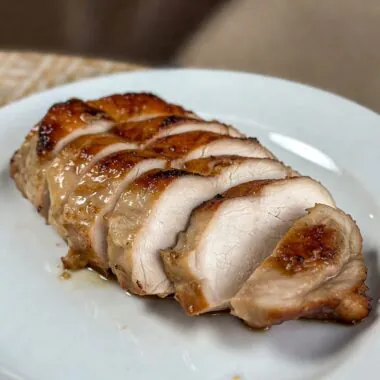
Heat the olive oil in a large skillet over medium-high heat until it shimmers. Add the chicken and cook 5-7 minutes per side until golden brown and the internal temperature reaches 165°F. That’s the temperature where harmful bacteria die and proteins have fully set.
Remove the chicken and let it rest. Here’s why this matters: when meat cooks, the heat pushes juices toward the center. If you cut immediately, those juices end up on your cutting board instead of in the meat. Resting lets the muscle fibers relax and reabsorb that liquid. Give it at least 5 minutes.
Step 2: Cook the Pasta
Bring a large pot of water to a boil. Salt it generously — the water should taste like the ocean. Add the fettuccine and cook until al dente, usually about 1 minute less than the package instructions. The pasta will continue cooking when you combine it with the sauce.
Before draining, reserve 1 cup of pasta water. Don’t skip this. Don’t forget. Set it next to your stove because you’ll need it.
Step 3: Build the Alfredo Sauce
In the same skillet you used for the chicken (don’t wash it — that fond is flavor), melt the butter over medium-low heat. Add the minced garlic and sauté for about 30 seconds until fragrant. Don’t let it brown. Burnt garlic is bitter and will ruin the whole dish.
Pour in the heavy cream and bring to a gentle simmer. Not a boil — a simmer. Small bubbles barely breaking the surface. Let it reduce slightly, about 2-3 minutes.
Now add the Parmesan gradually, whisking constantly. This is where patience matters. Dump it all in at once and you’ll get clumps. Add it slowly and it emulsifies into the cream, creating that velvety texture. The sauce should thicken in about 5 minutes of gentle cooking.
Step 4: Combine Everything
Add the drained pasta directly to the skillet. Toss to coat every strand. If the sauce seems too thick or sticky, add pasta water a few tablespoons at a time. The starch in the water helps the sauce cling to the pasta instead of sliding off.
Slice your rested chicken into strips and fold it into the pasta. Taste. Add more salt or pepper if needed — but remember, the Parmesan is already salty, so go easy at first.
Step 5: Serve
Transfer to plates or serve family-style from the skillet. Top with fresh parsley if using. Eat immediately — Alfredo doesn’t wait around.
⚠️ Common Mistakes to Avoid
Even simple recipes have their pitfalls. Here’s what trips people up:
Using high heat for the sauce. Cream breaks under high heat — the proteins coagulate and separate from the fat, leaving you with a greasy mess. Keep it at a gentle simmer. If you see bubbles rapidly breaking the surface, turn it down.
Pre-grated Parmesan. I mentioned it before, and I’ll mention it again because it’s the number one cause of gritty Alfredo. Those anti-caking agents prevent proper melting. Buy a wedge. Grate it yourself. Takes 30 seconds. Delicious Chicken Alfredo Pasta with Creamy Sauce.
Overcooking the pasta. Mushy pasta can’t be fixed. Al dente means there’s still a slight bite in the center. It should have texture, not collapse under the weight of the sauce.
Forgetting to season. Both the chicken and the sauce need salt. Unsalted cream and butter mean you’re starting with a blank canvas. Build flavor at every step.
Skipping the pasta water. This is your texture adjuster. Without it, you’re stuck with whatever consistency the sauce happens to be. With it, you control the final result.
Delicious Variations and Customizations
Once you’ve mastered the basic technique, the variations are endless:
Broccoli Alfredo: Add small florets to the boiling pasta water during the last 3 minutes of cooking. Drain together. The broccoli soaks up the sauce beautifully.
Shrimp Alfredo: Swap chicken for large shrimp. They cook faster — about 2-3 minutes per side. Add them to the pan after the garlic, cook through, then proceed with the cream.
Mushroom Alfredo: Sauté sliced mushrooms in the skillet after removing the chicken. They’ll release their liquid, then brown. Continue with the sauce recipe.
Spicy Alfredo: Add red pepper flakes to the garlic sauté. A quarter teaspoon gives a gentle heat; half a teaspoon makes it distinctly spicy.
Lighter Version: Use half-and-half instead of heavy cream. The sauce won’t be as thick, but it still works. You may need to let it reduce a bit longer.
Gluten-Free: Use your favorite gluten-free pasta. The sauce itself is naturally gluten-free.
Storing and Reheating Leftovers
Alfredo is best eaten fresh — the sauce tends to separate as it sits. But if you have leftovers, here’s how to handle them:
Let the dish cool to room temperature, then transfer to an airtight container. Refrigerate for up to 3-4 days.
To reheat, the stovetop is your best option. Place the Alfredo in a skillet over medium-low heat. Add a splash of milk or cream to loosen the sauce. Stir frequently until heated through. The microwave works too, but stir halfway through to ensure even heating.
Freezing? Technically possible, but not recommended. Cream sauces tend to separate when frozen and thawed. If you must, portion into freezer-safe containers and freeze for up to 2-3 months. Thaw overnight in the refrigerator before reheating.
💡 Pro Tips for the Best Results
A few final pointers to take your Alfredo from good to great:
Grate your own cheese. I’ve said it multiple times because it’s that important. The difference between freshly grated and pre-grated is night and day.
Use room-temperature dairy. Cold cream hitting hot butter can cause initial separation. Let your cream sit on the counter for 20 minutes before cooking. Small detail, real impact.
Taste as you go. The Parmesan is salty, but the pasta water and cream dilute it. Build your seasoning gradually, tasting at each stage.
Serve immediately. Alfredo doesn’t improve with sitting. The sauce tightens as it cools, losing that flowing, coating quality. Get it to the table while it’s still hot and loose. Creamy Chicken Alfredo Penne for Any Night.
Frequently Asked Questions (FAQ)
+Why does my Alfredo sauce separate?
Sauce separation usually happens from high heat or adding cheese too quickly. Cream proteins coagulate under high temperatures, pushing out fat. Keep the heat at a gentle simmer. Add cheese gradually while whisking constantly. If it’s already separated, try whisking in a tablespoon of cold butter off-heat to re-emulsify.
+Can I use milk instead of heavy cream?
You can, but the sauce won’t be as rich or thick. To compensate, make a roux by cooking 1 tablespoon of flour in the butter for a minute before adding the milk. This gives you a thicker consistency without the heavy cream.
+How do I know when the chicken is fully cooked?
The safest method is an instant-read thermometer inserted into the thickest part. It should read 165°F. Visually, the meat should be opaque throughout with no pink, and the juices should run clear when pierced.
+Can I use pre-grated Parmesan cheese?
Technically yes, but I strongly recommend against it. Pre-grated cheese contains anti-caking agents that prevent smooth melting. You’ll end up with a grainy, gritty sauce. A wedge of Parmesan and a box grater take about 30 seconds.
+How long does leftover chicken Alfredo last?
Store in an airtight container in the refrigerator for 3-4 days. Reheat gently with a splash of liquid to restore the sauce’s consistency. The dish doesn’t freeze well due to the cream content.
+What pasta shapes work best with Alfredo?
Long, flat shapes like fettuccine, linguine, or tagliatelle are traditional — the sauce clings to the broad surface area. Penne and rigatoni work too, with the sauce pooling inside the tubes. Avoid very thin shapes like angel hair; they get overwhelmed by the heavy sauce.
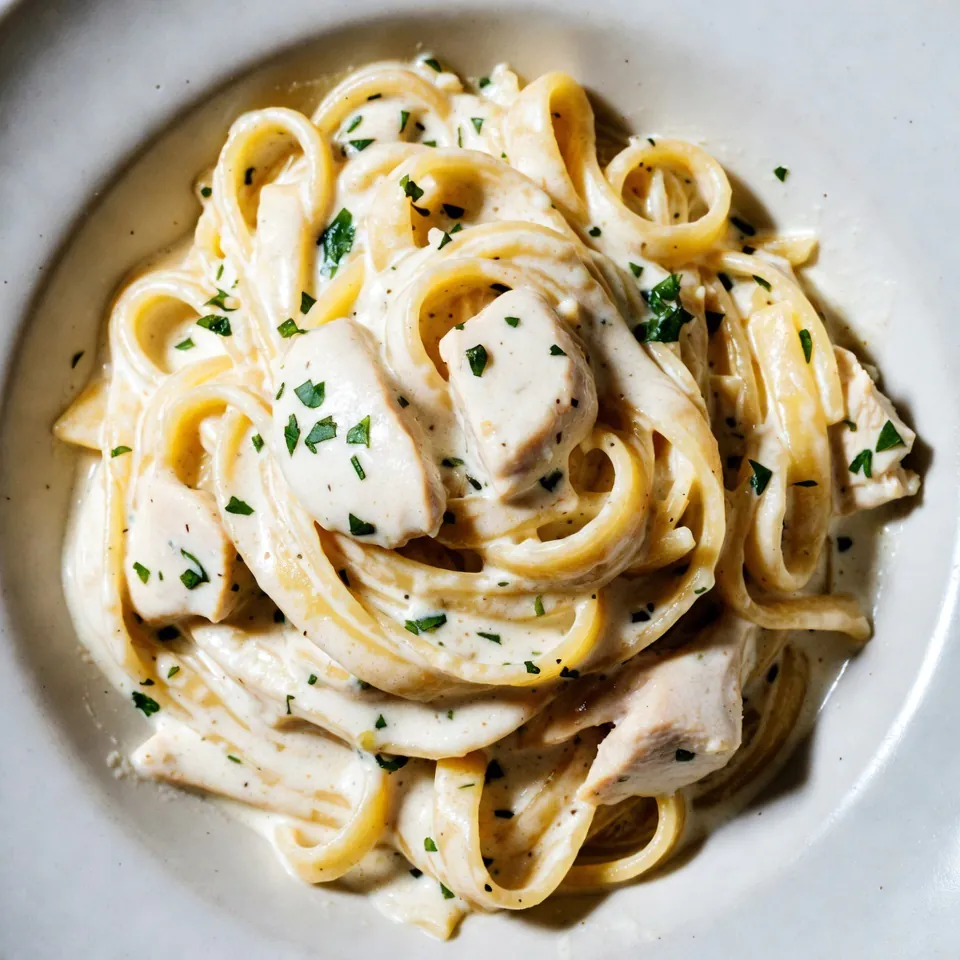
Chicken Alfredo - Creamy Chicken Pasta
Ingredients
Method
- Prepare the Chicken
- Make the Alfredo Sauce
- Meanwhile Prepare the pasta
Nutrition
Notes
- For perfectly cooked chicken, aim for an internal temperature of 75°C (165°F); it should be golden brown outside and juicy inside.
- To prevent your Alfredo sauce from breaking, keep the heat on low and stir continuously after adding the cream to maintain a smooth consistency.
- If you want to lighten up the dish, consider using half-and-half instead of heavy cream, or swap in Greek yogurt for a tangy twist without sacrificing creaminess.
- To save time, cook the pasta in the same pot as the sauce for the last few minutes of cooking; this allows the pasta to absorb the sauce's flavor while reducing cleanup.
- Store leftovers in an airtight container in the fridge for up to 3 days, and reheat gently on the stove with a splash of milk to restore creaminess.