📋 In This Article
- Introduction
- Why You’ll Love This Recipe (Why It Works)
- Ingredients for Greek Pasta Salad
- Choosing Your Pasta
- Crafting the Perfect Greek Dressing
- Instructions
- Pro Tips for Greek Pasta Salad Perfection
- Common Mistakes to Avoid
- Variations & Add-ins
- Serving Suggestions
- Storage & Make-Ahead Tips
- Frequently Asked Questions (FAQ)
- Conclusion
Introduction
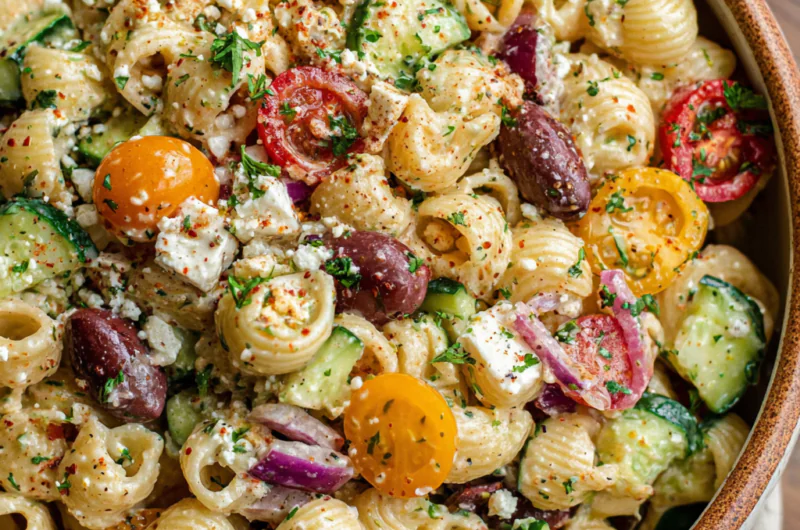
Let’s be honest: most pasta salads are an afterthought. You know the ones—sitting sad and mayo-drenched at the end of a potluck table, slowly wilting under the sun. Greek Pasta Salad is different. It’s the dish people actually want to eat, the one that disappears first while the potato salad languishes. The formula is simple but non-negotiable: al dente pasta that keeps its bite, crisp vegetables that haven’t given up, and a punchy lemon-olive oil dressing that ties everything together without drowning it.
What makes this version work isn’t just the ingredients—it’s the technique. Soaking the red onions tames their bite. Rinsing the pasta stops the cooking cold. And letting the whole thing chill before serving? That’s when the magic happens. The pasta absorbs the dressing, the vegetables release just enough of their juices, and suddenly you have a cohesive dish instead of a random collection of parts. Creamy Cajun Sausage Pasta for a Flavorful Meal.
Why You’ll Love This Recipe (Why It Works)
Here’s what separates a mediocre pasta salad from one people remember: texture integrity. This salad holds up. The cucumbers stay crisp, the tomatoes stay juicy, and the pasta doesn’t turn into mush after an hour in the fridge. That’s not an accident—it’s the result of specific choices at each step.
The lemon-olive oil dressing does double duty. It coats everything in bright, tangy flavor while the oil creates a barrier that prevents the pasta from absorbing too much moisture too quickly. Plus, this dish actually improves as it sits. The flavors meld, the herbs infuse, and what tasted good at noon tastes great by dinner. Perfect for potlucks, meal prep, or those nights when you want something ready when you walk through the door.
Ingredients for Greek Pasta Salad
For the Pasta Salad:
- 16 ounces rotini pasta (or penne, farfalle—any shape with nooks and crannies)
- 1 pint cherry tomatoes, halved
- ¾ English cucumber, diced (about 1 ½ cups)
- 1 red bell pepper, finely diced
- ½ small red onion, thinly sliced
- ½ cup pitted Kalamata olives, halved
- ½ cup crumbled feta cheese
- ¼ cup fresh parsley, roughly chopped
- Salt and pepper, to taste
For the Lemon Olive Oil Dressing:
- ⅓ cup freshly squeezed lemon juice (about 2 large lemons)
- 1 tablespoon lemon zest
- 2 cloves garlic, minced
- ½ cup extra virgin olive oil
- ½ teaspoon dried oregano
- ½ teaspoon salt
- ¼ teaspoon black pepper
Note: Quality matters here. Use tomatoes that actually smell like tomatoes, feta that’s creamy and tangy (Greek or French varieties work best), and olive oil you’d be happy to drizzle on bread.
Choosing Your Pasta
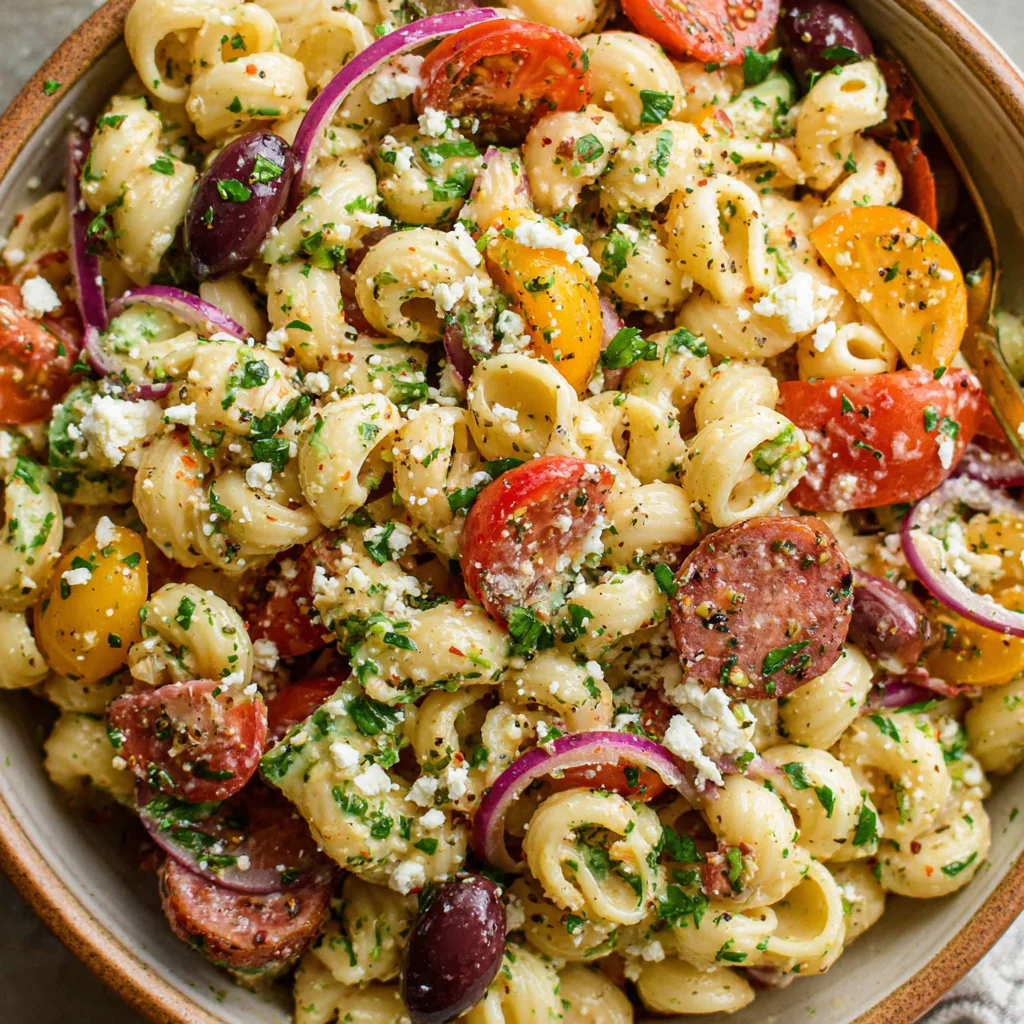
The shape you pick isn’t just about aesthetics—it determines how much dressing clings to each bite. Rotini, with its tight corkscrew shape, is the MVP here. Those spirals catch dressing in their grooves, ensuring you get flavor in every mouthful rather than a sad puddle at the bottom of the bowl. Penne and farfalle work well too; avoid smooth shapes like spaghetti or linguine, which let the dressing slide right off.
Cooking to al dente isn’t a suggestion—it’s structural insurance. Pasta continues cooking slightly even after you drain it, and it softens further as it absorbs dressing. Start with firmer pasta, and you’ll end up with the perfect texture after chilling. If you cook it to “done” right out of the pot, you’ll have mush by tomorrow. I learned this the hard way with a batch destined for a friend’s barbecue. Don’t be me.
For gluten-free options, chickpea or lentil pasta holds up surprisingly well. These alternatives have a nuttier flavor and firmer texture that actually works in this context—just taste-test your dressing for salt, as these pastas tend to need a bit more seasoning.
Crafting the Perfect Greek Dressing
The dressing is where most pasta salads fail. Too much oil and it’s greasy. Too much acid and it’s harsh. The key is emulsification—getting the oil and lemon juice to form a stable mixture that coats rather than separates.
Start with your acid base: lemon juice and zest. The zest contains aromatic oils that punch up the lemon flavor without adding more acidity. Then slowly stream in the olive oil while whisking (or shake vigorously in a jar—my preferred lazy method). What you’re doing is breaking the oil into tiny droplets suspended in the lemon juice, creating a velvety, cohesive dressing that clings to the pasta and vegetables.
The garlic adds pungency, the oregano brings that characteristic Greek note, and the salt does more than season—it actually helps the emulsion hold together. Don’t skip it. And here’s the thing: make this dressing in a jar you can seal. It keeps for a week in the fridge and works on everything from grilled vegetables to chicken to a quick dip for bread.
Instructions
- Cook the Pasta: Bring a large pot of water to a rolling boil. Add a generous tablespoon of salt—the water should taste like a well-seasoned soup. Add the pasta and cook until al dente, usually 1-2 minutes less than the package directions. Drain and rinse immediately under cold water until the pasta is completely cool. This stops the cooking process and removes excess starch that would otherwise make your salad gummy.
- Soak the Red Onion: While the pasta cooks, thinly slice the red onion and submerge it in a bowl of cold water with a pinch of salt. Let it soak for at least 10 minutes. This draws out the sulfur compounds that make raw onion harsh and indigestible, leaving you with crisp, mild slices that add flavor without the bite. Drain well before adding to the salad.
- Make the Dressing: In a jar with a tight-fitting lid, combine the lemon juice, lemon zest, minced garlic, olive oil, dried oregano, salt, and pepper. Shake vigorously for 30 seconds until the mixture is cloudy and slightly thickened—that’s your emulsion forming. Taste and adjust seasoning if needed.
- Prep the Vegetables: Halve the cherry tomatoes, dice the cucumber and bell pepper into pieces roughly the same size as the pasta, and roughly chop the parsley. Uniform pieces mean every bite has a bit of everything.
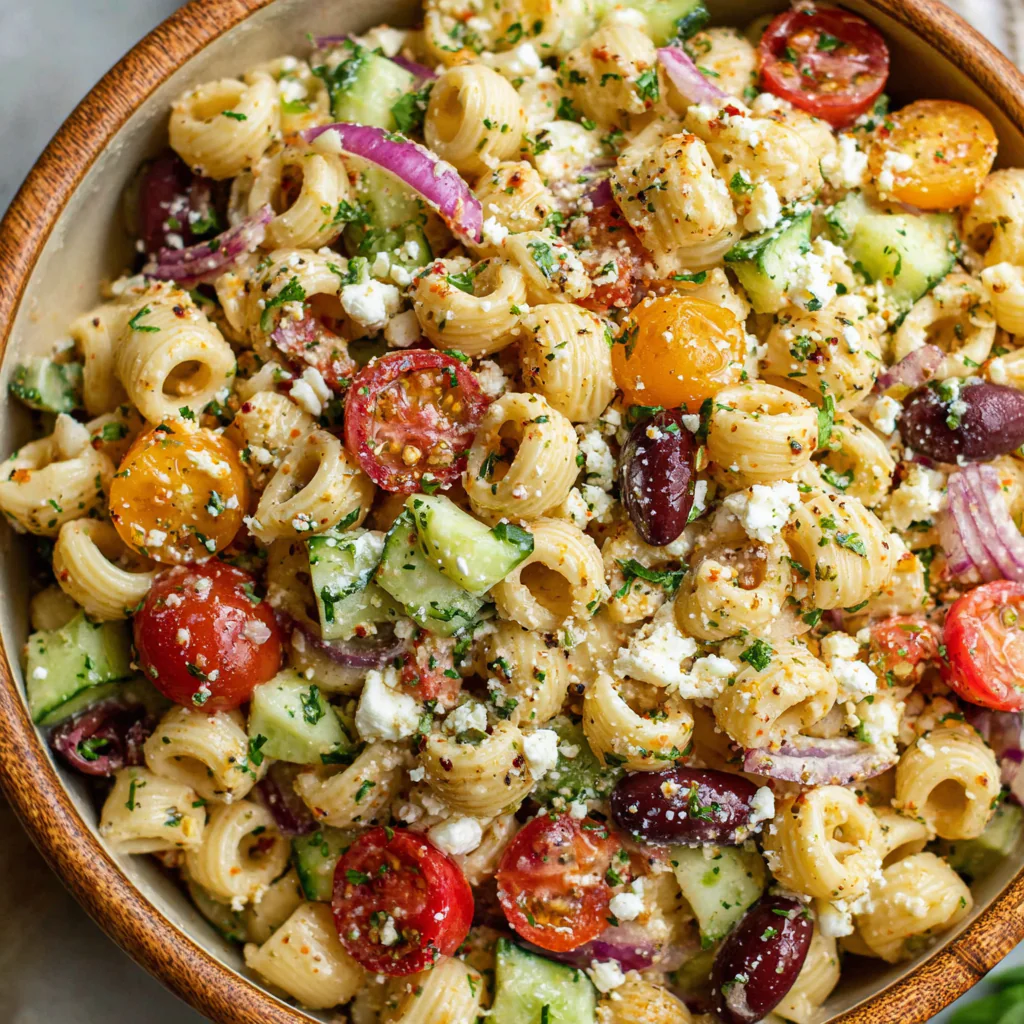
- Assemble the Salad: In a large bowl, combine the cooled pasta, drained onions, tomatoes, cucumber, bell pepper, olives, feta, and parsley. Pour about three-quarters of the dressing over the top and toss gently but thoroughly. Add more dressing to taste—you want everything coated but not swimming.
- Chill Before Serving: Cover and refrigerate for at least 30 minutes, though 2 hours is better. This resting period lets the flavors meld and the pasta absorb the dressing. Before serving, taste and add more salt, pepper, or a squeeze of lemon if it needs brightening.
💡 Pro Tips for Greek Pasta Salad Perfection
- Soak Your Onions: I know, it feels like an extra step. But 10 minutes in cold water transforms raw red onion from a palate-assault to a crisp, sweet addition. The sulfur compounds that cause that harsh, lingering bite are water-soluble—they leach out into the soaking water, leaving you with onion flavor without the aggression.
- Rinse the Pasta Thoroughly: Cold water stops the cooking, but it also washes away surface starch. Left alone, that starch would make your pasta sticky and your dressing gummy. Rinse until the water runs clear and the pasta feels cool to the touch.
- Salt Your Pasta Water Aggressively: This is your only chance to season the pasta itself. The water should taste like a well-salted soup—about 1 tablespoon of kosher salt per pound of pasta. Pasta cooked in plain water will taste flat no matter how much dressing you add later.
- Use Block Feta and Crumble It Yourself: Pre-crumbled feta is convenient, but it’s coated in anti-caking agents that prevent it from melting into the salad properly. Block feta is creamier, tangier, and distributes more evenly when you crumble it by hand.
- Let It Rest: Pasta salad needs time. The flavors need to marry, the pasta needs to absorb the dressing, and the vegetables need to release a bit of their juices to create that cohesive flavor. Thirty minutes is the minimum; overnight is even better.
- Save Some Dressing: Hold back a few tablespoons of dressing to add just before serving. The pasta absorbs liquid as it sits, and a fresh hit of dressing brightens everything up.
⚠️ Common Mistakes to Avoid
Overcooking the pasta: This is the number one killer of pasta salad. Remember: the pasta will soften as it absorbs dressing and sits in the fridge. If it’s fully cooked when it leaves the pot, it’ll be mush by the time you serve it. Pull it 1-2 minutes early and trust the process.
Skipping the onion soak: Raw red onion can dominate a dish, overpowering the delicate flavors of cucumber, tomato, and feta. The soak isn’t optional if you want balanced flavor. Ten minutes. Cold water. Pinch of salt. Done.
Dressing while the pasta is warm: Warm pasta absorbs dressing rapidly and unevenly, leading to some pieces that are saturated and others that are dry. It also causes the feta to melt slightly, turning creamy instead of maintaining those distinct crumbles. Cool the pasta completely before dressing.
Using low-quality feta: Not all feta is created equal. The pre-crumbled stuff in the tub is often dry and aggressively salty. Look for Greek or French feta in brine—it’s creamier, more complex, and worth the extra dollar.
Under-seasoning: Cold food requires more salt than hot food. Your taste buds are less sensitive at lower temperatures, so that perfectly seasoned warm pasta will taste bland once chilled. Taste the finished salad and adjust—you’ll likely need more salt and lemon than you think.
Variations & Add-ins
The beauty of this template is its flexibility. Once you master the basic technique, you can riff endlessly. Creamy Mexican Street Corn Pasta Salad Recipe.
For protein, grilled chicken turns this into a main course. Season chicken breasts with oregano, lemon, and garlic, grill until just cooked through, and slice over the top. Chickpeas are a no-cook alternative—they add heft and plant protein without any extra work.
For more vegetables, artichoke hearts (marinated, from a jar) add a briny depth that plays well with the olives and feta. Sun-dried tomatoes concentrate the tomato flavor, especially good if you’re making this in winter when fresh tomatoes are lackluster. Fresh spinach wilts slightly under the dressing, adding greens without the prep work of heartier lettuces.
For a creamy variation, fold in a few tablespoons of tzatziki or a dollop of Greek yogurt. The tang works with the lemon dressing, and the creaminess coats the pasta in a different but equally delicious way.
For a vegan version, skip the feta and add extra olives or a sprinkle of nutritional yeast for umami. The dressing is already dairy-free, so the only adjustment needed is the cheese.
Serving Suggestions
This salad is a potluck workhorse, but it’s also a solid foundation for a meal. Serve it alongside grilled lamb chops or lemon-herb chicken for a full Mediterranean spread. A platter of warm pita, hummus, and olives turns it into a mezze-style dinner.
For a lighter meal, pile it over a bed of greens—arugula adds a peppery bite that complements the creamy feta and tangy dressing. Or fold in some canned tuna or chickpeas and call it lunch.
Leftovers make an excellent desk lunch. The flavors improve overnight, and it requires no reheating. Pack it with a piece of fruit and some pita chips, and you’re set.
Storage & Make-Ahead Tips
This salad is built for advance preparation. The components can be prepped a day ahead and stored separately: cooked pasta in one container, chopped vegetables in another, dressing in a jar. Assemble when you’re ready to serve, and it comes together in minutes.
Once dressed, the salad keeps for up to 5 days in the refrigerator. The texture changes slightly—the pasta softens, the vegetables release some liquid—but it remains perfectly edible and often better on day two or three.
If the salad seems dry after storage, add a splash of olive oil and a squeeze of lemon. The pasta continues to absorb liquid, so a quick refresh brings it back to life. Don’t add more dressing if you can help it—the acid can become overwhelming.
For picnics and potlucks, transport the salad in a cooler or insulated bag. It can sit out for up to 2 hours safely, but beyond that, the texture suffers and food safety becomes a concern. If you’re serving outdoors on a hot day, nestle the bowl in a larger bowl of ice to keep it chilled. Delicious Easy Shrimp Scampi Pasta Bake Recipe.
Frequently Asked Questions (FAQ)
+Why does my pasta salad get soggy?
Soggy pasta salad usually comes down to three culprits: overcooked pasta, too much dressing added at once, or not rinsing the pasta after cooking. Cook to al dente, rinse thoroughly to remove starch, and add dressing gradually. The pasta will absorb some liquid as it sits, so start with less than you think you need.
+Can I make pasta salad the day before?
Absolutely. In fact, this Greek pasta salad improves with time. The flavors meld and the pasta absorbs the dressing, creating a more cohesive dish. Store it covered in the refrigerator and give it a quick toss before serving. If it seems dry, add a splash of olive oil and lemon juice to refresh.
+How long does Greek pasta salad last in the fridge?
Properly stored in an airtight container, this salad keeps for 4-5 days. The texture softens slightly over time, but the flavor remains excellent. For best results, consume within 3 days if you’ve used very ripe tomatoes, as they release more liquid as they sit.
+What pasta shape is best for pasta salad?
Shapes with texture and crevices—rotini, fusilli, penne, farfalle—hold dressing best. Smooth shapes like spaghetti or shells let the dressing slide off. For gluten-free options, chickpea or lentil pasta works well and adds extra protein.
+Can I use bottled Italian dressing instead?
You can, but the flavor won’t be as bright or fresh. Bottled dressings often contain stabilizers and preservatives that mute the flavors. Homemade lemon-olive oil dressing takes 2 minutes to shake together and tastes significantly better. The fresh lemon juice and quality olive oil make a noticeable difference.
+Why soak red onions before adding to salad?
Raw red onions contain sulfur compounds that create a harsh, pungent bite that can overpower other flavors. Soaking them in cold water for 10 minutes draws out these compounds, leaving you with crisp, mild onion slices that add flavor without the aggression. It’s a small step that makes a big difference.
Conclusion
A great pasta salad shouldn’t be an afterthought. This Greek Pasta Salad proves that with the right technique—al dente pasta, a properly emulsified dressing, and a brief rest in the fridge—you can create something that people actually want to eat. It’s fresh, it’s flavorful, and it holds up beautifully whether you’re serving it tonight or packing it for tomorrow’s lunch.
The formula is forgiving enough for substitutions but specific enough to guarantee success. Swap the vegetables, add protein, make it your own—but don’t skip the onion soak or the chill time. Those details matter. Now go make a batch. Your next potluck deserves better than the grocery store deli counter.