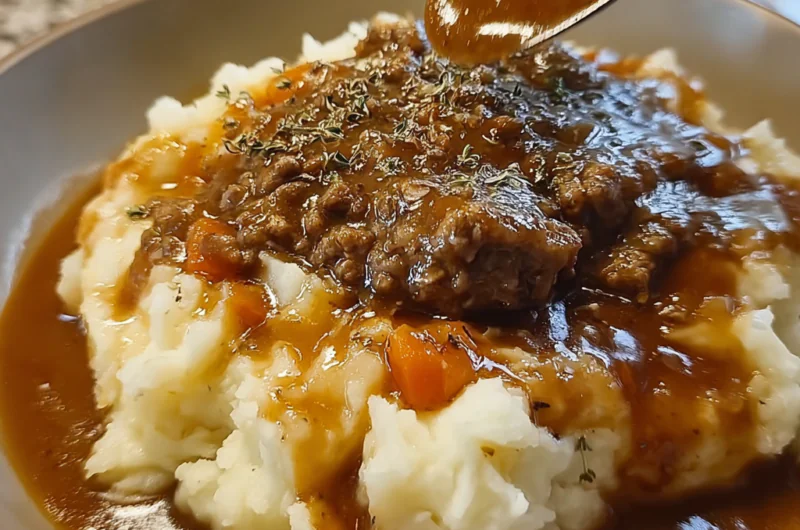
A hearty, nostalgic classic featuring savory ground beef in a rich, golden gravy served over fluffy, buttery mashed potatoes—ready in under 30 minutes.
📋 In This Article
- Introduction
- Why This Recipe Works
- Deep Dive: The Science of the Gravy
- The Foundation: Fluffy, Creamy Mashed Potatoes
- Ingredients You’ll Need
- Step-by-Step Cooking Instructions
- Common Mistakes to Avoid
- Creative Variations & Serving Suggestions
- Storage, Reheating, and Freezing Tips
- Pro Tips for Success
- Frequently Asked Questions (FAQ)
- Conclusion
Introduction
There is a specific kind of magic in a bowl of Ground Beef & Gravy Over Mashed Potatoes. It isn’t fancy. It isn’t trying to be. But when you need dinner on the table fast, and you need it to actually satisfy that deep, primal hunger for something warm and savory, nothing else quite hits the mark. I’ve spent years testing techniques in professional kitchens, yet this humble dish remains a weekly rotation in my own home. Why? Because it’s affordable, it’s forgiving, and it’s a masterclass in pantry efficiency.
This recipe takes the guesswork out of the process. We’re going beyond just “browning meat.” We’re talking about building a fond, deglazing for depth, and treating your potatoes with the respect they deserve so they don’t turn into glue. Whether you know this dish as “hamburger gravy” or simply “that beef stuff,” get ready to make the best version of it you’ve ever had. Mini BBQ Mushroom Cheddar Meatloaf Recipe.
Why This Recipe Works
This isn’t just a recipe; it’s a lesson in flavor physics. The genius of Ground Beef & Gravy Over Mashed Potatoes lies in the maillard reaction. By properly searing the beef, we create those delicious brown bits (the fond) stuck to the pan. Most people scrub those off; we deglaze them. That is where the deep, savory flavor lives.
It’s also incredibly versatile. While it shines over potatoes, it plays just as well with egg noodles, rice, or even cauliflower mash for a low-carb twist. It’s budget-friendly, uses minimal dishes (one pan for the gravy, one pot for the potatoes), and reheats beautifully. If you’re looking for a meal that bridges the gap between childhood nostalgia and culinary technique, this is it.
Deep Dive: The Science of the Gravy
The heart of this dish is the gravy. To get it right, you have to understand the thickening power of starch. We use a classic roux approach here—cooking flour in the rendered beef fat. This does two things: it removes the raw flour taste and coats the starch granules in fat, preventing them from clumping when the liquid hits.
When you add the broth, the starch granules swell and burst, thickening the liquid. A common mistake is rushing this step. You need a simmer, not a boil, to activate the starch without breaking the sauce. And for the love of flavor, don’t just dump the beef broth in. Use it to scrape up that fond. That dark, caramelized residue is pure concentrated umami. Deglazing dissolves those proteins back into your sauce, turning brown water into a rich, velvety gravy.
The Foundation: Fluffy, Creamy Mashed Potatoes
Let’s be clear: there is a right way and a wrong way to mash potatoes. The enemy here is overworking the starch. When you beat potatoes too aggressively, the cells rupture and release sticky amylose. That’s how you get wallpaper paste.
To avoid this, we use a ricer or a food mill. It gently separates the cells for a fluffy texture. If you don’t have one, a simple hand masher works—just stop as soon as the big lumps are gone. Also, heat your dairy. Adding cold milk and butter to hot potatoes drops the temperature and makes the texture heavy. Warm dairy incorporates smoothly, creating a silky emulsion. And please, salt the potato water. It’s your only chance to season the inside of the potato.
Ingredients You’ll Need
For the Ground Beef and Gravy:
- 1 pound ground beef (80/20 blend is crucial; the fat carries the flavor)
- 2 cups beef broth (low-sodium allows you to control the saltiness)
- ½ cup chopped onion (about 1 small onion, diced small for even cooking)
- 2 cloves garlic (minced; add it late so it doesn’t burn)
- 2 tablespoons all-purpose flour (the thickening agent)
- 1 tablespoon Worcestershire sauce (the secret umami booster)
- Salt and freshly cracked black pepper (to taste)
- 2 tablespoons vegetable oil (only if your beef is very lean)
For the Mashed Potatoes:
- 2 pounds potatoes (Russet for fluffiness, Yukon Gold for buttery flavor)
- 4 tablespoons butter (unsalted, melted or very soft)
- ½ cup whole milk (warmed slightly)
- Salt (1 tablespoon for the water, plus more to taste)
- Pepper (freshly ground)
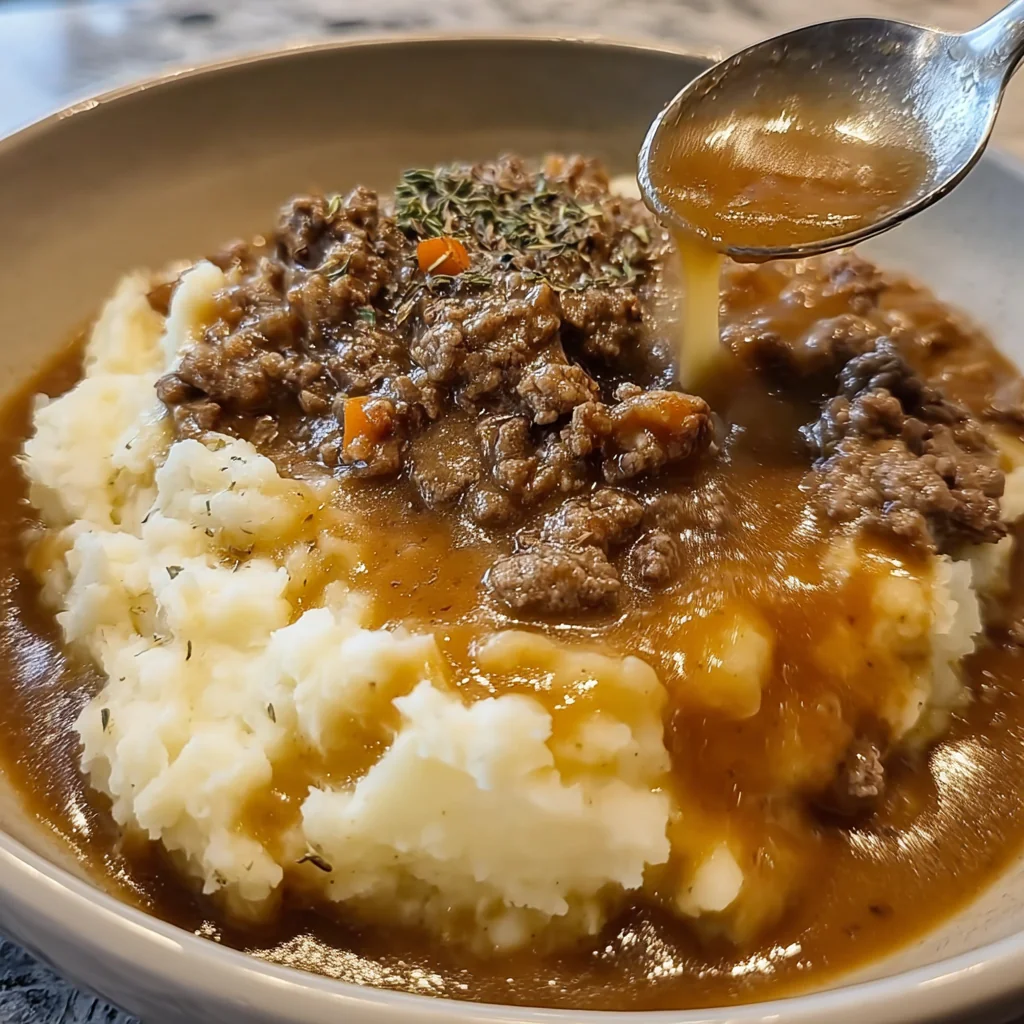
Step-by-Step Cooking Instructions
Preparing the Mashed Potatoes
- Simmer the Potatoes: Peel and chop the potatoes into 1-inch chunks. Place them in a pot and cover with cold water by an inch. Add a generous tablespoon of salt. Bring to a boil, then reduce to a simmer. Cook for 15-20 minutes until a knife slides through effortlessly.
- Drain and Dry: Drain the potatoes thoroughly. Return them to the warm pot over low heat for 1 minute to evaporate excess surface moisture. This prevents watery mash.
- Mash: Remove from heat. Add the warm milk and melted butter. Mash gently with a ricer or masher until smooth. Season with salt and pepper. Cover and set aside.
Making the Ground Beef and Gravy
- Sear the Beef: Heat a large skillet over medium-high heat. Add the ground beef, breaking it apart. Do not crowd the pan. Let it sit for a minute to develop a crust before stirring. Cook for 6-8 minutes until deeply browned.
- Drain and Sauté: Remove the beef with a slotted spoon, leaving about 2 tablespoons of fat in the pan. If the beef was lean and produced no fat, add 2 tablespoons of oil. Add the onions and cook for 3 minutes until soft. Add the garlic and cook for 30 seconds until fragrant.
- Build the Roux: Sprinkle the flour over the onions and fat. Stir constantly for 1 minute to cook out the raw flour taste.
- Deglaze and Simmer: Slowly whisk in the beef broth, scraping up the browned bits from the bottom of the pan. Add the Worcestershire sauce. Bring to a simmer.
- Combine: Return the beef to the skillet. Simmer for 5-7 minutes until the gravy thickens enough to coat a spoon. Taste and adjust seasoning.
Serving Your Dish
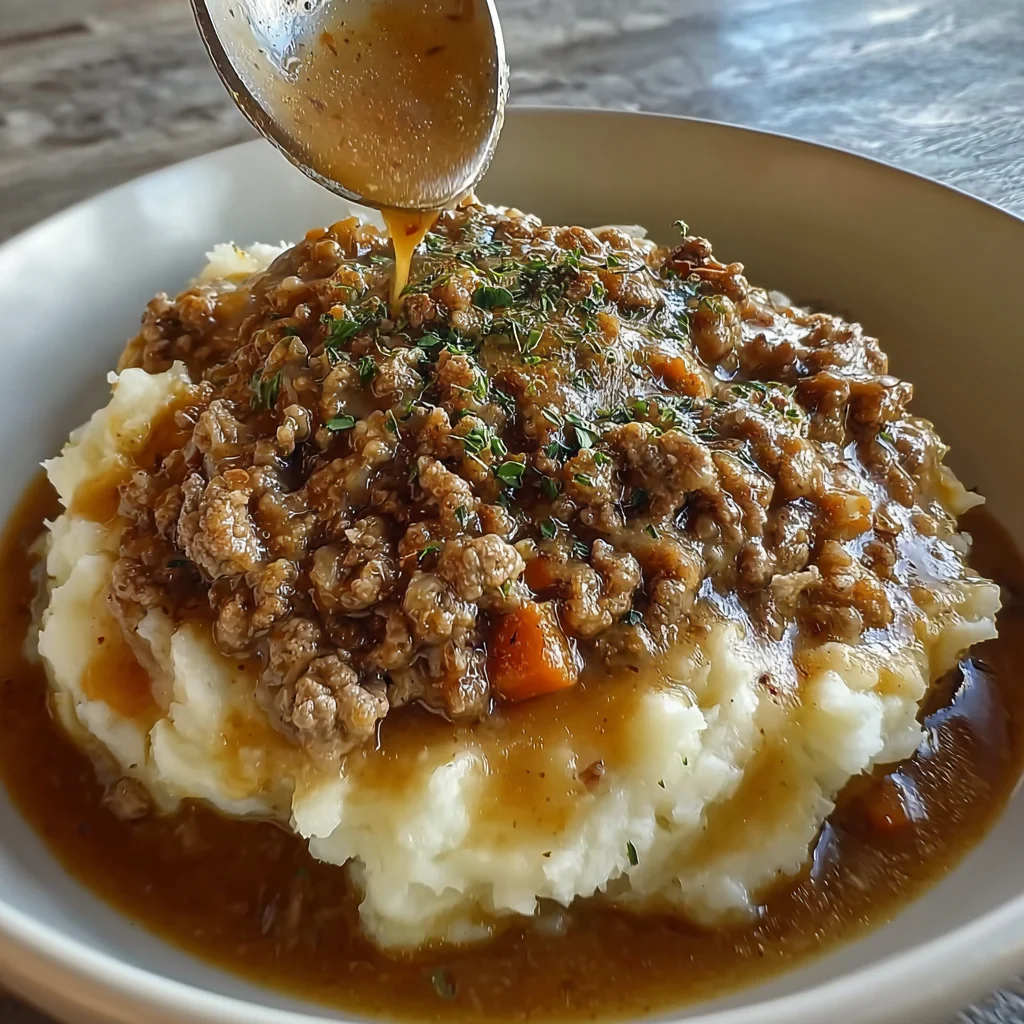
Spoon a generous mound of potatoes into a bowl and ladle the hot gravy over the top. Garnish with fresh parsley if you’re feeling fancy.
⚠️ Common Mistakes to Avoid
Even simple recipes have pitfalls. The most common error I see is overmixing the potatoes. I used to think mashing them more made them smoother. It doesn’t. It turns them into library paste. Stop mashing the second the lumps disappear.
Another issue is thin, watery gravy. This usually happens when the flour isn’t cooked long enough or the liquid is added too fast. Make sure you whisk the broth in gradually to prevent lumps, and give it time to reduce. If it’s still too thin, let it simmer uncovered. Conversely, if it’s too thick, just add a splash of water or broth. Finally, don’t forget to season. Taste the gravy after it thickens. The flavors concentrate as it reduces, so what tasted salty at the boil might be perfect now. Delightful Meat Pie for Cozy Family Meals.
Creative Variations & Serving Suggestions
This dish is a chameleon. For a Shepherd’s Pie vibe, stir in a cup of frozen peas and carrots during the last 5 minutes of simmering. It adds color and sweetness that cuts through the richness.
If you want to switch up the base, egg noodles are a classic alternative that holds the sauce beautifully. For a low-carb option, serve over steamed cauliflower or roasted spaghetti squash. You can also swap the protein—ground turkey works well, but you’ll need to add extra oil since it’s leaner. And if you want to get really wild, melt a slice of cheddar cheese over the top right before serving. It’s not traditional, but it’s delicious.
Storage, Reheating, and Freezing Tips
To store, keep the potatoes and gravy in separate airtight containers. The gravy will keep in the fridge for 3 to 4 days. Reheat it gently on the stovetop or in the microwave with a splash of water to loosen it up.
Mashed potatoes are best eaten fresh, but leftovers can be revived with a little butter and milk. Freezing works well for the gravy—just thaw it overnight in the fridge. I don’t recommend freezing the mashed potatoes, though. The water content in potatoes expands when frozen, destroying the texture and leaving you with a grainy mess. Make those fresh.
💡 Pro Tips for Success
To achieve the best Ground Beef & Gravy Over Mashed Potatoes, you need to focus on the fond. Those browned bits are flavor gold. When you deglaze the pan with broth, use a wooden spoon to scrape every last bit up. It dissolves into the gravy, adding a savory depth you can’t get from a seasoning packet.
Also, temperature control matters more than you think. If your beef is browning too fast but staying pink inside, your heat is too high. If it’s steaming and turning gray instead of browning, your heat is too low or the pan is crowded. You want a sizzle, not a hiss. And for the potatoes? Warm your milk. It sounds fussy, but cold milk makes the potatoes tighten up. Warm milk keeps them fluffy. Savory Cheesy Ground Beef and Potatoes Delight.
Frequently Asked Questions (FAQ)
+Why is my gravy lumpy?
Lumps form when flour isn’t whisked smoothly into the fat before liquid is added. To fix this, make sure you cook the flour with the fat for a full minute, then whisk in the broth slowly and constantly.
+Can I make this recipe gluten-free?
Yes. Substitute the all-purpose flour with cornstarch. Mix 1 tablespoon of cornstarch with 1 tablespoon of cold water to make a slurry, then stir it into the simmering broth until thickened.
+How do I know when the potatoes are done cooking?
Test them with a paring knife or a fork. If the utensil slides through the potato chunk with zero resistance and the potato falls apart easily, they are ready.
+Can I use instant mashed potatoes instead?
You can, but the texture won’t be as creamy. If you are short on time, instant potatoes are a viable shortcut, but I highly recommend using real potatoes for the best flavor and texture.
+How long does ground beef gravy last in the fridge?
Stored in an airtight container, the gravy will stay fresh for 3 to 4 days. Reheat it thoroughly to 165°F before serving.
+What sides go with this dish?
This is a heavy, comforting meal, so pair it with something bright. A simple green salad with vinaigrette, roasted green beans, or steamed broccoli adds a nice crunch and cuts the richness.
Conclusion
Ground Beef & Gravy Over Mashed Potatoes stands as an enduring comfort food that evokes warmth and nostalgia. It’s a dish that proves you don’t need expensive cuts of meat or complicated techniques to create a dinner that feels like a hug. It’s affordable, adaptable, and deeply satisfying. So, grab your pot and skillet, and make some memories tonight. Share your variations in the comments—I’d love to hear how you make this classic your own.
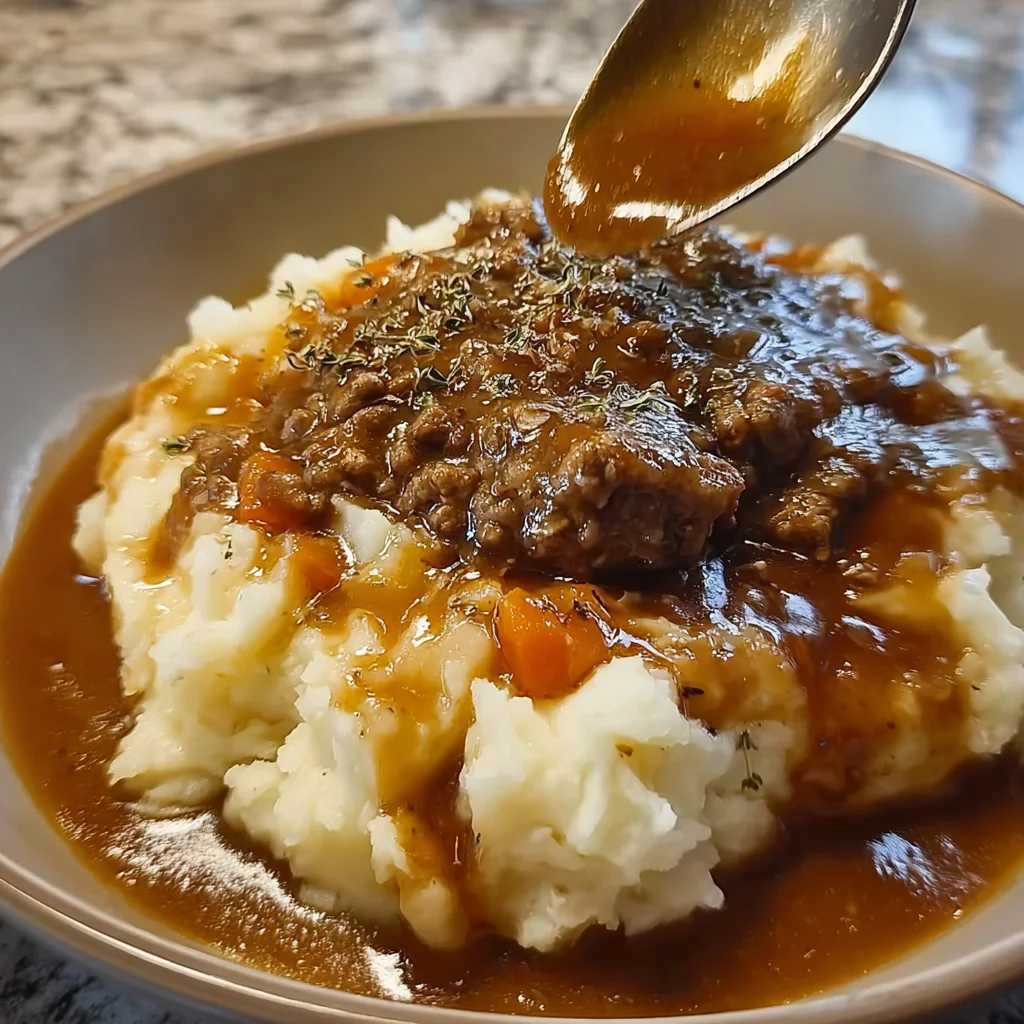
Easy Ground Beef and Gravy Over Mashed Potatoes
Ingredients
Method
- For the Mashed Potatoes
- For the Ground Beef and Gravy
- To Serve
Nutrition
Notes
- For creamy mashed potatoes, ensure the milk and butter are at room temperature before adding them to the potatoes to avoid a gluey texture.
- If you're short on time, instant mashed potatoes can be a great alternative; just follow the package instructions for a quick side.
- To prevent your gravy from becoming too thick, mix the cornstarch with a little cold water before adding it to the beef broth to ensure a smooth consistency.
- Store any leftovers in an airtight container in the fridge for up to 3 days, or freeze the ground beef and gravy for up to 3 months for a quick meal later.
- To reheat, use the microwave for quick warming or place the beef and gravy back in a skillet over low heat, stirring gently until heated through to keep the sauce from breaking.