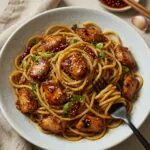
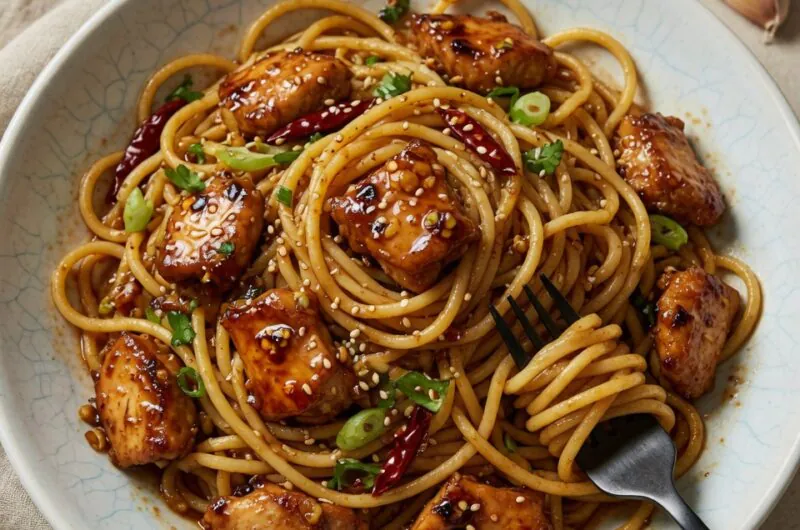
Savory, sweet, and ready in 25 minutes—this pasta-style lo mein uses a clever technique to deliver takeout flavor without the delivery fee.
📋 In This Article
Introduction
Let’s be honest: the craving hits hard. You want that glossy, sticky-sweet Honey Garlic Chicken Lo Mein, but the delivery fees are astronomical, and the restaurant version often arrives as a greasy, sodium-bomb puddle. We’ve all been there, staring into the fridge, wondering if we can pull off a stir-fry at home. You absolutely can, and honestly? It’s better when you do. This recipe bridges the gap between authentic Chinese technique and the accessibility of Italian pasta, solving the “I don’t have fresh noodles” dilemma without sacrificing texture.
The beauty of this dish lies in its aggressive seasoning and high-heat cooking. We aren’t just tossing boiled noodles in sauce; we are building layers of flavor. By using a combination of honey for viscosity and soy sauce for that deep umami punch, you get a glaze that clings to every strand. It’s fast, it’s forgiving, and it beats takeout every time.
Why This Recipe Works (Better Than Takeout!)
Most takeout joints rely on heavy oils and MSG to do the heavy lifting. While delicious, it often masks the freshness of the ingredients. Here, we focus on the Maillard reaction—getting a deep, golden-brown crust on the chicken—to generate flavor naturally.
Control is the name of the game. When you cook at home, you dictate the salt level and the texture. Restaurant lo mein often suffers from soggy noodles; our “pasta style” method ensures al dente strands that hold their structure against the sauce. Plus, the economic argument is undeniable: a family-sized portion of this Honey Garlic Chicken Lo Mein costs a fraction of what you’d pay for four cartons of delivery.
The Secret to ‘Pasta Style’ Lo Mein
Here is the controversy: Do you need fresh lo mein noodles? Ideally, yes. But practically? Dried Italian spaghetti works shockingly well if you treat it right. The secret isn’t the noodle itself, but the starch content and how you sauce it.
Spaghetti is made from durum wheat, which has a higher protein content than standard Chinese egg noodles, making it more resilient. However, it releases more starch into the water. If you drain your spaghetti and dump it directly into the wok, you risk a gummy texture. The fix? Cook the pasta about 1 minute shy of the package instructions. Drain it, but don’t rinse it. The residual heat finishes the cooking in the sauce, allowing the noodles to absorb the honey-garlic glaze rather than swimming in it. This technique, often called “marrying” the pasta with the sauce, ensures every bite is flavorful, not just the first.
Ingredients You’ll Need
Chicken
- 2 lbs chicken breasts or thighs (Thighs are superior here—they have more intramuscular fat, rendering them juicy and resistant to drying out during high-heat searing. If using breast, be vigilant.)
Sauce
- 1/2 cup honey (Provides viscosity and floral sweetness)
- 1/2 cup soy sauce (Low sodium recommended to control salinity)
- 1/4 cup ketchup (A non-traditional secret weapon; the tomato paste and vinegar add acidity and body)
- 1 tablespoon sesame oil (For toasting aroma)
- 3 large cloves garlic, minced (Fresh is non-negotiable; the pre-minced jars have a metallic, acidic bite)
- 1 tablespoon ginger, freshly grated
- 2 tablespoons cornstarch (Dissolved in the marinade, this is essentially a “velveting” technique to protect the meat)
Noodles
- 1 package fresh Lo Mein noodles (Or substitute with 8 oz dried spaghetti or linguine)
Vegetables
- 4 cups mixed vegetables (Cruciferous veggies like broccoli and carrots need a harder sear, while snap peas and peppers only need a flash. Cut them accordingly.)
Garnish
- Sesame seeds
- 3 green onions, chopped
Step-by-Step Instructions
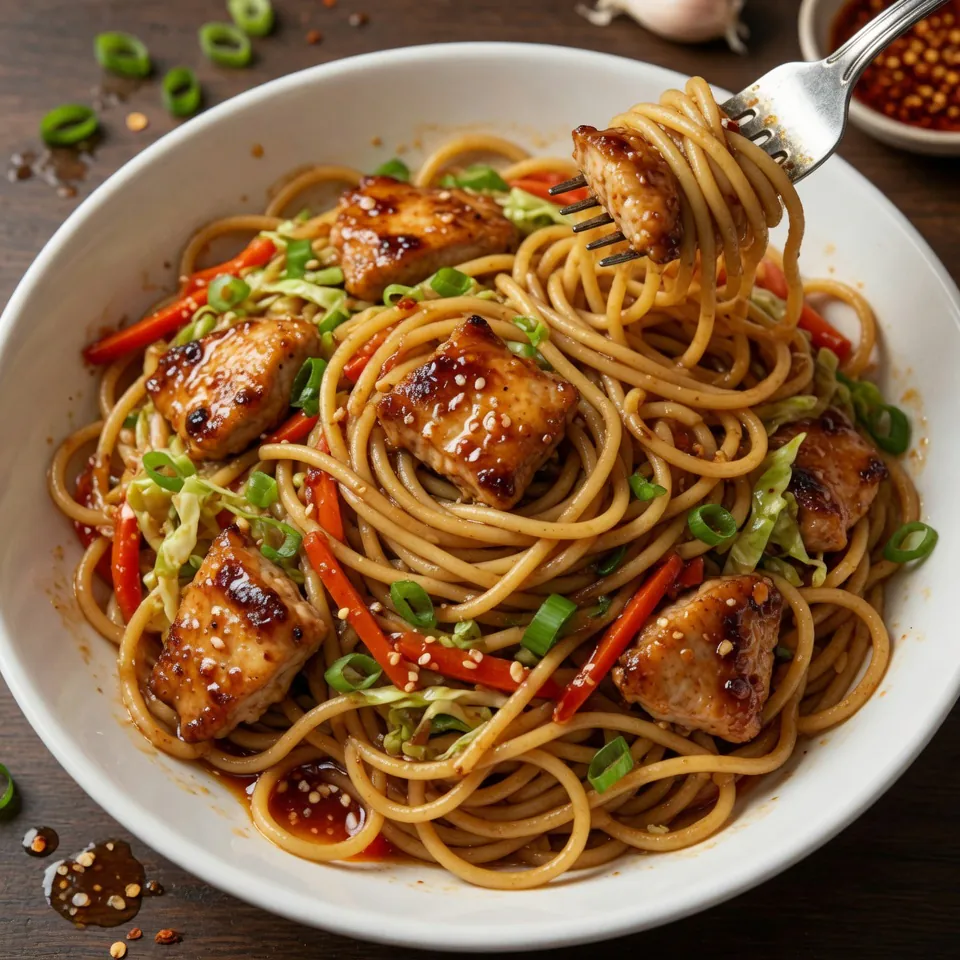
- Prepare the Chicken and Marinade: Cut the 2 lbs of chicken into bite-sized, uniform pieces. Uniformity ensures even cooking—nobody wants a raw chunk next to a dry one. In a bowl, combine 1/2 cup honey, 1/2 cup soy sauce, 1/4 cup ketchup, and 3 large cloves of minced garlic. Add the chicken to the marinade. Let it soak for at least 15 minutes. Science Note: The cornstarch in the marinade creates a microscopic barrier around the protein, locking in moisture during the sear—a technique known as velveting.
- Cook the Noodles: Bring a pot of water to a rolling boil. Add your noodles. If using spaghetti, cook for 1 minute less than the package directs for al dente. Drain immediately. Do not rinse.
- Sear the Chicken: Heat 1 tablespoon of oil in a wok or large skillet over high heat. You want the oil to shimmer; if it smokes, it’s too hot, but if it’s pooling, it’s not hot enough. Add the chicken in a single layer. Do not touch it for 2 minutes. Let the Maillard reaction occur—this browning creates hundreds of new flavor compounds. Flip and cook for another 3-4 minutes until browned and cooked through.
- Stir-Fry Vegetables: Remove the chicken and set aside. Add a splash more oil if the pan is dry. Toss in the harder vegetables (carrots, broccoli) first for 2 minutes, then add softer ones (peppers, snap peas) for 1 minute. They should be vibrant and crisp-tender.
- Combine and Glaze: Return the chicken to the pan. Pour in any remaining marinade (it’s safe since the chicken is cooked). Add the drained noodles. Toss vigorously with tongs. Cook for 2 minutes until the sauce bubbles and thickens into a glossy glaze that coats the noodles.
- Serve: Remove from heat. Finish with sesame seeds and chopped green onions.
Instant Pot Variation
Use the sauté setting to brown the chicken. Add the sauce and pressure cook for 4 minutes. Quick release, add veggies, and use sauté again to reduce the sauce.
Slow Cooker Variation
Combine chicken and sauce. Cook on low for 4 hours. Add vegetables in the last 30 minutes. Cook noodles separately and toss before serving.
⚠️ Common Mistakes to Avoid
Even simple stir-fries can go wrong. Here is where most home cooks stumble.
Overcrowding the pan: This is the cardinal sin. If the pan is crowded, the temperature drops, and your chicken steams in its own juices rather than searing. That gray, rubbery texture? That’s steamed chicken. Cook in batches if necessary. It takes an extra 5 minutes but guarantees a golden crust.
Burning the garlic: Garlic has a low smoke point. If you add it too early, it turns bitter and acrid. In this recipe, the garlic goes into the marinade, which protects it somewhat, but if you are adding fresh aromatics to the pan, do it right before the liquid ingredients.
Soggy noodles: Using pasta requires attention. If you over-boil the spaghetti, it will fall apart when you toss it in the sauce. Remember, al dente is your safety net.
Variations & Substitutions
This recipe is a template, not a law.
- Protein: Try shrimp—they cook in half the time, so add them last. Firm tofu pressed and cubed is excellent for a vegetarian spin.
- Vegetables: Use the “clean out the fridge” method. Cabbage, bok choy, or even kale work well. Just adjust cooking times; kale needs longer than spinach.
- Noodles: If you are gluten-free, rice noodles work, but they are more delicate. Handle them gently and use a non-stick pan to prevent breaking.
Storage & Reheating Tips
Store leftovers in an airtight container for up to 4 days. The noodles will absorb more sauce as they sit, so the dish gets drier over time.
Reheating: Skip the microwave if you can. It makes noodles gummy. Instead, heat a skillet over medium heat, add a splash of water or chicken broth, and toss the leftovers until heated through. The liquid rehydrates the starches and revives the sauce.
💡 Pro Tips for Next-Level Flavor
Want to take this from “good” to “I can’t believe I made this”?
Marinate longer: 15 minutes works, but overnight is where the magic happens. The salt in the soy sauce denatures the proteins, allowing the meat to retain more water during cooking.
Use a wok if you have one: The shape concentrates the heat at the bottom for searing while the cooler sides keep veggies crisp.
The first time I made this, I used a cheap non-stick pan and wondered why the chicken looked gray. You need the heat. A stainless steel pan or cast iron holds heat better, ensuring that critical browning.
Bloom your spices: If you have extra ginger, toss it in the hot oil for 30 seconds before adding the chicken. It releases the essential oils and creates a fragrant base layer for the dish.
Frequently Asked Questions (FAQ)
+Why is my lo mein soggy?
Usually, this is due to overcrowding the pan or overcooking the noodles. If too much moisture is released from the vegetables or the noodles are too soft, the sauce won’t cling. Ensure your pan is ripping hot and the noodles are al dente.
+Can I use spaghetti for lo mein?
Absolutely. Dried spaghetti is a standard substitute for lo mein noodles. The key is cooking it al dente and ensuring it is well-drained before hitting the wok. The texture is slightly different—more firm—but the flavor absorption is excellent.
+How do I know when the chicken is done?
The most accurate method is an instant-read thermometer; look for 165°F (74°C). Visually, the juices should run clear, and the meat should be opaque throughout with no pink centers.
+Can I freeze lo mein?
Yes, but the texture suffers slightly. Freeze the chicken and vegetable mixture separately from the noodles if possible. Thaw overnight in the fridge and reheat in a skillet with a splash of water.
+What can I substitute for honey?
Maple syrup works well for a different floral profile, or brown sugar dissolved in a teaspoon of water can mimic the sweetness and viscosity.
+Is this recipe gluten-free?
Not as written. You must use gluten-free spaghetti (like brown rice or corn pasta) and substitute the soy sauce with Tamari or a certified gluten-free soy sauce alternative.