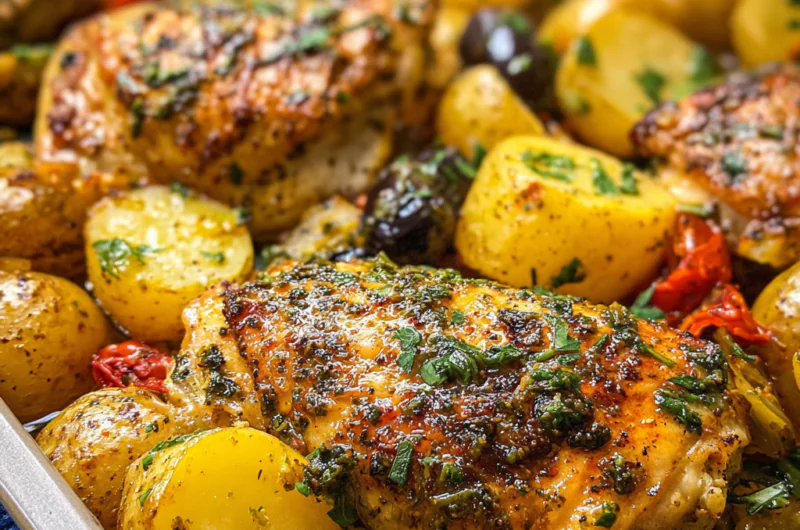
There’s a specific kind of magic that happens when you roast chicken and potatoes together. The fat renders out of the thighs, bathing the potatoes in savory richness, while the high heat turns the chicken skin into shattered glass-crispy perfection. This One-Pan Mediterranean Chicken and Potatoes recipe is the weeknight warrior you’ve been looking for. It relies on a high-heat roasting technique to balance textures—crispy skin, creamy potatoes, and tender vegetables—without the need for stovetop searing.
📋 In This Article
- Why This Recipe Works: The Science of Roasting
- Ingredients You Need for Mediterranean Chicken
- Step-by-Step Instructions
- Marinating for Maximum Flavor
- Common Mistakes to Avoid
- Variations and Customizations
- Serving Suggestions
- Storage and Reheating Tips
- Pro Tips for Next-Level Flavor
- Frequently Asked Questions (FAQ)
Why This Recipe Works: The Science of Roasting
You might think “one-pan” just means throwing everything on a sheet tray and hoping for the best. Not quite. The secret here is temperature and timing. We roast at a high 425°F (220°C). At this temperature, the Maillard reaction—the chemical process where amino acids and reducing sugars create browning and complex savory flavors—occurs rapidly on the chicken skin.
But here is the crucial detail: the potatoes need a head start. If you put everything in at once, the chicken releases moisture before the potatoes can form a crust, leading to steaming. By starting the potatoes and chicken together, the potatoes absorb the rendered chicken fat (or fond) while developing their own caramelized exterior. We also stagger the vegetables. Delicate items like cherry tomatoes and bell peppers go in later. If you roast tomatoes for 45 minutes, they turn to mush; added in the last 15 minutes, they burst into sweet, jammy pockets of acid that balance the rich meat. Sheet Pan Mediterranean Chicken & Zucchini Recipe.
Ingredients You Need for Mediterranean Chicken
- 2 Lemons: We use both the zest and juice. The zest contains essential oils that provide bright aroma without the acidity that can toughen meat during marination.
- 4 Garlic Cloves: Minced fine. When roasted, garlic sugars caramelize, turning pungent raw heat into sweet, nutty depth.
- 2 tablespoons Extra Virgin Olive Oil: Essential for conducting heat and aiding in the Maillard reaction.
- 2 ½ pounds Bone-In, Skin-On Chicken Thighs: The bone insulates the meat, keeping it juicy, while the skin provides the necessary fat for crisping.
- 1 ½ pounds Yukon Gold Potatoes: Cut into 1-inch chunks. Yukons have a medium starch content; they get creamy inside without falling apart like russets would.
- 1 Red Onion: Sliced into wedges. Red onions are sweeter than yellow when roasted and hold their shape well.
- 1 Bell Pepper: Chopped into large pieces for sweetness and crunch.
- 1 cup Cherry Tomatoes: Halved. Their acidity cuts through the heavy savory notes of the chicken.
- 12 Pitted Kalamata or Castelvetrano Olives: These add a briney, umami-rich punch that contrasts with the sweet vegetables.
- 2 tablespoons Herbes de Provence: A classic dried blend containing thyme, rosemary, and lavender. It creates a distinct Mediterranean crust.
- Fresh Parsley or Tarragon: Chopped, for a burst of fresh flavor at the end.
- Kosher Salt and Black Pepper: Essential for seasoning.
Step-by-Step Instructions
1. Marinate for Depth
In a large bowl, combine the lemon zest, minced garlic, Herbes de Provence, 2 teaspoons of Kosher salt, black pepper, and olive oil. Add the chicken thighs and potatoes. Toss everything with your hands to ensure an even coat.
- The Science: Salting the chicken and potatoes ahead of time allows salt to penetrate the muscle fibers. It dissolves some proteins, ensuring the chicken stays juicy and the potatoes seasoned through to the center. Let this sit for at least 30 minutes at room temperature. (The first time I skipped this rest, the potatoes were bland in the center—don’t make that mistake).
2. Preheat for Crispiness
Preheat your oven to 425°F (220°C).
- Why this temp? This is the sweet spot. Lower temps dry out the chicken before the skin browns; higher temps burn the skin before the potatoes are tender.
3. Stage the Roast
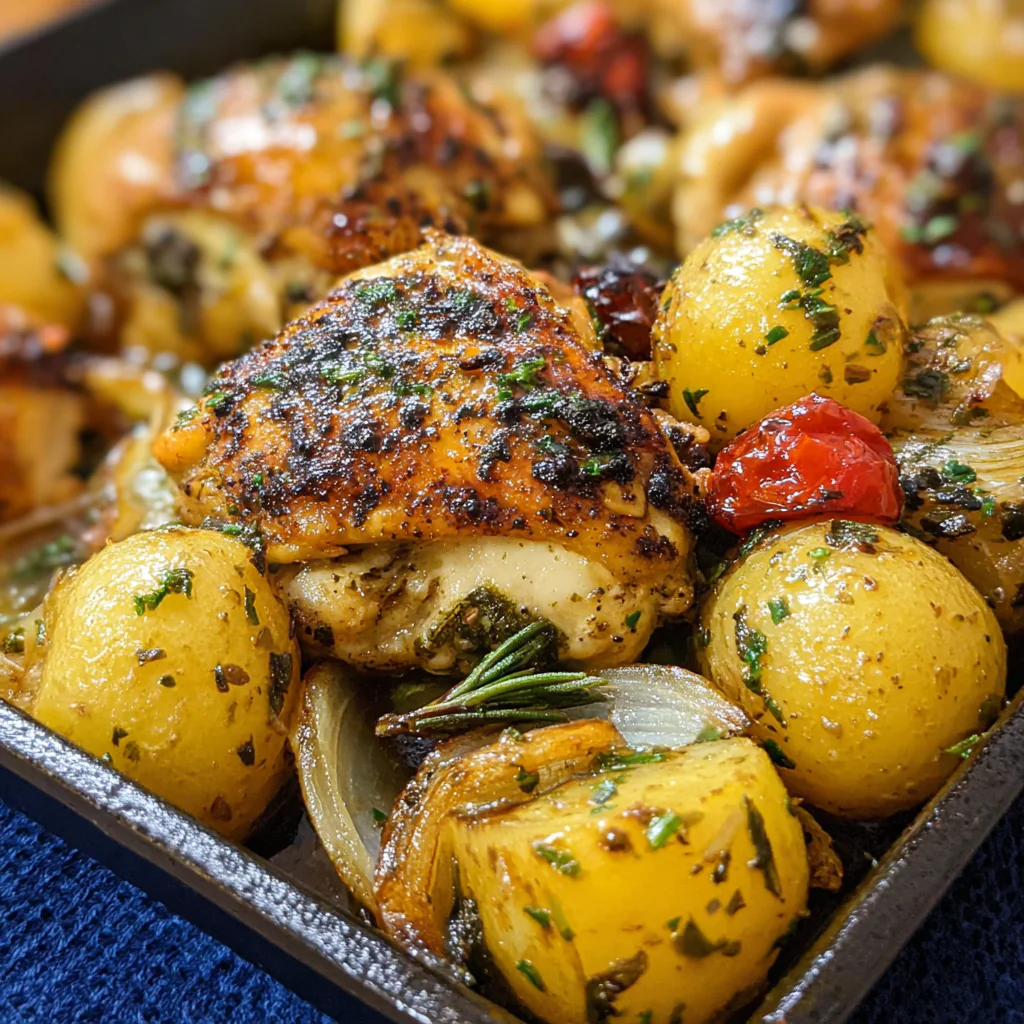
Arrange the chicken thighs skin-side up on a large rimmed baking sheet. Scatter the potatoes around the chicken. Do not overcrowd the pan; leave space between items or they will steam.
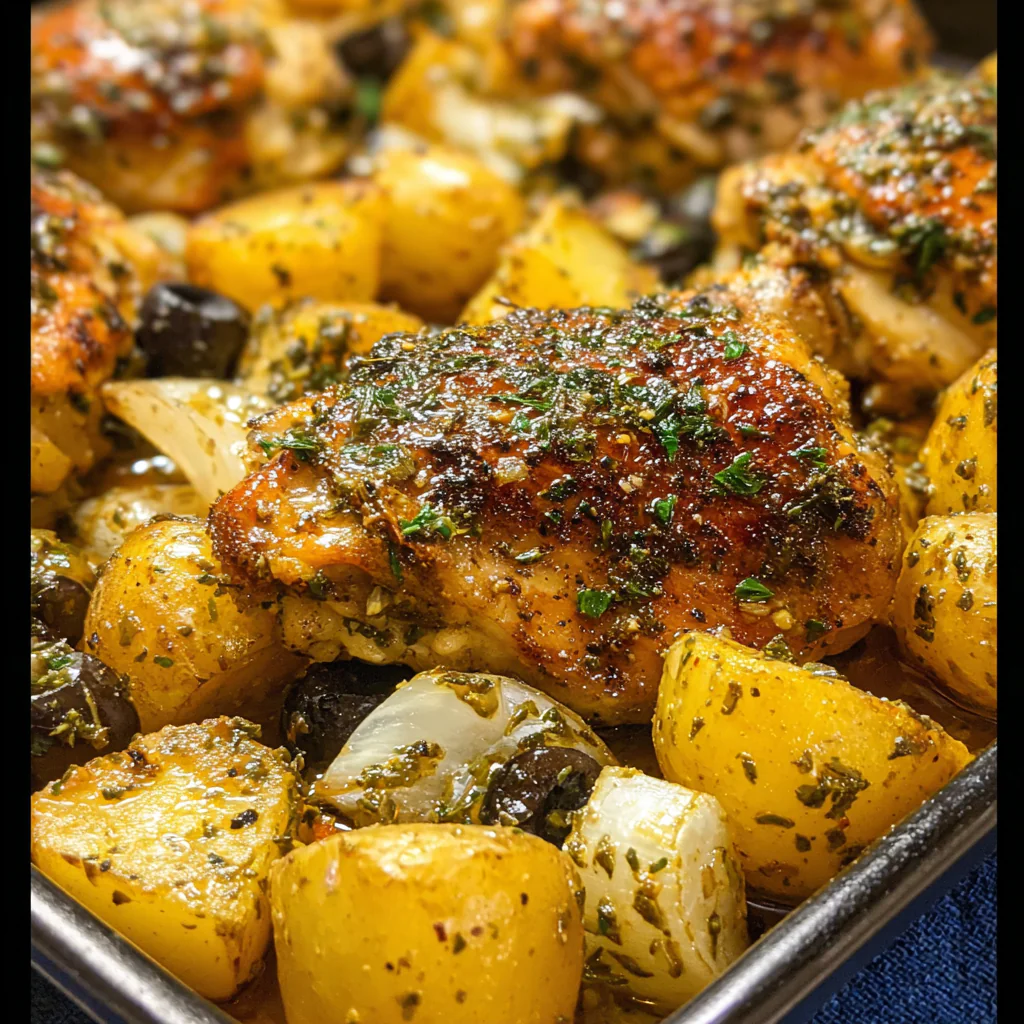
- Visual Cue: The chicken skin should look tight and pale, the potatoes glistening with oil.
- Roast for 25 minutes.
4. Add the Aromatics
Remove the pan from the oven. Add the red onion wedges, bell peppers, and olives to the pan, tucking them between the chicken and potatoes. Return to the oven.
- Timing Note: We add these now because they cook faster than dense potatoes. Adding them later prevents them from burning or turning into mush.
5. Finish and Rest
Roast for another 20-25 minutes, until the chicken reaches an internal temperature of 165°F (74°C) and the skin is deep golden brown. Add the cherry tomatoes for the final 10 minutes of roasting just until they burst.
- Doneness Cue: The juices should run clear when the chicken is pierced, and the potatoes should offer no resistance to a paring knife.
6. Serve
Let the dish rest for 5-10 minutes before serving. Squeeze fresh lemon juice over the tray and sprinkle with fresh parsley. This “finishing acid” brightens the heavy, roasted flavors.
Marinating for Maximum Flavor
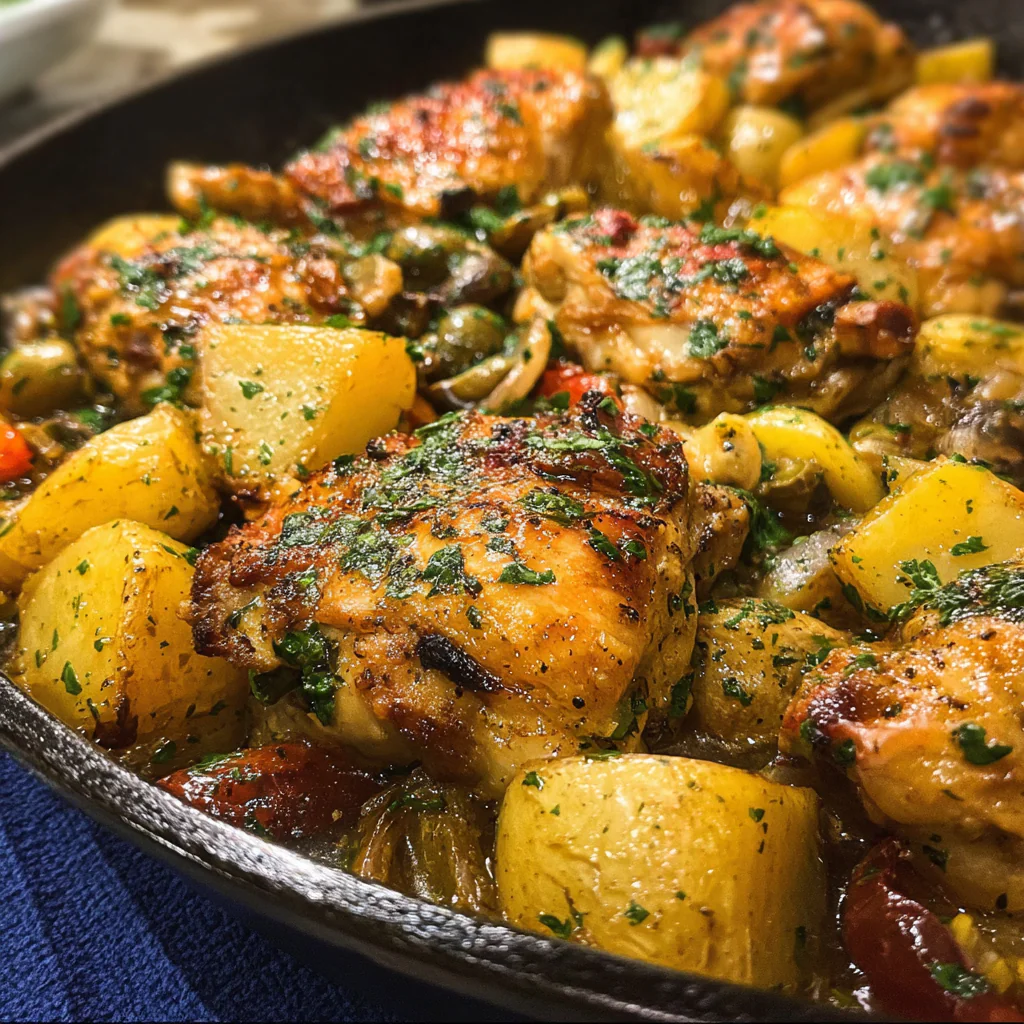
The marinade is more than just a coating; it’s a chemical treatment for your food. The lemon zest provides aromatic oils that don’t cook off in the oven, while the garlic and herbs infuse the fat. When you toss the potatoes in this mix, you are doing more than seasoning them. The oil coats the starch, promoting caramelization. If you have the time, letting the chicken and potatoes marinate in the fridge for up to 2 hours allows the salt to fully penetrate the meat, resulting in a juicier bite. However, even 30 minutes makes a noticeable difference compared to seasoning right before cooking. 🍋 Sheet Pan Lemon Garlic Salmon: Quick, Healthy, and Bursting with Flavor.
⚠️ Common Mistakes to Avoid
Even a simple recipe can go wrong. Here is how to ensure success:
- Overcrowding the Pan: This is the most common error. If the ingredients are touching, moisture gets trapped and creates steam. Steam prevents the Maillard reaction, leaving you with gray, rubbery chicken and soggy potatoes. Use two pans if necessary.
- Cold Chicken: If your chicken goes into the oven straight from the fridge, the outside overcooks before the inside is done. Let it sit in the marinade at room temperature for 30 minutes.
- Under-seasoning: Potatoes are salt sponges. Be generous with your Kosher salt in the marinade stage, or the potatoes will taste bland compared to the savory chicken.
- Skipping the Rest: Cutting into the chicken immediately lets the juices run out onto the pan. Resting allows the muscle fibers to relax and reabsorb those juices, keeping the meat moist.
Variations and Customizations
This recipe is a template, not a law.
- Protein Swaps: Bone-in, skin-on chicken breasts work well, but increase the cooking time slightly. For a seafood twist, try thick white fish fillets like cod or halibut—add them in the last 12-15 minutes of roasting.
- Vegetable Swaps: Zucchini and eggplant are classic Mediterranean additions. Cut them into thick rounds and add them with the onions. They have high water content, so they shrink significantly.
- Spice Shifts: Swap Herbes de Provence for Za’atar for a tangy, herbal note, or add smoked paprika and cumin for a more North African flavor profile.
- Dietary Needs: This dish is naturally gluten-free and dairy-free. Just ensure your processed ingredients (like olives or broths if using) are certified gluten-free.
Serving Suggestions
To turn this tray bake into a feast, serve it with something that can soak up the pan drippings. A simple Greek salad with cucumber, feta, and dill adds a cold crunch to the hot roast. Warm pita bread or a side of fluffy couscous is perfect for mopping up the lemony juices. For a creamy element, a dollop of tzatziki or a garlic-yogurt sauce provides a cooling contrast to the savory chicken and briny olives.
Storage and Reheating Tips
Store leftovers in an airtight container in the refrigerator for up to 3-4 days. To reheat, avoid the microwave if you want to keep the skin crispy. Place the chicken and potatoes on a baking sheet and heat in a 350°F (175°C) oven for 15-20 minutes. This method warms the meat through without turning the skin rubbery. If you must freeze it, wrap portions tightly in foil or freezer bags for up to 2 months. Thaw overnight in the fridge before reheating. Herb Roasted Chicken with Veggies & Potatoes – Easy One-Pan Dinner Recipe.
💡 Pro Tips for Next-Level Flavor
- Dry Brine: For the absolute crispiest skin, salt your chicken thighs and let them sit uncovered in the fridge for 4-24 hours before cooking. The salt draws out moisture which then evaporates in the dry fridge air, leaving the skin perfectly dry and ready to crisp.
- Preheat the Pan: Put your baking sheet in the oven while it preheats. When you dump the potatoes onto the hot metal, they sizzle immediately, creating a crust on the bottom that you can’t get with a cold pan.
- Finish with Fat: Drizzle a little high-quality extra virgin olive oil over the dish just before serving. It adds a raw, peppery flavor that cooked oil lacks.
- Use a Meat Thermometer: Don’t guess. A thermometer ensures you pull the chicken at exactly 165°F (74°C), preventing dryness.
Frequently Asked Questions (FAQ)
+Why is my chicken skin soggy?
Soggy skin is usually caused by overcrowding the pan or not using high enough heat. Make sure there is at least an inch of space between pieces so air can circulate, and ensure your oven is fully preheated to 425°F (220°C).
+Can I use boneless chicken thighs?
Yes, but the cooking time will be significantly shorter. Boneless thighs cook in about 15-20 minutes. Add them to the pan when the potatoes are halfway done to prevent the meat from drying out.
+How do I know when the potatoes are done?
Test the potatoes with a paring knife or a fork. They should offer no resistance and slide off the knife easily. If the outside is burning but the inside is hard, lower the oven temperature to 400°F and roast longer.
+Can I prep this ahead of time?
Absolutely. You can toss the chicken and potatoes in the marinade up to 24 hours in advance and keep them covered in the fridge. This actually improves the flavor. Let the tray sit at room temperature for 20 minutes before putting it in the oven.
+What can I substitute for Herbes de Provence?
If you don’t have Herbes de Provence, a mix of equal parts dried thyme, rosemary, and oregano is a perfect substitute. Italian seasoning also works well in a pinch.
+Can I make this with sweet potatoes?
Yes, sweet potatoes work well, though they are sweeter and softer than Yukon Golds. They will cook at roughly the same rate, but keep an eye on them as their high sugar content makes them prone to charring faster.
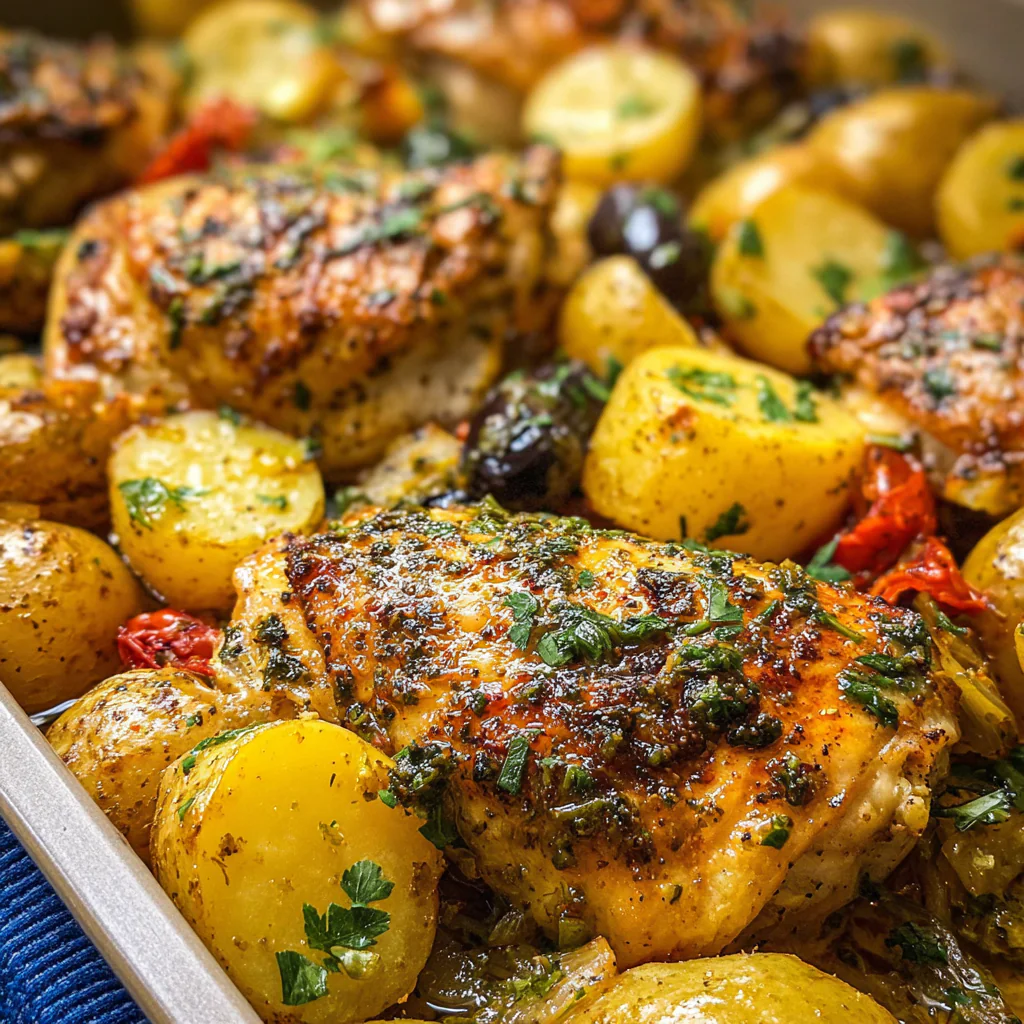
Roasted Chicken and Potatoes with Herbes de Provence and Olives
Ingredients
Method
- Make the Herbes de Provence marinade. Use a rasp-style zester or grater to finely zest both of the lemons and grate the garlic. Set aside one of the lemons for serving, and reserve the remaining lemon for another use. Place the lemon zest and garlic in a large bowl and mix with the Herbes de Provence, salt, a generous amount of freshly ground black pepper, and the olive oil. Stir with a fork to combine.
- Marinate the chicken and potatoes. Add chicken and potatoes to the bowl. Using a rubber spatula, toss the chicken and potatoes until they are fully coated with the seasoning mix. Let stand at room temperature for 30 minutes to marinate, or cover and refrigerate up to 8 hours.
- Get ready. Heat oven to 425°F with a rack in the top third of the oven. Arrange the chicken and potatoes on a large rimmed baking sheet in a single layer, and turn the potatoes cut-side down (this will help them brown).
- Roast chicken and potatoes. Place the sheet pan on the top rack of the oven and roast until chicken and potatoes are golden, about 20 minutes. Remove the pan from the oven.
- Add shallots and olives. Scatter the shallots and olives around the chicken. Return the pan to the oven and roast until the chicken is nicely browned, 20 to 30 minutes longer. This should be plenty of time for the chicken to cook through fully, but if you have any doubt, the internal temperature of the thighs and legs should register at 165°F on an instant-read thermometer.
- Finish and serve. Remove the pan from the oven and squeeze the juice from one lemon over the chicken and potatoes. Scatter with chopped parsley and tarragon. To serve, transfer the chicken and potatoes to a large family-style serving dish, or divide among dinner plates.
Nutrition
Notes
- Ensure the chicken reaches an internal temperature of 165°F for safe consumption; use an instant-read thermometer to check the thickest part of the thighs and legs.
- To prevent dryness, avoid overcooking the chicken; keep an eye on it as it roasts and remove it from the oven when it's golden brown and juices run clear.
- If you can't find Castelvetrano olives, any good-quality pitted green olive will work well; just adjust the salt in the recipe slightly to account for brinier olives.
- For a quicker flavor boost, marinate the chicken and potatoes for at least 30 minutes at room temperature, but if time allows, letting them sit for a few hours in the fridge will deepen the taste.
- Leftovers can be stored in the refrigerator for up to 3 days; reheat in a 350°F oven for about 15-20 minutes to keep the chicken skin crispy.