Introduction
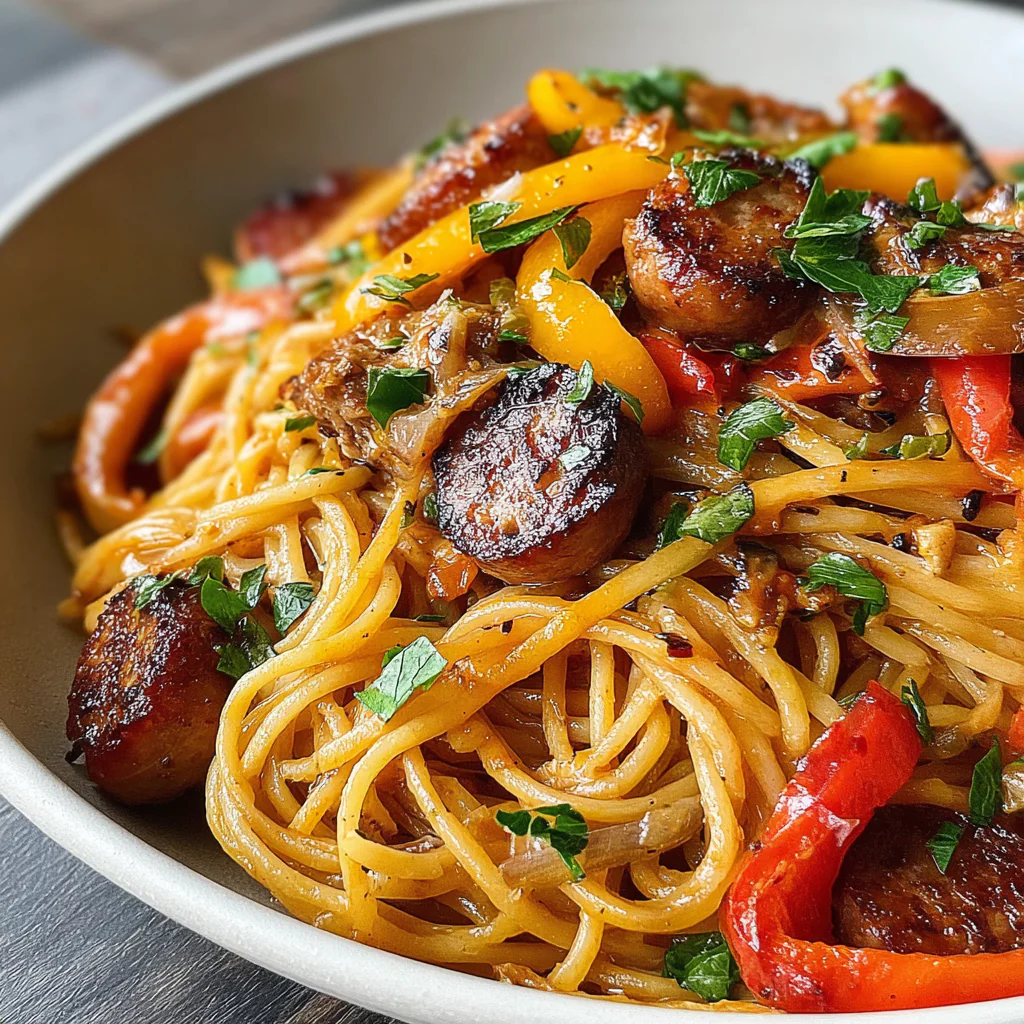
Spaghetti with Sausage and Peppers is a dish that encapsulates comfort food at its finest. The robust flavors of the sausage meld beautifully with vibrant, sautéed peppers, creating a harmonious blend that will excite your taste buds.
This recipe is perfect for a weeknight dinner or a weekend gathering, as it balances richness and freshness effortlessly. The ease of preparation makes it accessible for home cooks of all levels, ensuring everyone can elevate their dinner table with this hearty meal.
Ingredients
- 400g spaghetti
A classic Italian pasta that serves as the base of the dish. Its long, thin strands hold onto the sauce, creating a delightful combination of flavors with each bite. - 300g Italian sausage
Italian sausage provides a rich, meaty flavor that is seasoned with herbs and spices, elevating the dish. Using a mix of sweet and spicy sausage can add complexity to the overall taste. - 1 red bell pepper
This sweet pepper adds both color and a slight crunch to the dish. Its natural sweetness contrasts beautifully with the savory sausage, enhancing the overall flavor profile. - 1 green bell pepper
Similar to the red variety, green bell peppers provide a slightly more bitter flavor that balances the sweetness of the red pepper. Together, they offer a vibrant presentation. - 1 medium onion
The onion adds depth and richness to the sauce, serving as a flavor base. When sautéed, it becomes soft and sweet, complementing the other ingredients. - 3 cloves garlic, minced
Garlic infuses the dish with aromatic flavors that are foundational in many Mediterranean recipes. Freshly minced garlic brings a pungent punch that enhances the overall savoriness. - 400g can of diced tomatoes
Diced tomatoes are essential for creating a rich sauce that coats the pasta. They add acidity and sweetness, balancing the hearty sausage and sautéed vegetables. - 2 tablespoons olive oil
Olive oil is used for sautéing the vegetables and sausage, imparting a fruity flavor. It also helps in browning the ingredients, developing richer flavors. - 1 teaspoon dried oregano
Oregano is a staple herb in Italian cooking that adds an earthy, aromatic note. It's a perfect complement to the sausage and peppers. - Salt and pepper, to taste
Seasoning is vital in cooking to enhance the natural flavors of the ingredients. Adjust to your preference to ensure a balanced dish. - Fresh basil, for garnish (optional)
Basil adds freshness and a burst of flavor when sprinkled on top just before serving. It's a lovely herb that ties the dish together visually and taste-wise.
Directions & Preparation
Step 1: Cook the spaghetti according to package instructions until al dente.
Cooking the spaghetti al dente means it will have a firm texture that holds up well against the robust sauce. Reserve a cup of pasta water before draining; it can be useful for adjusting the sauce's consistency later.
Step 2: While the pasta cooks, heat olive oil in a large skillet over medium heat.
Heating the oil properly is crucial for sautéing. It should shimmer but not smoke. This ensures even cooking of the sausage and vegetables without burning.
Step 3: Add the sliced sausages to the skillet and cook until browned, about 5-7 minutes.
Browning the sausage develops a deep flavor through the Maillard reaction. Don't overcrowd the pan; cook in batches if necessary for even coloration and texture.
Step 4: Remove the sausage from the skillet and set aside, leaving the drippings.
Retaining the drippings is important as they contain flavor from the sautéed sausage. This fat will be used to cook the vegetables, adding depth to the overall dish.
Step 5: In the same skillet, add chopped onion, bell peppers, and garlic; sauté until softened, about 5-6 minutes.
Cooking the vegetables until softened releases their natural sugars, adding sweetness to the sauce. Stir frequently to avoid sticking or burning, ensuring even cooking.
Step 6: Return the cooked sausage to the skillet, then stir in the can of diced tomatoes and oregano.
Bringing the sausage back into the skillet allows it to mingle with the fresh flavors of the vegetables. The addition of diced tomatoes provides the necessary moisture for the sauce.
Step 7: Simmer the mixture for about 10 minutes, allowing the flavors to meld.
Simmering at this stage helps the sauce thicken and develop its flavors. The heat should be low enough to keep the sauce bubbling gently, which preserves freshness without reducing it too much.
Step 8: Add the cooked spaghetti to the skillet, tossing to combine. If the sauce is too thick, add reserved pasta water a tablespoon at a time until desired consistency is reached.
Tossing the spaghetti with the sauce ensures each strand is coated with the flavorful mixture. Adding pasta water can help create a silkier, more cohesive sauce that clings to each bite.
Step 9: Season the pasta with salt and pepper to taste, then serve hot, garnished with fresh basil if desired.
Final seasoning is essential for balancing the flavors. Serving hot ensures that the dish is at its most appetizing, and fresh basil adds an aromatic touch that highlights the dish's freshness.

The Perfect Sausage Selection
Choosing the right sausage is pivotal for achieving the richness of flavor you desire in this dish. While Italian sausage is traditional, consider using varieties like spicy or mild to cater to personal tastes. Additionally, a mix of pork and turkey sausage can lighten the dish while still offering a savory, hearty experience.
Balancing Flavors with Peppers
Peppers play a dual role in this recipe, not only adding color but also flavor complexity. Opt for a mix of red and green bell peppers to create a vibrant presentation and varied texture. If you’re feeling adventurous, try incorporating other pepper varieties like roasted red peppers or even jalapeños for a spicy kick.
Enhancing Your Sauce
To elevate your sauce even further, consider adding a pinch of red pepper flakes for heat or a splash of balsamic vinegar for tang. These small additions can transform the sauce into a more dynamic component of the dish, balancing the richness of the sausage with bright, contrasting flavors.
FAQs
What can I do if the sauce is too thick?
If your sauce is too thick, gradually add reserved pasta water, a tablespoon at a time, until you reach your desired consistency. This water, rich in starch, helps create a silkier sauce.
How can I make the dish less bland?
To enhance the flavor, ensure you season your dish properly with salt and pepper during cooking. Additionally, adding herbs like fresh basil or parsley before serving can brighten the flavors.
What if I want a meat-free version?
For a vegetarian twist, substitute the sausage with plant-based sausage or simply omit it, adding mushrooms for texture and flavor. You can also increase the quantity of bell peppers and add vegetables like zucchini.
Can I replace spaghetti with another type of pasta?
Absolutely! This dish pairs well with various pasta shapes—penne, rigatoni, or even gluten-free pasta if needed. Just adjust the cooking time according to the new pasta type.
What if my vegetables are overcooked?
If your vegetables turn mushy, consider adding a few fresh ones towards the end of cooking to provide a contrast in texture. You could also blend the sauce for a smooth consistency.
Can I add cheese to this dish?
Yes, adding grated cheese like Parmesan or Pecorino Romano on top before serving can lend a savory, salty flavor that complements the dish beautifully.
Conclusion
Spaghetti with Sausage and Peppers is not just a meal; it's a celebration of hearty flavors and vibrant colors. Whether you're serving it for a family dinner or entertaining friends, this dish is sure to impress and satisfy.
The beauty of this recipe lies in its adaptability, allowing you to mix and match ingredients based on what you have on hand. With each bite, you'll feel the love and dedication that went into crafting this comforting Italian classic.
Recipe Card
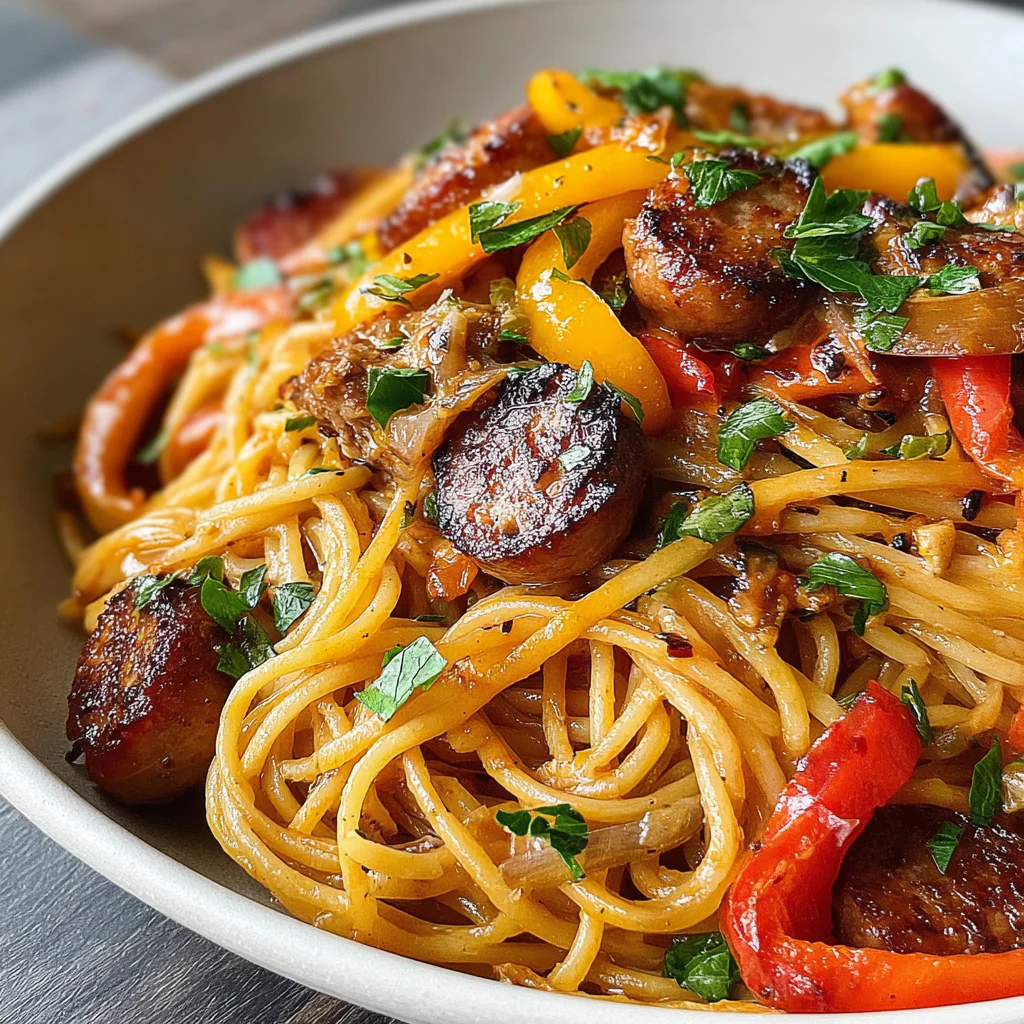
Savor the Flavor of Spaghetti with Sausage and Peppers
Ingredients
Method
- Cook the spaghetti according to package instructions until al dente.
- While the pasta cooks, heat olive oil in a large skillet over medium heat.
- Add the sliced sausages to the skillet and cook until browned, about 5-7 minutes.
- Remove the sausage from the skillet and set aside, leaving the drippings.
- In the same skillet, add chopped onion, bell peppers, and garlic; sauté until softened, about 5-6 minutes.
- Return the cooked sausage to the skillet, then stir in the can of diced tomatoes and oregano.
- Simmer the mixture for about 10 minutes, allowing the flavors to meld.
- Add the cooked spaghetti to the skillet, tossing to combine. If the sauce is too thick, add reserved pasta water a tablespoon at a time until desired consistency is reached.
- Season the pasta with salt and pepper to taste, then serve hot, garnished with fresh basil if desired.
Tried this recipe?
Let us know how it was!Notes
Additional serving suggestions: pair with a crisp salad, garlic bread, or roasted seasonal vegetables for balance.
For make-ahead, prep components separately and assemble just before heating to preserve texture.
Taste and adjust with acid (lemon/vinegar) and salt right at the end to wake up flavors.