Introduction
Kale has solidified its place as a staple in healthy cooking, especially within the Paleo community. Its robust flavor and nutrient density make it an excellent choice for those seeking to nourish their bodies with real food. When paired with caramelized onions, the naturally earthy taste of the kale is enhanced, creating a dish that's both satisfying and healthful.
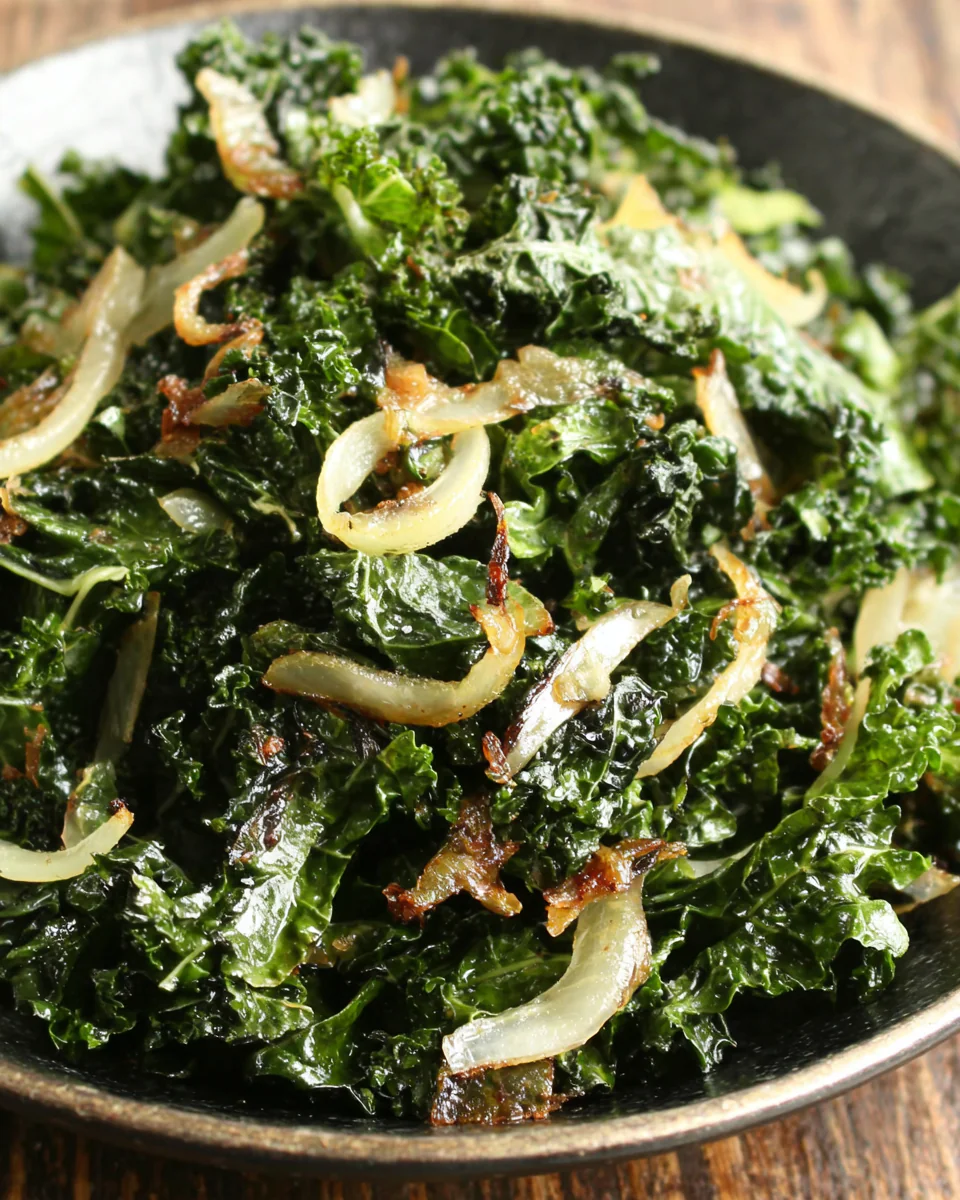
This simple yet elegant recipe for Paleo sautéed kale with caramelized onions transforms these ingredients into a flavorful side dish that complements various proteins. The sweetness of the onions provides a delightful contrast, while the sautéing technique helps retain the kale's vibrant color and nutritional benefits. It's a great way to elevate your meals with minimal effort.
Ingredients
- 1 bunch of kale
Kale is a leafy green known for its high nutrient content, including vitamins A, C, and K. It's rich in antioxidants and also provides fiber, making it an essential component in a clean, Paleo diet. - 2 large onions, thinly sliced
Onions add natural sweetness and depth to the dish when caramelized. They are packed with flavor and contain antioxidants that support overall health, adding a savory balance to the bitterness of the kale. - 3 tablespoons olive oil
Olive oil serves as the primary cooking fat in this recipe, helping to sauté the vegetables while imparting a rich flavor. It's also a healthy fat that supports heart health and provides essential fatty acids. - Salt, to taste
Salt enhances the natural flavors of the ingredients. Using it judiciously can help balance the dish, bringing out the sweetness of the caramelized onions and the earthiness of the kale. - Black pepper, to taste
Black pepper adds a subtle heat and complexity to the flavor profile. It also enhances the absorption of nutrients from the kale, making this dish not only tasty but also beneficial.
Directions & Preparation
Step 1: Prepare the kale
Start by washing the kale thoroughly under cold water to remove any dirt or grit. Remove the stems by holding the base of the stem and running your fingers along the leaf to separate it. Chop the kale into bite-sized pieces. This preparation ensures that the kale cooks evenly and is easy to eat, enhancing the overall enjoyment of the dish.
Step 2: Caramelize the onions
In a large skillet, heat the olive oil over medium heat, then add the sliced onions. Stir occasionally, cooking them slowly until they become golden brown and soft, which can take about 15-20 minutes. Caramelization develops the onions' natural sugars, creating a sweet flavor that beautifully complements the kale. This step is crucial as it builds the flavor foundation for the dish.
Step 3: Sauté the kale
Once the onions are caramelized, add the prepared kale to the skillet. Toss the kale with the onions and a splash of water to help it steam and wilt. Cook for about 5-7 minutes until the kale is tender but still vibrant green. This method helps retain the nutrients in the kale while infusing it with the sweet onion flavor, making the dish both nutritious and delicious.
Step 4: Season and serve
Once the kale is cooked, season with salt and black pepper to taste. Stir well to ensure even seasoning. Serve warm as a side dish or as a base for proteins like grilled chicken or fish. Proper seasoning is essential to enhance the flavors and provide a satisfying finish that brings out the best in this recipe.

The Nutritional Power of Kale
Kale is often touted as a superfood due to its incredible nutrient profile. Antioxidants such as quercetin and kaempferol are abundant in this leafy green, contributing to its anti-inflammatory properties. Additionally, kale is rich in vitamins and minerals like calcium, iron, and magnesium, making it an excellent choice for those following a Paleo lifestyle, enhancing both health and vitality.
Caramelization: Sweetness and Depth
The process of caramelizing onions might seem simple, but it requires patience and care to achieve the perfect balance of sweetness and flavor depth. As the onions cook slowly, their natural sugars break down, creating that rich, golden-brown hue. This layer of flavor not only enhances the kale but also adds complexity to dishes, allowing home cooks to create restaurant-quality meals from similar basic ingredients.
Versatility in Serving
Paleo sautéed kale with caramelized onions is remarkably versatile. While it makes a fantastic side dish on its own, it can also transform into a delightful main course when served alongside grilled meats, fish, or even crumbled bacon for added flavor. Consider using it as a filling for wraps or as a base for breakfast bowls topped with poached eggs or avocado, showcasing its adaptability to different meal patterns.
FAQs
What if my onions don't caramelize well?
If your onions are not caramelizing, make sure to cook them over medium heat and give them time. Stir occasionally to prevent burning. If necessary, lower the heat slightly to allow for even cooking.
Can I add other vegetables to the sauté?
Certainly! You can include other vegetables such as bell peppers or mushrooms for added texture and flavor. Just be sure to adjust the cooking time for denser vegetables that require longer cooking.
What if my sauté turns out too salty?
If the dish ends up too salty, you can balance it by adding a splash of water or additional kale to dilute the saltiness. Cooking longer can help absorb some of the salt, making it more palatable.
How can I scale this recipe for a larger crowd?
To scale the recipe, simply increase the quantities of kale and onions while maintaining the same ratios. Use a larger skillet to accommodate the increase in volume while ensuring the vegetables have enough space to sauté properly.
Can I use a different type of onion?
Absolutely, you can use different types of onions such as red or yellow onions. Each type brings its unique flavor; red onions provide a sharper taste, while yellow onions sweeten beautifully when caramelized.
How do I know when the kale is properly sautéed?
The kale is done when it’s vibrant green, tender, and slightly wilted. It should still maintain some texture and not turn mushy, ensuring it’s enjoyable to bite into and packed with nutrients.
Conclusion
Paleo sautéed kale with caramelized onions is more than just a simple side dish; it’s a celebration of flavors and nutrition. With minimal ingredients, it highlights the best of what these vegetables have to offer, making it easy to incorporate into any meal.
Whether you're enjoying it on its own or as a complement to your favorite protein, this recipe is sure to become a favorite in your kitchen. Embrace the earthy flavors and health benefits of kale while savoring the sweet touch of caramelized onions—your palate will thank you.
Recipe Card

Decadent High Protein Low Carb Chocolate Cake
Ingredients
Method
- Preheat the oven to 350°F (175°C), and line a cake pan with parchment paper.
- In a large mixing bowl, combine almond flour, cocoa powder, protein powder, erythritol, baking powder, and salt.
- In another bowl, whisk together the eggs, applesauce, and vanilla extract until well combined.
- Gradually add the wet ingredients to the dry ingredients, stirring until no dry spots remain.
- Pour the batter into the prepared cake pan, smoothing the top with a spatula.
- Bake for 25-30 minutes, or until a toothpick inserted into the center comes out clean.
- Allow the cake to cool in the pan for 10 minutes before transferring it to a wire rack to cool completely.
- Once cooled, you can frost or serve as desired, perhaps with a dollop of whipped cream or berries.
Tried this recipe?
Let us know how it was!Notes
Additional serving suggestions: pair with a crisp salad, garlic bread, or roasted seasonal vegetables for balance.
For make-ahead, prep components separately and assemble just before heating to preserve texture.
Taste and adjust with acid (lemon/vinegar) and salt right at the end to wake up flavors.