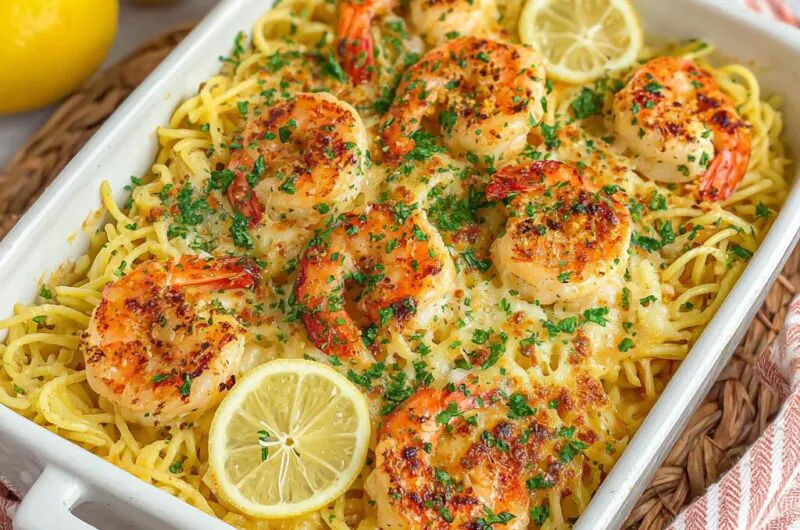
Golden, bubbling cheese meets tender shrimp in a garlic-butter bath—this is the comfort food you didn’t know you needed.
📋 In This Article
Introduction
Let’s be honest: traditional shrimp scampi is usually a stovetop affair. You toss the pasta in the pan, maybe splash some wine around, and serve it immediately before it cools down. But I’m here to argue that moving this classic into the oven changes the game entirely. This Shrimp Scampi Pasta Bake takes the bright, garlicky flavors you love and transforms them into a deeply savory, bubbling casserole that feeds a crowd without keeping you hostage at the stove.
The first time I tried baking scampi, I was skeptical. Wouldn’t the shrimp turn rubbery? Wouldn’t the sauce separate? It turns out, the high, dry heat of the oven actually concentrates the flavors in a way a skillet can’t. The butter and wine reduce into a glossy glaze that clings to the noodles, while the cheese on top creates a golden crust that adds a necessary textural contrast. It’s the kind of dish that feels fancy enough for a dinner party but easy enough for a chaotic Tuesday night. Delicious Easy Shrimp Scampi Pasta Bake Recipe.
Why This Baked Method Works
Moving from a skillet to a casserole dish isn’t just about convenience—it’s about flavor physics. On the stove, liquids evaporate quickly, often leaving you with a thin sauce. In the oven, the dry heat surrounds the dish, allowing the dry white wine and butter to mingle and reduce more gently.
This method also solves the biggest problem with pasta bakes: dryness. Because we are essentially poaching the shrimp in a bath of garlic butter and wine, the pasta reabsorbs those liquids as it bakes, plumping up with flavor rather than drying out. You get a rich flavor profile that is savory and satisfying, with a creamy sauce that forms naturally from the starch of the pasta mixing with the butter and cheese.
Ingredients
For the Scampi Sauce:
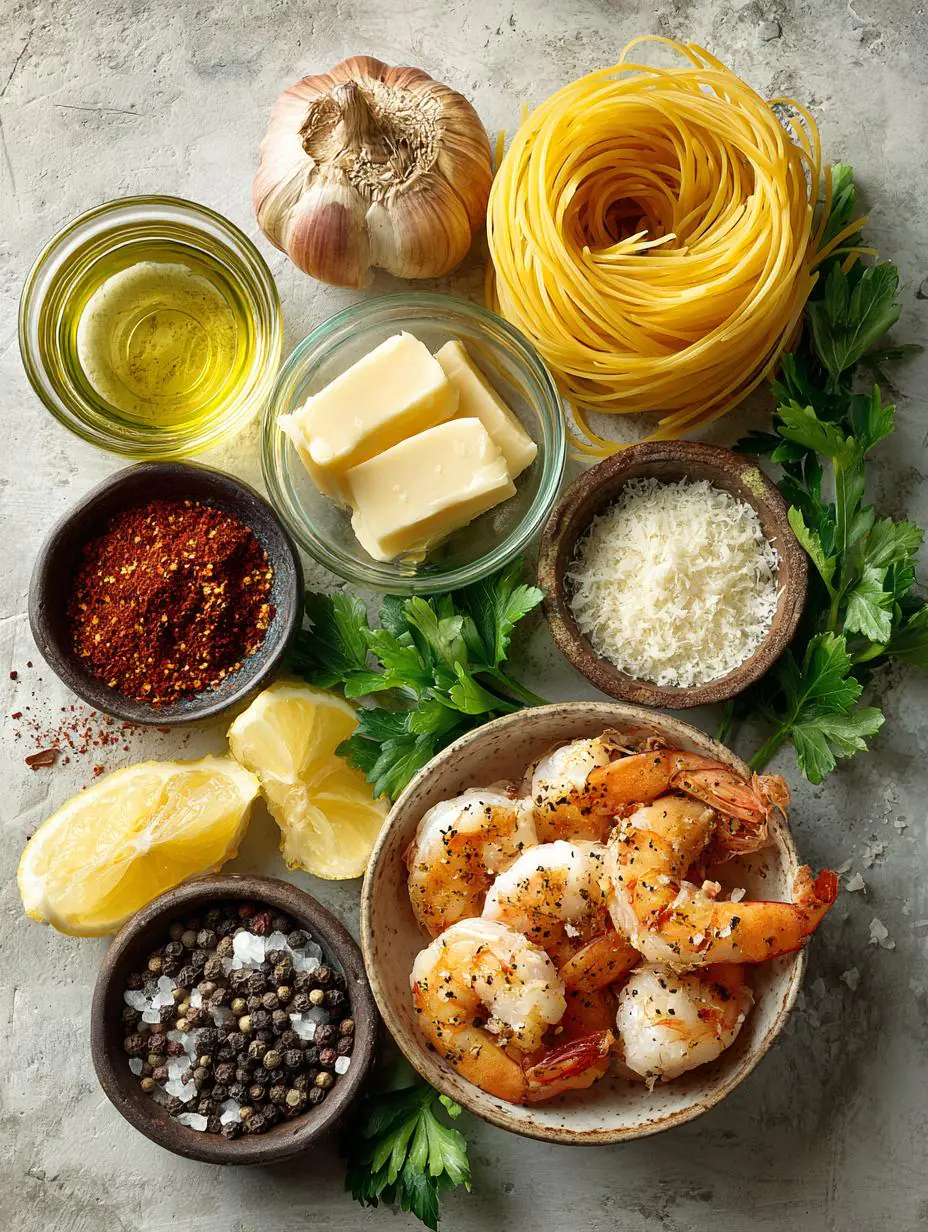
- 2 pounds medium raw shrimp (peeled and deveined; tails on or off, but I prefer off for easier eating)
- 1 cup unsalted butter (2 sticks; cut into cubes for even melting)
- 4 cloves garlic (minced; don’t be shy here, garlic is the backbone)
- 1 tablespoon Dijon mustard (the secret emulsifier that keeps the sauce stable)
- 1 tablespoon fresh lemon juice (acid is non-negotiable for cutting the fat)
- 1 cup dry white wine (Pinot Grigio or Sauvignon Blanc; something you’d actually drink)
- 1/2 teaspoon red pepper flakes (optional, but adds a nice warmth)
- Salt and black pepper (to taste)
- 1/4 cup fresh parsley (chopped, for a hit of freshness at the end)
For the Pasta Bake:
- 12 ounces pasta (spaghetti, linguine, or penne)
- 1 cup grated Parmesan cheese (plus more for serving)
Notes on Ingredients:
Choosing Shrimp: Look for medium shrimp (31-40 count). Thaw frozen shrimp completely and—this is critical—pat them dry with paper towels. Excess moisture creates steam, and steam prevents the sauce from coating the shrimp properly.
The Wine: Use a dry white wine with good acidity. Sweet wines will throw off the balance. If you absolutely cannot use wine, substitute with an equal amount of chicken broth, though you’ll lose some complexity.
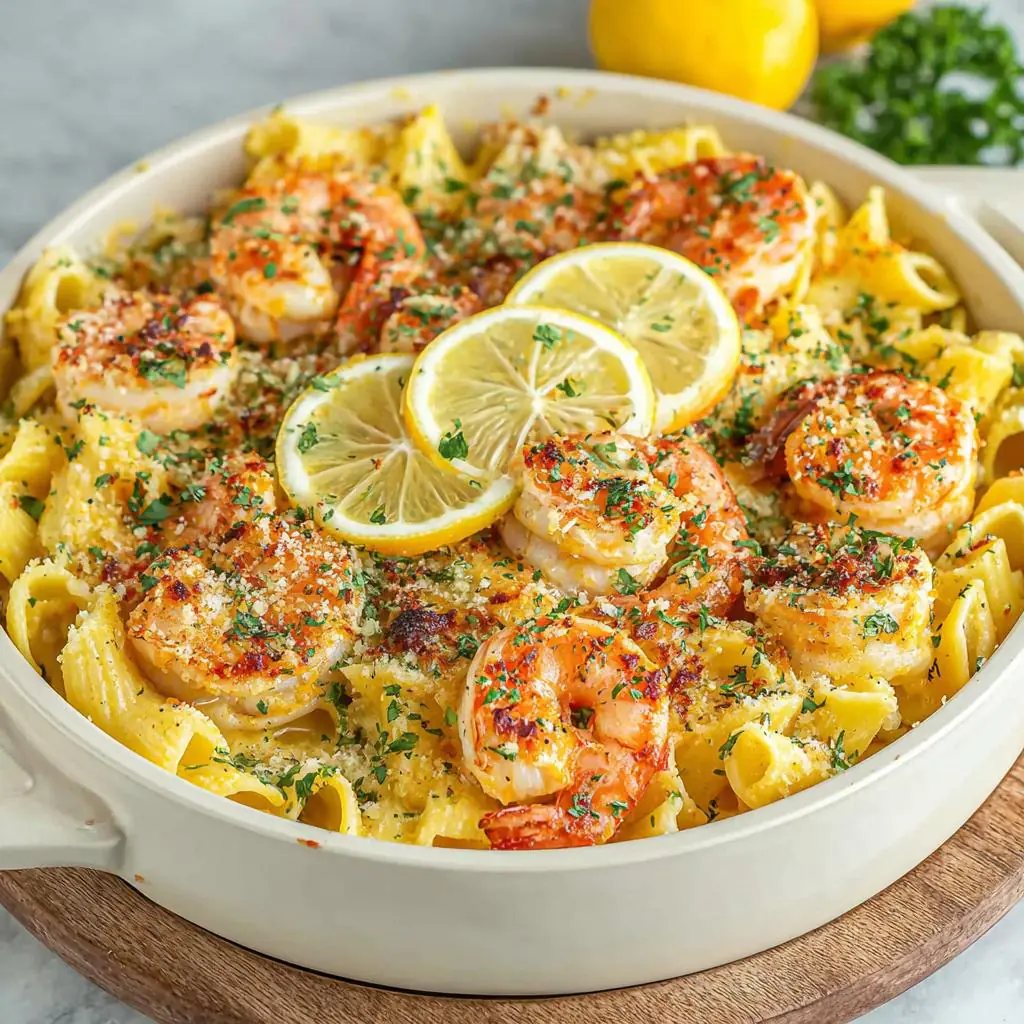
Pasta Selection: Long strands like spaghetti or linguine are traditional, but they can be tricky to serve in a casserole. Short shapes like penne or gemelli trap the sauce better and make serving easier. Whatever you choose, cook it just shy of al dente.
Instructions
- Preheat and Prep: Preheat your oven to 450°F (230°C). High heat is essential here; we want the sauce bubbling and the cheese browning rapidly so the shrimp don’t overcook. Gather your ingredients.
- Cook Pasta: Bring a large pot of salted water to a boil. Add the pasta and cook for 1 minute less than the package instructions for al dente. The pasta will continue to hydrate in the oven, so undercooking it now prevents mushy results later. Drain, reserving 1/2 cup of the pasta water.
- Make the Sauce Base: While the pasta cooks, melt the 1 cup butter in a saucepan over medium heat. Add the minced garlic and sauté just until fragrant, about 1 minute. We want the garlic aromatic, not browned or bitter. Pour in the 1 cup white wine, lemon juice, and Dijon mustard. Let it simmer for 3-4 minutes to reduce slightly.
- Combine: In a large mixing bowl (or directly in the baking dish if it’s large enough), toss the cooked pasta with the sauce. Add the raw shrimp, red pepper flakes, and half of the Parmesan cheese. Toss until everything is well coated. If it looks dry, add a splash of the reserved pasta water.
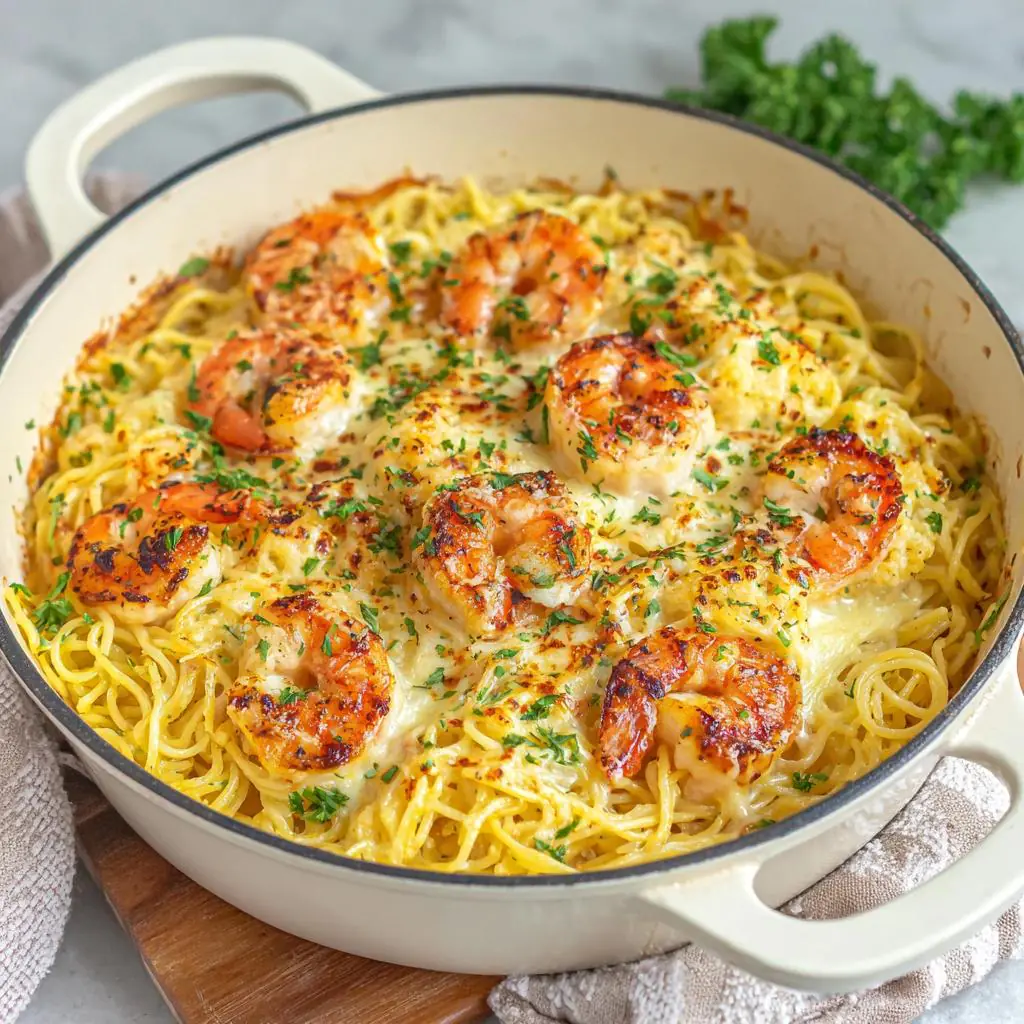
- Bake: Transfer the mixture to a 9×13 inch baking dish. Spread it into an even layer. Sprinkle the remaining Parmesan cheese over the top. Bake at 450°F for 12-15 minutes, or until the shrimp are pink and opaque and the sauce is bubbling.
- Finish: Remove from the oven. Sprinkle with fresh parsley and serve immediately.
💡 Pro Tips for the Best Results
Don’t Overcook the Shrimp: Shrimp are essentially pure protein bundles. When heated, their muscles contract tightly. If you leave them in too long, they squeeze out all their moisture, resulting in a rubbery texture. Because we are baking them at 450°F, they cook incredibly fast. Pull the dish the moment they turn opaque.
The Science of Al Dente: Pasta absorbs liquid as it cools. By pulling the pasta early, you create a moisture gradient. The starchy surface of the pasta will absorb the buttery wine sauce during the bake, effectively seasoning the noodle from the inside out. Shrimp Scampi Bake: A Garlic Butter Pasta Delight.
Emulsification Matters: The Dijon mustard in the sauce acts as an emulsifier. Butter and wine naturally want to separate, but the mustard helps bind them into a cohesive, velvety sauce that clings to the pasta rather than pooling at the bottom of the dish.
⚠️ Common Mistakes to Avoid
Using Cold Shrimp: If you toss ice-cold shrimp into the baking dish, they will lower the overall temperature, leading to uneven cooking. Let them sit on the counter for 15 minutes while you prep the other ingredients.
Skipping the Pasta Water: That starchy liquid is liquid gold. If your sauce looks a little tight after mixing, a quarter cup of pasta water loosens it up and adds body. The starch helps the sauce adhere to the noodles.
Burning the Garlic: Garlic burns faster than you think. When sautéing the garlic in butter, keep the heat at medium and watch it like a hawk. Burnt garlic turns acrid and bitter, ruining the sweet, savory profile of the scampi.
Serving Suggestions
This dish is rich, so it needs something bright and crisp on the side. A fresh green salad with a sharp vinaigrette cuts through the butter beautifully. If you want to lean into the comfort food vibe, serve it with crusty garlic bread to mop up every last drop of the sauce.
For wine pairings, stick to the crisp white wine you used in the recipe. A Sauvignon Blanc or Pinot Grigio mirrors the acidity in the dish without competing with the flavors.
How to Store Leftovers
Let the Shrimp Scampi Pasta Bake cool completely before covering it. Store it in the refrigerator for up to three days. Seafood degrades quickly, so don’t push it past that window.
To reheat, skip the microwave if possible. It tends to make shrimp rubbery. Instead, cover the dish with foil and warm it in a 350°F (175°C) oven for about 15-20 minutes. The foil traps moisture, gently reheating the pasta without drying out the shrimp. Greek Pasta Salad Recipe: Fresh, Flavorful & Foolproof.
Frequently Asked Questions (FAQ)
+Which pasta is best with shrimp scampi?
Long, thin pasta like linguine or angel hair is traditional because the strands get coated evenly in the sauce. However, for a baked casserole, short shapes like penne or orecchiette are often better. They hold their texture well during baking and are easier to serve.
+Can scampi be cooked in the oven?
Absolutely. Baking scampi is a hands-off method that allows the flavors to meld together. The dry heat concentrates the sauce and creates a delicious texture that you can’t achieve on the stovetop.
+Why is my shrimp scampi watery?
This usually happens if the shrimp weren’t dried properly or if the wine wasn’t reduced enough. Shrimp release water as they cook. Patting them dry before baking ensures the sauce stays velvety, not soupy.
+Can I use frozen shrimp?
Yes, but thaw them completely first. Place the frozen shrimp in a colander and run cold water over them for about 10 minutes. Then, pat them very dry with paper towels to remove excess moisture.
+Can I make this ahead of time?
You can assemble the dish a few hours ahead and keep it covered in the fridge. However, because shrimp cook so quickly, I recommend baking it right before serving to ensure they don’t turn rubbery during the reheating process.