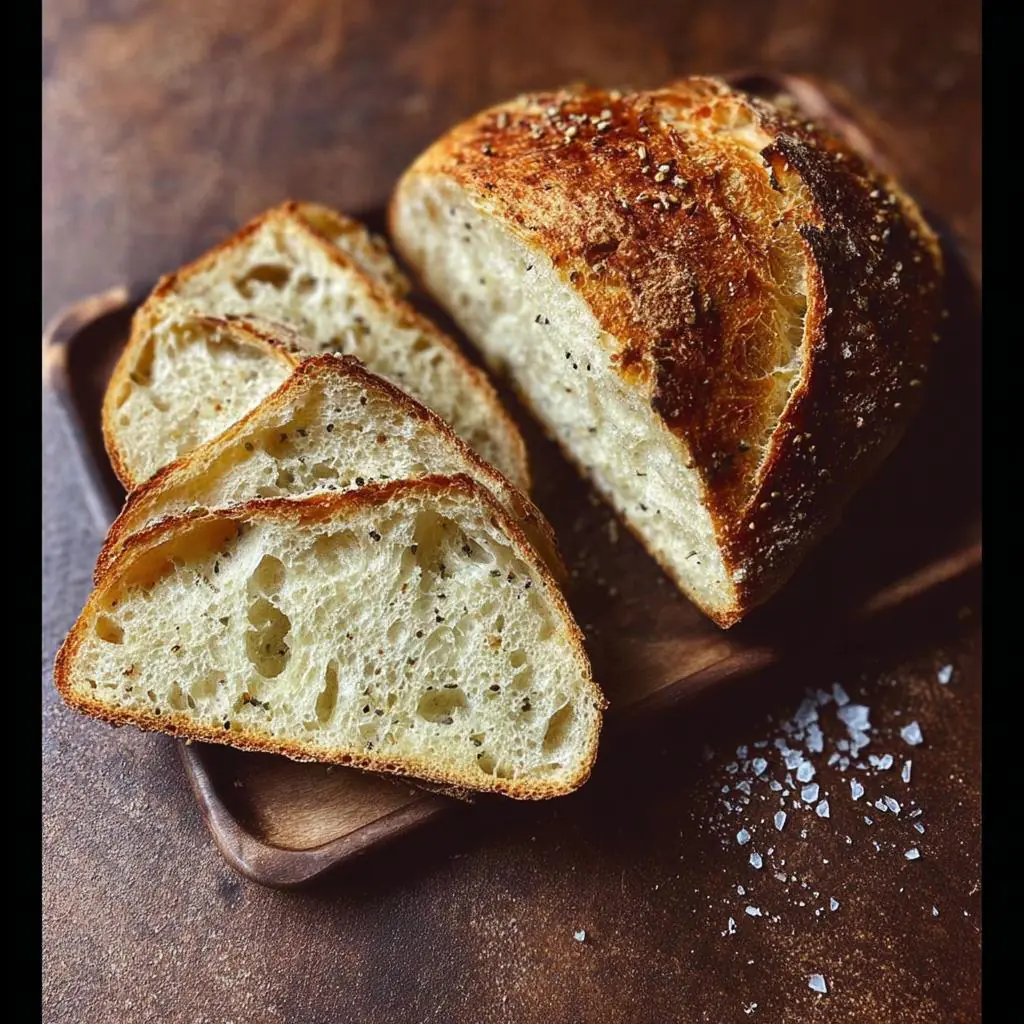
For the dukkah, place the almonds and rest of ingredients into a food processor. Pulse until coarsely chopped. You want the texture not too chunky, yet not too fine. Store in an air-tight container until ready to use.
To make the dough: in a large bowl, combine the starter, water and bread flour. Mix everything until the flour is absorbed. Cover with plastic wrap and let it rest for 30 minutes.
Add the salt. Lift and fold the dough over itself several times, and squish with your hands to incorporate. The dough will tear slightly as you fold, and the salt will not fully dissolve.
Stretch & fold: To strengthen your dough, do a series of stretch and folds every 30 minutes for 2 hours during bulk fermentation. Simply gather a portion of the dough, stretch it upwards and then fold it over itself. Rotate the bowl ¼ turn and repeat until you have come full circle. You will have completed 4 folds.
Then set aside for 5-6 hours at room temperature until the dough double in volume and feels soft.
Shaping the dough: When your dough has risen nicely shape the dough. Remove the dough from the bowl, and place onto the floured section so that it does not stick. You do not need to 'punch down' the dough; it will gently deflate as you fold and shape it. If you want single loaf set aside as such or cut it into two loaf.
Gather the dough, one side at a time, and fold it into the center. Flip the dough over and place it seam side down.
To coat the dough just sprinkle the dough with water and add all your dukkah to a large bowl. Roll the dough around in the seed mixture until well coated. If there is too much flour on the dough, the dukkah will not stick.
Second rise: Place your seeded dough into a banneton. Cover with plastic wrap and refrigerate overnight.
When you are ready to bake, remove the dough from the fridge and allow it to rest for about ½ hour (in the banneton). Preheat your oven to 450F with pizza stone. Carefully invert the dough into a parchment paper.
Slashing the dough: Right before your bread goes into the oven, make a shallow slash about 2 inches long in the center of the dough. Use a bread lame, sharp paring or serrated knife.
Baking the bread: Place your bread into the oven (lid on) and bake for 35minutes or until deep, golden brown. Check the bread doneness but registering internal temperature 205F
If you want crisp crust during the last 10 minutes of baking, crack open the oven door. This allows the moisture to escape, leaving your bread with crisp crust.
Cooling: Remove the bread from the oven, and cool on a wire rack for at least an hour before slicing. The longer you wait, the easier it will be to cut. Don't slice into it too soon or else the texture will be gummy.