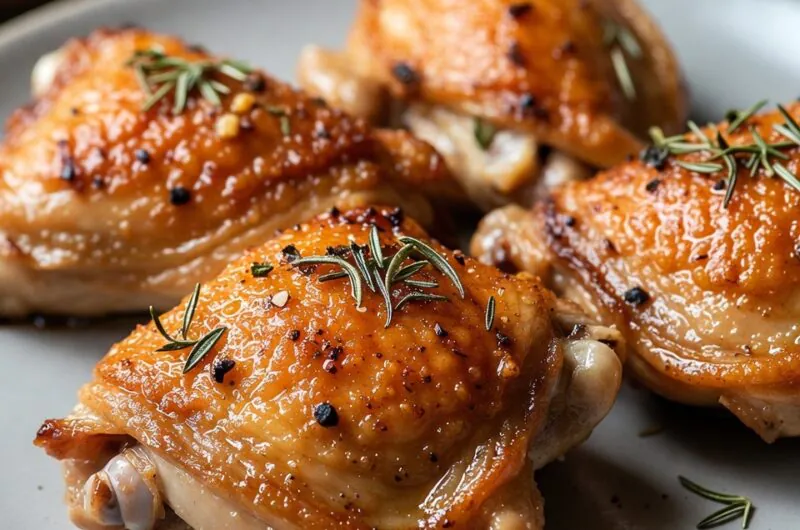
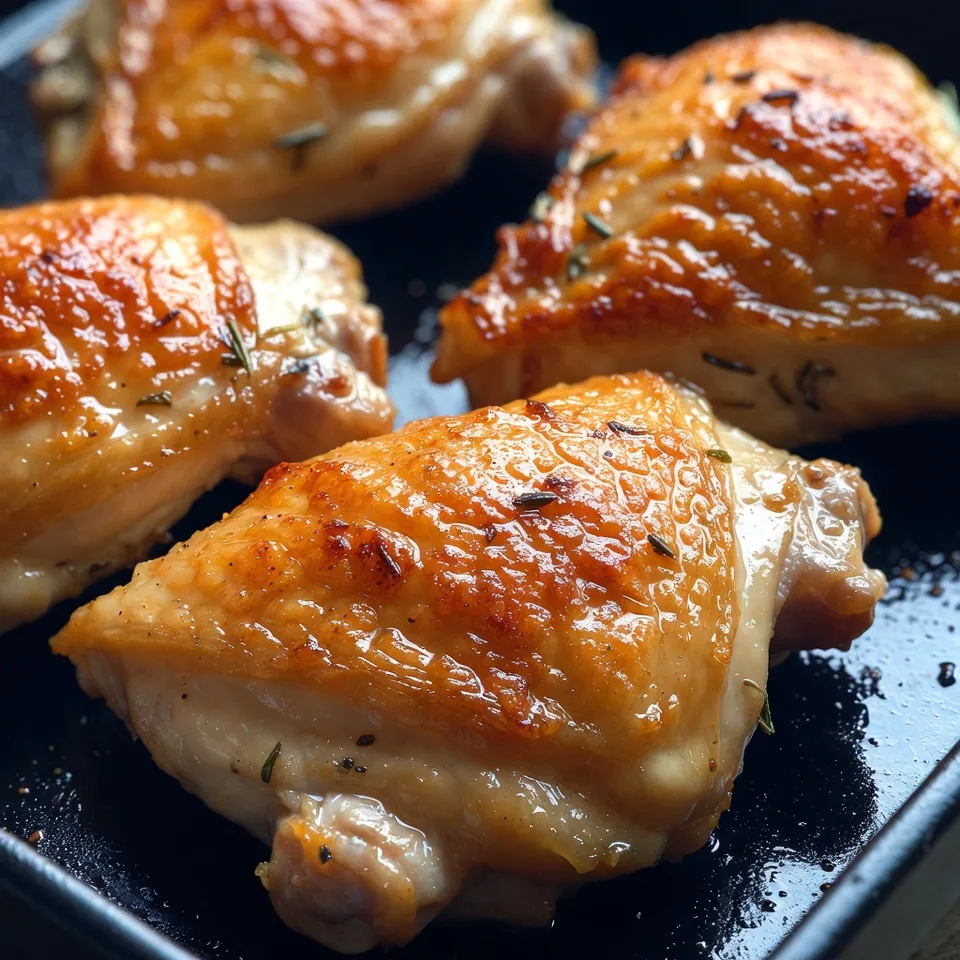
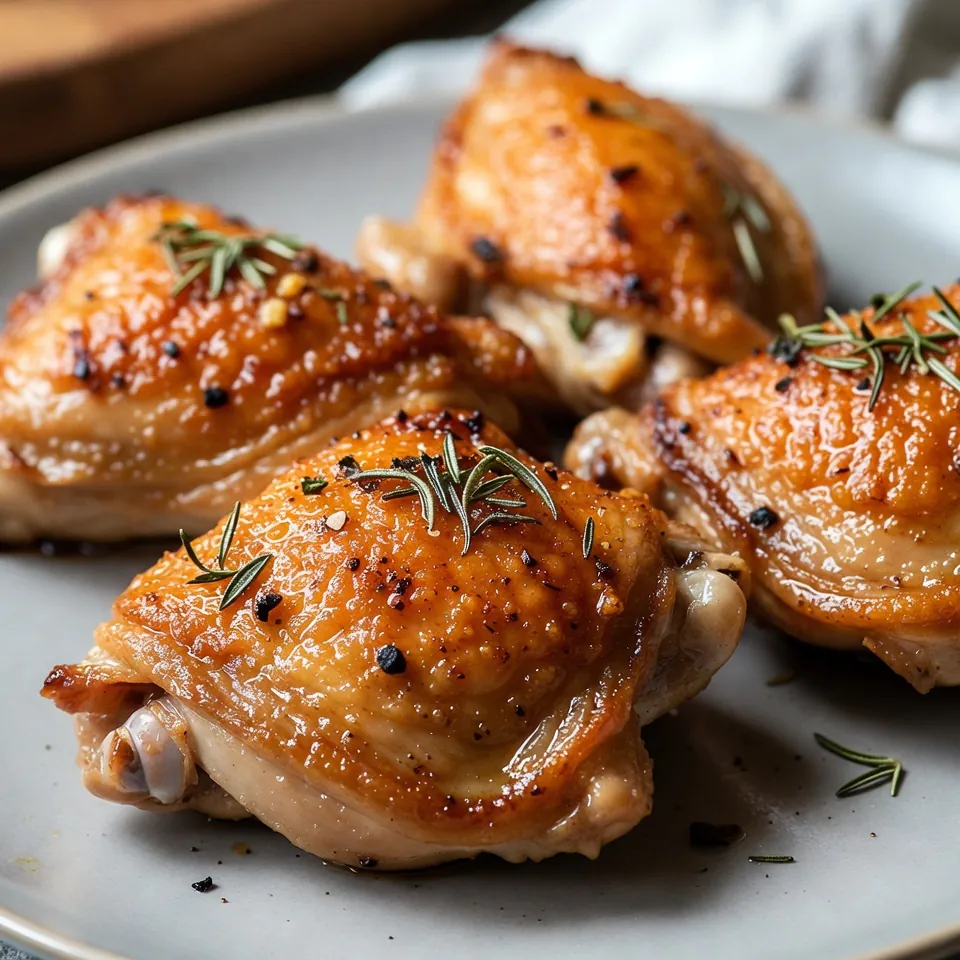
Golden, juicy chicken thighs with impossibly crispy skin — ready in 45 minutes with minimal prep.
📋 In This Article
Introduction
If you’ve ever pulled a tray of chicken out of the oven only to find the skin flabby and the meat dry, you aren’t alone. The internet is full of advice on how to achieve that deep-fried crunch using an oven, but much of it is contradictory. This baked chicken thighs crispy skin recipe cuts through the noise. We are focusing on bone-in, skin-on thighs because the bone acts as an insulator, slowing the cooking of the meat so it stays juicy while the skin has time to render its fat and crisp up. It is the best of both worlds: the ease of weeknight baking with the texture of a restaurant dish.
The Science of Crisp (Why This Recipe Works)
Crispy skin isn’t just about high heat; it’s about moisture management. Here is the deal: skin is mostly water and collagen. For skin to become crispy, that water has to evaporate, and the collagen has to break down and render out. Classic Chicken Parmesan Recipe: Crispy, Cheesy, Perfect.
Water boils at 212°F. The Maillard reaction—the chemical process that creates browning and that savory, roasted flavor—doesn’t really kick into high gear until temperatures exceed 300°F. If your chicken skin is wet when it hits the oven, the energy goes into evaporating water rather than browning the skin. This is why we pat the chicken dry. It removes the barrier to browning.
We bake at 400°F (200°C) because it is the sweet spot. It is hot enough to drive off moisture and trigger the Maillard reaction rapidly, but not so hot that the skin burns before the collagen renders. And yes, the baking powder matters. It’s not just a leavener; it raises the pH of the skin. This accelerates browning and creates tiny carbon dioxide bubbles on the surface, increasing surface area for extra crunch.
Ingredients You’ll Need
- 3 pounds bone-in, skin-on chicken thighs: Look for thighs that are roughly the same size so they cook evenly. Air-chilled birds often crisp up better than water-chilled ones.
- 2 tablespoons olive oil: You need fat to conduct heat to the skin.
- 2 teaspoons salt: Essential for flavor and drawing out residual moisture.
- 2 teaspoons garlic powder: Provides a savory base note.
- 2 teaspoons onion powder: Adds sweetness and depth.
- 2 teaspoons Italian seasoning: A dried herb blend that stands up to high heat.
- 1 teaspoon black pepper: Freshly ground is best.
- 1 teaspoon paprika: Smoked or sweet, for color and aroma.
- Optional: 1 teaspoon baking powder: The secret weapon for ultra-crispy skin.
Step-by-Step Instructions
Step 1: Preheat and Prep
Preheat your oven to 400°F (200°C). If you have a baking stone or steel, put it in the oven while it heats—it acts as a thermal battery to crisp the bottom of the chicken. Line a baking sheet with foil for easier cleanup.
Step 2: Dry the Skin
Remove the chicken from the packaging. Take paper towels and thoroughly pat the chicken dry. I mean really dry. Get into the nooks and crannies. Moisture is the enemy of crispiness here.
Step 3: Season and Coat
Place the thighs in a large bowl or directly on your prepared sheet. Drizzle with the olive oil, rubbing it all over the skin and underneath. In a small bowl, mix the salt, garlic powder, onion powder, Italian seasoning, black pepper, paprika, and baking powder (if using). Sprinkle the mixture evenly over the thighs, ensuring you get seasoning under the skin as well as on top.
Step 4: Arrange for Airflow
Arrange the thighs on the baking sheet, skin-side up. Make sure they are not touching. If the pieces are crowded, they will steam instead of roast. You want hot air to circulate around every piece.
Step 5: Bake to Perfection
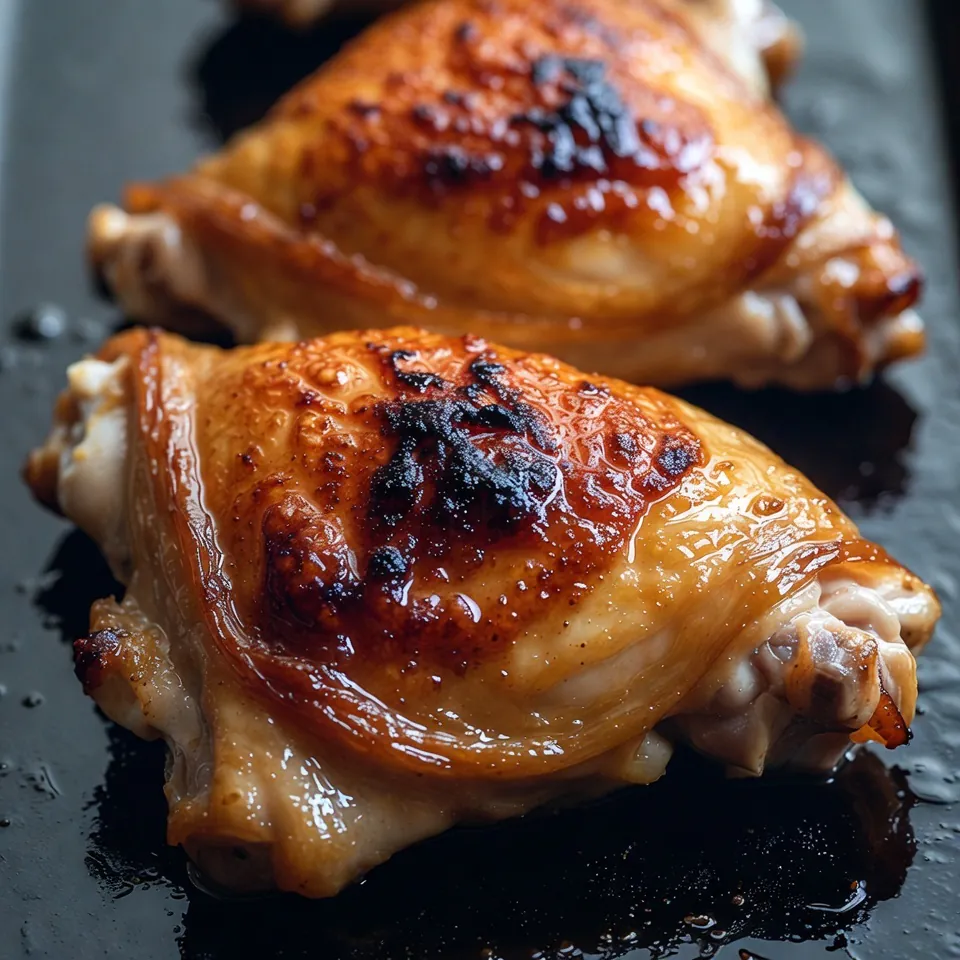
Bake for 35 to 45 minutes. You are looking for an internal temperature of 165°F (74°C) in the thickest part of the thigh, avoiding the bone. The skin should be a deep, golden brown. If you want an extra-charred finish, pop the tray under the broiler for the last 2 to 3 minutes, but watch it closely.
Step 6: Rest Before Serving
Remove the chicken from the oven. Let it rest on the baking sheet for 5 to 10 minutes. This step is non-negotiable. If you cut into it immediately, the juices will run right out onto the pan. Resting allows the proteins to relax and reabsorb that liquid, ensuring every bite is succulent.
💡 Pro Tips for Maximum Crispiness
- Use a Wire Rack: Elevating the chicken on a wire rack set inside the baking sheet allows hot air to circulate underneath, crisping the bottom skin as well as the top.
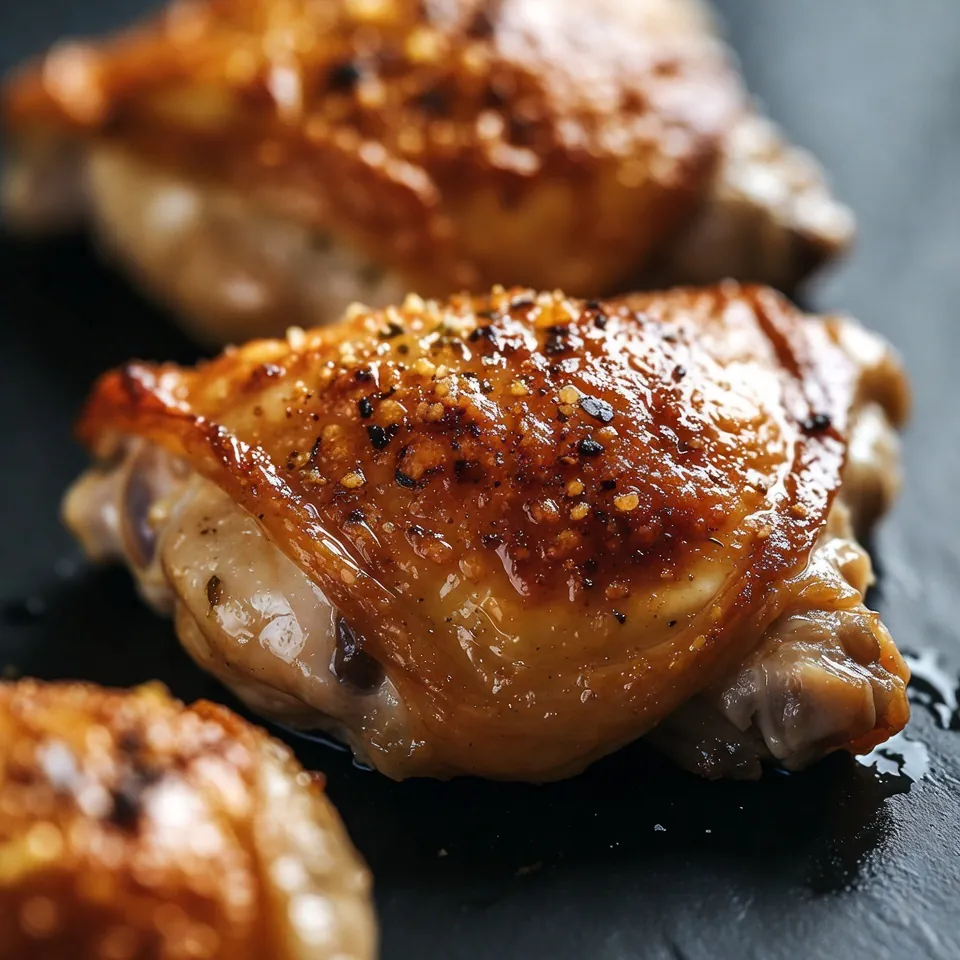
- Don’t Skip the Baking Powder: I used to skip this step thinking it was a gimmick. I was wrong. The difference in texture is noticeable, giving the skin a brittle, glass-like crunch.
- The Cold Pan Method: If you don’t have a rack, try placing the chicken in a cold cast-iron skillet and then putting it in the oven. The cold pan heats up slowly, allowing the fat to render out gradually before the skin starts to brown.
- Season Ahead: For the best flavor, salt your chicken and let it sit uncovered in the fridge for 4 hours or overnight. The salt penetrates deep into the meat, and the dry air of the fridge dehydrates the skin further—this is called dry brining.
- Broil with Caution: Broiling is a great finisher, but sugar burns fast. If your seasoning blend has sugar in it, keep the chicken a few inches from the broiler element.
⚠️ Common Mistakes to Avoid
Even with a simple recipe, things can go sideways. Avoid these pitfalls to ensure your baked chicken thighs crispy skin recipe turns out perfectly.
Not drying the chicken: This is the number one error. Wet skin creates steam. Steam creates soggy skin. Pat it dry until the paper towels come away clean.
Overcrowding the pan: It’s tempting to fit as many thighs as possible onto one sheet. Don’t do it. Overcrowding traps moisture released from the meat, turning your oven environment into a steam bath. Use two pans if necessary. Nashville Hot Chicken: A Southern Delight.
Cooking at low heat: Low and slow is great for brisket, but it spells disaster for crispy skin. Temperatures below 400°F often result in rubbery, pale skin that never quite crisps up.
Skipping the rest period: Cutting into the chicken immediately releases the juices that make the meat moist. Resting allows those juices to thicken and redistribute, keeping the meat tender.
Using boneless, skinless thighs: You cannot get crispy skin if there is no skin. Boneless thighs cook faster and often dry out before the exterior has a chance to develop a crust. Stick to bone-in, skin-on for this method.
Flavor Variations & Pairings
The base seasoning for this recipe is versatile, but you can easily pivot the flavor profile.
- Lemon Herb: Swap the Italian seasoning for fresh rosemary and thyme, and add lemon slices to the pan. The acid cuts through the rich fat.
- Honey Garlic: Brush a mixture of honey, soy sauce, and garlic onto the chicken during the last 5 minutes of baking. This creates a sticky, sweet glaze, though it softens the skin slightly.
- Smoky Paprika: Increase the paprika and add a pinch of cayenne for a smoky, spicy kick.
For sides, serve this chicken with roasted root vegetables, which can cook on a separate sheet pan at the same temperature. A crisp green salad with a vinaigrette provides a refreshing contrast to the rich, savory meat.
Storage & Reheating
Store leftover chicken in an airtight container in the refrigerator for up to 4 days. For freezing, wrap the thighs individually in plastic wrap and place them in a freezer bag for up to 3 months.
Reheating is where most people ruin good leftovers. Do not use the microwave. It turns crispy skin into a soggy mess within seconds. Instead, place the chicken in a preheated oven at 350°F (175°C) for 15 to 20 minutes, or until heated through. An air fryer set to 350°F (175°C) for 5 to 10 minutes works even better for restoring that just-baked crunch. Jalapeño Popper Stuffed Chicken: A Spicy Dinner Delight.
Frequently Asked Questions (FAQ)
+Why is my baked chicken skin not crispy?
The most common culprit is moisture. If the chicken wasn’t dried thoroughly before seasoning, or if the pan was overcrowded, the skin will steam rather than roast. Ensure the skin is bone-dry and the pieces have space between them.
+Should I bake chicken thighs at 350°F or 400°F?
For crispy skin, 400°F (200°C) is superior. At 350°F, the chicken cooks more slowly, often resulting in skin that is leathery or rubbery rather than crisp. The higher temperature facilitates better fat rendering and browning.
+Do I need to flip chicken thighs when baking?
No. Baking them skin-side up the entire time allows the skin to stay exposed to the hot oven air, ensuring it crisps evenly. Flipping them interrupts this process and can tear the skin.
+How do I know when chicken thighs are done?
Use an instant-read thermometer inserted into the thickest part of the thigh, avoiding the bone. You are looking for an internal temperature of 165°F (74°C). The juices should run clear when pierced with a knife.
+Can I use baking soda instead of baking powder?
Technically yes, but be careful. Baking soda is much stronger and has a higher pH. If you use too much, it can leave a metallic, soapy taste. Stick to baking powder for a safer, flavor-neutral crunch.
+Should I cover chicken thighs with foil while baking?
Do not cover them. Covering the pan traps steam, which prevents the skin from browning and crisping. You want dry heat to surround the chicken.
Crispy Baked Chicken Thighs
Ingredients
Method
- Preheat oven to 400 degrees. Line a large baking sheet with foil for easy cleanup and set aside.
- Remove the chicken thighs from their packaging and pat them dry with paper towels. Arrange the chicken thighs on prepared baking sheet and drizzle with the olive oil rubbing the oil into the chicken to coat.
- In a small bowl mix together the salt, pepper, garlic powder, onion powder, Italian seasoning, and paprika. Sprinkle the spices over the chicken evenly.
- Bake chicken in preheated oven for 35-45 minutes.*
Nutrition
Notes
- Always pat the chicken thighs dry with paper towels before seasoning; this helps achieve that coveted crispy skin by removing excess moisture.
- For perfectly cooked chicken, aim for an internal temperature of 165°F. Use a meat thermometer to check the thickest part of the thigh for accuracy.
- If you want extra crispy skin, consider broiling the chicken for the last 2-3 minutes of cooking, but keep a close eye to prevent burning.
- Feel free to swap out the Italian seasoning for your favorite herbs, like smoked paprika or a blend of fresh herbs, to customize the flavor profile.
- Leftover chicken thighs can be stored in an airtight container in the fridge for up to 4 days. When reheating, bake them at 350°F for about 15 minutes to restore the crispiness.