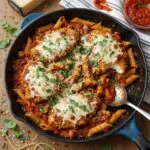
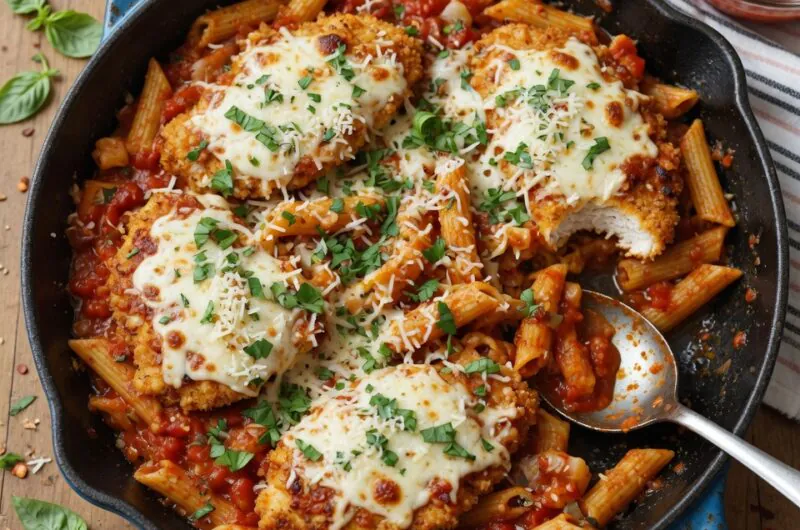
All the crispy, cheesy comfort of chicken parmesan—without the mess of breading. This one-pan wonder comes together in 30 minutes flat.
📋 In This Article
Introduction
Let’s be honest. Traditional chicken parmesan is a project. You pound the cutlets, set up the breading station, fry them in batches, and then you bake them. It’s delicious, but it’s a Sunday undertaking, not a Tuesday dinner.
That’s where this Chicken Parmesan Pasta Skillet comes in. It deconstructs the classic, keeping the golden, tender bites of chicken and that gooey, cheese-pull topping, but tossing the deep-frying mess. By using a single skillet, we leverage the fond—those sticky, caramelized bits left behind after searing—to build a sauce with depth that boiled-pasta versions simply can’t match. It’s weeknight cooking at its finest: smart, fast, and incredibly satisfying. Creamy Chicken Mushroom Fettuccine Bake: The Ultimate Comfort Food.
Why You’ll Love This Recipe
This isn’t just “quick and easy.” It’s a flavor bomb.
Texture and Taste: You get the savory crunch of seared chicken, the silkiness of marinara coated in starchy pasta water, and the stretch of melted mozzarella.
The Science of the Skillet: Cooking the pasta with the sauce allows the noodles to release their starch directly into the liquid. That starch acts as an emulsifier, binding the oil and tomato water into a thick, creamy sauce without needing heavy cream.
Convenience: One pan means minimal cleanup. It’s macro-balanced and family-friendly, but most importantly, it actually tastes like you spent an hour cooking.
Ingredients Overview
The Protein
- Chicken Breast: Use boneless, skinless breasts. Cut them into 1-inch pieces—small enough to cook quickly, large enough to stay juicy. Pro tip: Dry them well with paper towels before they hit the pan; moisture is the enemy of browning.
The Base
- Pasta: Short shapes with hollows and ridges work best. Rigatoni, penne, or fusilli trap the sauce in their nooks.
- Olive Oil: A good glug is necessary for sautéing and flavor.
- Garlic: Freshly minced. The pre-minced jarred stuff often lacks the pungent kick this dish needs.
- Italian Seasoning: A dried blend that provides that classic pizzeria aroma.
The Sauce & Finish
- Marinara Sauce: Use a high-quality jarred sauce (look for San Marzano tomatoes) or homemade.
- Parmesan Cheese: Grate it yourself. Pre-grated cheese contains anti-caking agents that prevent it from melting smoothly.
- Mozzarella Cheese: Low-moisture, part-skim shredded mozzarella melts perfectly without turning the dish into a grease slick.
- Pasta Water: This is the secret ingredient. That cloudy, starchy liquid is liquid gold for thickening sauces.
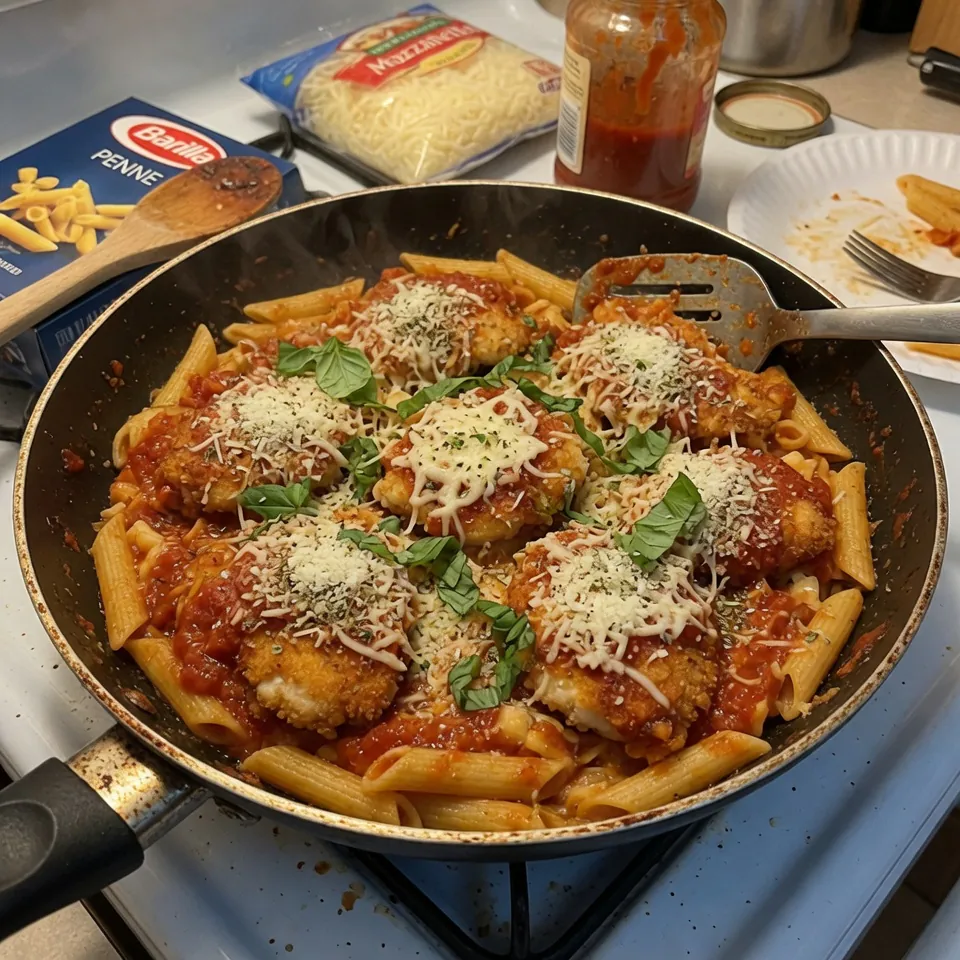
Step-by-Step Instructions
- Cook the Pasta: Bring a large pot of salted water to a boil. Add your pasta and cook until just shy of al dente (about 1-2 minutes less than package directions). Reserve 1 cup of pasta water, then drain. Why? The pasta will finish cooking in the sauce, absorbing flavor without turning to mush.
- Sauté the Chicken: While the water boils, heat 2 tablespoons of olive oil in a large, deep skillet or cast-iron pot over medium-high heat. Season the cubed chicken generously with salt and pepper. Add to the pan. Don’t crowd the pan—do it in batches if necessary. Sear until golden brown and cooked through, about 5-6 minutes. Science Note: That golden crust isn’t just color; it’s the Maillard reaction creating hundreds of complex flavor compounds.
- Build the Flavor: Reduce heat to medium. Add the minced garlic and Italian seasoning, stirring constantly for about 1 minute until fragrant. Be careful—garlic burns fast. Pour in the marinara sauce and 1/2 cup of the reserved pasta water, scraping up the fond from the bottom of the pan. That’s where the flavor lives.
- Combine: Toss the drained pasta into the skillet. Stir well to coat every piece. If the sauce looks too thick, add a splash more pasta water. Simmer for 2-3 minutes so the pasta can drink up the sauce.
- Melt the Cheese: Sprinkle the mozzarella and Parmesan evenly over the top. Cover the skillet with a lid and let it sit for 2-3 minutes to melt the cheese. For a bubbly, browned top, pop the skillet under the broiler for 1-2 minutes (keep an eye on it!).
- Serve: Garnish with fresh basil. Serve immediately.
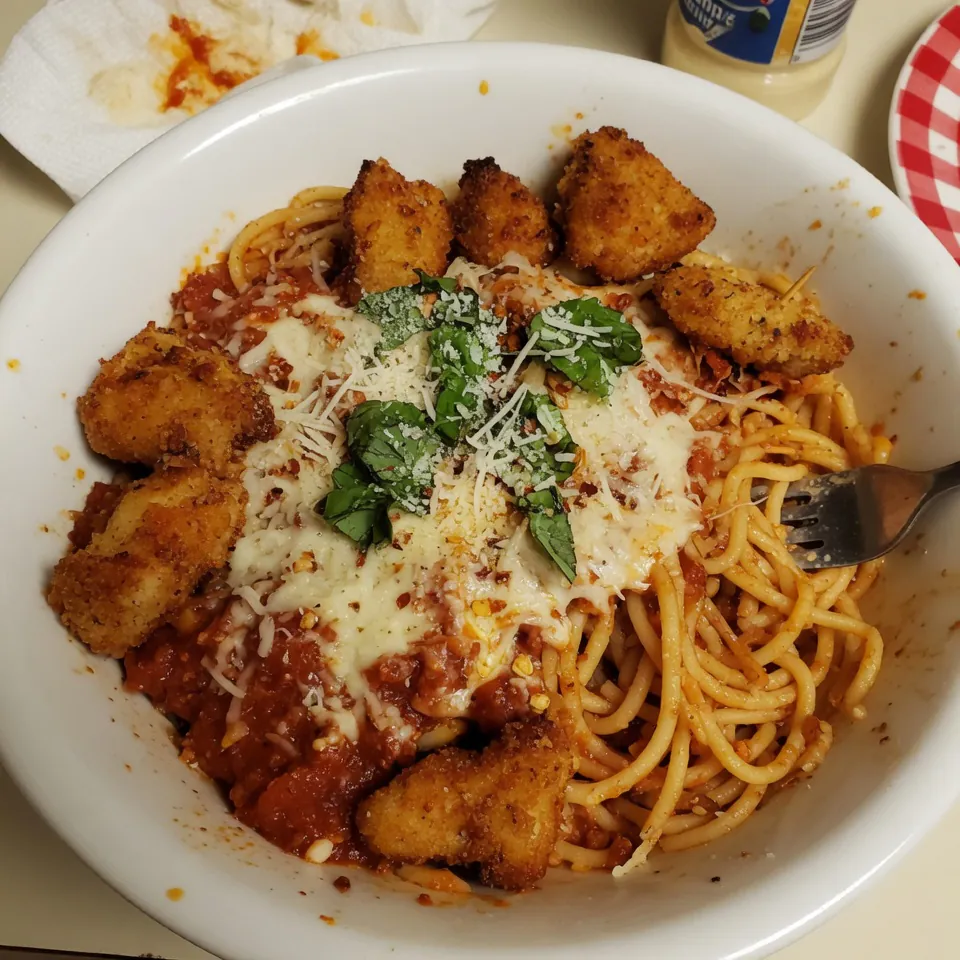
⚠️ Common Mistakes & How to Avoid Them
Common Mistakes & How to Avoid Them
Even simple dishes can go sideways. Here’s how to ensure success:
- Watery Sauce: This is the most common complaint. If you don’t reserve pasta water or use too much regular water, the sauce won’t emulsify. Fix it: Use the starchy pasta water to bind the sauce, and let the pasta simmer in the sauce for those final few minutes to thicken it up.
- Dry Chicken: Overcooking is the enemy. Because the chicken is cut small, it cooks fast. Use a meat thermometer to pull it at 165°F. Science Note: At 165°F, proteins have denatured enough to be safe, but haven’t squeezed out all their moisture yet.
- Mushy Pasta: If you boil the pasta to full doneness before adding it to the sauce, it will overcook. Pull it early. It finishes cooking in the sauce.
- Bland Flavor: If it tastes flat, it needs salt or acid. The pasta water should be salty “like the sea.” If the sauce is too acidic, a pinch of sugar or baking soda balances it.
Recipe Variations & Substitutions
Recipe Variations & Substitutions for Chicken Parmesan Pasta Skillet
Gluten-Free: Swap traditional pasta for a sturdy gluten-free variety like brown rice or chickpea pasta. Note that these tend to release less starch, so you may need less pasta water.
Lower Carb: Use zucchini noodles or spaghetti squash. Add these in the last 2 minutes of cooking just to warm through—no boiling required.
Spice It Up: Red pepper flakes are classic, but try adding diced jalapeños with the garlic for a different heat profile.
Creamy Twist: For a richer sauce, stir in 2 ounces of cream cheese or a splash of heavy cream right before adding the pasta. Cajun Chicken Penne with Cream Sauce: 30-Minute Recipe.
Cheese Swaps: Provolone adds a smoky sharpness, while Fontina offers a nutty, earthy vibe. Both melt beautifully.
Storage & Reheating Tips
To ensure your Chicken Parmesan Pasta Skillet remains fresh and flavorful, follow these essential storage and reheating tips.
Refrigerator: Store leftovers in an airtight container in the fridge for up to 4 days. The flavors often improve the next day as they meld.
Freezer: You can freeze this dish, but the texture of the pasta may soften upon thawing. Freeze without the cheese for best results, for up to 3 months.
Reheating: The microwave works, but can make the pasta rubbery. For best results, reheat in a skillet over medium-low heat. Add a splash of water or extra sauce and cover with a lid to steam the pasta back to life.
💡 Chef’s Tips for Success
Chef’s Tips for Success
The Pasta Water Trick: I used to skip this step—don’t. That starchy water is the difference between a sauce that clings to the pasta and one that slides off. It creates an emulsion that feels creamy without adding cream.
Don’t Walk Away: Garlic goes from fragrant to bitter in seconds. Stay by the pan during the aromatics stage.
Room Temperature Chicken: If you have time, let the chicken sit out for 15 minutes before cooking. Cold chicken hits the pan and drops the temperature, leading to uneven cooking.
Cast Iron is King: If you have a cast iron skillet, use it. It retains heat beautifully, ensuring the cheese melts evenly and the chicken sears rather than steams. How To Make Shredded Chicken: The Stovetop Method.
Frequently Asked Questions (FAQ)
+Frequently Asked Questions (FAQ)
+Why is my pasta skillet watery?
This usually happens if you skip the pasta water or don’t let the sauce reduce. The starch in the pasta water is crucial for thickening. Make sure to simmer the sauce with the pasta for a few minutes to let it thicken properly.
+Can I use pre-cooked or rotisserie chicken?
Yes. If using pre-cooked chicken, add it during the last few minutes of step 3 just to warm through. You won’t get the same depth of flavor from the fond since you aren’t searing raw meat, so consider adding a little extra seasoning.
+What pasta shape is best for this?
Short, tubular shapes like rigatoni, penne, or ziti are ideal. Their hollow centers trap the sauce, ensuring you get flavor in every bite. Long noodles like spaghetti are harder to toss and serve in a skillet.
+Can I make Chicken Parmesan Pasta Skillet ahead of time?
You can assemble it ahead, but the pasta will continue to absorb the sauce. If making ahead, cook the pasta slightly less and store the sauce and pasta separately if possible. Otherwise, expect a softer texture upon reheating.
+How do I know when the chicken is done?
The safest way is a meat thermometer; look for 165°F. Visually, the juices should run clear and the meat should be opaque throughout. Since the pieces are small, they cook quickly, so check early to avoid drying it out.
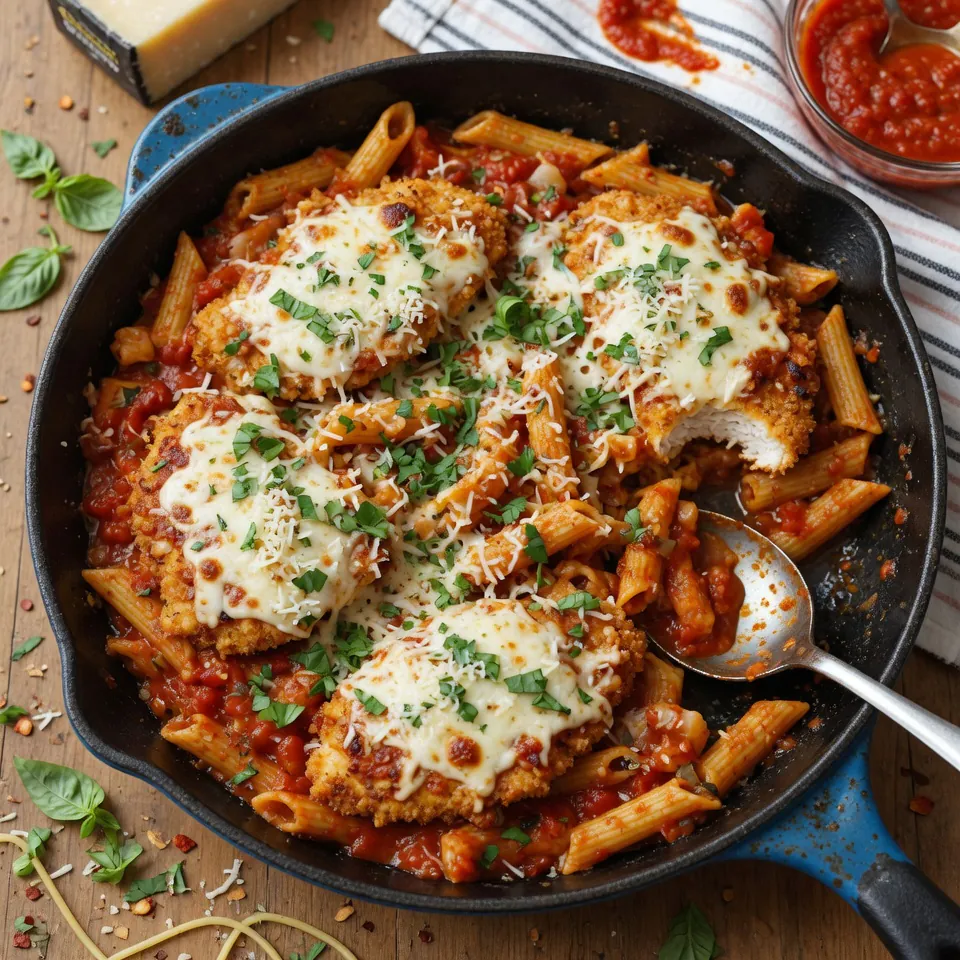
Chicken Parmesan Pasta
Ingredients
Method
- Make the pasta. Bring a large pot of water to a boil and cook pasta according to the directions on the package until al dente. When draining, reserve 2 tablespoons of pasta water.
- When the pasta has about 5 minutes left, start making the chicken. Heat a large skillet over medium heat. Add oil and let it get hot. Then add the chicken and garlic and cook for 5-6 minutes stirring occasionally, until browned on the outside (it will continue to cook as you go). Next, add Italian seasoning and salt and pepper and stir to coat. If there is a lot of liquid in the pan, remove some of it as it will water down the sauce.
- Add pasta sauce and parmesan cheese and mix to combine.
- Drain pasta, saving 2 tablespoons of the pasta water.
- Assemble. Add pasta and pasta water to the pan and mix well to combine. Finally, top with mozzarella cheese, cover with a lid, and let melt for about 1-2 minutes.
- Enjoy! Garnish with optional toppings and enjoy!
Nutrition
Notes
- To ensure perfectly cooked chicken, aim for an internal temperature of 165°F; the pieces should be golden brown on the outside and juicy inside.
- If your sauce seems too watery, let it simmer uncovered for a few minutes to thicken before adding the pasta, which will help prevent a soggy dish.
- Feel free to swap out fusilli for any pasta you have on hand, like penne or spaghetti; just adjust the cooking time according to package instructions.
- For easy reheating, warm leftovers gently on the stovetop over low heat, adding a splash of water or extra sauce to keep the pasta moist.
- Store leftovers in an airtight container in the fridge for up to 5 days; for longer storage, consider freezing portions for up to 3 months.