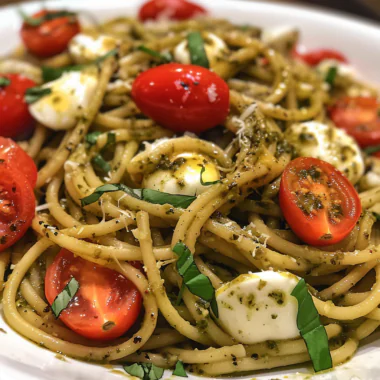
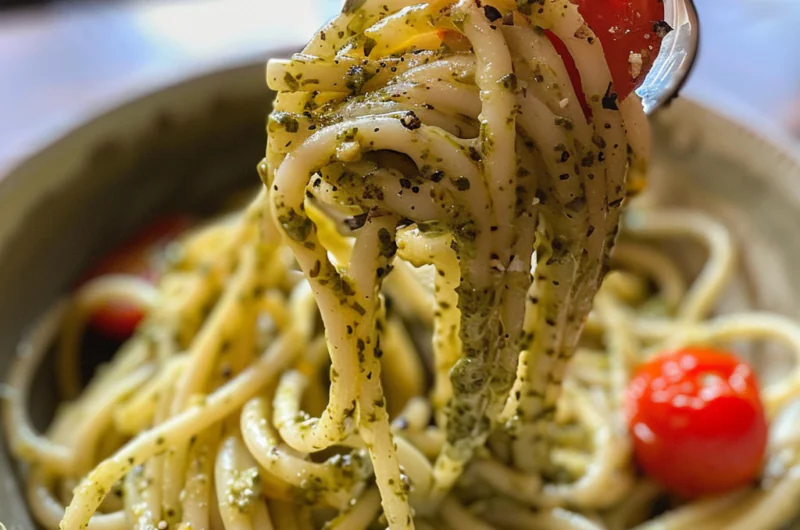
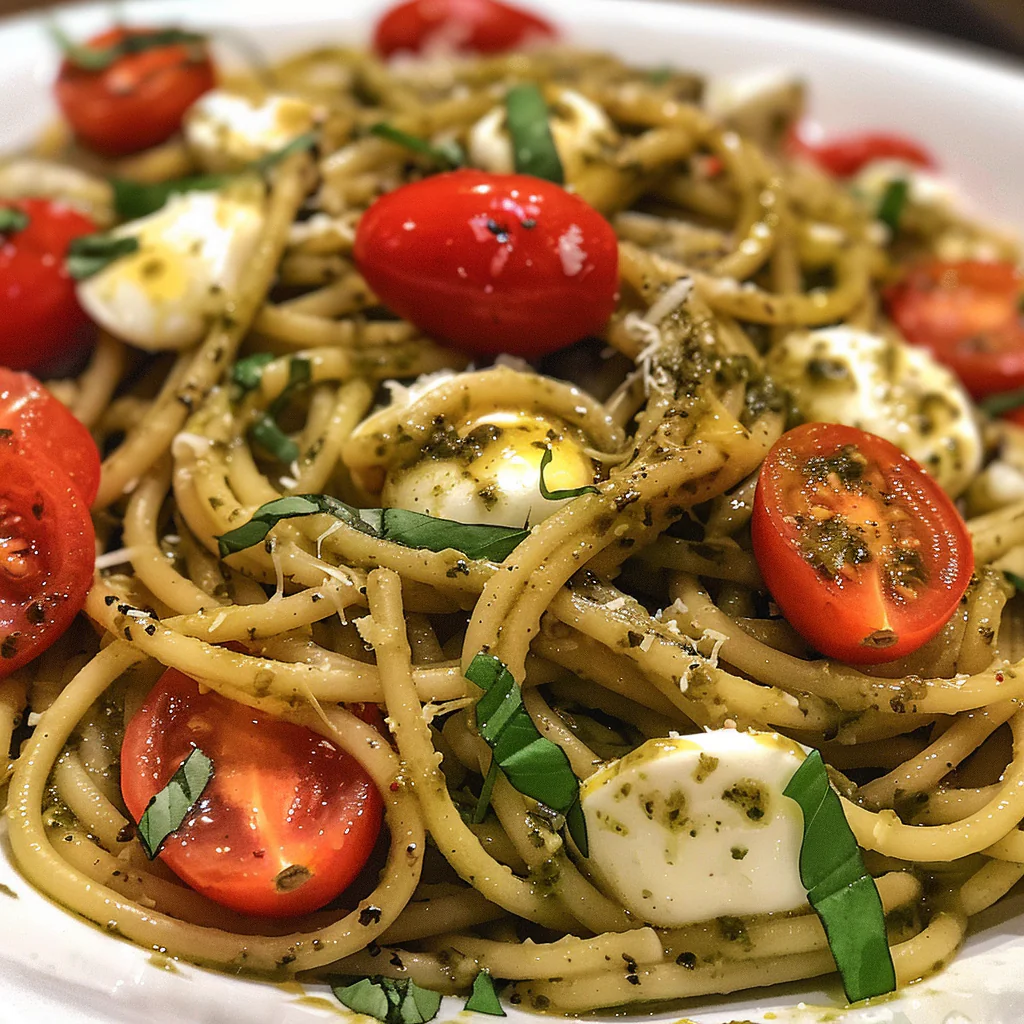
A weeknight hero: al dente pasta swimming in a velvety, emulsified sauce, studded with sweet, charred tomatoes and milky mozzarella.
📋 In This Article
Introduction
There is a specific kind of magic that happens when you cook pasta directly in its sauce rather than boiling it in a separate pot. The starch released from the noodles thickens the cooking liquid, transforming it into a glossy, clinging emulsion that no amount of olive oil or butter can replicate. This Creamy One-Pot Lemon Pesto Pasta with Blistered Cherry Tomatoes & Fresh Mozzarella leverages that exact science.
It’s the answer to the “what’s for dinner?” panic. Instead of juggling a pot of boiling water and a separate sauté pan, everything happens in one vessel. The tomatoes blister and burst, their natural sugars caramelizing into intense sweetness, while the pesto and cream melt into a sauce that coats every ridge of the pasta. It is fast, efficient, and deeply satisfying.
Why This Recipe Works
Most pasta recipes ask you to boil water in one pot and make sauce in another. This recipe rejects that. By toasting the pasta slightly in the rendered tomato juices and fond, you build a base layer of flavor that permeates the noodles themselves.
The heavy cream provides the fat necessary to carry the pesto’s aromatic compounds, while the starchy pasta water acts as the binder. This is emulsification in action—fat and water suspended together to create a texture that is undeniably creamy without being heavy. Plus, the acidity of the lemon juice cuts through the richness of the mozzarella and cream, balancing the dish so it never feels cloying.
Key Ingredients for Your Creamy Pesto Pasta
For the Blistered Tomatoes
- 2 cups cherry tomatoes: Look for firm, vibrant ones. They need to hold up to high heat.
- 2-3 tablespoons minced garlic: Fresh is non-negotiable here; the jarred stuff burns too fast.
- 2 tablespoons olive oil: A neutral oil won’t give you the same fruitiness.
- Flaky salt and black pepper: Essential for seasoning the tomatoes before they burst.
- 1/2 cup fresh basil: Added at the very end to keep it from wilting into oblivion.
For the Pasta Base
- 16 oz pasta: Short shapes like fusilli or gemelli trap the sauce best. Gluten-free varieties work, but they absorb liquid differently, so keep an eye on the pot.
- 1 cup basil pesto: High-quality store-bought is fine, but ensure it’s vibrant green, not brown.
- 1 cup heavy cream: This creates the luscious body. Half-and-half works but yields a thinner sauce.
- 4 cups vegetable broth: The cooking medium. Low sodium is best so you can control the salt level.
For Serving
- 1 cup fresh mozzarella pearls: The mini pearls are ideal; they melt just enough without losing their shape completely.
- Lemon zest and fresh lemon juice: The acid is the “salt” of this dish—it makes the flavors pop.
- Freshly grated parmesan cheese: For a savory, salty finish.
- Balsamic vinegar: An optional drizzle for depth.
Step-by-Step Instructions: One-Pot Perfection
- Blister the tomatoes: Heat the olive oil in a large, heavy-bottomed pot or Dutch oven over medium-high heat until shimmering. Add the cherry tomatoes and shake the pan to coat them in oil. Here is the hard part: don’t touch them. Let them sizzle undisturbed for 3-4 minutes. You want the skins to char and blister—this triggers the Maillard reaction, creating complex, savory notes you can’t get from steaming. Once blistered, season with salt and pepper, stir in the garlic, and cook for another 30 seconds until fragrant. Remove the tomatoes from the pot and set aside.
- Toast the pasta: Add the pasta and vegetable broth to the same pot (no need to wash it; that fond is flavor). Bring to a boil. The liquid should reduce slightly as the pasta cooks.
- Create the sauce: Once the pasta is al dente (usually 2 minutes less than the package instructions), it should have absorbed most of the broth, leaving behind a starchy, silky liquid. Reduce heat to low. Stir in the heavy cream and basil pesto.
- Emulsify: Here is the trick. Toss the pasta vigorously. The starch molecules released from the pasta are swelling and trapping water, creating a thickened sauce without a roux. If it looks too tight, add a splash of the reserved pasta water.
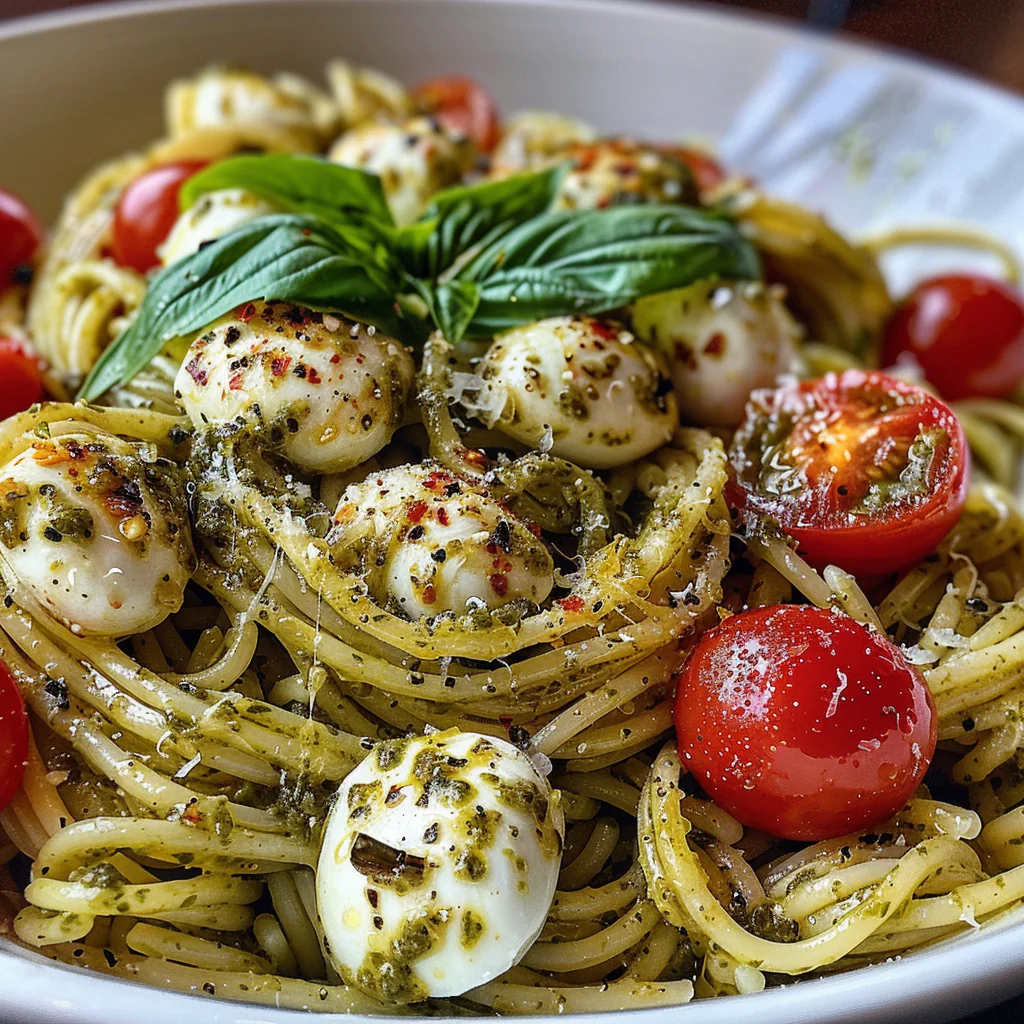
- Finish and serve: Remove the pot from the heat entirely. Heat kills the fresh basil in pesto, turning it brown and flat. Off the heat, fold in the fresh mozzarella pearls, the reserved blistered tomatoes, lemon juice, and lemon zest. The residual heat will gently melt the cheese without making it rubbery. Top with parmesan and fresh basil.
⚠️ Common Mistakes to Avoid
Even simple recipes have pitfalls. Here is how to dodge them.
Over-stirring the tomatoes: When blistering, the instinct is to stir. Don’t. Stirring cools the pan down and steams the tomatoes instead of searing them. You want dry, high heat to concentrate the sugars.
Adding pesto too early: Pesto is delicate. If you boil it with the broth, the basil oxidizes and the oils separate. Always stir pesto in at the very end, off the heat, to preserve its bright, fresh flavor.
Ignoring the pasta water: That cloudy liquid at the bottom of the pot is liquid gold. It is filled with starch extracted from the pasta. If your sauce looks too thick or oily, a splash of this water re-emulsifies the fats and creates a velvety texture.
Using cold mozzarella: Cold cheese seizes when it hits hot pasta. Let your mozzarella pearls sit on the counter while the pasta cooks. Room temperature cheese melts evenly and stretches beautifully.
Delicious Variations & Dietary Adaptations
Gluten-Free Adaptation
Swap the standard pasta for a chickpea or brown rice pasta. Note that gluten-free pasta releases less starch, so the sauce won’t thicken as naturally. You may need to simmer the liquid a few minutes longer before adding the cream to concentrate it.
Vegan Option
Dairy-free cream sauces often break, so stability is key. Use full-fat coconut cream instead of heavy cream—it has a higher fat content that emulsifies well. Replace the mozzarella with a tofu-based feta or skip the cheese and add cannellini beans for creaminess and protein.
Protein Boost
This dish is vegetarian, but it loves meat. Grilled chicken thighs or shrimp can be cooked in the pan before the tomatoes. For a plant-based protein, white beans or chickpeas can be added right along with the broth to warm through.
Vegetable Additions
Fresh spinach wilts perfectly in the residual heat. Toss in a few handfuls right before the cheese. For a crunchier texture, add zucchini ribbons or asparagus to the pot during the last 4 minutes of the pasta boiling time.
Storage & Reheating Tips
Refrigeration: Store the pasta in an airtight container for up to 3 days. The sauce will thicken considerably as it cools because the starch retrogrades—essentially crystallizing.
Reheating: The microwave is the enemy of creamy pasta. It creates hot spots that cause the sauce to separate. Instead, reheat in a skillet over low heat. Add a splash of water or broth (about a tablespoon per cup of pasta) and stir constantly. The moisture and agitation will reconstitute the emulsion, bringing the sauce back to its original creamy state.
Freezing: Not recommended. Cream sauces and cooked pasta tend to become grainy and watery upon thawing due to the breakdown of the dairy emulsion.
💡 Pro Tips for Next-Level Flavor
Toast the pine nuts: If you are making your own pesto, toast the pine nuts in a dry pan until golden brown. This deepens the nutty profile, adding a savory backbone that contrasts the sweet tomatoes.
Use a heavy pot: Thin pots have hot spots. A heavy-bottomed Dutch oven distributes heat evenly, preventing the milk solids in the cream from scorching on the bottom.
Save the cheese rind: If you have a leftover parmesan rind, toss it into the pot while the pasta boils. It infuses the broth with a profound umami depth. Remove it before serving.
The lemon trick: Add the lemon zest after the pasta is plated. The volatile oils in the zest are incredibly aromatic but fade quickly when heated. Fresh zest on top provides a fragrant “pop” with every bite.
Frequently Asked Questions (FAQ)
+Why did my pesto turn brown?
Pesto oxidizes when exposed to air and heat. To keep it vibrant green, stir it in at the very end of cooking, off the heat. You can also press a piece of plastic wrap directly onto the surface of leftover pesto before storing it to minimize air contact.
+Can I use milk instead of heavy cream?
You can, but the sauce will be much thinner. Heavy cream contains at least 36% fat, which is crucial for a stable emulsion. If using milk, simmer the sauce longer to reduce it, or add a slurry of cornstarch and water to thicken it.
+How do I know when the pasta is done?
Taste it. The pasta should be tender but still have a slight bite (al dente). Remember, it will continue to cook slightly in the residual heat of the sauce, so pulling it a minute early is safer than overcooking it.
+Can I make this ahead of time?
You can prep the components (blister the tomatoes, measure the liquids) a day in advance, but the dish is best eaten immediately after cooking. Cooked pasta absorbs sauce as it sits, becoming dense and mushy.
+What sides go with this pasta?
A simple arugula salad with a lemon vinaigrette cuts through the richness. Or, serve it with crusty garlic bread to soak up any extra sauce.