
Introduction
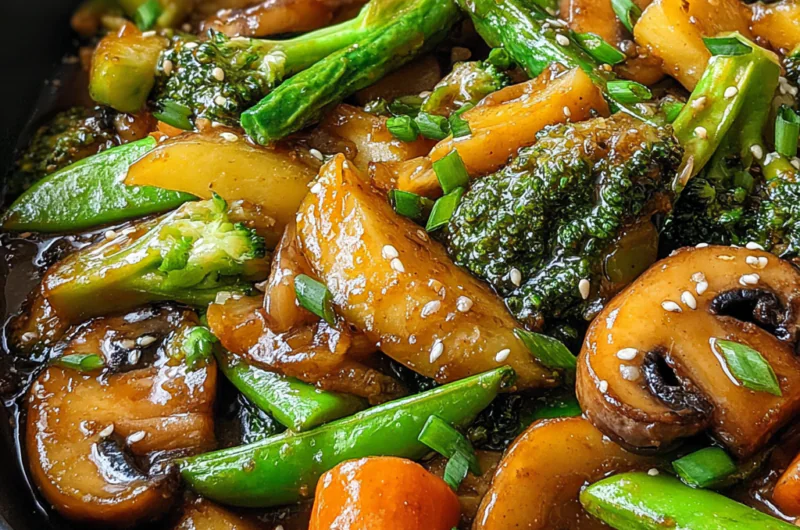
Vegetarian stir-fry is a delightful way to bring the vibrant colors and flavors of vegetables to your dinner table. The beauty of this dish lies not only in its simplicity but also in its versatility, allowing you to adapt it to your taste preferences and what's in season.
At its core, a stir-fry is a quick-cooking method that preserves the freshness and texture of vegetables while infusing them with savory flavors. This article will help you create a dish that dazzles in flavor and nutrition, showing that vegetarian meals can be both satisfying and indulgent.
Ingredients
- 2 cups broccoli florets
Broccoli adds a pleasing crunch and is packed with nutrients, including vitamins C and K. Its robust flavor holds up well against stir-fry sauces. - 1 bell pepper, sliced
Bell peppers bring a sweet, slightly tangy flavor and a burst of color to the dish. They are an excellent source of antioxidants and enhance the overall visual appeal. - 1 cup snap peas
Snap peas are crisp and sweet, offering a delightful pop in texture. They also cook quickly, making them ideal for stir-fry. - 2 carrots, julienned
Carrots provide a natural sweetness and a bright orange hue, contributing to the dish's nutrition with beta carotene and fiber. - 1 cup mushrooms, sliced
Mushrooms add an earthy depth and umami flavor that enriches the overall taste. They also absorb and enhance the stir-fry sauce. - 3 cloves garlic, minced
Garlic is a flavor powerhouse that infuses the stir-fry with aroma and warmth, complementing the other ingredients beautifully. - 1 inch ginger, grated
Fresh ginger adds a zesty kick and warmth, balancing the sweetness from the vegetables with its spicy undertones. - 3 tablespoons soy sauce
Soy sauce brings depth and a savory umami flavor, tying together the different ingredients while providing a salty contrast. - 1 tablespoon sesame oil
Sesame oil introduces a nutty aroma and flavor; it is often drizzled at the end for a fragrant finish and healthier fat profile. - 2 tablespoons vegetable oil
Vegetable oil is used for frying and helps achieve that coveted stir-fry sizzle while keeping the dish light. - Cooked rice or noodles, for serving
Rice or noodles serve as a filling base, soaking up the flavors from the stir-fry and creating a satisfying meal.
Directions & Preparation
Step 1: Prepare all your vegetables by washing and chopping them.
Preparation is key in stir-frying. Having all your vegetables prepped and ready to go ensures the cooking process is smooth and efficient. This also prevents the risk of overcooking any ingredient, as stir-frying occurs quickly.
Step 2: Heat the vegetable oil in a large wok or skillet over medium-high heat.
Heating the oil properly is crucial for achieving that stir-fried texture. A hot wok sears the vegetables, caramelizing their natural sugars and locking in their flavors. The high heat creates that wonderful sizzle that defines a good stir-fry.
Step 3: Add garlic and ginger to the hot oil, and sauté for about 30 seconds until fragrant.
This step is essential for building flavor. Cooking garlic and ginger quickly in hot oil releases their oils and aromas without burning them, setting a flavorful foundation for the entire dish.
Step 4: Toss in the broccoli and carrots, stirring constantly for about 2-3 minutes until they begin to soften.
Starting with these vegetables ensures they receive enough time to cook down while retaining some crunch. Stir constantly to promote even cooking and to prevent burning.
Step 5: Add the bell pepper, snap peas, and mushrooms, continuing to stir-fry for another 3-4 minutes.
Adding these quicker-cooking vegetables later keeps their texture crisp. The varying cooking times are key to achieving that perfect harmony of crunch and tenderness in your stir-fry.
Step 6: Pour in the soy sauce and sesame oil, stirring to coat the vegetables evenly.
The addition of soy sauce and sesame oil adds a rich, savory flavor that enhances the dish. Stirring ensures that each vegetable is well-coated, maximizing flavor.
Step 7: Taste the stir-fry, adjusting seasoning as needed. Consider adding a splash of water to loosen the mixture if it's too thick.
Tasting during cooking is critical to ensure a balanced flavor profile. If the stir-fry feels dense, a touch of water can help create a sauce that beautifully clings to the vegetables.
Step 8: Remove from heat and let it rest for a couple of minutes before serving over rice or noodles.
Allowing the stir-fry to rest lets the flavors meld further while ensuring it is not piping hot when you serve it. This resting time also gives you a moment to prep your plates.

Boost Your Flavor with Extra Seasoning
If you crave an extra depth of flavor, consider adding some chili paste or a splash of rice vinegar. These additions can elevate your vegetarian stir-fry to new heights, providing a delightful balance of heat and acidity that complements the natural sweetness of the vegetables.
Experiment with Seasonal Vegetables
One of the joys of vegetarian stir-fry is its flexibility. Seasonal vegetables like zucchini in the summer or squash in the fall can bring fresh flavors and textures. Not only do they make your dish more nutritious, but they also vary the visual appeal and keep your meals exciting throughout the year.
Make It Your Own with Protein Additions
Transform your vegetarian stir-fry into a more substantial meal by adding protein sources such as tofu or tempeh. These plant-based options can soak up the flavors of the stir-fry sauce, making for a hearty and filling dish that satisfies both hunger and taste.
FAQs
What if my stir-fry sauce is too salty?
If the sauce tastes too salty, you can balance it by adding a splash of vinegar or some sugar, which helps counteract the saltiness.
What should I do if my vegetables are too soggy?
Soggy vegetables often result from overcooking. To avoid this, make sure your pan is hot enough and add veggies based on their cooking times.
Can I add more vegetables than listed?
Absolutely! Feel free to incorporate any of your favorite vegetables, just ensure they have similar cooking times to maintain texture.
How can I add more spice to my stir-fry?
To increase the heat, incorporate chili flakes or thinly sliced fresh chili peppers into your dish while sautéing.
What if I can’t find fresh vegetables?
Frozen vegetables can be a great alternative; just ensure you thaw and drain them well before adding to the stir-fry.
Is there a quick way to thicken the sauce?
You can mix a teaspoon of cornstarch with water and add it to the stir-fry. A quick simmer will thicken the sauce.
Conclusion
Vegetarian stir-fry is not just a meal; it's a canvas for culinary creativity. With the right ingredients and techniques, you can craft a stir-fry that rewards you with flavor, color, and nutrition.
Embrace the versatility of vegetarian stir-fry in your cooking repertoire. It's an approachable dish that allows for experimentation while ensuring you meet your dietary goals.
Recipe Card
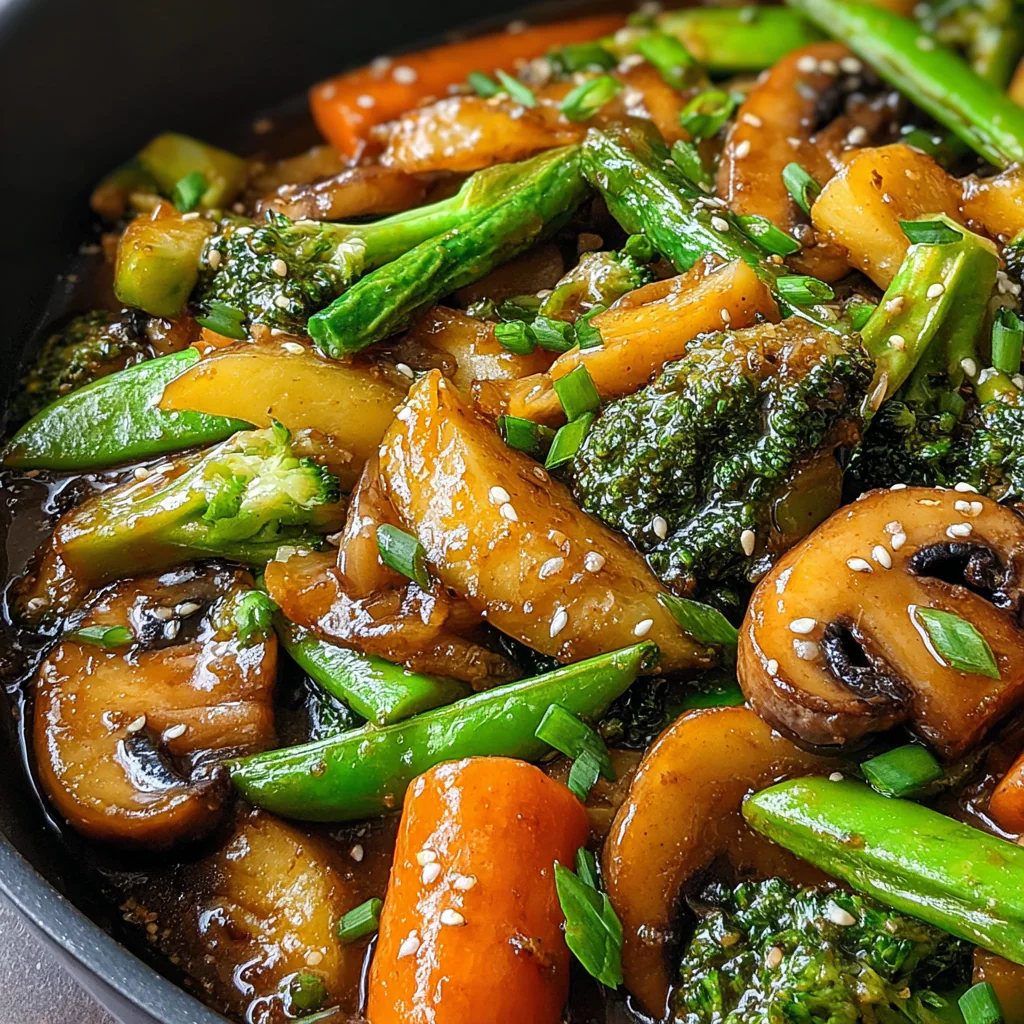
Elevate Your Meals with a Flavorful Vegetarian Stir-Fry
Ingredients
Method
- Prepare all your vegetables by washing and chopping them.
- Heat the vegetable oil in a large wok or skillet over medium-high heat.
- Add garlic and ginger to the hot oil, and sauté for about 30 seconds until fragrant.
- Toss in the broccoli and carrots, stirring constantly for about 2-3 minutes until they begin to soften.
- Add the bell pepper, snap peas, and mushrooms, continuing to stir-fry for another 3-4 minutes.
- Pour in the soy sauce and sesame oil, stirring to coat the vegetables evenly.
- Taste the stir-fry, adjusting seasoning as needed. Consider adding a splash of water to loosen the mixture if it's too thick.
- Remove from heat and let it rest for a couple of minutes before serving over rice or noodles.
Tried this recipe?
Let us know how it was!Notes
Additional serving suggestions: pair with a crisp salad, garlic bread, or roasted seasonal vegetables for balance.
For make-ahead, prep components separately and assemble just before heating to preserve texture.
Taste and adjust with acid (lemon/vinegar) and salt right at the end to wake up flavors.