Introduction
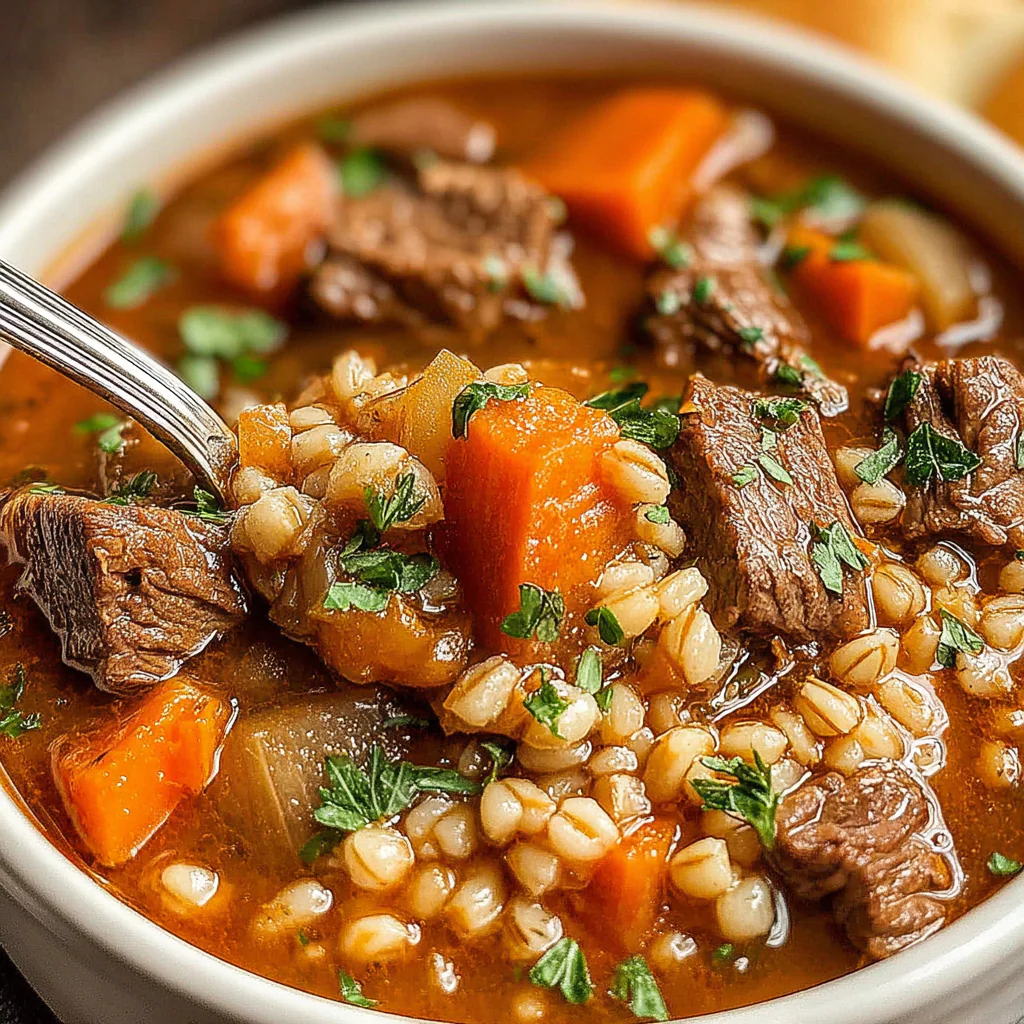
As the colder months approach, a steaming bowl of soup becomes a comforting staple in many households. One dish that stands out during this season is beef and barley soup, known for its rich flavors and hearty ingredients. This timeless recipe brings together tender beef, nutritious barley, and an array of vegetables, creating a meal that warms the soul.
Beef and barley soup is not only satisfying but also a wonderful way to showcase the nourishing qualities of its ingredients. Barley adds a unique texture while absorbing the flavors of the broth, making each spoonful a delightful experience. Whether you’re cooking for a family dinner or meal prepping for the week ahead, this soup provides wholesome nourishment and is surprisingly simple to make.
Ingredients
- 1 pound beef chuck, cut into cubes
Beef chuck is a great choice for soups due to its rich flavor and marbling, which breaks down during the cooking process, becoming tender and juicy. The meat provides a hearty base that enriches the entire dish, infusing the broth with robust beefy notes. - 1 cup pearl barley
Pearl barley adds a chewy texture and nutty flavor to the soup. It is rich in fiber and helps to thicken the broth, making each bowl satisfying and filling. Barley also absorbs the flavors from the vegetables and beef, enhancing the overall taste. - 1 large onion, chopped
Onion adds a foundational flavor to the soup, providing sweetness and depth. As it cooks down, the onion caramelizes slightly, contributing a savory undertone that complements the beef and barley beautifully. - 2 carrots, diced
Carrots provide a touch of sweetness and vibrant color to the soup. Their natural sugars balance the savory elements, and they also add nutritional benefits, making the dish even healthier. - 2 celery stalks, diced
Celery lends a crisp texture and fresh flavor that brightens the soup. It also builds on the aromatic base alongside onion and carrots, creating a well-rounded flavor profile. - 4 cups beef broth
Beef broth serves as the soup's foundational liquid, packing it with flavor. A high-quality broth enhances the richness of the beef and vegetables, ensuring a full-bodied soup that warms with each spoonful. - 1 teaspoon dried thyme
Dried thyme adds a subtle earthy aroma and depth to the soup. It complements the beef and barley, enhancing the overall herbal notes without overpowering the dish. - 1 bay leaf
A bay leaf introduces a slightly floral aroma that elevates the overall flavor. It infuses the broth with nuances that enrich the dish, though it should be removed before serving. - Salt and pepper to taste
Seasoning with salt and pepper is vital to enhance and balance the flavors of the soup. Starting with a moderate amount allows you to adjust as it cooks, ensuring the final dish is perfectly seasoned. - 2 tablespoons olive oil
Olive oil is used for sautéing the vegetables, imparting a subtle richness to the base. It helps to prevent sticking and allows the flavors of the ingredients to meld beautifully as they cook.
Directions & Preparation
Step 1: Heat the olive oil in a large pot over medium heat.
Heating the oil before adding the vegetables ensures a proper sauté, allowing the onions to become translucent and aromatic. This initial step is crucial as it builds the flavor foundation for your soup, creating a savory base that enhances all subsequent ingredients.
Step 2: Add the chopped onion, carrots, and celery to the pot.
Sautéing the onion, carrots, and celery creates a 'mirepoix', which is a classic flavor base for dishes. Cook until the vegetables soften, which typically takes about 5 minutes. This step helps to release the natural sweetness of the veggies and forms the aromatic backbone of your soup, adding complexity to the final flavor.
Step 3: Stir in the beef cubes and cook until browned.
Browning the beef is essential, as it caramelizes the meat and deepens its flavor profile through the Maillard reaction. This step also helps to lock in the juices of the beef, ensuring that each piece stays moist and delicious throughout the cooking process.
Step 4: Add the pearl barley, beef broth, thyme, bay leaf, salt, and pepper.
Once the beef is browned, adding the barley and broth creates the heart of your soup. The barley will absorb the flavors while it cooks, contributing to both thickness and taste. Ensure the ingredients are mixed well; this maximizes the distribution of flavors and makes certain the barley cooks evenly.
Step 5: Bring the mixture to a boil, then reduce the heat and simmer.
Bringing the soup to a boil before lowering the heat allows for a quick initial cooking phase, then simmering ensures the flavors meld and the barley cooks to perfection. This step is key to achieving the right consistency in your soup while allowing the flavors to deepen over time.
Step 6: Simmer for about 1 to 1.5 hours until the barley is tender.
Patience during the simmering stage is important as it allows the barley to absorb flavors and become tender. Stir occasionally to prevent sticking and help evenly distribute the heat. The longer simmering will also ensure the beef becomes tender and the overall flavor intensifies.
Step 7: Taste and adjust the seasoning as necessary.
Seasoning adjustments at this point are crucial to ensure your soup has a balanced flavor profile. Depending on the beef broth’s saltiness and your preference, you may want to add more salt or pepper to enhance the existing flavors without overpowering them.
Step 8: Remove the bay leaf before serving.
Removing the bay leaf is essential as it can be tough and not pleasant to eat. This final step ensures that your soup is ready to enjoy, free of any unwelcome textural surprises that might detract from your hearty meal.

Choosing the Right Beef for Your Soup
While beef chuck is a popular choice for this soup, you can explore other cuts for different flavor profiles and textures. Cuts like brisket or short ribs can add a richer taste, but may require different cooking times. Keep in mind the importance of marbling, as well-marbled cuts will provide more flavor and a juicier result.
Incorporating Additional Vegetables
Feel free to customize beef and barley soup with other vegetables according to your preference or what you have on hand. Ingredients like potatoes, parsnips, or green beans work well and can enhance the nutritional value. Just be aware that different vegetables may affect cooking times and flavors, so ensure they are added accordingly.
Storing and Reheating Your Soup
If you find yourself with leftovers, beef and barley soup stores beautifully in the refrigerator for up to three days. To reheat, gently warm it on the stove, adding a splash of water or broth if it thickens too much. This allows you to enjoy the soup at its best, keeping flavors and textures intact for satisfying meals throughout the week.
FAQs
What if my soup is too thick?
If your beef and barley soup turns out too thick, simply stir in a bit of beef broth or water gradually until you reach your desired consistency. This lets you control the thickness without losing flavor.
Can I add lentils to this recipe?
Yes, lentils can be a great addition for extra protein and texture. Keep in mind that they cook faster than barley, so add them during the last 20-30 minutes of simmering to prevent them from becoming mushy.
What can I do if my beef is tough after cooking?
If your beef remains tough, it likely needs more time to break down properly. Simmer the soup for an additional 30 minutes, checking periodically until the meat is tender.
How can I enhance the flavor if it tastes bland?
If your soup tastes bland, try adding a splash of Worcestershire sauce or a bit more salt and pepper to heighten the flavors. Fresh herbs like parsley added at the end can also provide a vibrant touch.
Is it okay to use frozen vegetables?
Absolutely! Frozen vegetables can save time and work well in this soup. Just add them during the last 20 minutes of cooking to warm through and retain their texture.
What type of barley should I use?
Pearl barley is recommended for this soup because it cooks faster and has a lovely chewy texture. Avoid using hulled barley, as it requires a longer cooking time and can alter the soup's consistency.
Can I make this soup in a slow cooker?
Yes, this soup adapts well to slow-cooking. Brown the beef and sauté the vegetables first, then place them in a slow cooker with the remaining ingredients. Cook on low for 6-8 hours or high for 3-4 hours.
Is there a substitute for beef broth?
You can use vegetable broth as a substitute for a lighter flavor, or chicken broth if you prefer a different meat profile. Just note that it will change the flavor slightly, so adjust seasonings accordingly.
Conclusion
Beef and barley soup is more than just a meal; it's a cozy experience that invites you to relax and enjoy the comforts of home. With its heartiness and flavor, this soup becomes a go-to choice for chilly evenings or casual family gatherings.
As you explore different variations, consider how each ingredient contributes to the overall harmony of flavors. Whether sticking closely to the traditional recipe or experimenting with your favorite additions, this soup will surely warm your heart and fill your belly.
Recipe Card
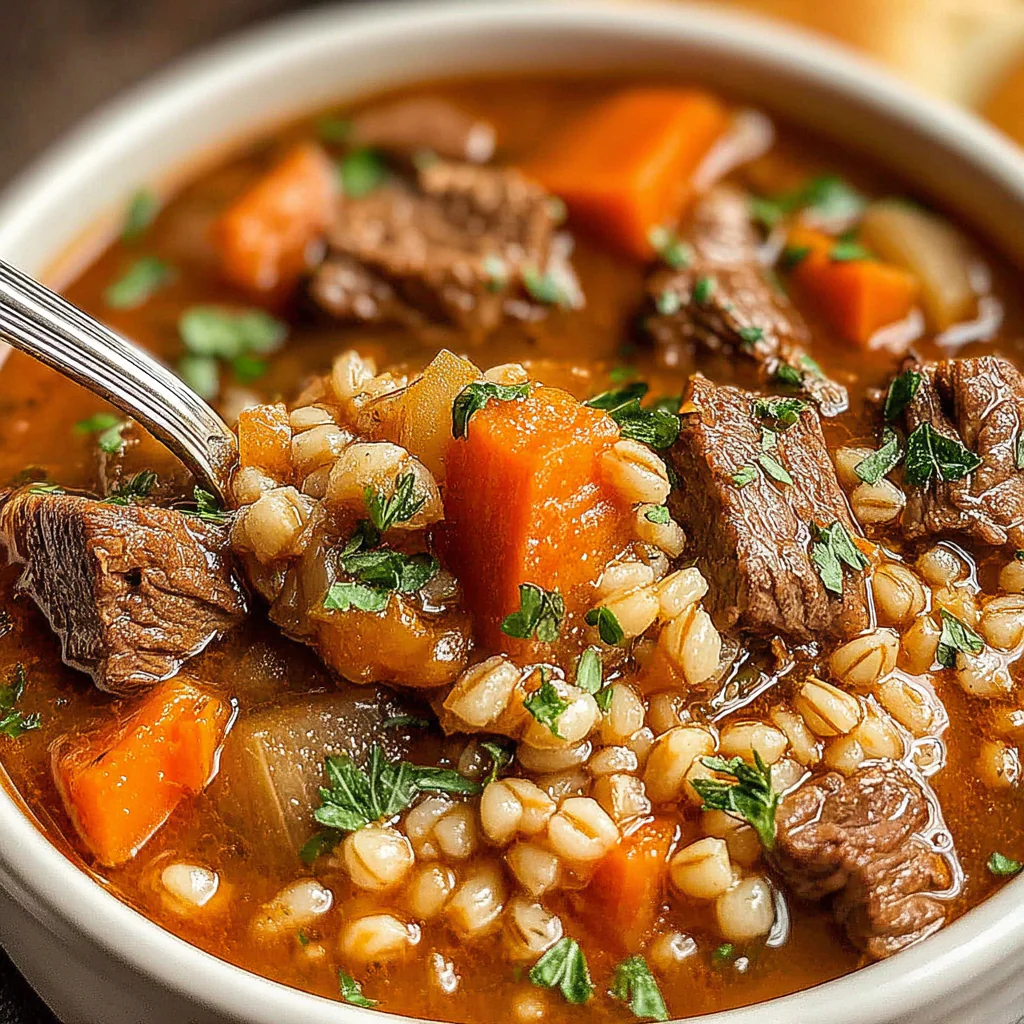
Hearty Beef and Barley Soup for Cozy Days
Ingredients
Method
- Heat the olive oil in a large pot over medium heat.
- Add the chopped onion, carrots, and celery to the pot.
- Stir in the beef cubes and cook until browned.
- Add the pearl barley, beef broth, thyme, bay leaf, salt, and pepper.
- Bring the mixture to a boil, then reduce the heat and simmer.
- Simmer for about 1 to 1.5 hours until the barley is tender.
- Taste and adjust the seasoning as necessary.
- Remove the bay leaf before serving.
Tried this recipe?
Let us know how it was!Notes
Additional serving suggestions: pair with a crisp salad, garlic bread, or roasted seasonal vegetables for balance.
For make-ahead, prep components separately and assemble just before heating to preserve texture.
Taste and adjust with acid (lemon/vinegar) and salt right at the end to wake up flavors.