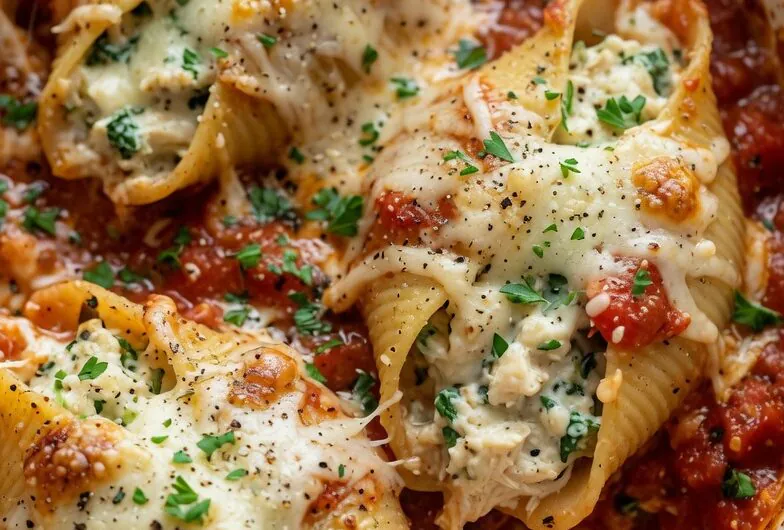
Golden, bubbly, and loaded with a three-cheese chicken filling—this is the comfort food classic that turns a Tuesday night into an occasion.
📋 In This Article
Introduction
There is a specific kind of magic in pulling a tray of Cheesy Chicken Stuffed Shells Covered in Marinara and Baked Until Bubbly from the oven. It’s the kind of dish that makes the kitchen smell like an Italian grandmother’s house, the air thick with the scent of garlic, tomatoes, and browning cheese. But let’s be honest: stuffed shells can be a project. My goal here isn’t just to give you a recipe; it’s to give you a roadmap that ensures your effort pays off in spades.
We’re skipping the bland, watery filling that plagues so many versions. Instead, we focus on a rich, velvety blend of ricotta, mozzarella, and savory chicken that holds its shape. By the time that marinara is bubbling and the cheese has blistered into golden spots, you’ll have a dish that satisfies on a visceral level.
Why You’ll Love This Recipe
Let’s cut to the chase. This isn’t just “another pasta bake.”
This recipe solves the three biggest problems with stuffed shells: bland fillings, broken pasta, and dry results. By using Cooked Chicken—ideally a rotisserie bird with all its rendered flavor—we get a meaty depth without the extra work of poaching raw meat. The Ricotta Cheese provides the fluffy body, while the Mozzarella Cheese delivers the stretch.
It’s a meal prep champion. You can assemble the entire dish on Sunday, stash it in the fridge, and slide it into the oven on a chaotic Wednesday. It reheats beautifully, making it arguably better the next day when the flavors have had time to meld.
Ingredients Overview
Success starts with what you buy. Here’s how the team comes together.
For the Filling:
- Jumbo Pasta Shells: The structural integrity of the dish. Look for boxes without too many broken shells (though save the broken ones to sprinkle on top later).
- Cooked Chicken: Rotisserie chicken is king here. It’s already seasoned and moist, saving you a step.
- Ricotta Cheese: Part-skim is the sweet spot. It offers creaminess without the excess water weight of whole milk, which can make the filling soupy.
- Cream Cheese: Just a touch adds a tangy stability that pure ricotta lacks.
- Mozzarella Cheese: Low-moisture, part-skim shredded mozzarella melts into that characteristic gooey web.
- Parmesan Cheese: For a salty, umami punch.
- Garlic and Onion: The aromatic base.
- Italian Seasoning: A dried blend that ties the chicken and cheese together.
For the Sauce:
- Marinara Sauce: Don’t skimp. A high-quality jarred sauce (like Rao’s or a local brand) or homemade will make or break the dish.
- Olive Oil: To sauté the aromatics if you’re doctoring the sauce.
For the Shells:
Cooking pasta for a bake is a science. You must salt the water heavily—it should taste like a seasoned soup. This is the only chance to season the actual pasta structure.
Step-by-Step Instructions
1. The Oven Setup
Preheat your oven to 375°F (190°C). This temperature is the sweet spot: hot enough to bubble the sauce and brown the cheese, but gentle enough to heat the filling through without drying out the pasta edges.
2. Pasta Strategy
Boil the Jumbo Pasta Shells in that heavily salted water. Set a timer for 2 minutes less than the package instructions. We want them al dente—firm to the bite. They will continue to absorb liquid from the sauce in the oven (a process called hydration), so if you boil them to softness now, they’ll turn to mush later.
Drain them and lay them out on a lightly oiled baking sheet or foil. Do not rinse them. You want the starch on the surface to help the sauce adhere. I learned this the hard way—rinsed shells are slippery and refuse to grab the cheese.
3. The Filling
In a large bowl, combine the shredded Cooked Chicken, Ricotta Cheese, half of the Mozzarella Cheese, and the Parmesan Cheese. Season aggressively. Chicken and ricotta are blank canvases; they need salt, pepper, garlic powder, and those herbs to wake up. Mix until just combined—over-mixing can make the texture gummy.
4. The Stuffing Technique
Here’s a pro tip: skip the spoon. Put your filling in a large zip-top bag and snip the corner. Pipe the filling into each shell. It’s faster, cleaner, and ensures you get filling all the way to the edges.
5. Assembly
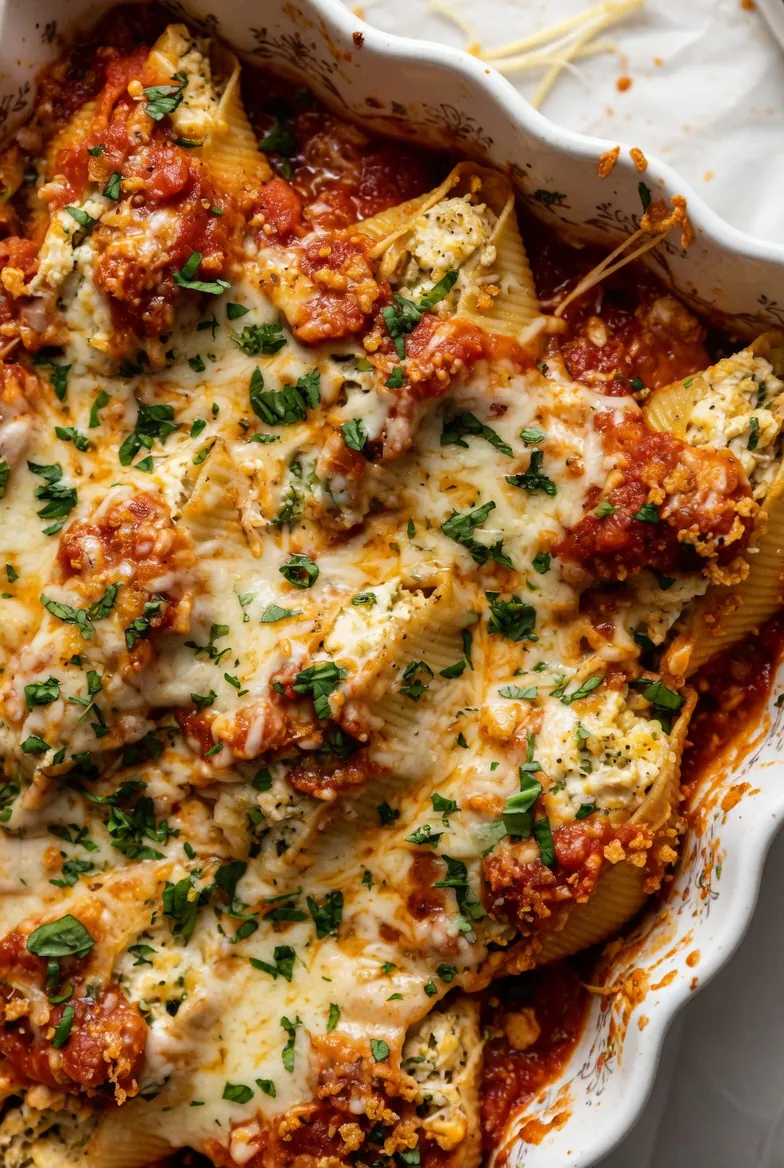
Spread a thin layer of Marinara Sauce on the bottom of your 9×13 inch baking dish. This “glue” keeps the shells from sticking and adds moisture from the bottom up. Arrange the stuffed shells open-side up. Pour the remaining sauce over the shells, focusing on the edges where the pasta tends to crisp and dry out.
6. The Cheese Cap
Sprinkle the remaining Mozzarella Cheese and a dusting of Parmesan over the top.
7. The Bake
Cover tightly with aluminum foil. Bake for 25 minutes. This steams the shells, heating the filling through. Then, remove the foil and bake for another 10-15 minutes. This is where the Maillard reaction kicks in—the proteins and sugars in the cheese brown, creating that nutty, toasted flavor profile we crave.
8. The Rest
Let the dish sit for 10 minutes before serving. I know it’s hard to wait. But during this rest, the internal temperature equalizes, and the cheese filling sets up so it doesn’t run out the moment you cut into a shell.
💡 Pro Tips for Perfect Stuffed Shells
The “Broken Shell” Hack: Inevitably, a few shells will tear during the boil. Don’t toss them. Tuck the broken pieces into the empty spaces of the baking dish. They catch the extra sauce and cheese, becoming the crispy, saucy “noodles” everyone fights over.
Temperature Matters: Let your Ricotta Cheese and Cream Cheese come to room temperature before mixing. Cold cheese creates lumps; room-temp cheese blends into a silky, velvety emulsion.
Sauce Coverage: Ensure every bit of exposed pasta is covered in sauce. Any shell edge poking out without sauce will turn hard and tooth-breakingly crunchy. If you run low on sauce, a splash of water or stock mixed into the bottom of the jar works wonders.
⚠️ Common Mistakes to Avoid
- Overstuffing the Shells: It feels generous, but packing them too tight causes the filling to burst out during baking. Aim for a golf-ball-sized amount of filling per shell.
- Under-seasoning the Filling: Ricotta needs salt. Taste your filling before you start stuffing. If it doesn’t taste good cold, it won’t taste good baked.
- Using Cold Filling: If your filling is cold from the fridge, the bake time increases, drying out the pasta. Room temp ingredients heat evenly.
- Skipping the Rest Period: Cutting into the dish immediately releases steam and causes the cheese to deflate. Patience is the final ingredient.
Flavor Variations & Customizations
This recipe is a blueprint. Once you master the technique, play with the variables.
- Spinach & Artichoke: Thaw frozen spinach and squeeze it dry (very dry!). Chop artichoke hearts and fold them into the cheese mixture for a classic dip flavor profile.
- Spicy Arrabbiata: Swap the Marinara Sauce for a spicy tomato sauce. Add red pepper flakes to the filling for a heat that cuts through the richness of the cheese.
- Alfredo Twist: For a white sauce version, replace the marinara with a jarred Alfredo sauce. Add cooked broccoli florets to the filling for texture and color.
Make-Ahead & Freezing Instructions
Fridge: Assemble the dish completely, cover tightly with foil, and refrigerate for up to 24 hours. Add an extra 10 minutes to the covered baking time to account for the cold start.
Freezer: This is a freezer superstar. Assemble the shells in a disposable foil pan. Wrap the entire pan in plastic wrap, then a layer of heavy-duty foil. Freeze for up to 3 months.
Reheating: Thaw in the fridge overnight. Bake covered at 375°F for 30 minutes, then uncover for 15 minutes. If baking from frozen, bake covered for 45-50 minutes before uncovering.
Serving Suggestions & Pairings
This is a heavy, rich dish. It needs acidity and crunch to balance the plate.
- Simple Green Salad: Dressed with a sharp vinaigrette. The acid cuts the creamy cheese, cleansing the palate.
- Garlic Bread: Essential for mopping up the excess sauce.
- Roasted Broccoli or Asparagus: Roasted vegetables bring a charred, earthy flavor that complements the sweetness of the tomato sauce.
Frequently Asked Questions (FAQ)
+Can I use uncooked chicken?
I don’t recommend it. The filling doesn’t stay in the oven long enough to safely cook raw chicken without overbaking the pasta. Using pre-cooked Cooked Chicken (like rotisserie) ensures food safety and better texture.
+My shells are tearing. What am I doing wrong?
You are likely overcooking them during the boil, making them too soft to handle, or stuffing them too aggressively. Undercook them by 2 minutes and handle them gently.
+Can I make this without ricotta?
Yes. Cottage Cheese is a common substitute. Blend it smooth in a food processor first to mimic the texture of ricotta, or use a mix of cream cheese and sour cream for a tangier profile.
+How long do leftovers last?
Store in an airtight container in the refrigerator. They will keep for 3-4 days. Reheat individual portions in the microwave with a splash of water to rehydrate the sauce.
+Why is my filling watery?
This usually happens if you used whole-milk ricotta without draining it, or if you added wet vegetables (like spinach) without squeezing out the excess moisture. Drain your cheeses and veggies thoroughly.