
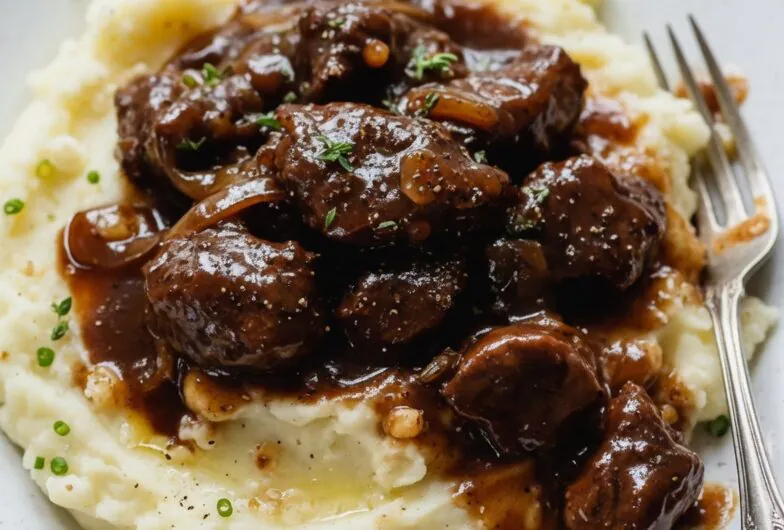
Slow-simmered beef in a rich, savory gravy paired with impossibly fluffy garlic potatoes—the kind of meal that defines comfort.
📋 In This Article
- Introduction
- Why This Recipe Works (The Science of Comfort)
- Ingredients for Ultimate Beef Tips and Gravy
- Step-by-Step Instructions: Mastering Beef Tips and Gravy
- Common Mistakes to Avoid for Perfect Results
- Delicious Variations and Customizations
- Storage and Reheating Tips
- Pro Tips for Restaurant-Quality Beef Tips and Gravy
- Frequently Asked Questions (FAQ)
Introduction
There is a specific kind of magic in a bowl of Tender Beef Tips and Gravy Served Over Creamy Garlic Mashed Potatoes. It’s the kind of meal that slows down a Tuesday night or anchors a Sunday supper. You know the feeling: fork-tender chunks of beef that yield to the slightest pressure, swimming in a gravy so savory it tastes like it simmered all day (because it did), all ladled over a cloud of buttery potatoes. But here’s the thing—getting that texture right isn’t just about “cooking longer.” It’s about chemistry. It’s about knowing which cut of meat to buy and understanding why we sear, why we deglaze, and why we must be gentle with those potatoes.
Why This Recipe Works (The Science of Comfort)
This isn’t just “throwing ingredients in a pot.” This is controlled chemistry.
The Cut Matters: We use chuck roast. Why? It’s tough. It’s full of connective tissue (collagen). When you apply low, moist heat over time, that collagen hydrolyzes into gelatin. That gelatin coats the muscle fibers, making the meat taste succulent and rich. If you use a lean cut like sirloin and cook it this long, it turns to leather. Chuck turns to velvet.
The Maillard Reaction: We don’t just “brown” the meat. We sear it. This creates the Maillard reaction—hundreds of new flavor compounds on the surface of the beef. Those brown bits stuck to the pan (the fond) are pure concentrated flavor. Deglazing with broth dissolves that fond back into the liquid, creating a foundation for gravy that tastes deep and complex, not just salty.
Starch Management: For the potatoes, we use Russets. They are high-starch, low-moisture. When cooked and passed through a ricer, the starch cells swell and separate. If you overwork them (like with a stand mixer), the starch cells rupture and release amylose, resulting in a gluey, paste-like texture. We treat them gently to keep them fluffy.
Ingredients for Ultimate Beef Tips and Gravy
Gathering the right ingredients is half the battle. Here is what you need for this Tender Beef Tips and Gravy Served Over Creamy Garlic Mashed Potatoes.
Beef Tips
- Beef Chuck Roast: Cut into 1-inch cubes. Uniform size ensures even cooking.
- Worcestershire Sauce: Adds fermented umami depth that salt alone can’t achieve.
- Beef Broth: Ideally homemade, but a high-quality store-bought brand works.
- Ketchup: Just a tablespoon. It adds body and a subtle sweetness to balance the savory beef.
Gravy
- Yellow Onion: Diced small to melt into the sauce.
- Garlic: Fresh cloves, minced.
- All-Purpose Flour: Used to coat the beef and thicken the braising liquid.
- Mushrooms (optional): Cremini or button, for earthiness.
- Kitchen Bouquet (optional): A browning agent to give the gravy that deep, appetizing mahogany color.
Creamy Garlic Mashed Potatoes
- Russet Potatoes: Peeled and cut into 2-inch chunks.
- Heavy Cream: Warmed before adding to the potatoes.
- Unsalted Butter: Allows you to control the salt level.
- Garlic: Cloves simmered in the cream to infuse the flavor directly.
Step-by-Step Instructions: Mastering Beef Tips and Gravy
- Searing the Meat: Pat the beef cubes dry with paper towels. Moisture is the enemy of browning. Season generously with salt and pepper. Heat oil in a large skillet or Dutch oven over medium-high heat until shimmering. Add beef in batches—do not crowd the pan. If you crowd the pan, the temperature drops, and the meat steams instead of searing. Brown on all sides, about 3-4 minutes per batch. Remove meat and set aside.
- Building the Aromatics: Reduce heat to medium. Add butter, onions, and a pinch of salt. Scrape up the browned bits (fond) from the bottom as the onions cook. Cook until onions are translucent and soft, about 5 minutes. Add garlic and cook for 30 seconds until fragrant. If using mushrooms, add them now and cook until they release their liquid and brown slightly.
- Thickening the Base: Sprinkle the flour over the vegetables. Stir constantly for 1 minute to cook out the raw flour taste. This creates a roux right in the pan.
- Deglazing and Simmering: Slowly pour in the beef broth and Worcestershire sauce while whisking to prevent lumps. Add the ketchup. Return the beef and any accumulated juices to the pot. Bring to a simmer.
- Slow Cooking: Cover and transfer to a 300°F oven or keep on a low stovetop simmer. Cook for 2 to 3 hours. You want the beef to be fork-tender—offering no resistance when you pierce it. I used to rush this step, checking the meat after an hour. Don’t. It needs the full time to break down that collagen.
- The Potatoes: About 30 minutes before the beef is done, place peeled, cut potatoes in a pot of cold, salted water. Bring to a boil. Cook until fork-tender, about 15-20 minutes. Drain. Meanwhile, gently simmer cream, butter, and crushed garlic in a small saucepan.
- Mashing: Pass the potatoes through a ricer or food mill back into the pot. Stir in the warm garlic-cream mixture. Season with salt and white pepper.
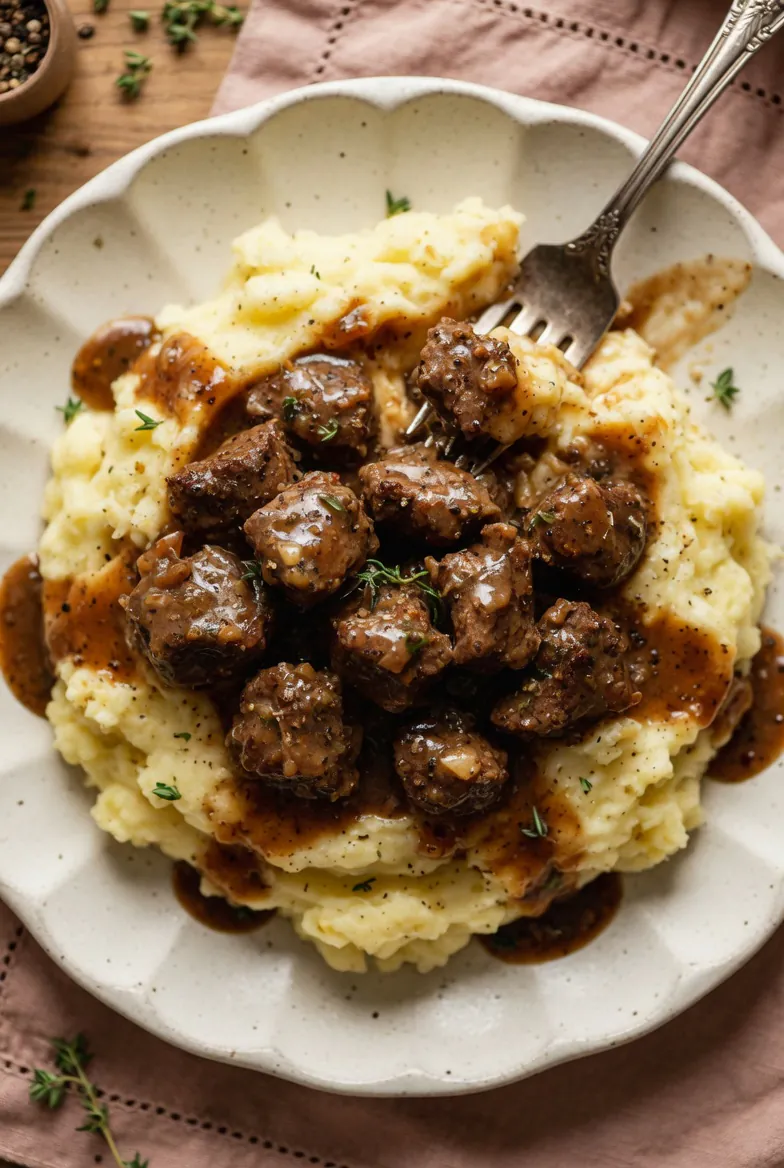
- Serving: Mound the potatoes on a plate. Ladle the beef and gravy over the top.
⚠️ Common Mistakes to Avoid for Perfect Results
Even a simple dish can go wrong. Here is how to avoid the pitfalls.
Overcrowding the Pan: This is the most common error. When the meat is packed too tight, it releases moisture, lowering the pan temperature. You end up with gray, boiled beef. Cook in batches.
The Lumpy Gravy Problem: Adding cold liquid to hot flour causes clumping. Whisking constantly while slowly adding warm broth creates a stable emulsion. If lumps persist, use an immersion blender.
Overworking the Potatoes: This is the difference between fluffy and gluey. Russets need gentle handling. Never use a food processor. A ricer or hand masher is the only way to go.
Under-seasoning: Gravy needs salt, but it also needs brightness. If the gravy tastes flat, a splash of vinegar or a dash more Worcestershire can wake it up.
Delicious Variations and Customizations
Once you master the technique, you can play with the formula.
Red Wine Braised: Swap 1 cup of beef broth for a dry red wine like Cabernet or Merlot. The tannins cut through the richness of the beef, resulting in a deeper, more robust sauce.
Herb-Forward: Add fresh sprigs of thyme and rosemary to the braising liquid. Tie them with kitchen twine so you can remove them easily before serving.
Dairy-Free Option: For the mashed potatoes, swap the cream and butter for a high-quality olive oil. It creates a rich, velvety texture with a peppery finish that complements the beef.
Root Vegetable Medley: Add carrots and parsnips to the braise during the last hour. They absorb the savory gravy and add natural sweetness.
Storage and Reheating Tips
Leftovers are often better the next day, as the flavors have time to meld.
Refrigeration: Store the beef and potatoes in separate airtight containers. The beef will keep for up to 4 days. The potatoes are best used within 2 days, as they can get watery.
Freezing: Freeze the beef tips and gravy in a freezer-safe bag for up to 3 months. I don’t recommend freezing the mashed potatoes, as the texture degrades significantly upon thawing.
Reheating: Reheat the beef gently in a saucepan over low heat. Add a splash of broth if the gravy has thickened too much in the fridge. For the potatoes, reheat in the microwave with a tablespoon of butter or cream to restore moisture.
💡 Pro Tips for Restaurant-Quality Beef Tips and Gravy
Want to elevate the dish? These are the tricks chefs use.
Marinate in the Fridge: Salt the beef cubes and let them sit uncovered in the fridge for 4 hours (or overnight). This dries the surface for a better sear and seasons the meat internally.
Infuse the Dairy: Don’t just mash garlic into the potatoes. Simmer the crushed cloves in the cream. The garlic softens and its flavor permeates the fat, distributing evenly through the potatoes.
Finish with Butter: Just before serving, swirl a tablespoon of cold, unsalted butter into the gravy. This is called monter au beurre. It adds a glossy sheen and a velvety mouthfeel that you can’t get from flour alone.
Frequently Asked Questions (FAQ)
+Why are my beef tips tough?
If your beef is chewy, it hasn’t cooked long enough. Tough cuts like chuck need time to break down collagen into gelatin. Keep cooking until it offers no resistance to a fork.
+Can I use a different cut of beef?
You can use round steak, but it is leaner and can dry out faster. Chuck roast or short ribs are ideal because their fat content keeps them moist during the long braise.
+How do I thicken my gravy?
If the gravy is too thin after cooking, mix 1 tablespoon of cornstarch with 1 tablespoon of cold water to make a slurry. Whisk this into the simmering gravy and cook for 2 minutes until thickened.
+Can I make this without a slow cooker?
Absolutely. A Dutch oven or heavy pot with a tight-fitting lid works perfectly. Keep the heat low and steady—either on the stovetop or in a 300°F oven.
+What potatoes are best for mashing?
Russets are best for a fluffy, light texture. Yukon Golds are great for a creamier, denser mash. Avoid waxy potatoes like red bliss, which can be gummy.
+Can I skip the searing step?
You can, but you’ll sacrifice flavor. Searing creates the Maillard reaction, which adds complexity to the gravy. The dish will still work, but it will taste flatter and less “beefy.”