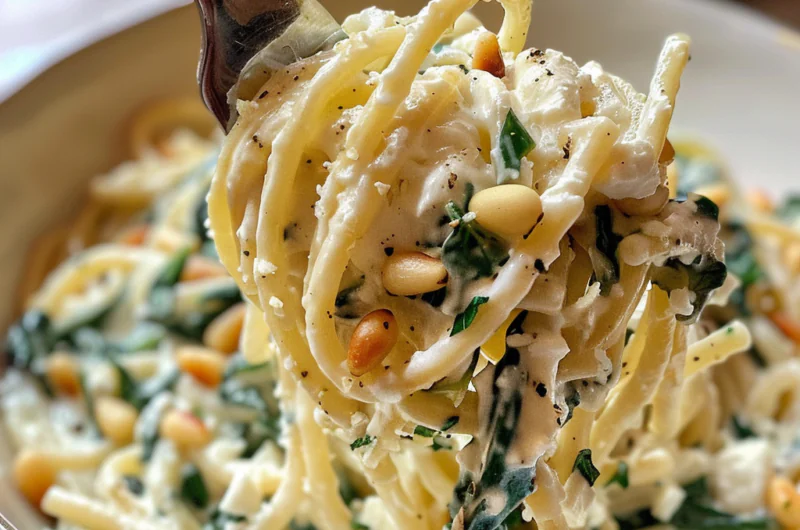
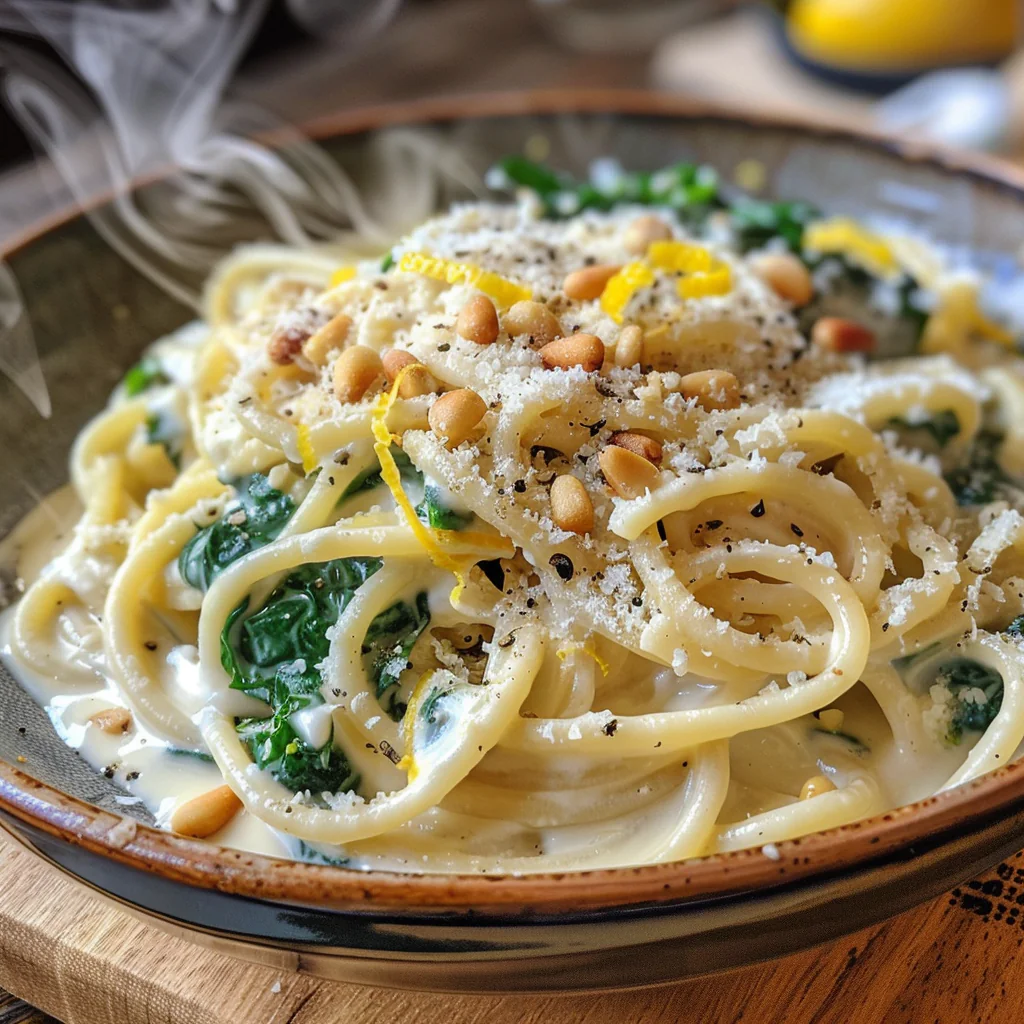
A creamy, no-drain vegetarian dinner that comes together in 20 minutes—perfect for busy weeknights.
📋 In This Article
Introduction
Let’s be honest: weeknight cooking often feels like a race against the clock. That’s exactly why this One-Pot Lemon Ricotta Pasta with Spinach & Pine Nuts has earned a permanent spot in my rotation. It delivers the kind of velvety, comforting sauce you usually only get from a roux-based mac and cheese, but without the fuss. The secret lies in the One-Pot Method—cooking the pasta directly in vegetable broth. As the noodles hydrate, they release starch into the liquid, thickening it into a glossy, emulsified base that hugs every curve of the pasta.
But convenience doesn’t mean we sacrifice depth. We’re building layers here: the nutty crunch of Toasted Pine Nuts, the sharp, bright punch of fresh lemon, and the rich, milky sweetness of high-quality Ricotta Cheese. It’s a lesson in the power of acid-fat balance—the lemon juice cuts through the heavy dairy, preventing the dish from feeling cloying. This isn’t just a “quick vegetarian dinner”; it’s a masterclass in maximizing flavor with minimal effort.
Why This Recipe Works (and Outranks the Rest)
Most pasta recipes ask you to boil water in one pot and make sauce in another. Not this one. By toasting the pine nuts first and then cooking the pasta in a measured amount of broth, we achieve two things: flavor concentration and natural emulsification. The starch released by the pasta acts as a binder, creating a creamy texture without heavy cream.
The real magic happens when the Ricotta Cheese hits the hot, starchy pasta water. Because we remove the pot from direct high heat before adding the dairy, the proteins in the ricotta relax rather than coagulate. This prevents the dreaded grainy texture often seen in ricotta-based sauces, resulting in a velvety finish. The Lemon Zest and juice provide volatile aromatic oils and acidity, which “wake up” the palate, balancing the richness of the cheese. Finally, the Spinach wilts perfectly in the residual heat, retaining its vibrant color and nutrients without becoming slimy.
Ingredients List
- 1 tablespoon extra virgin olive oil
- 3 cloves fresh garlic, minced
- 4 cups low-sodium vegetable broth
- 12 ounces dried spaghetti, linguine, or short pasta like orecchiette
- 5 ounces fresh spinach (about 5 packed cups)
- 1 cup high-quality whole-milk ricotta cheese
- 3 ounces finely grated Parmesan cheese, plus extra for serving
- Zest of 1 medium lemon (about 1 tablespoon)
- Juice of 1 medium lemon (about 3 tablespoons)
- 1/2 teaspoon kosher salt, or to taste
- 1/4 teaspoon freshly ground black pepper, or to taste
- 1/4 cup pine nuts
Step-by-Step Instructions
Step-by-Step Instructions
- Toast the Pine Nuts: Place a large pot or Dutch oven over medium heat. Add the pine nuts and toast, stirring constantly, for about 2–3 minutes. Watch them closely—nuts go from golden to burnt in seconds due to their high oil content. Once they smell nutty and look golden brown, remove them immediately from the pot and set aside.
- Sauté the Aromatics: Return the pot to medium heat and add the olive oil. Add the minced garlic and sauté for about 30 seconds until fragrant. Do not let it brown; we want the garlic sweet and aromatic, not bitter.
- Cook the Pasta (The One-Pot Way): Pour in the vegetable broth and bring it to a rolling boil. Add the pasta and stir to ensure it’s submerged. Cook the pasta at a vigorous simmer (uncovered) for 1 minute less than the package instructions suggest. Crucial step: As the pasta cooks, the liquid will reduce. If the pot looks dry before the pasta is done, add a splash of water.
- Emulsify the Sauce: Turn off the heat. The pasta should be al dente and there should be about 1/2 cup of starchy liquid remaining at the bottom. Add the ricotta, Parmesan, lemon zest, lemon juice, salt, and pepper. Stir vigorously. The residual heat will melt the cheese into the starchy broth, creating a thick, creamy sauce that clings to the noodles.
- Wilt the Spinach: Add the fresh spinach to the pot. Stir gently for about 1 minute. The heat from the pasta is enough to wilt the greens perfectly without overcooking them.
- Serve: Top with the reserved toasted pine nuts and an extra crack of black pepper. Serve immediately.
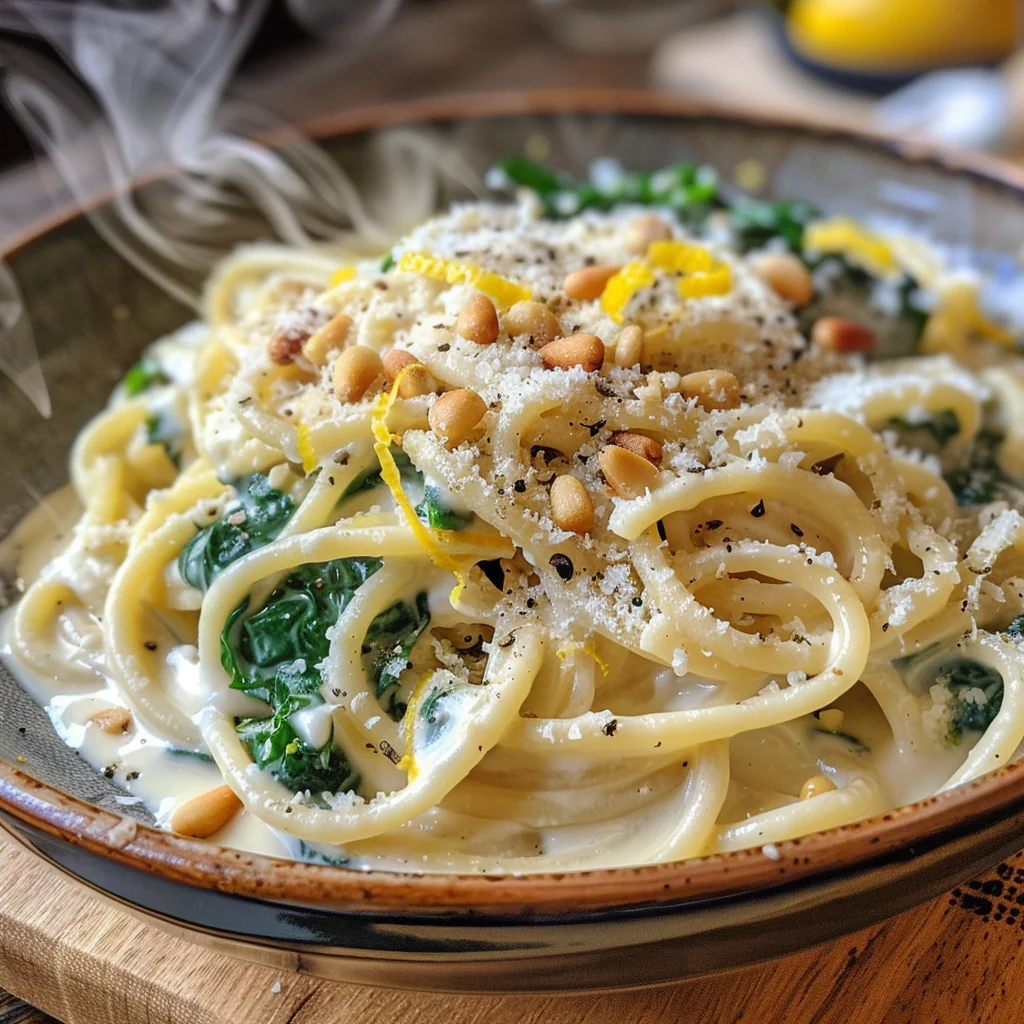
⚠️ Common Mistakes to Avoid
Even a simple recipe has pitfalls. Here is how to ensure your One-Pot Lemon Ricotta Pasta turns out perfectly every time:
- Boiling Off All the Liquid: The starchy cooking liquid is the foundation of your sauce. If the pot runs dry before the pasta is tender, you lose the binding agent. Keep an eye on the liquid level and add small splashes of water if needed.
- Curdling the Ricotta: Adding ricotta to boiling liquid is a fast track to grainy, separated sauce. Always remove the pot from the heat source entirely before stirring in the cheese. This ensures a silky texture.
- Burning the Pine Nuts: Pine nuts have a high fat content, which means they conduct heat rapidly. They can burn in the time it takes to check your phone. Stay at the stove and keep the nuts moving in the dry pan.
- Under-Seasoning: Broth provides the base flavor, but the ricotta is mild. Taste the final dish before serving—you will likely need that extra pinch of salt or a final squeeze of lemon to make the flavors pop.
- Using Low-Fat Ricotta: Low-fat ricotta lacks the fat necessary to create a smooth emulsion. It often results in a watery, grainy texture. Stick to whole-milk ricotta for the best mouthfeel.
Delicious Variations & Substitutions
This recipe is a template. Once you master the technique, you can adapt it to whatever is in your pantry.
- Protein Boost: Stir in a can of drained cannellini beans along with the spinach for extra protein and fiber. The creamy beans complement the pasta texture beautifully.
- Gluten-Free Adaptation: Use your favorite gluten-free pasta. Note that gluten-free pasta releases less starch, so you may need to mash a few beans or add a tablespoon of butter to help thicken the sauce.
- Greens Swap: If spinach isn’t your thing, try arugula for a peppery bite or Lacinato kale (add it 2 minutes earlier as it takes longer to wilt).
- Nut Alternatives: Pine nuts can be pricey. Walnuts or almonds work well; just chop them roughly before toasting.
- Vegan Version: Use a vegan ricotta alternative and nutritional yeast in place of Parmesan. The lemon flavor is strong enough to mask any “beany” taste from vegan cheeses.
Storage & Reheating Tips
Pasta dishes with cheese sauces are best eaten fresh, but life happens. Here’s how to handle leftovers.
Storage: Let the pasta cool completely before transferring to an airtight container. It will keep in the refrigerator for up to 3 days. The sauce will absorb into the noodles as it sits, making it thicker.
Reheating: The microwave tends to unevenly cook dairy, leading to separation. Reheat in a skillet over medium-low heat instead. Add a splash of water or broth to loosen the sauce. Stir gently until warmed through. I used to skip this step and just nuke it—don’t. The texture suffers immensely.
💡 Pro Tips for Next-Level Flavor
To take this from “good” to “I can’t believe this was one pot,” consider these culinary insights:
- Bloom the Garlic: Sautéing garlic in oil over medium-low heat releases its water-soluble flavor compounds into the fat. This distributes garlic flavor throughout the dish rather than having pockets of raw garlic heat.
- The Starch Factor: If you drain your pasta in a colander, you lose the starch. By cooking in a measured amount of liquid, you retain that starch. It acts similarly to a roux, stabilizing the fat in the cheese and preventing separation.
- Acid Adjustment: Lemon juice isn’t just for flavor; acid balances fat. If the dish feels heavy on the palate, add more lemon juice, not salt. It “brightens” the profile without increasing sodium.
- Reserve Liquid: Before adding the ricotta, check the pot. If it looks like soup, let it boil another 30 seconds. If it looks dry, add 1/4 cup water. You want the consistency of heavy cream before the cheese goes in.
Frequently Asked Questions (FAQ)
+Can I use frozen spinach instead of fresh?
Yes, but fresh spinach is preferred for texture. If using frozen, thaw it completely and squeeze out all the excess water. Otherwise, you’ll introduce too much moisture and water down the sauce.
+Why is my ricotta sauce grainy?
Graininess usually happens when ricotta is introduced to high heat. The proteins seize up and separate. To fix this, ensure your pot is off the heat and the pasta has stopped bubbling before stirring in the cheese. Tempering the ricotta with a bit of the hot pasta water before adding it can also help stabilize it.
+What pasta shape works best?
Short shapes like penne, fusilli, or orecchiette are ideal because they trap the creamy sauce in their nooks. Long noodles like spaghetti or linguine work well too, but require more frequent stirring in the one-pot method to prevent sticking.
+Can I make this ahead of time?
You can prep the ingredients (mince garlic, toast nuts, zest lemon) ahead, but the dish is best served immediately. Cooked pasta absorbs liquid as it sits, so leftovers will be thicker and less creamy than the fresh version.
+How do I know when the pasta is done?
Taste it. The pasta should be tender but still have a slight bite (al dente). Remember, it will continue to cook slightly when you add the cheese and spinach, so pulling it one minute early is safer than overcooking it.
+What do I do if I don’t have vegetable broth?
Water works in a pinch, but you’ll need to increase the salt and olive oil significantly to compensate for the lost flavor. A bouillon cube dissolved in hot water is a great emergency substitute.
+Are pine nuts necessary?
They add a specific buttery crunch, but they aren’t strictly necessary. If you have a nut allergy, try toasted panko breadcrumbs seasoned with a little garlic powder for a similar textural contrast.
+Can I use heavy cream instead of ricotta?
You can, but it changes the dish entirely. Ricotta provides a fluffy, fresh texture. Heavy cream would make a denser, richer sauce. If you swap it, use 1/2 cup of cream and reduce the broth slightly.
Conclusion
This One-Pot Lemon Ricotta Pasta with Spinach & Pine Nuts proves that you don’t need a restaurant kitchen to produce a dinner that feels luxurious. It’s a testament to the power of smart technique—using pasta water as a thickener and residual heat to melt cheese—over complicated ingredients. Whether you’re a seasoned cook or a beginner, this recipe offers a reliable, delicious way to get dinner on the table fast. Give it a try, and don’t forget to toast those pine nuts—it makes all the difference.
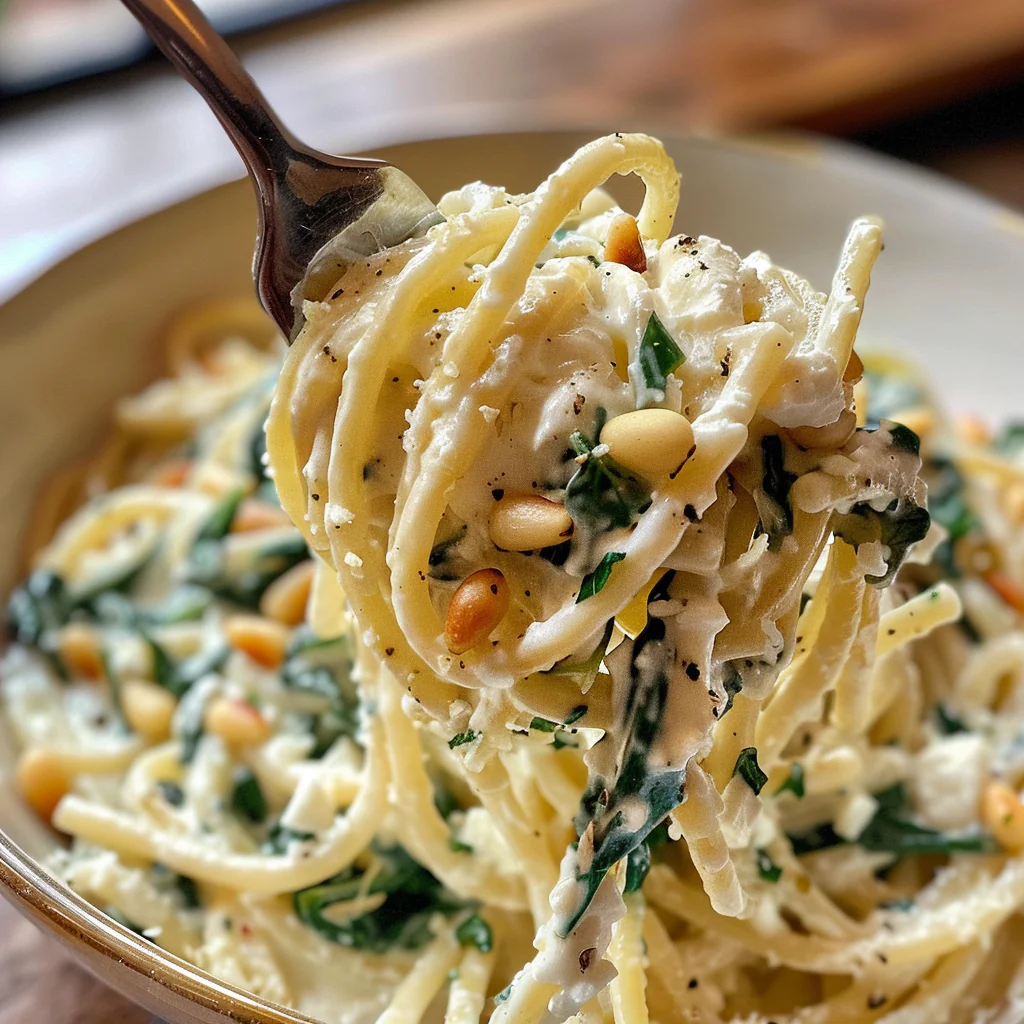
One-Pot Lemon Ricotta Spinach Pasta
Ingredients
Method
- Heat 1 tablespoon olive oil in a 12-inch high-sided skillet or large Dutch oven over medium heat until shimmering. Add 3 minced garlic cloves and cook until lightly brown and fragrant, about 2 minutes.
- Add 1 (32-ounce) carton low-sodium broth and 1 pound dried spaghetti and bring to a simmer. Continue to simmer, stirring occasionally with tongs so the pasta doesn't stick, until the pasta is al dente, about 15 minutes. If pasta needs more liquid, add water 1/4 cup at a time (up to 1 cup total) and continue to cook until the pasta is ready and most of the liquid is absorbed.
- Stir in 5 ounces baby spinach until almost wilted. Turn off the heat. Stir in 1 cup whole-milk ricotta cheese, 3 ounces grated Parmesan cheese, the finely grated zest of 1 medium lemon, the juice of 1 medium lemon, 1/2 teaspoon kosher salt, and 1/4 teaspoon black pepper until the ricotta is melted and the sauce is creamy. Taste and season with more kosher salt as needed. Garnish with more grated Parmesan cheese, freshly ground black pepper, and lemon zest if desired.
- Recipe Notes
Nutrition
Notes
- To ensure your pasta cooks evenly, stir it every few minutes and check for doneness after about 12 minutes; it should be al dente with a slight bite.
- If the pasta absorbs too much liquid and the mixture seems dry, add water in small increments (1/4 cup at a time) until you achieve a creamy consistency.
- For added nutrition and flavor, feel free to substitute the spinach with other quick-cooking vegetables like kale or zucchini, or add protein such as grilled chicken or shrimp.
- This dish can be stored in the fridge for up to three days; reheat gently on the stovetop with a splash of broth or water to maintain creaminess.
- To avoid a curdled sauce, make sure to incorporate the ricotta cheese off the heat; this will help it melt smoothly into the pasta.