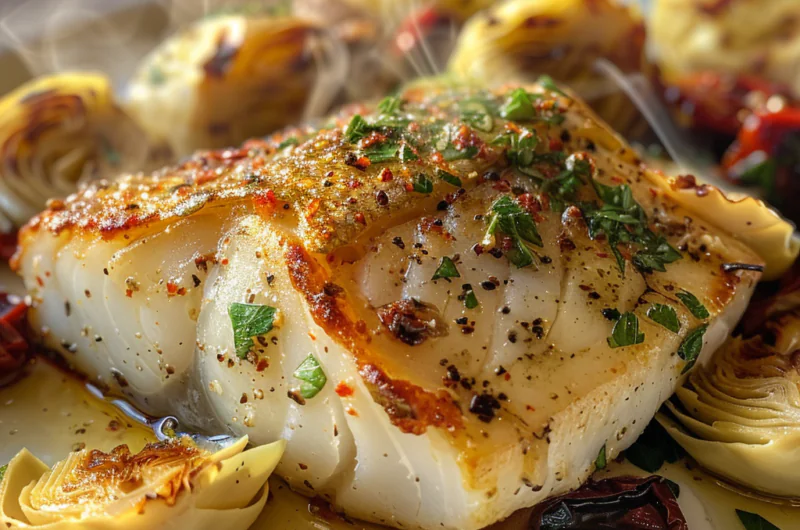
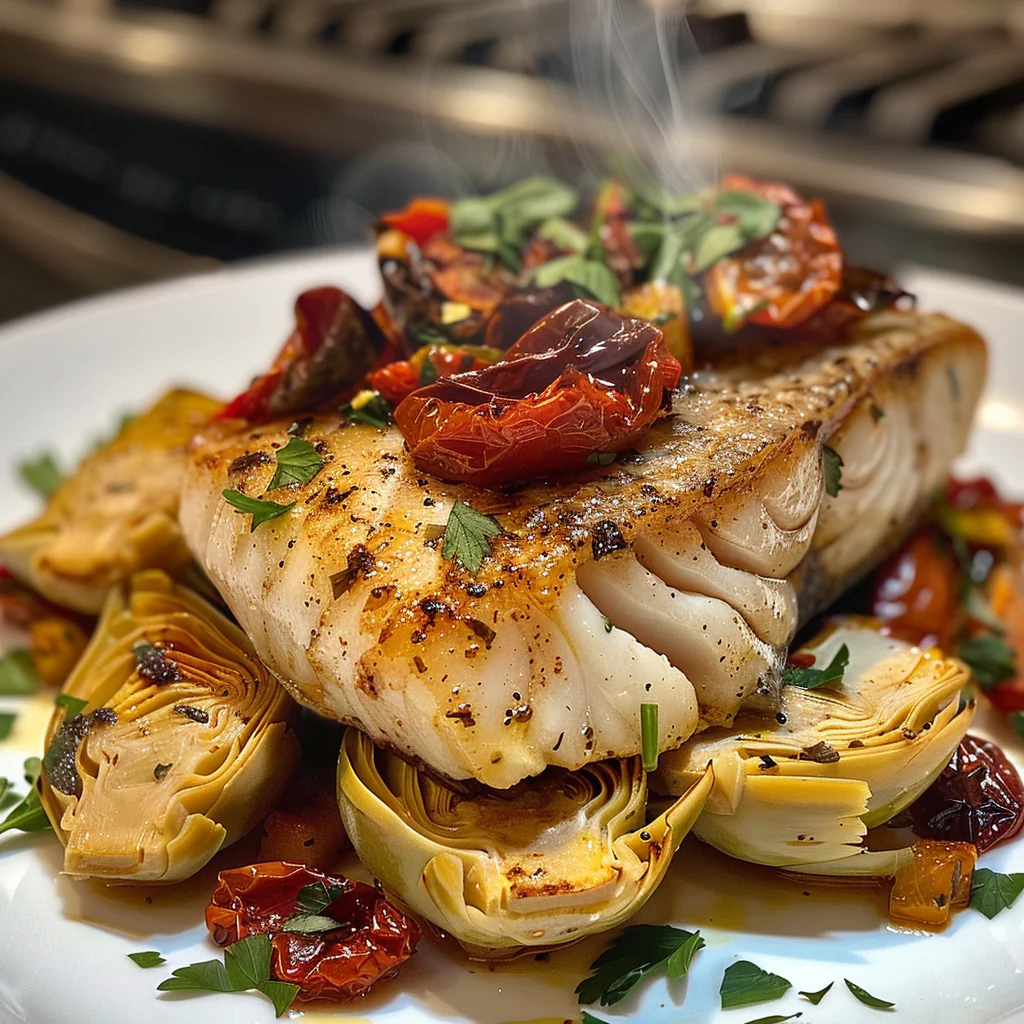
Flaky, tender cod with roasted artichokes and sun-dried tomatoes — ready in 25 minutes with almost no cleanup.
📋 In This Article
Introduction
Most sheet pan fish recipes disappoint. The vegetables turn soggy, the fish dries out, and everything tastes vaguely of nothing. Sheet Pan Lemon Herb Cod & Roasted Artichoke Hearts with Sundried Tomatoes actually works. The technique matters here: a hot oven, properly dried ingredients, and a quick marinade that does more than just coat the surface.
The Mediterranean diet gets thrown around as a buzzword, but this recipe delivers on the actual promise. Lean protein from cod, fiber from artichokes, healthy fats from olive oil — all without sacrificing flavor or spending an hour in the kitchen. The lemon and herbs penetrate the fish during a brief marinade, creating depth that feels intentional rather than accidental.
Why This Recipe Works
Here’s what separates this from other sheet pan dinners: temperature control and surface area.
Most recipes throw everything on one pan and hope. That fails because fish and vegetables cook at different rates. This recipe uses 400°F — hot enough to drive caramelization on the artichokes while the cod stays moist. The single-layer arrangement matters more than you’d think. Overcrowding creates steam. Steam kills browning. No browning means flat flavor.
The marinade isn’t just for show. A 15-minute soak in lemon juice, garlic, and olive oil does two things: the acid begins denaturing proteins on the surface (tenderizing the fish), and the oil carries fat-soluble compounds deeper into the flesh. Skip this step and the difference is noticeable. I used to skip it when rushed — don’t. Twenty minutes on the counter brings the fish closer to room temperature, which promotes even cooking. Cold fish from the fridge cooks unevenly; the outside overcooks before the inside is done.
The Mediterranean Diet: What You’re Actually Getting
This isn’t just marketing. The Mediterranean pattern emphasizes whole foods over processed ones, and the ingredients here work together synergistically. Cod provides Omega-3 fatty acids that support heart health and reduce inflammation. Artichokes deliver prebiotic fiber — essentially food for your gut bacteria. Olive oil contributes monounsaturated fats linked to lower cholesterol and better cardiovascular outcomes.
But here’s the part most recipes skip: these ingredients enhance each other nutritionally. The fat in olive oil helps your body absorb the fat-soluble vitamins in the vegetables. The lemon juice brightens flavor without adding sodium. You’re not just eating healthy ingredients in isolation — you’re getting compounding benefits.
Ingredients You’ll Need
For the Cod:
- 4 Cod Fillets (about 6 oz each, fresh or fully thawed)
- 2 tablespoons Olive Oil (extra virgin)
- 2 tablespoons Lemon Juice (freshly squeezed)
- 1 tablespoon Lemon Zest (from about 1 lemon)
- 3 cloves Garlic (minced)
- 1 teaspoon Salt (divided use)
- ½ teaspoon Black Pepper
For the Vegetables:
- 1 can Artichoke Hearts (14 oz, drained well and halved)
- ½ cup Sun-Dried Tomatoes (oil-packed, drained)
- 1 tablespoon Olive Oil
- 2 tablespoons Fresh Herbs (parsley, dill, or oregano — chopped)
Optional Additions:
- ¼ cup Kalamata Olives (pitted, for briny depth)
- 1 tablespoon Capers (rinsed)
- Red Pepper Flakes (if you want heat)
Step-by-Step Instructions
Step 1: Preheat and Prep
Preheat your oven to 400°F (200°C). This temperature hits a critical window: hot enough to trigger the Maillard reaction on the vegetables, but not so aggressive that the fish overcooks before its interior reaches the safe zone. Line a large sheet pan with parchment paper — not foil, which can react with acidic ingredients like lemon.
Step 2: Marinate the Cod
Pat the cod fillets dry with paper towels. Do this thoroughly. Surface moisture creates steam, and steam prevents browning. In a shallow dish, whisk together the olive oil, lemon juice, lemon zest, minced garlic, half the salt, and the pepper. Add the cod and turn to coat all sides. Let it sit for 15-20 minutes at room temperature.
Why room temperature? Cold fish from the refrigerator cooks unevenly by definition — the exterior will be overdone before the interior reaches temperature. A brief rest on the counter brings the fish closer to ambient, promoting more even protein denaturation throughout.
Step 3: Prepare the Vegetables
While the fish marinates, drain the artichoke hearts thoroughly. Press them gently between paper towels to remove excess moisture — this is the step most people skip, and it’s why their vegetables turn soggy. Halve any large pieces. In a bowl, toss the artichokes and sun-dried tomatoes with the remaining tablespoon of olive oil and the rest of the salt.
Step 4: Arrange and Roast
Arrange the vegetables in a single layer on the prepared sheet pan, leaving space in the center for the fish. Place the marinated cod fillets in the center. Don’t crowd the pan. Ingredients need space for hot air to circulate. Crowding creates steam, and steam is the enemy of texture.
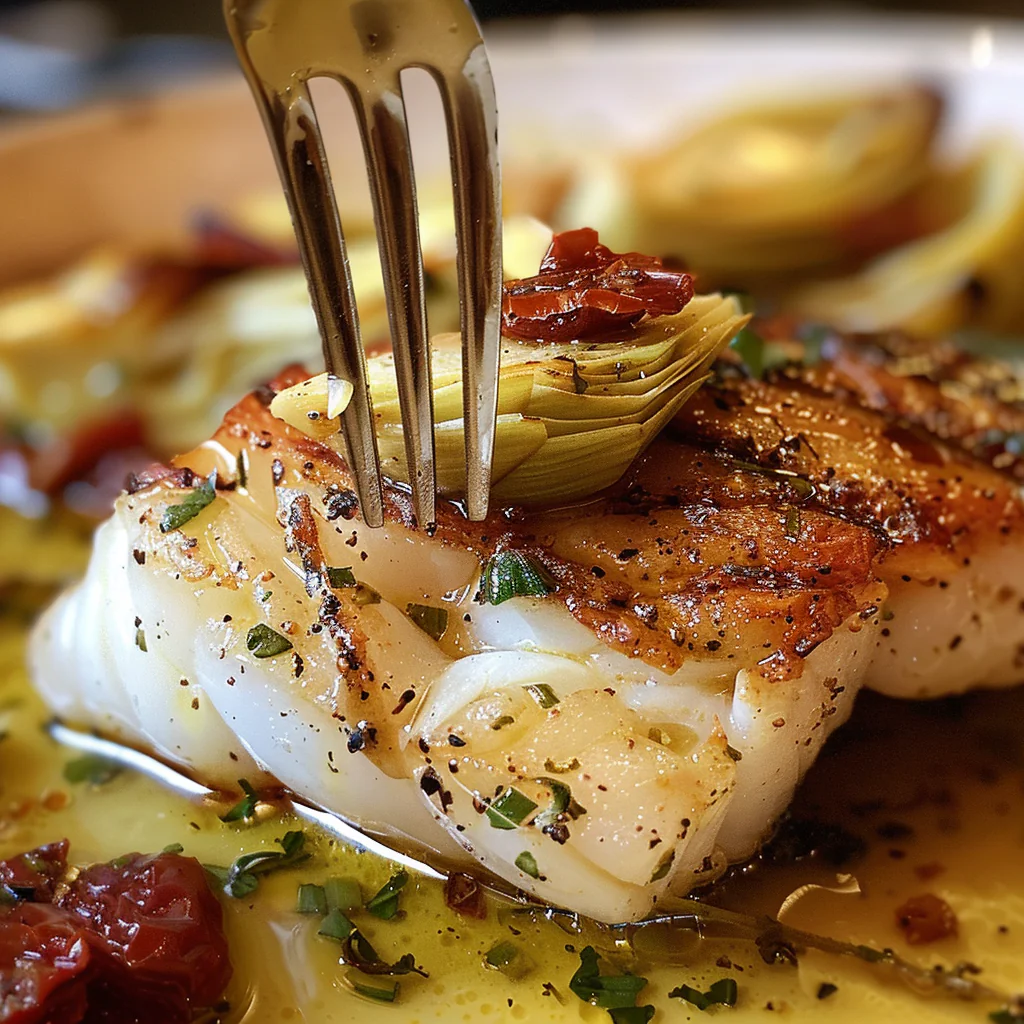
Bake for 12-15 minutes, until the cod flakes easily with a fork and reaches an internal temperature of 145°F (63°C). The vegetables should show slight browning on the edges.
Step 5: Finish and Serve
Remove from the oven. Scatter fresh herbs over everything and serve with lemon wedges. The residual heat releases the herbs’ essential oils, adding one final aromatic layer. Let the dish rest for about 2 minutes before serving — this allows the juices to redistribute rather than pooling on the plate.
⚠️ Common Mistakes to Avoid
Overcooking the fish. Cod goes from perfectly flaky to rubbery in roughly 60 seconds. Pull it at 140°F (60°C) and let carryover cooking finish the job — the internal temperature will climb to 145°F as it rests. Use a thermometer. Visual cues are unreliable.
Skipping the marinade. The lemon-garlic mixture does more than add surface flavor. The acid begins breaking down surface proteins, creating a more tender texture. A 15-minute soak gives you about 80% of the flavor penetration you’d get from overnight marinating. That’s a worthwhile trade-off.
Wet vegetables. Canned artichoke hearts are packed in liquid. Drain them well and press between paper towels. Excess moisture creates steam, which prevents the caramelization that gives roasted vegetables their depth and sweetness.
Crowding the pan. Every ingredient needs breathing room. When pieces touch, they steam instead of roast. Use a larger pan or cook in batches if necessary.
Variations & Substitutions
Fish Options
Cod is mild and affordable, but you have alternatives. Halibut offers a meatier texture and higher fat content — it’s more forgiving and harder to overcook but costs significantly more. Salmon brings omega-3s and a richer flavor; add 3-4 minutes to the cooking time due to its density. Tilapia works for a budget-friendly version, though it’s milder and dries out faster, so check it at 10 minutes.
Vegetable Swaps
No artichokes? Cherry tomatoes burst during roasting and create a natural pan jus that’s delicious with the fish. Zucchini adds volume but cooks faster — add it halfway through roasting to prevent mushiness. Bell peppers contribute crunch and sweetness. Adjust timing based on density: harder vegetables need more time, softer ones need less.
Herb Alternatives
Fresh herbs make a tangible difference. Dill brings anise notes that complement white fish. Parsley adds clean freshness without competing flavors. Oregano leans into the Mediterranean profile with its slightly bitter, earthy character. Use what you have, but use fresh if possible — dried herbs need time to rehydrate and won’t deliver the same brightness.
Dietary Modifications
This recipe is naturally gluten-free and dairy-free. For a low-sodium version, reduce the added salt and rely more heavily on herbs, lemon, and the natural salinity from capers or olives if using them.
Serving Suggestions
This dish stands on its own, but the right side makes it a complete meal. A simple green salad with a sharp vinaigrette cuts through the richness of the olive oil. Quinoa or couscous absorbs the pan drippings — don’t let that flavor go to waste. Crusty bread serves the same purpose and requires zero additional cooking.
For wine, a Sauvignon Blanc or Pinot Grigio mirrors the lemon’s acidity and won’t overpower the delicate fish. If you prefer red, a light Pinot Noir works surprisingly well.
Storage & Reheating
Refrigerate leftovers in an airtight container for up to 3 days. The fish won’t improve with time, so plan to eat it sooner rather than later.
Reheating: Skip the microwave — it turns fish rubbery by overheating the proteins unevenly. Instead, place leftovers on a baking sheet, cover loosely with foil, and warm in a 275°F (135°C) oven for 10-12 minutes. This gentle heat preserves the flaky texture.
Freezing isn’t recommended. Cooked fish becomes watery and loses its delicate structure upon thawing.
💡 Pro Tips for Success
Room temperature fish. Pull cod from the refrigerator 20 minutes before cooking. Cold fish cooks unevenly by definition — the exterior overcooks while the interior struggles to reach temperature.
Zest before you juice. It’s significantly easier to zest a whole lemon than one that’s already been squeezed. The zest contains essential oils that add brightness without additional acidity.
Don’t skip the oil. The olive oil isn’t just for flavor — it conducts heat efficiently and promotes even browning. Fat-soluble compounds in the herbs and garlic need oil to distribute properly across the fish.
Parchment over foil. Parchment prevents sticking without creating a steam trap. Foil can react with acidic ingredients like lemon and create off-flavors.
Rest before serving. Two minutes on the pan allows juices to redistribute throughout the fish. Cut too early and you’ll lose moisture directly onto the board.
Frequently Asked Questions (FAQ)
+Why does my cod come out rubbery?
Rubbery cod means overcooking, plain and simple. Fish proteins tighten and squeeze out moisture when heated too long. Pull the fish at 140°F (60°C) internal temperature and let carryover cooking finish it. The temperature will rise to 145°F during the rest. If you don’t have a thermometer, the flesh should flake cleanly with a fork — if it resists or feels firm, it’s already overdone.
+Can I use frozen cod fillets?
Yes, but thaw them completely first. Frozen fish releases excess water during cooking, which creates steam and prevents proper browning. Thaw overnight in the refrigerator or place the sealed package under cold running water for 30 minutes. Never microwave to thaw — it cooks the edges while the center stays frozen.
+How do I know when the cod is fully cooked?
The flesh should flake easily when pressed gently with a fork and appear opaque throughout, with no translucent spots. An instant-read thermometer inserted into the thickest part should register 145°F (63°C). If you don’t have a thermometer, insert a knife at the thickest point — the flesh should separate into clean, white flakes rather than looking glassy or mushy.
+Can I meal prep this recipe?
You can, but fish doesn’t hold as well as heartier proteins like chicken or beef. For best results, cook the vegetables ahead and refrigerate for up to 5 days, then cook the fish fresh when you’re ready to eat — it only takes 15 minutes. If you cook everything together, consume within 2-3 days for acceptable quality.
+What can I substitute for artichoke hearts?
Cherry tomatoes work beautifully and create a natural sauce when they burst. Roasted red peppers from a jar add sweetness and require no prep. Zucchini provides volume but cooks faster — add it after the fish has been in for 5 minutes. Broccoli florets offer more crunch but need an extra 5-10 minutes, so start them before adding the fish.