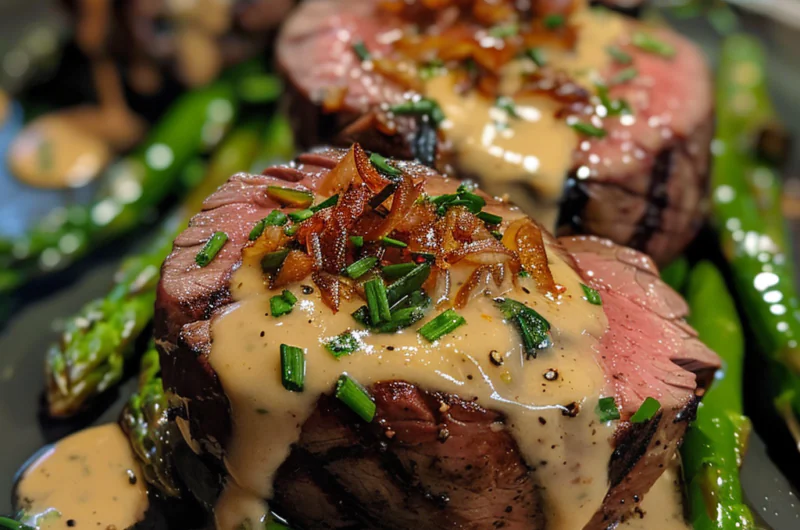
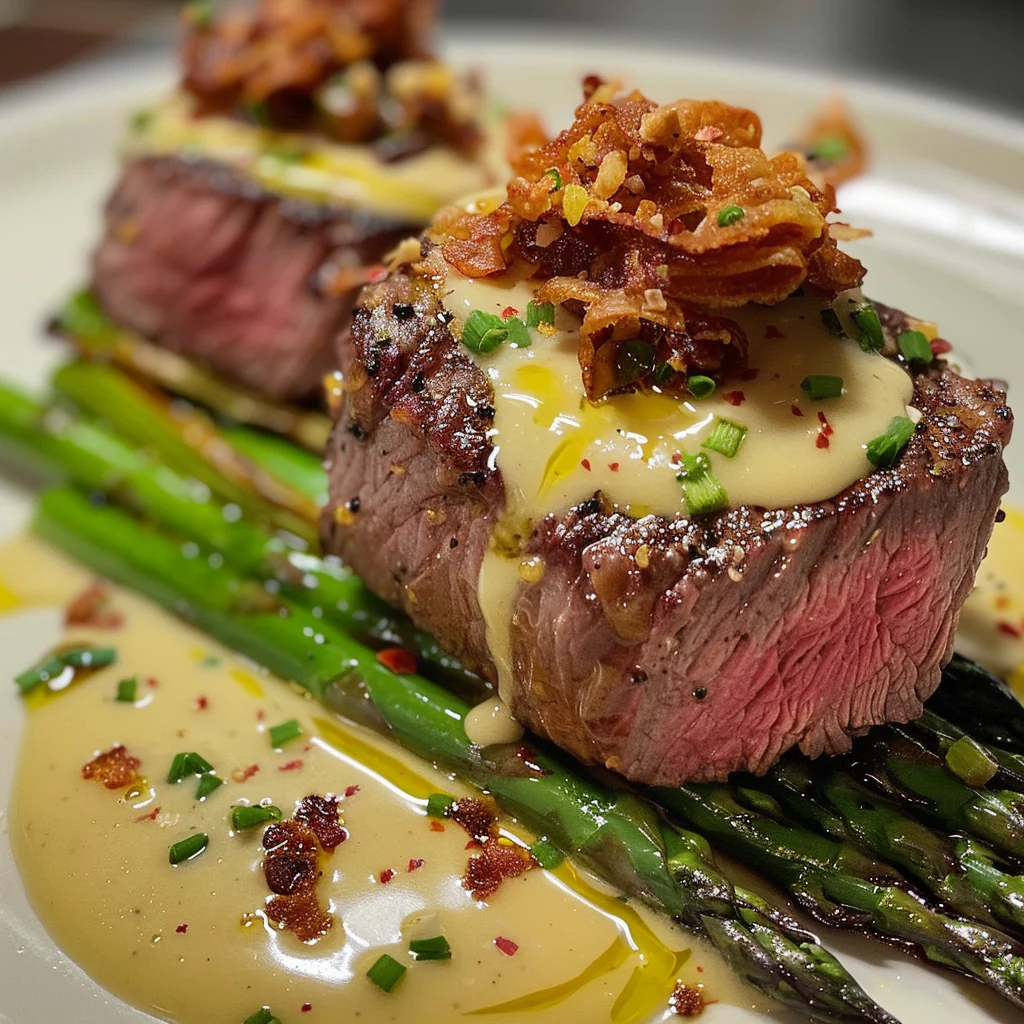
A perfectly seared, buttery-soft steak draped in a velvety, pungent cheese sauce and topped with crunchy golden shallots—ready in under 30 minutes for the ultimate date-night win.
📋 In This Article
Introduction
There is a specific kind of silence that falls over a table when you serve Juicy Pan-Seared Beef Tenderloin with Creamy Gorgonzola Sauce & Crispy Shallots. It’s the silence of people too busy chewing to speak. While tenderloin often gets a bad rap in culinary circles for being “too mild” or lacking the heavy marbling of a ribeye, that leanness is exactly what makes it the perfect canvas for a rich, pungent Gorgonzola sauce. The high fat and sharp tang of the cheese cut right through the lean meat, while crispy shallots add a textural surprise that keeps every bite interesting.
This dish looks incredibly impressive. It tastes expensive. But here’s the secret: the actual hands-on work is minimal. It’s less about complex technique and more about timing. You sear the meat, whip up a quick pan sauce, and fry some shallots. That’s it. Whether it’s an anniversary or just a Tuesday that needs upgrading, this recipe delivers steakhouse results without the steakhouse price tag.
Why This Recipe Works (The Science of Deliciousness)
We aren’t just throwing cheese on meat here; we are leveraging thermal dynamics and chemistry to build layers of flavor.
The crust on the beef is all about the Maillard Reaction. When the meat hits the hot pan, amino acids and reducing sugars react to create hundreds of new flavor compounds. This doesn’t “seal in juices” (that’s a persistent myth), but it does create a savory, nutty crust that provides contrast to the soft interior.
Then there is the fond—those sticky, browned bits left in the pan after searing. They are packed with concentrated flavor. By using the same pan to start your sauce, you dissolve that fond into the cream, effectively recycling flavor back into the dish. Finally, the emulsification of the cheese into the cream creates a stable, velvety sauce that clings to the meat rather than breaking into greasy puddles.
Ingredients You’ll Need
For the Steak:
- USDA Prime Beef Tenderloin (1 pound, cut into two 8-ounce steaks)
- Kosher Salt (1 teaspoon, divided)
- Freshly Ground Black Pepper (1 teaspoon, freshly cracked)
- Olive Oil (2 tablespoons, for searing)
For the Creamy Gorgonzola Sauce:
- Heavy Cream (1 ½ cups)
- Gorgonzola Crumbles (3 ounces, room temperature)
- Parmesan Cheese (3 tablespoons, freshly grated)
- Fresh Thyme (1 teaspoon, finely chopped)
- Fresh Rosemary Sprigs (2, whole)
- Garlic Cloves (2, smashed)
For the Crispy Shallots:
- Shallots (2 large, thinly sliced into rings)
- All-Purpose Flour (½ cup, for dredging)
- Olive Oil (1 cup, for frying)
- Buttermilk (½ cup, for soaking)
Step-by-Step Instructions: Pan-Seared Perfection
Preparing the Beef
Start by taking your Juicy Pan-Seared Beef Tenderloin out of the fridge. Cold meat sears poorly; it steams instead. Let the steaks sit on the counter for about 30 minutes to take the chill off. Pat them aggressively dry with paper towels. Moisture is the enemy of a good crust. Season generously on all sides with kosher salt and black pepper. Don’t be shy—if you can see the salt, you’re doing it right.
Pan-Searing the Tenderloin
Preheat your oven to 400°F. Heat a cast-iron skillet or heavy stainless steel pan over medium-high heat until it is smoking hot. Add the olive oil. Once the oil shimmers, lay the steaks in the pan. Don’t move them. Let them cook for 4-5 minutes until a deep, dark crust forms. Flip and sear the other side for 3 minutes.
If you have thick steaks, transfer the whole pan to the preheated oven. Roast for 5-10 minutes. Use a meat probe to check the internal temperature; pull the steaks at 120°F for medium-rare. The residual heat will finish the job. Transfer the meat to a cutting board and tent loosely with foil.
Making the Creamy Gorgonzola Sauce
While the meat rests, get to work on the sauce. Pour off excess fat from the skillet but leave those browned bits (the fond) behind. Set the pan over medium heat. Add the heavy cream, smashed garlic, and rosemary sprigs. Bring to a gentle simmer, scraping up the browned bits with a wooden spoon.
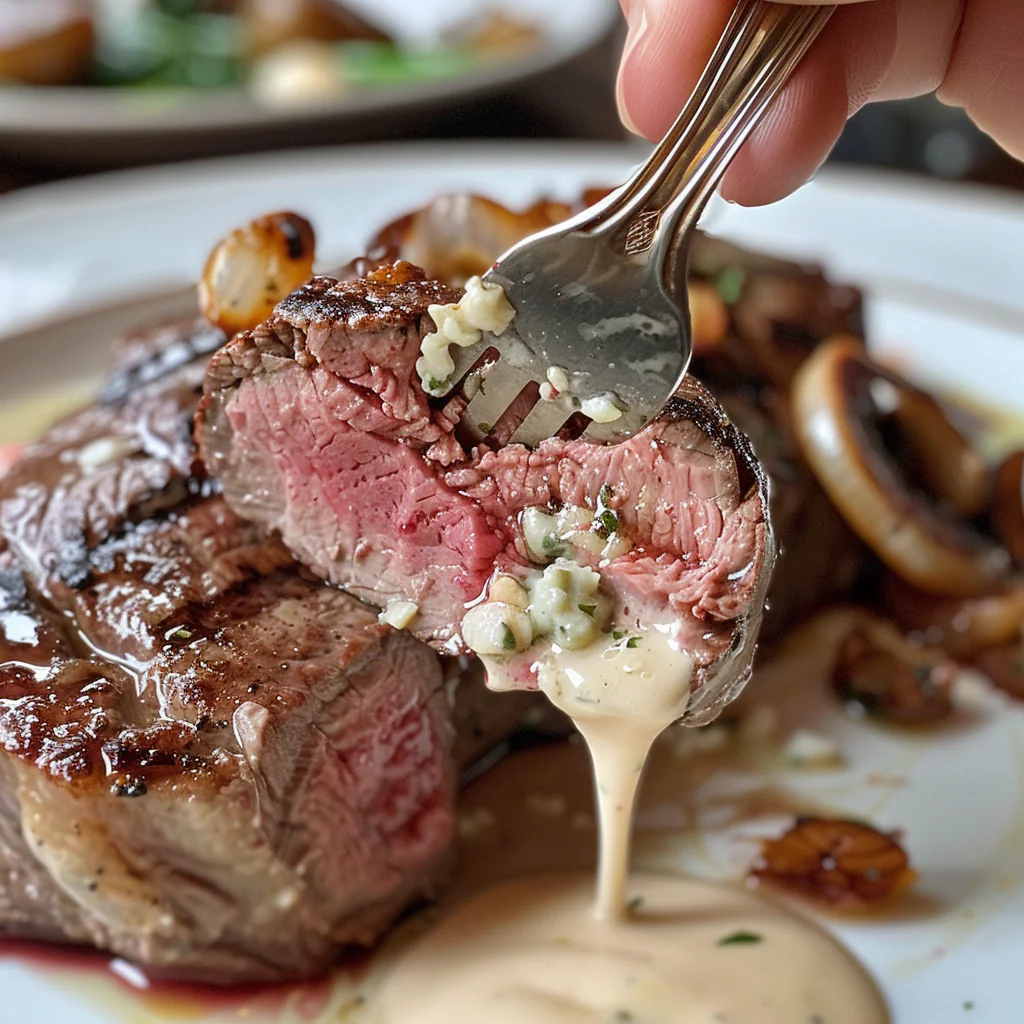
Let the cream reduce slightly until it coats the back of a spoon, about 3-4 minutes. Remove the rosemary and garlic. Lower the heat and whisk in the Gorgonzola and Parmesan. Stir until melted and smooth. If the sauce gets too thick, splash in a little water or more cream. Season with black pepper.
Crafting the Crispy Shallots
You can do this step first or while the cream simmers. Toss the sliced shallots in buttermilk, then drain and dredge them in flour, shaking off the excess. Heat about ½ inch of oil in a small saucepan over medium-high heat. Fry the shallots in batches until golden brown and crispy, about 2-3 minutes. Transfer to a paper towel-lined plate and sprinkle immediately with salt.
Plating
Slice the tenderloin against the grain into thick medallions. This shortens the muscle fibers, making the meat easier to chew. Arrange the slices on a warm plate. Drizzle the creamy Gorgonzola sauce over the top—don’t drown it, just enough to coat. Pile the crispy shallots on top for that essential crunch.
⚠️ Common Mistakes to Avoid
Even a simple recipe has pitfalls. Here is where most home cooks go wrong.
Overcooking the Tenderloin: This is the number one crime. Tenderloin has very little fat, so medium-well or well-done results in dry, chalky meat. Stick to 120°F internal temperature for medium-rare. Trust your thermometer, not the clock.
Under-seasoning the Beef: Because tenderloin is mild, it needs salt. Salt it aggressively before it hits the pan. If you salt right before cooking, the salt stays on the surface and creates a tasty crust. If you salt hours ahead, it penetrates deeper—both methods work, but do not skip the salt.
Boiling the Sauce: Dairy breaks if you boil it. Once the cheese is in, keep the heat low. If you see the sauce looking greasy or separated, take it off the heat immediately and whisk in a teaspoon of cold water to bring the emulsion back together.
Soggy Shallots: If your shallots aren’t crunchy, the oil wasn’t hot enough or they were crowded in the pan. Fry them in small batches and let them drain fully before topping the steak.
Variations & Pairings
This dish is versatile. If you want to switch things up, try these tested variations.
Sauce Variations: If blue cheese isn’t your thing, a Red Wine Reduction works beautifully. Deglaze the pan with a cup of red wine after searing the beef, reduce it by half, then swirl in butter. Or try a Brandy Cream Sauce by flambéing brandy in the pan before adding the cream.
Cheese Alternatives: For a milder flavor, substitute Gorgonzola with Roquefort for a sharper bite, or Cambozola for a creamier, Brie-like texture.
Side Dishes: You need something to soak up that sauce. Creamy Mashed Potatoes or a Truffle Risotto are classic. For a lighter touch, roasted asparagus or a bitter arugula salad with lemon vinaigrette cuts through the richness.
Wine Pairings: A big, bold red stands up to the Gorgonzola. A Cabernet Sauvignon or a peppery Syrah is ideal. If you prefer white, a rich Chardonnay can work, but avoid anything too acidic or it will clash with the cream.
💡 Pro Tips for a Restaurant-Quality Experience
Want to look like a pro? Focus on these details.
Use a Meat Thermometer: Visual cues lie. A thermometer guarantees perfection. Insert it into the thickest part of the steak, avoiding bone or fat.
Rest Your Meat: I used to skip this step—don’t. When meat cooks, the juices retreat to the center. If you cut immediately, those juices end up on the cutting board, not in your mouth. Resting allows the fibers to relax and reabsorb the liquid. Ten minutes is the minimum.
Reverse Sear Option: If you have thick steaks, try the reverse-sear method. Roast the steak in a 250°F oven until it hits 115°F internally, then sear it in a smoking hot pan for 60 seconds per side. This gives you a perfect edge-to-edge pink center with a thin crust.
Deglaze the Pan: Never waste the fond. Those browned bits are pure umami. Whether you are making the cream sauce or a wine reduction, always scrape the bottom of the pan to incorporate that flavor base.
Storage & Reheating
Leftovers are rare with this dish, but if you have them, treat them gently.
Store the beef and sauce separately. Wrap the steak tightly in plastic wrap or place it in an airtight container. Refrigerate for up to 3 days. The sauce should be in its own container; keeping them together makes the crust soggy.
To reheat, skip the microwave. It ruins the texture. Instead, place the steak in a 250°F oven until warmed through, about 15-20 minutes. Reheat the sauce gently in a saucepan over low heat, stirring constantly. If the sauce has thickened too much in the fridge, thin it with a splash of cream. Re-crisp the shallots quickly in a hot pan for 30 seconds.
Frequently Asked Questions (FAQ)
+Why is my beef tenderloin tough?
Tough tenderloin is usually overcooked. Because this cut is so lean, it dries out rapidly past medium-rare. Slice it against the grain to shorten the muscle fibers, which makes chewing easier even if the meat is perfectly cooked.
+Can I make the Gorgonzola sauce ahead of time?
Yes. Make the sauce up to 2 days in advance and store it in the fridge. Reheat it gently over a double boiler or very low heat, whisking constantly to prevent the cream from breaking.
+What is the best pan for searing beef?
Cast iron is the gold standard. It retains heat exceptionally well, meaning the pan temperature won’t drop drastically when you add the cold steak. A heavy stainless steel pan works too, but avoid non-stick; they rarely get hot enough for a proper Maillard reaction.
+How do I fix a sauce that has separated?
If your sauce looks oily or curdled, remove it from the heat immediately. Whisk in a teaspoon of cold water or an ice cube. This shocking technique can sometimes bring the emulsion back together. If that fails, start a new batch with a little fresh cream and slowly whisk the broken sauce into it.
+Can I use frozen beef tenderloin?
You can, but thaw it completely in the refrigerator for 24 hours first. Pat it extremely dry before searing. Frozen meat releases a lot of moisture as it thaws, and excess moisture guarantees a gray, steamed crust rather than a brown sear.
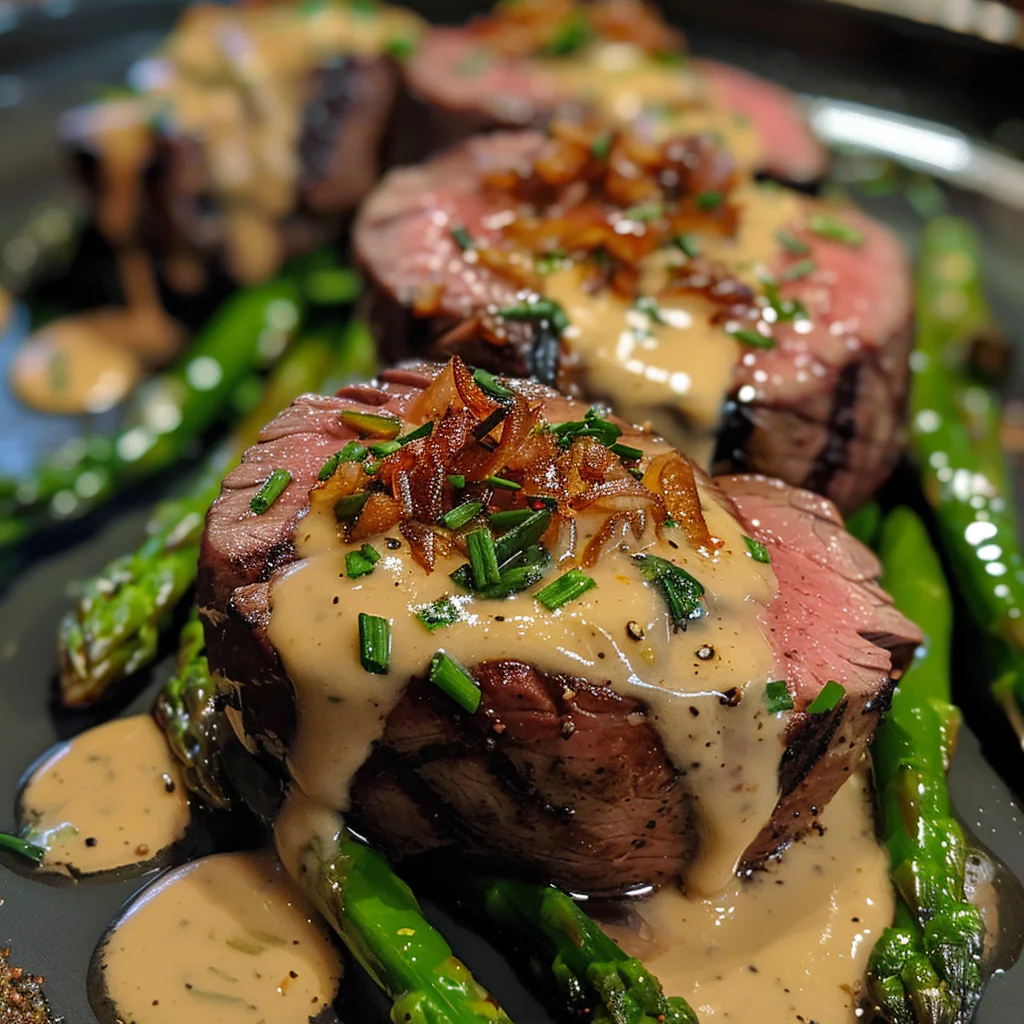
Beef Tenderloin With Creamy Gorgonzola Sauce
Ingredients
Method
- Preheat the oven to 450 degrees.
- Rub the beef with a light coating of olive oil and a generous amount of salt and pepper around all sides. Do not be afraid to use salt on the outside. You need this to season the meat or it will be bland.
- Use a large sheet pan with short sides, like a cookie sheet. Place a flat rack in the sheet pan to keep the meat off the pan.
- Insert an oven proof thermometer in one end so that the tip is in the middle of the roast. Do not insert the rod from the top, as it is too hard to get it in the middle. Use a thermometer that sits on the counter with a cord. (you can find this in my favorite cooking tools link, I can't live without this)
- 4. Cook the roast for 15 minutes at 450 degrees and than lower the oven to 325 degrees. Do not open the oven at all during this time. Set the thermometer to 120 for medium rare or 125 for medium.
- Take the roast out of the oven when the thermometer reaches the desired temperature and cover with foil. Do not remove the thermometer. Let the roast sit for 15-20 minutes before slicing. You will see the thermometer will rise another 8-10 degrees. Medium Rare will rise close to 130 and more medium with register at 135 on thermometer. It's very important to let the roast rest out of the oven, it will continue to cook and allow the juices to spread back out into the meat. This is how you get the perfect cooking throughout your meat from top to bottom and from end to end.
- Gorgonzola Sauce: Bring the cream to a full boil in a medium to large sauce pan, boil rapidly until sauce thickens and stir occasionally. Take off the heat and add the rest of the ingredients until the cheeses are melted. This sauce can easily be made ahead of time and reheated.
Nutrition
Notes
- For perfect doneness, use an instant-read thermometer; aim for 120°F for medium-rare and 125°F for medium. Remember, the temperature will continue to rise while the meat rests.
- To prevent dryness, ensure you generously season the beef before cooking and avoid opening the oven door during the initial high-heat phase.
- If you're short on time, consider using a smaller cut of beef, like filet mignon, which cooks faster while still delivering tender results.
- For a creamier sauce, whisk the Gorgonzola in gradually to prevent it from clumping and ensure a smooth consistency. Reheat gently on low heat if needed.
- This dish can be made ahead; the sauce stays fresh in the fridge for up to 3 days. Reheat slowly on the stove to maintain its creamy texture.