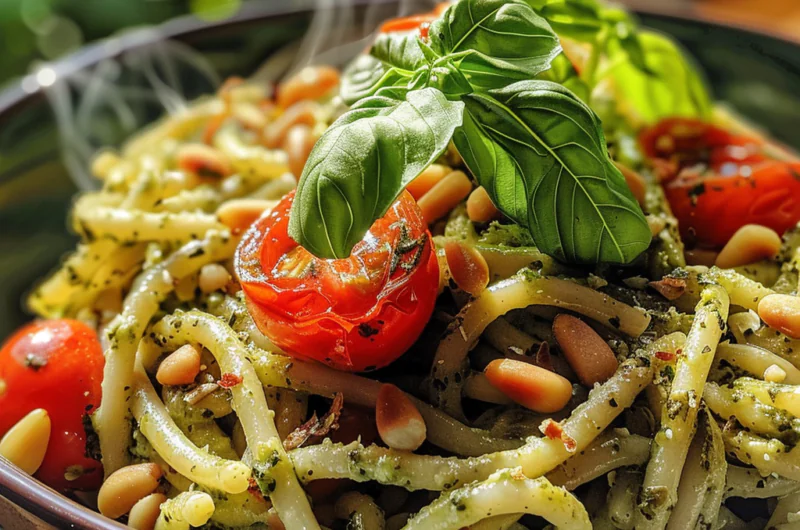
A 20-minute vegetarian dinner with silky pesto, burst tomatoes, and buttery crunch in every bite.
📋 In This Article
Introduction
Let’s be honest: pesto pasta usually falls into one of two camps. Either it’s bone-dry and clumpy, or it’s swimming in oil that separates the moment it hits the plate. Neither is what you’re after on a Tuesday night. Creamy Pesto Pasta with Blistered Cherry Tomatoes & Toasted Pine Nuts solves both problems with one simple technique that most recipes skip entirely.
The trick lies in that unassuming cup of pasta water you drain away. Most home cooks dump it without a second thought. Big mistake. That cloudy, starchy liquid is pure gold — it contains dissolved starches that help the pesto emulsify into a velvety sauce that actually clings to your noodles instead of pooling at the bottom of the bowl.
I learned this the hard way years ago, standing over a pot of separated, oily pasta wondering where I went wrong. The answer was in the sink.
Why This Recipe Works
This dish succeeds where others fail because it treats pesto as a sauce, not a condiment. When you toss hot pasta with pesto straight from the jar, the oil separates and the basil wilts into a sad, dark mess. But when you thin it gradually with starchy pasta water, something almost magical happens. The starch molecules swell and create a network that traps oil droplets, resulting in a creamy, cohesive emulsion that coats every strand.
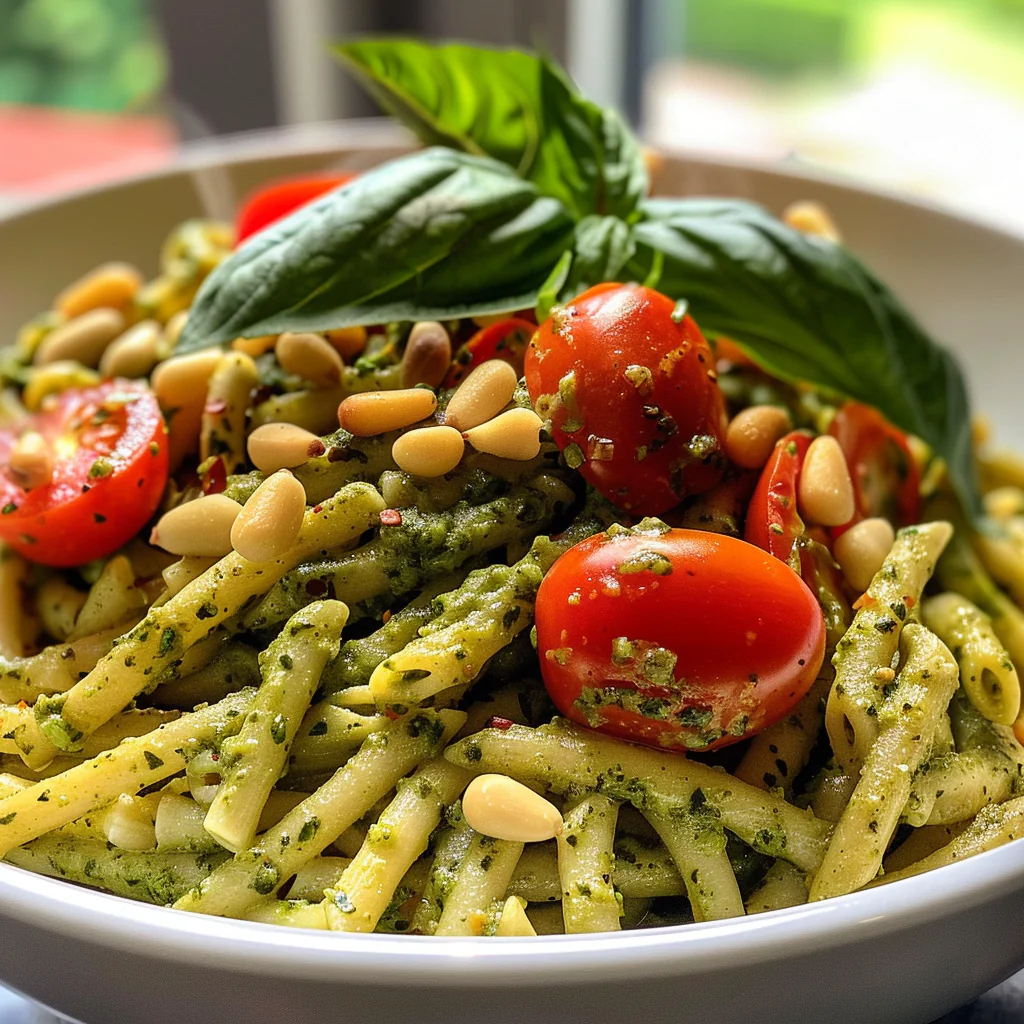
The blistered cherry tomatoes contribute more than just color. As they burst, their juices mix with the olive oil in the pan, creating a light pan sauce that bridges the gap between the intense pesto and the mild pasta. Sweet, acidic, and slightly caramelized — they cut through the richness in a way that feels intentional, not accidental.
And those pine nuts? They’re not just garnish. Toasted properly, they develop deep, buttery notes through the Maillard reaction, adding a textural contrast that keeps each bite interesting. Soft pasta, creamy sauce, burst tomatoes, crunchy nuts. That’s the whole game.
Essential Ingredients for Your Creamy Pesto Pasta
For the Base
- Pasta (12 oz): Long strands like fettuccine or linguine work beautifully, but short shapes like orecchiette or fusilli catch the pesto in their nooks. Use bronze-cut pasta if you can find it — the rougher surface texture gives the sauce something to grab onto.
- Basil Pesto (1/2 cup): Homemade is worth the extra five minutes, but a quality store-bought version works in a pinch. Look for one where basil is the first ingredient, not oil.
- Cherry Tomatoes (30): Seek out smaller ones. They blister faster and have a higher skin-to-flesh ratio, which means more concentrated flavor when they burst.
For the Finish
- Pine Nuts (2 tablespoons): Toast them whole, then roughly chop. Smaller pieces distribute better through the dish.
- Parmesan Cheese (2 tablespoons, freshly grated): The pre-grated stuff in tubs contains anti-caking agents that prevent it from melting properly. Grate it yourself from a wedge.
- Garlic (2 cloves, minced): One gets sautéed with the tomatoes, one gets stirred into the finished dish for a raw bite.
- Extra Virgin Olive Oil (1 tablespoon): Save the good stuff for finishing. The heat from the pasta will bloom its aromatic compounds.
- Fresh Basil (handful): Tear it by hand right before serving. Cutting with a knife bruises the leaves and turns them black.
Optional but Worth It
- Heavy Cream (2 tablespoons): Not traditional, but it stabilizes the emulsion and adds a luxurious mouthfeel. Skip it if you’re dairy-free.
- Red Pepper Flakes (pinch): For a subtle heat that plays nicely against the sweet tomatoes.
Step-by-Step Instructions
Step 1: Toast the Pine Nuts
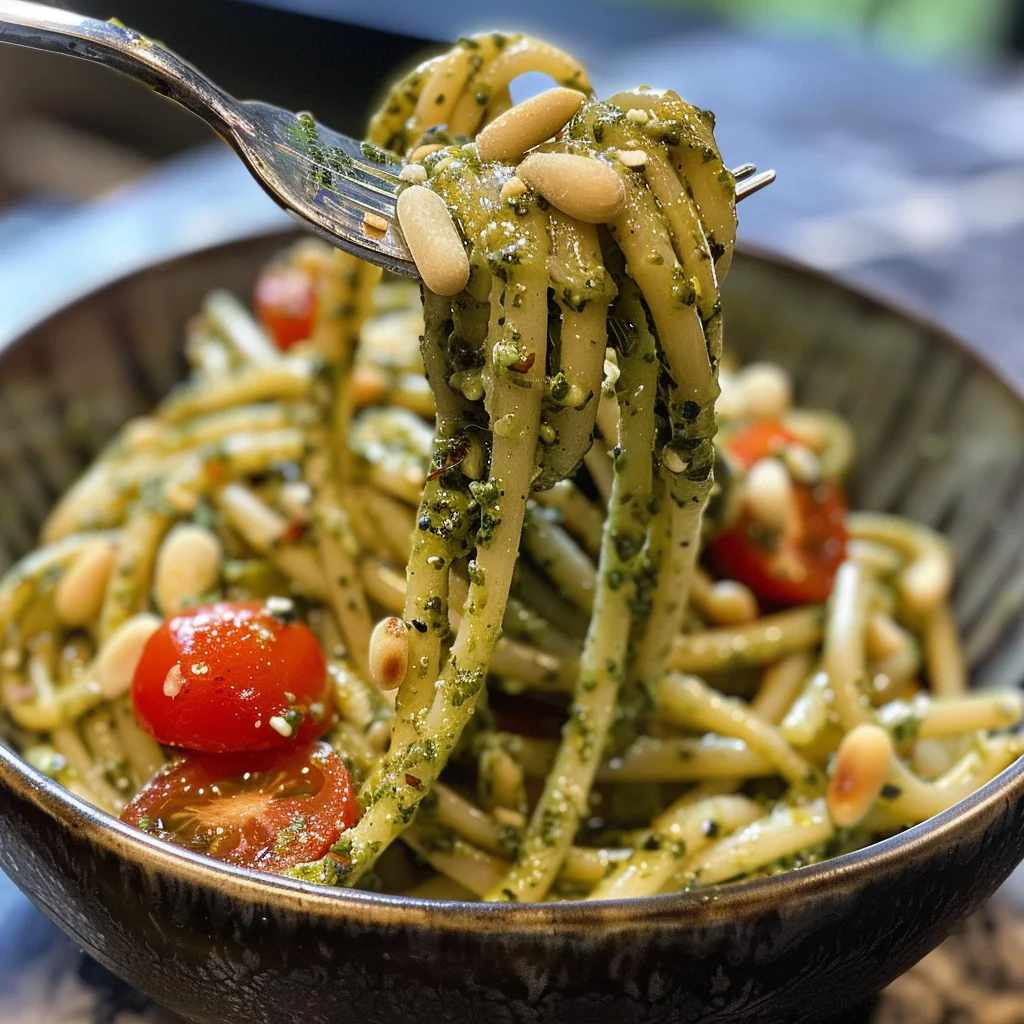
Place pine nuts in a dry skillet over medium-low heat. Shake the pan constantly. They’ll smell faintly nutty at first, then suddenly intensify — that’s your window. The moment they turn golden, dump them onto a plate. Residual heat will continue cooking them, and burnt pine nuts taste acrid and bitter. You’re looking for the color of honey and the smell of toasted bread.
This takes about 3-4 minutes, but watch closely. Pine nuts contain high amounts of oil, which means they go from perfect to ruined in roughly thirty seconds.
Step 2: Cook the Pasta Properly
Bring a large pot of water to a rolling boil. Add enough salt that it tastes like a properly seasoned soup — not quite as salty as the ocean, but close. Under-salted water yields bland pasta, and no amount of sauce can fix that.
Add the pasta and stir immediately to prevent sticking. Cook until just shy of al dente — usually 1-2 minutes less than the package suggests. The pasta will finish cooking in the sauce, absorbing flavor as it softens.
Before draining, reserve a full cup of that starchy cooking water. This is your insurance policy against dry, clumpy pasta.
Step 3: Blister the Cherry Tomatoes
While the pasta cooks, heat olive oil in a large skillet over medium-high heat. Add the cherry tomatoes (halved or whole — halved blister faster, whole look prettier) and let them sit undisturbed for 2 minutes.
Here’s the thing: most people stir too often. Don’t. Let the cut sides contact the hot metal. You want to hear a sizzle, see some smoke, watch the skins wrinkle and char in spots. That’s caramelization happening in real time.
After 2-3 minutes, stir once, then add the minced garlic. Cook another minute until the tomatoes have burst and released their juices, creating a jammy mixture. If the pan looks dry, add a splash of pasta water to loosen.
Step 4: Build the Sauce
Transfer the drained pasta directly to the skillet with the tomatoes. Add the pesto and toss vigorously with tongs. Now add that reserved pasta water gradually — start with 1/4 cup, then add more as needed.
The pasta should glisten, not drip. Each piece coated in a thin, even layer of sauce. If it looks dry, add more water. Too loose? Keep tossing over low heat — the starch will thicken it.
Remove from heat. Stir in half the pine nuts, half the Parmesan, and a drizzle of your best olive oil. Taste. Add salt if needed (it probably will), and a generous amount of black pepper.
Step 5: Serve Immediately
Transfer to warmed plates. Top with remaining pine nuts, Parmesan, and fresh basil. A final drizzle of olive oil. Done.
⚠️ Common Mistakes to Avoid
Even simple dishes have pitfalls. Here’s what trips people up:
Overcooking the pasta. Al dente means “to the tooth” — there should be slight resistance when you bite. If it’s soft all the way through, you’ve already lost. The pasta continues cooking when you add it to the hot sauce, so pulling it early is essential.
Under-blistering the tomatoes. Pale, firm tomatoes add nothing. You want them collapsed and jammy, their sugars concentrated through caramelization. High heat and patience. Don’t rush this step.
Skipping the pasta water. This is the single biggest mistake. Without it, your pesto sits on top of the pasta rather than becoming one with it. The starch in that water is what transforms oil and basil into a cohesive, creamy emulsion.
Burning the pine nuts. I’ve done this more times than I care to admit. They go from white to golden to black in seconds. Use your nose — the moment that nutty aroma intensifies, they’re done. Get them off the heat immediately.
Adding pesto to cold pasta. The residual heat from the pasta helps the oils in the pesto bloom, releasing aromatic compounds you’d otherwise miss. Cold pasta = muted flavor.
💡 Pro Tips from the Test Kitchen
Make pesto in bulk and freeze it. Portion it into ice cube trays. One cube is roughly two tablespoons — perfect for a single serving of pasta. Thaws in minutes and tastes infinitely better than store-bought.
Save tomato scraps. If you’re growing tomatoes, save the trimmings and overripe ones. Roast them with olive oil and garlic until they collapse, then blend into a quick tomato-pesto hybrid. Reduces waste and adds depth.
Toast pine nuts in the oven. If you’re already using the oven for something else, spread pine nuts on a sheet pan and toast at 350°F for 5-6 minutes. More even browning, less risk of burning, and one less pan to wash.
Finish with acid. A squeeze of lemon juice at the end brightens everything. The pesto is rich, the tomatoes are sweet — acid cuts through both. Start with half a lemon and taste.
Delicious Variations
The base recipe is solid, but here’s how to make it your own:
Protein boost. Canned white beans, drained and rinsed, add creaminess and protein without changing the dish’s character. For omnivores, rotisserie chicken or quick-seared shrimp turn this into a complete meal.
Greens integration. Wilted spinach or kale adds volume and nutrients. Add it to the tomatoes during the last minute of cooking so it softens without becoming mushy.
Nut alternatives. Pine nuts are traditional but expensive. Toasted walnuts, almonds, or even sunflower seeds work. Each brings a different flavor profile — walnuts are earthier, almonds sweeter, sunflower seeds more neutral.
Vegan adaptation. Use a dairy-free pesto (nutritional yeast instead of Parmesan) and skip the cream. The pasta water technique still creates creaminess without any dairy at all.
Gluten-free option. Any gluten-free pasta works, but rice-based varieties tend to release more starch into the cooking water, which actually helps the sauce. Just don’t rinse it — you need that surface starch.
Storage & Reheating
Pesto pasta doesn’t improve with age, but it stores adequately.
Refrigeration: Keep in an airtight container for up to 3 days. The pesto will darken on top — that’s oxidation, not spoilage. Stir before reheating to redistribute the oils.
Reheating: Add a splash of water before microwaving. The pasta will have absorbed sauce overnight, so you need to reintreintroduce moisture. Heat in 30-second intervals, stirring between each. For stovetop reheating, add a tablespoon of water and toss over low heat until warmed through.
Freezing: Not recommended. The texture of both the pasta and the pesto deteriorates significantly. The tomatoes become mealy, and the sauce separates irreparably upon thawing.
Make-ahead components: The pesto can be made up to 5 days ahead and refrigerated (press plastic wrap directly onto the surface to prevent browning) or frozen for months. Toast pine nuts in advance and store in an airtight container. The tomatoes should be cooked fresh — reheated tomatoes lose their texture.
Frequently Asked Questions
+Why does my pesto pasta always end up dry?
Two reasons: not enough sauce, or not using pasta water. Pesto is concentrated — it needs to be thinned with starchy cooking water to become a proper sauce. Start with 1/4 cup and add more until the pasta glistens. Also, remember that pasta continues absorbing sauce as it sits, so it’s best served immediately.
+Can I use sun-dried tomatoes instead of fresh?
You can, but the dish becomes something entirely different. Sun-dried tomatoes are chewy, intensely salty, and lack the burst of juice that fresh ones provide. If using them, rehydrate in warm water first, and reduce the salt elsewhere in the dish.
+How do I know when the tomatoes are properly blistered?
They should be collapsed, with wrinkled skins and some charred spots. When you press one with a spatula, it should burst easily. If it resists, it needs more time. The pan should have a jammy, slightly thickened liquid from the released juices.
+Can I skip toasting the pine nuts?
Technically yes, but you’ll miss out on significant flavor. Raw pine nuts are soft and bland. Toasting triggers the Maillard reaction, creating hundreds of new aromatic compounds. It takes 3 minutes and transforms them from filler to standout.
+What’s the best pasta shape for pesto?
Long strands like linguine are traditional, but short shapes with texture — fusilli, gemelli, orecchiette — hold the sauce better. The pesto gets trapped in the ridges and hollows. Avoid smooth shapes like penne, which let the sauce slide right off.
+How long does homemade pesto last in the fridge?
Up to 5 days if stored properly. Press plastic wrap directly onto the surface to minimize air contact, which causes oxidation and browning. For longer storage, freeze it — pesto freezes beautifully for up to 3 months.
+Can I make this recipe vegan?
Absolutely. Use a vegan pesto (substitute nutritional yeast for Parmesan, or simply omit the cheese) and skip the optional cream. The pasta water technique creates creaminess without dairy. Consider adding a tablespoon of tahini or cashew cream for extra richness.
Conclusion
This is the kind of recipe that becomes a regular in your rotation not because it’s impressive, but because it works. Every time. The technique of emulsifying pesto with pasta water transforms a simple dish into something that feels complete — saucy, creamy, balanced.
The blistered tomatoes add sweetness and acidity that cut through the richness. The pine nuts contribute crunch and buttery depth. Together, they create layers that most 20-minute meals can’t achieve.
Whether you’re cooking for yourself on a random Tuesday or throwing together a last-minute dinner for friends, Creamy Pesto Pasta with Blistered Cherry Tomatoes & Toasted Pine Nuts delivers. It’s vegetarian comfort food at its most practical — fast, flexible, and genuinely delicious.
Make it once, and you’ll stop thinking of pesto pasta as a dry, disappointing fallback. It’ll become the dish you actually want to make.
Pasta with Pesto and Blistered Tomatoes
Ingredients
Method
- Cook the pasta in salted water until al dente, according to the package directions.
- Meanwhile toast the pine nuts in a teaspoon of olive oil over medium heat until lightly golden. Stir almost constantly because this happens fast. Remove the pine nuts and set aside.
- In the same pan add 2 tablespoons olive oil and heat over medium high heat until hot. Add the cherry tomatoes and saute, shaking the pan to redistribute the tomatoes. Keep the pan moving until the tomatoes have started to blister and you see a few black marks develope. Some of the tomatoes may start to burst. Remove from the heat.
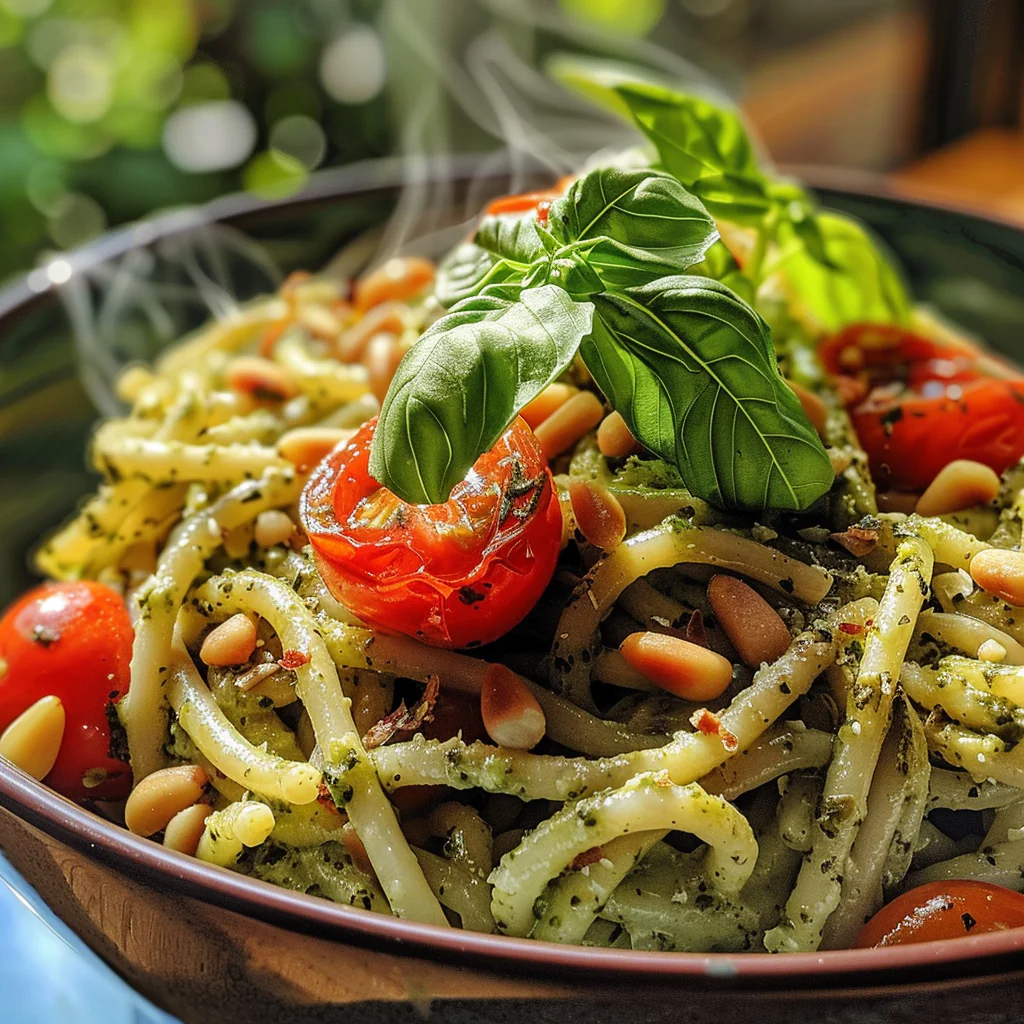
- Drain the pasta and toss with the pesto. Top with the blistered tomatoes, the pine nuts, shredded Parm, and a sprinkle of black pepper. Serve asap.
Nutrition
Notes
- To ensure your pasta is perfectly al dente, taste it 1-2 minutes before the package's suggested cooking time; it should have a slight bite without being raw.
- When toasting pine nuts, keep a close eye on them as they can burn quickly; they should be golden brown and fragrant, which typically takes just a couple of minutes.
- If you're short on time, feel free to use store-bought pesto; just make sure to taste and adjust the seasoning before tossing it with the pasta.
- For a delicious twist, toss in some sautéed seasonal vegetables like zucchini or bell peppers along with the blistered tomatoes for added color and nutrition.
- Leftovers can be stored in an airtight container in the fridge for up to 3 days; reheat gently in a pan with a splash of olive oil to revive the flavors without drying out the pasta.