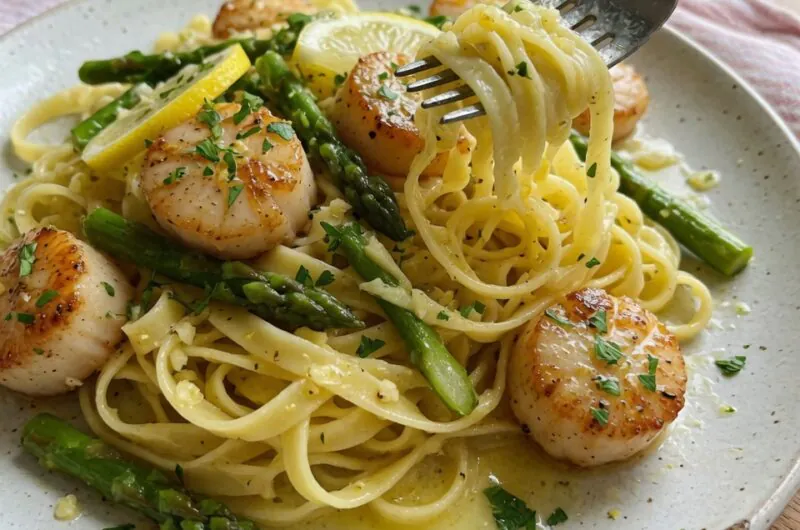
Silky pasta, golden-seared scallops, and crisp asparagus tossed in a bright lemon-butter emulsion—done in 25 minutes flat.
📋 In This Article
Introduction
There is a specific kind of intimidation that settles in when you stand over a hot pan with a bag of expensive sea scallops. I get it. I’ve been there. But here is the truth: Lemon Butter Scallop Pasta With Asparagus is arguably the fastest luxury meal you can make at home. It comes together in the time it takes to boil the water.
The real magic isn’t just the ingredients—it’s the chemistry. We are leveraging the Maillard reaction to create a deep, golden crust on the scallops, then using that fond (the browned bits stuck to the pan) to build a sauce that tastes like it came from a bistro kitchen. This dish is a study in contrast: sweet, tender scallops against the grassy crunch of asparagus, all bound together by a velvety, tart lemon butter. It’s elegant enough for a date night, yet weeknight-easy. Lemony Linguine with Pan-Seared Scallops & Fresh Parsley.
Why This Recipe Works
Most pasta dishes rely on heavy cream for luxury. This one relies on emulsification. By whisking cold butter into the white wine and lemon juice reduction, we create a stable, glossy sauce that clings to every strand of pasta without feeling heavy.
We also treat the asparagus differently. Rather than roasting it—which is great but takes too long when pasta is involved—we blanch it directly in the pasta water. This preserves its vibrant chlorophyll (keeping it bright green) and ensures it retains a snappy texture that stands up to the soft scallops. Finally, the scallops are seared hard and fast. Because we dry them out thoroughly, we achieve a deep caramelization that provides a savory, umami-rich counterpoint to the acidity of the lemon.
Ingredients You Need
For the Scallops and Produce
- Sea Scallops: 300 g of large, fresh sea scallops. Look specifically for “dry-packed” scallops if possible; they haven’t been treated with sodium tripolyphosphate (STP), meaning they sear beautifully rather than steaming in their own moisture.
- Bay Scallops: Alternatively, you can use 300 g of bay scallops. These are smaller and sweeter, requiring much less cook time—barely a minute in the pan.
- Fresh Asparagus: 1 small bunch. We want these cut into 2-inch batons or shaved into ribbons for quick cooking.
- Garlic: 2 cloves, minced. Fresh is non-negotiable here; the jarred stuff lacks the punchy aromatic oils we need.
For the Sauce and Pasta
- Butter: 3 tablespoons (45 g) of high-quality unsalted butter. We split this use: some for searing, the rest for finishing the sauce.
- Lemon: 1/4 cup of freshly squeezed lemon juice (approx. 2 lemons) plus 1 teaspoon of zest. The zest contains the essential oils that provide a floral top note.
- White Wine: 1/4 cup of dry white wine (like Pinot Grigio or Sauvignon Blanc). This provides the acidity needed to deglaze the pan and lift the fond.
- Pasta: 250 g of spaghettini or linguine. Long strands are ideal for twirling through the butter sauce.
- Parmesan Cheese: 45 g (about 1/4 cup) of freshly grated Parmesan. The salt content helps season the dish.
- Fresh Parsley: A handful, chopped.
- Olive Oil: 2 tablespoons of extra virgin olive oil. This prevents the butter from burning during the high-heat sear.
- Salt and Black Pepper: To taste.
- Optional: A pinch of red pepper flakes for heat.
Directions
1. Prep the Scallops
This is the most critical step. Remove the side muscle from the sea scallops if present (it feels tough and pulls away easily). Rinse them briefly if they look sandy, but then—and this is vital—pat them completely dry with paper towels. Moisture is the enemy of the Maillard reaction. If they are wet, they will boil. We want them dry. Season them generously with salt and pepper.
2. Boil the Pasta and Asparagus
Bring a large pot of salted water to a rolling boil. It should taste like the ocean—this is your only chance to season the pasta itself. Add the pasta and set a timer for 2 minutes less than the package instructions. In the last 2 minutes of boiling, drop the asparagus pieces into the pot. This blanches the asparagus perfectly while the pasta finishes cooking. Reserve 1 cup of the starchy pasta water, then drain.
3. Sear the Scallops
Heat a heavy-bottomed skillet (cast iron is best) over medium-high heat. Add the olive oil and 1 tablespoon of the butter. Wait until the butter foams and subsides—that’s when the water content has evaporated and the fat is hot enough. Lay the scallops in the pan, flat side down. Do not crowd them; work in batches if needed. Here’s the thing: don’t touch them. Let them cook for 2-3 minutes until a deep golden-brown crust forms. Flip and cook for another 1-2 minutes until opaque. Remove them from the pan immediately to stop carryover cooking.
4. Build the Sauce
Reduce the heat to medium. Add the garlic to the scallop drippings and sauté until fragrant—about 30 seconds. Pour in the white wine and lemon juice, scraping up the browned bits with a wooden spoon. This deglazing step incorporates the fond into the sauce. Let it reduce by half.
5. Emulsify and Toss
Turn the heat to low. Whisk in the remaining 2 tablespoons of butter, one piece at a time. This creates a velvety emulsion rather than a pool of melted fat. Add the drained pasta and asparagus to the skillet, tossing to coat. If the sauce looks too tight, splash in a bit of the reserved pasta water to loosen it. The starch in the water helps bind the sauce to the noodles.
6. Serve
Remove from heat. Gently fold the seared scallops back in just to warm through. Top with lemon zest, Parmesan cheese, and fresh parsley. Serve immediately.
⚠️ Common Mistakes to Avoid
Even with a simple recipe, things can go sideways. Here is how to troubleshoot the most common errors: Cowboy Butter Chicken Linguine Recipe.
Wet Scallops: If you skip the drying step, you will end up with gray, rubbery scallops that have boiled in their own juices. Pat them dry like you mean it. I used to rush this step—don’t.
Crowding the Pan: When you crowd the pan, the temperature drops too fast. The scallops steam instead of searing. You lose that caramelized flavor that makes the dish sing. Give them space.
Overcooking the Pasta: Since we toss the pasta in the sauce, you must pull it when it’s just shy of al dente. It will continue to cook in the residual heat of the pan. If you wait until it’s fully soft in the boiling water, it will be mushy by the time it hits the plate.
Burning the Garlic: Garlic has a low burn point. If you add it to a ripping hot pan, it turns bitter instantly. Add it only after you’ve reduced the heat for the sauce.
Variations & Customizations
This template is incredibly forgiving. Once you master the technique, feel free to riff on it.
- Switch the Protein: Shrimp works beautifully here and requires less precision than scallops. Just be sure to watch the cook time—shrimp go from done to rubbery in seconds.
- Go Creamy: For a richer sauce, stir in a tablespoon of heavy cream or mascarpone along with the butter.
- Change the Veg: When asparagus is out of season, peas, spinach, or cherry tomatoes are excellent substitutes. Tomatoes will burst and create a sweet juiciness that balances the lemon.
- Gluten-Free: Use your favorite gluten-free pasta, but be mindful that the starch content might differ, so you may need less pasta water for the sauce.
Storage & Reheating Tips
Scallops are delicate. They are at their absolute best the moment they hit the plate. However, if you have leftovers, store them in an airtight container in the refrigerator for up to 2 days.
To reheat, skip the microwave—it destroys the texture of both the scallops and the pasta. Instead, add the leftovers to a cold pan with a splash of water. Turn the heat to medium-low and toss gently until warmed through. The steam will rehydrate the pasta without overcooking the seafood. Zesty Lemon Garlic Shrimp Pasta – Quick & Flavorful Seafood Dinner.
💡 Pro Tips for the Best Scallop Pasta
- Dry-Packed is King: Always ask your fishmonger for dry-packed scallops. Wet scallops (treated with preservatives) release a ton of water and never brown properly, no matter how hot your pan is.
- Cold Butter, Hot Pan: When making the sauce, keep your butter cold. As it hits the hot reduction, it melts slowly, allowing the milk solids and fat to emulsify into a creamy suspension rather than separating into oil.
- Don’t Move the Pasta: When you add the pasta to the sauce, let it sit for 30 seconds before tossing. This allows the noodles to absorb the sauce directly.
- Finish with Acid: A final squeeze of lemon juice right before serving wakes up the flavors. Fat needs acid to pop.
Frequently Asked Questions
+Why are my scallops rubbery?
Scallops become rubbery when they are overcooked. They contain very little connective tissue, so they tighten up almost instantly when exposed to high heat. Remove them from the pan as soon as they turn opaque in the center; carryover cooking will finish the job.
+Can I use frozen scallops?
Yes, but thaw them completely in the refrigerator overnight. Before cooking, place them on a paper towel-lined plate and press firmly to remove excess moisture. Frozen scallops often retain more water than fresh, so drying is even more critical.
+What can I substitute for white wine?
If you prefer not to cook with alcohol, you can substitute an equal amount of chicken broth or vegetable stock. To mimic the acidity of the wine, add an extra teaspoon of lemon juice.
+How do I know when the scallops are done?
Look for the sides. When the scallop is raw, the sides are translucent and shiny. As it cooks, the sides will turn opaque. Once the opacity reaches halfway up the side of the scallop, flip it. It is done when the center is just barely translucent.
+Can I make this dairy-free?
Absolutely. Replace the butter with a high-quality olive oil or a vegan butter alternative. The sauce won’t be as creamy, but it will still be delicious.
+What wine pairs well with this dish?
Since the sauce is built on lemon and white wine, pour yourself a glass of whatever you cooked with. A crisp, unoaked Sauvignon Blanc or a Pinot Grigio complements the bright, citrusy notes perfectly.
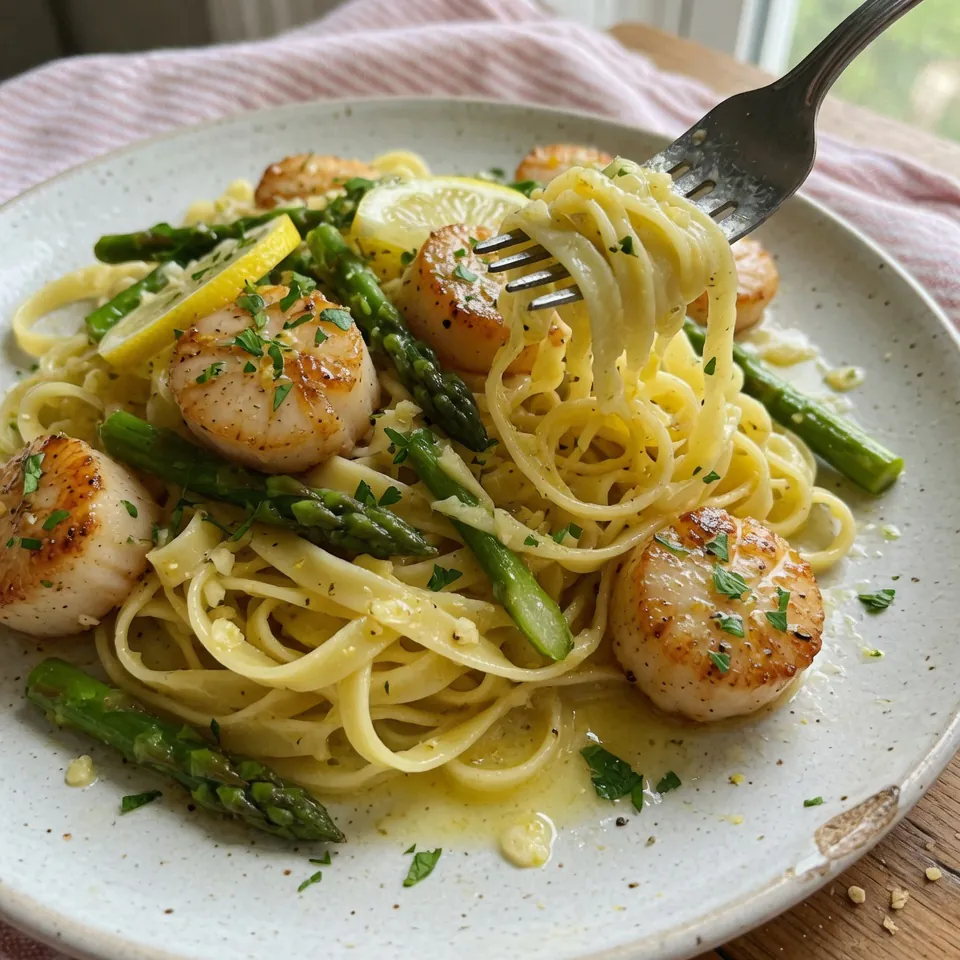
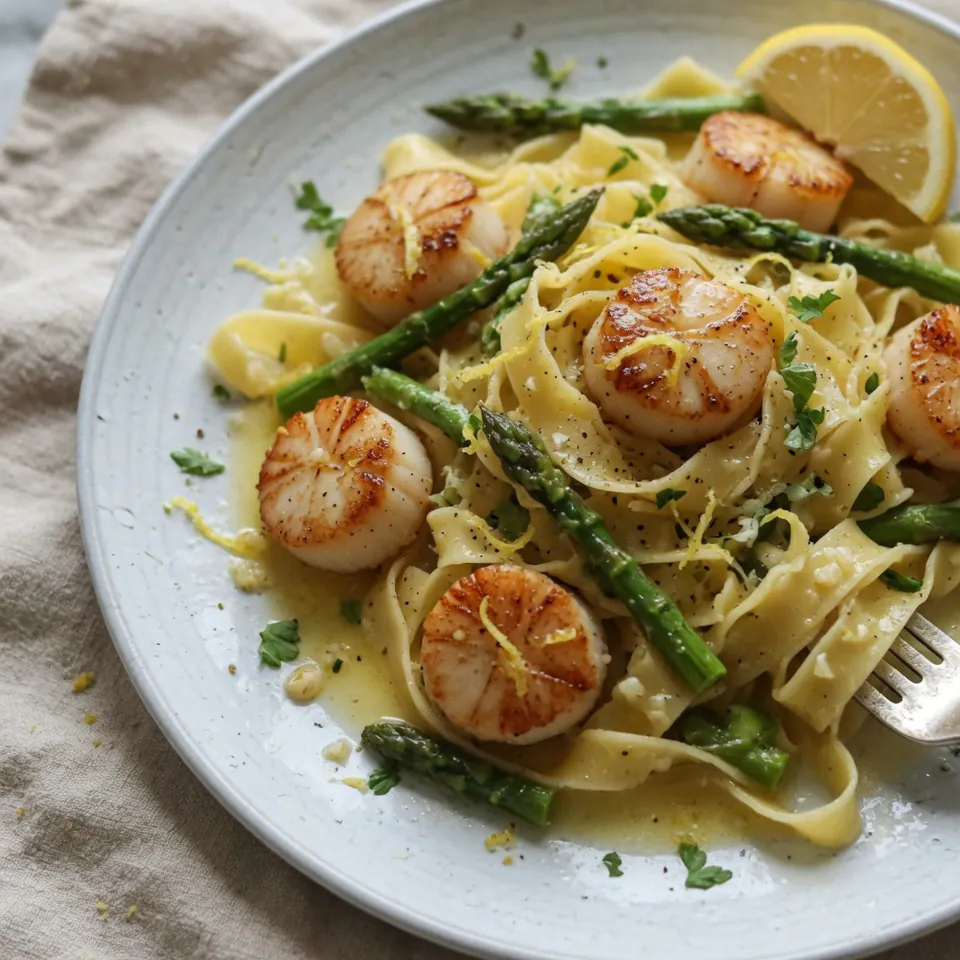
Scallops and Asparagus with Lemon Spaghettini
Ingredients
Method
- Set the scallops on a plate and allow them to come to room temperatures. Make sure to retain any of the liquid from the scallops that settles on the plate. You'll want to start making the asparagus ribbons at and start the pasta water at this point.
- Bring a large pot of lightly salted water to a boil. Add the spaghettini and cook until al dente. Drain and set aside, but do not rinse or cool.
- Whisk the lemon juice and olive oil together in a bowl. Add the spaghettini back to a large pot, then add the lemon juice, olive oil, grated parmigiano-reggiano, and the smaller portion (1 tbsp) of butter. Stir to combine, making sure that the cheese melts from the heat of the pasta. Cover and set aside.
- Heat a frying pan over medium-high heat for about 1 minute. The pan should be large enough to hold all of the scallops without crowding. Add the larger portion (2 tbsp) of butter to the pan and swirl around to let it melt and begin browning. Add the scallops to the pan carefully, making sure to give each one some space. Reduce the heat a little bit and sear until well- browned, then turn carefully and sear the other side. Cook the scallops until the center is still somewhat translucent (the actual time necessary will vary depending on the size of the scallops), then remove from the pan and set aside.
- Add the asparagus ribbons, white wine, and any leftover liquid from the scallops to the pan. Saute until the asparagus is soft but still vibrant green; about 1 minute.
- Add the contents of the pan to the spaghettini and carefully combine. Serve each portion of spaghettini garnished with chopped parsley, black pepper, lemon zest, and extra parmigiano-reggiano. Top each dish off with an individual portion of scallops and serve immediately.
Nutrition
Notes
- For perfectly cooked scallops, aim for a golden-brown sear on each side, and remove them from the heat when the centers are still slightly translucent; they will continue to cook from residual heat.
- To prevent the pasta from becoming dry or the sauce from breaking, ensure you add the pasta to the pan while it's still warm, allowing the cheese to melt evenly into the lemon and olive oil mixture.
- If you don't have asparagus on hand, feel free to swap in broccoli florets; just adjust the cooking time, as they may need an extra minute to become tender.
- When preparing the asparagus ribbons, use a vegetable peeler for even, thin slices that will cook quickly and maintain a vibrant color.
- This dish can be stored in the fridge for up to two days; reheat gently in a skillet over low heat with a splash of water or wine to keep the pasta moist and prevent it from sticking.