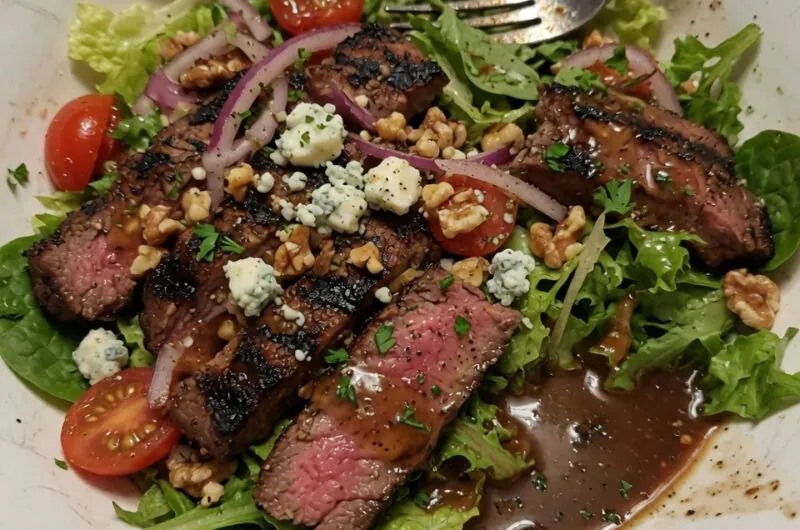
Juicy, medium-rare steak slices over peppery arugula with a tangy-sweet emulsified vinaigrette—dinner is served in 25 minutes.
📋 In This Article
- Introduction
- Why This Recipe Works
- Ingredients for the Perfect Grilled Steak Salad
- Crafting the Homemade Balsamic Vinaigrette
- Grilling the Steak to Perfection
- Assembling Your Ultimate Steak Salad
- Common Mistakes to Avoid
- Delicious Variations & Customizations
- Storage & Make-Ahead Tips
- Chef’s Pro Tips for Success
- Frequently Asked Questions (FAQ)
Introduction
There is a specific kind of satisfaction in a perfectly composed steak salad. It hits that elusive trifecta: substantial yet fresh, rich yet sharp. We’re talking about Grilled Steak Salad & Balsamic Vinaigrette, but not the sad, steak-topped afterthought you find on diner menus. This is a main event. The core concept here is contrast—hot, rendered fat and savory beef against crisp, cold greens and the bright acidity of a homemade dressing.
I’ve spent years testing salad proteins, and steak is notoriously easy to get wrong in this context. A rubbery, gray slice of beef can ruin the texture of an otherwise vibrant bowl. The secret isn’t just the cut; it’s the temperature differential and the slice. You want that Maillard-developed crust, but you need a cool, crisp base to balance it. It’s a simple dish, but the margin for error is surprisingly slim. Summer Fresh Corn Salad: The Ultimate Guide to a Light, Crisp, and Flavorful Summer Dish.
Why This Recipe Works
This isn’t just “meat on leaves.” It’s a study in thermodynamics and emulsification. First, the steak. We use high, direct heat to trigger the Maillard reaction—that chemical process where amino acids and sugars react under high temperatures to create hundreds of new flavor compounds. This gives the beef a savory depth that contrasts with the raw vegetables.
Then there’s the dressing. A Balsamic Vinaigrette often fails because it breaks, leaving an oily slick on your greens. We use Dijon mustard as an emulsifier; the mucilage in the mustard coat acts as a stabilizer, keeping the oil and vinegar suspended in a creamy union. Finally, the resting period. When muscle fibers heat up, they contract and push moisture to the center of the meat. If you slice immediately, that juice ends up on your cutting board, not your palate. Resting allows the fibers to relax and reabsorb those juices, ensuring your salad isn’t a dry, chewy mistake.
Ingredients for the Perfect Grilled Steak Salad
Quality matters here. Because the ingredient list is short, every item is exposed.
For the Steak:
- Beef Loin Top Sirloin Steak: A fantastic balance of flavor and cost. It’s lean enough to feel light but has enough intramuscular fat to stay juicy. Flank steak is a great alternative if you prefer a tighter grain, but avoid ultra-lean cuts like round, which dry out instantly.
- Kosher Salt & Freshly Ground Black Pepper: The only crust you need. Coarse salt draws out surface moisture, dissolves, and then reabsorbs into the meat, seasoning it deeply.
For the Salad:
- Arugula: Peppery and slightly bitter, it cuts through the richness of the beef better than mild romaine or iceberg.
- Cherry Tomatoes: Look for ones that actually smell like tomatoes. Their acidity provides little bursts of brightness.
- Cucumber: Persian or English cucumbers are best—fewer seeds, more crunch.
- Red Onion: Soak the slices in ice water for 10 minutes if you find raw onion too aggressive; it mellows the sulfur bite.
- Feta Cheese: Briny and creamy. It acts as a seasoning agent as much as a topping.
For the Balsamic Vinaigrette:
- Balsamic Vinegar: Use a decent quality one. If it tastes like straight acid, add a pinch more honey.
- Olive Oil: Extra virgin is standard, but don’t use your most expensive finishing oil; the vinegar will mask some of its nuance.
- Dijon Mustard & Honey: The Dijon emulsifies; the honey balances the acid.
- Garlic: One clove, minced finely. Raw garlic is potent, so use it sparingly.
Crafting the Homemade Balsamic Vinaigrette
A broken vinaigrette is a sad sight—oil pooling at the top, vinegar sinking to the bottom. Here’s how to fix that.
Start by whisking together the balsamic vinegar, Dijon mustard, minced garlic, and honey in a bowl. The mustard is your binder. While whisking vigorously, slowly drizzle in the olive oil. I mean slow—a thin, steady stream.
Here’s the science: you are forcing the oil droplets to break apart and disperse within the vinegar, while the mustard proteins surround those droplets, preventing them from recombining. This is an emulsion. If you pour the oil too fast, the droplets are too large to stabilize, and the sauce breaks. Taste it. Does it need more salt? Probably. Maybe a crack of black pepper.
Grilling the Steak to Perfection
Remove your steak from the fridge at least 30 minutes before cooking. Cold meat hits the grill and seizes up, cooking unevenly. Pat it completely dry with paper towels—surface moisture creates steam, and steam prevents browning. Season it generously on all sides.
Preheat your grill to high heat, around 450°F to 500°F. You want to hear that sizzle the moment the meat hits the grate. Place the steak on the grill and cook for 4-5 minutes per side for medium-rare. Cowboy Butter Chicken Linguine Recipe: A Bold & Flavorful Pasta You’ll Crave Weekly.
Use a meat thermometer. Visual cues are unreliable. You are aiming for an internal temperature of 130°F to 135°F. At this range, the muscle fibers have relaxed enough to be tender, but haven’t tightened to the point of squeezing out all moisture.
Transfer the steak to a cutting board and let it rest for at least 5-10 minutes. I used to skip this step, thinking it was optional. It isn’t. If you cut now, you lose juice; if you wait, you eat steak, not shoe leather.
Assembling Your Ultimate Steak Salad
Place your arugula, cucumbers, cherry tomatoes, and red onions in a large bowl. Pour about two-thirds of the balsamic vinaigrette over the greens and toss. Tossing the greens before adding the steak ensures every leaf is coated, rather than just pouring dressing over the top and hoping for the best.
Now, the carve. Identify the direction of the muscle fibers (the grain) and slice against the grain. This shortens the muscle fibers, making the meat significantly easier to chew. If you slice with the grain, you are asking your teeth to gnaw through long, rubbery fibers.
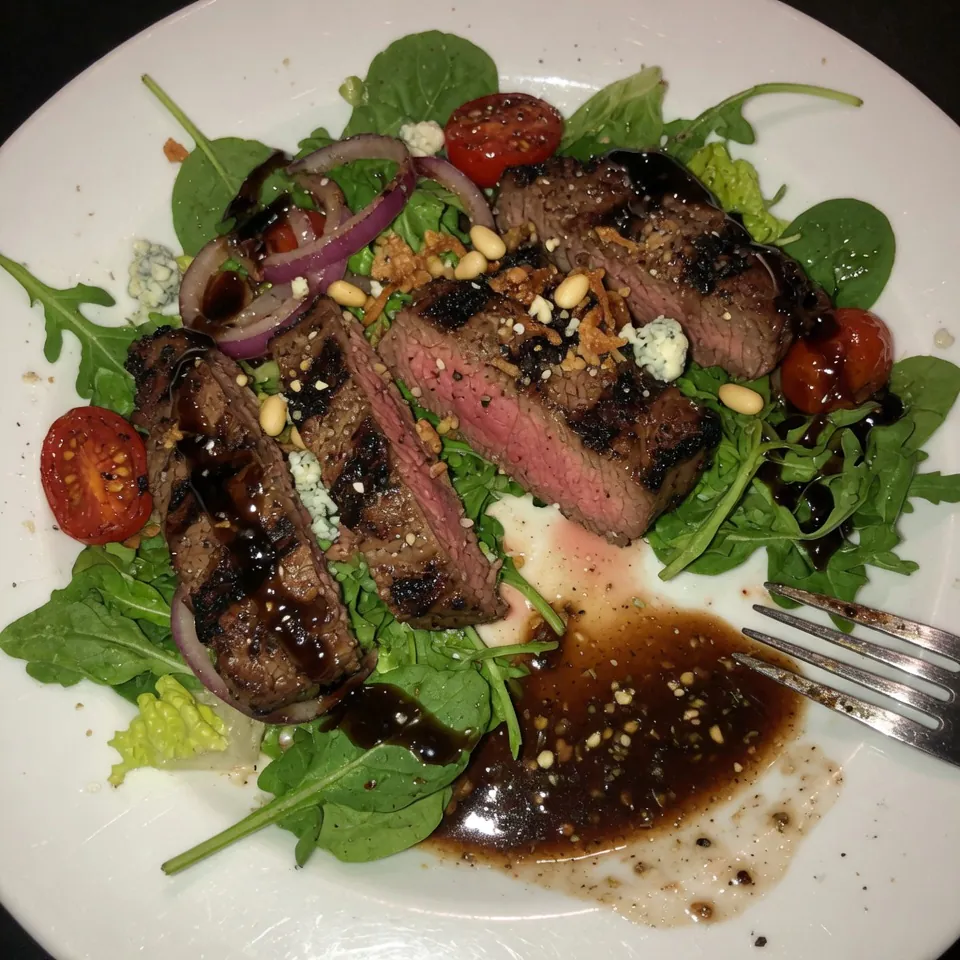
Lay the warm steak slices over the dressed greens. The residual heat will slightly wilt the arugula, releasing its aromatic oils. Top with crumbled feta cheese and drizzle the remaining dressing over the steak itself.
⚠️ Common Mistakes to Avoid
Even a simple recipe has pitfalls. Here is where most people go wrong.
- Overcooking the Steak: This is the cardinal sin. Well-done steak in a salad is dry and tough. Pull it at 130°F; carryover cooking will bring it to the perfect eating temperature.
- Slicing With the Grain: Flank and skirt steak are notorious for toughness if sliced incorrectly. Always look for the grain lines and cut perpendicular to them.
- Dressing Too Early: Acid breaks down delicate greens. If you dress the salad 20 minutes before serving, you will end up with a wilted, soggy mess. Dress right before tossing.
- Cold Steak on Cold Greens: While this can be a leftover lunch, the best version of this salad features hot, just-grilled meat. The warmth gently cooks the greens beneath it.
Delicious Variations & Customizations
This recipe is a template, not a law.
- The Blue Cheese Swap: If feta feels too mild, swap it for Gorgonzola or blue cheese. The funk pairs beautifully with the sweet balsamic.
- Add a Crunch: Toasted walnuts or pecans add texture and healthy fats.
- Spice It Up: Mix smoked paprika or cayenne into your steak rub. The heat plays well against the cool cucumber.
- Creamy Element: Add slices of avocado for a buttery texture that softens the peppery bite of the arugula.
Storage & Make-Ahead Tips
If you are meal prepping, keep the components separate. Store the grilled steak in an airtight container for up to 3 days. Store the washed greens with a paper towel to absorb excess moisture. Keep the balsamic vinaigrette in a jar in the fridge; it will keep for up to a week. Note that the olive oil may solidify in the cold—just let it sit on the counter for 15 minutes and shake vigorously before using. Grilled Vegetable Pasta Salad Recipe: A Fresh & Flavorful Summer Dish.
💡 Chef’s Pro Tips for Success
- Dry Your Meat: I cannot stress this enough. Moisture is the enemy of the Maillard reaction. Pat that steak dry until the paper towels come away clean.
- Let It Rest: The resting period allows the myosin proteins to relax. If you cut into it immediately, the juices run out because the proteins are still contracted from the heat.
- Season Your Greens: A pinch of salt on the tomatoes and cucumbers before you dress the salad amplifies their flavor exponentially.
Frequently Asked Questions (FAQ)
+What is the best steak for salad?
Flank steak, skirt steak, and top sirloin are the best choices. They offer robust beefy flavor and, when sliced correctly against the grain, offer a tender texture that holds up well to dressing without falling apart.
+How do I keep my steak from getting tough?
Toughness usually comes from two things: overcooking or slicing with the grain. Cook only to medium-rare (130°F) and always slice perpendicular to the muscle fibers to shorten the chew.
+Can I make the vinaigrette ahead of time?
Absolutely. In fact, it’s better if you do. Making the Balsamic Vinaigrette a few hours ahead allows the garlic to infuse the oil and vinegar. Store it in a sealed jar in the refrigerator.
+How long does grilled steak last in the fridge?
Cooked steak can be stored in an airtight container for 3 to 4 days. For the best texture in a salad, let the refrigerated steak come to room temperature before slicing and serving.
+Can I use a different vinegar?
Yes. While balsamic offers sweetness and depth, you can use red wine vinegar for a sharper bite or sherry vinegar for a nuttier profile. Adjust the honey accordingly to balance the acidity.