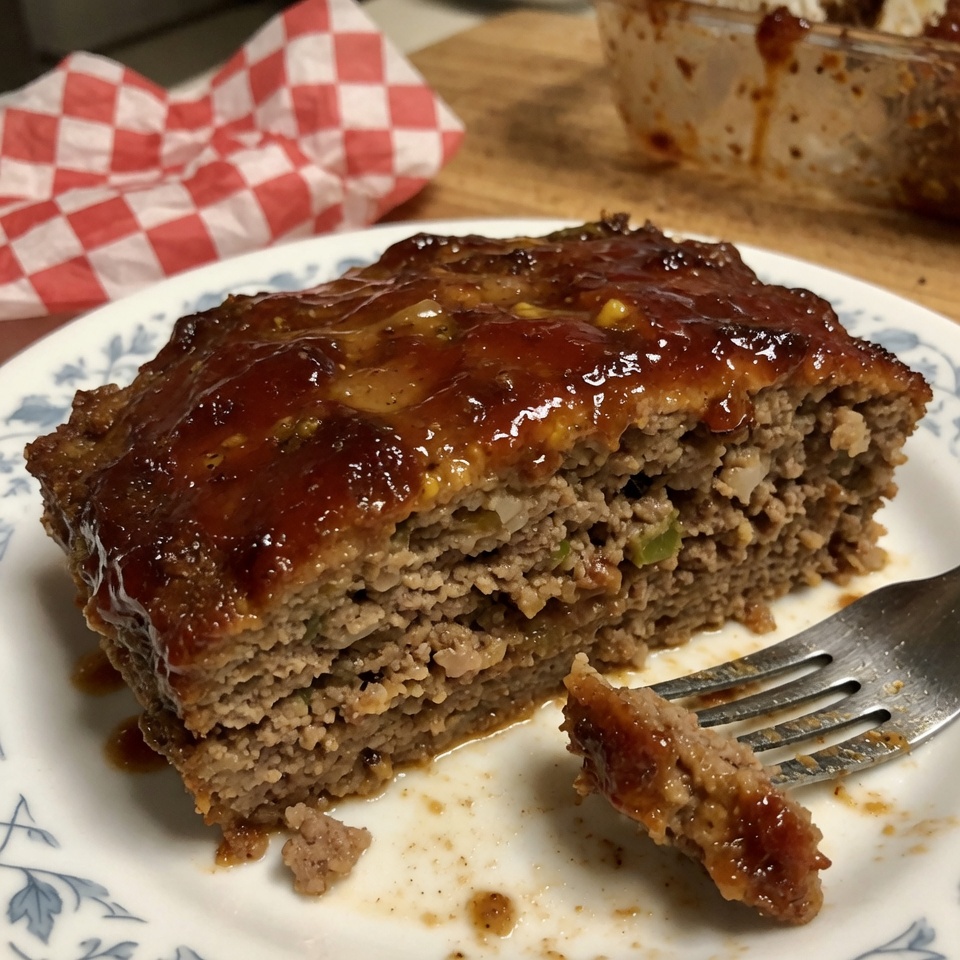
A nostalgic, no-fail recipe with a caramelized ketchup-brown sugar glaze that sticks to every slice.
📋 In This Article
- Introduction
- Why This Recipe Works
- The Perfect Tangy Glaze
- Ingredients You’ll Need
- Step-by-Step Instructions
- Common Meatloaf Mistakes (and How to Avoid Them)
- Meatloaf Variations & Customizations
- Serving Suggestions & Pairings
- Storage & Reheating Tips
- Pro Tips for Meatloaf Mastery
- Frequently Asked Questions (FAQ)
- Conclusion
Introduction
Let’s be honest: meatloaf gets a bad rap. Too often, it’s a dense, dry brick of meat that needs a gallon of gravy just to be palatable. But when done right, Classic Homemade Meatloaf With Tangy Glaze is something entirely different—tender, savory, and capped with a sticky-sweet glaze that caramelizes in the oven. The secret isn’t fancy equipment; it’s simple food science. By swapping dry breadcrumbs for a milk-soaked panade and using beef with enough fat, you guarantee a moist interior every time. This recipe is the one I return to whenever I need reliable, hearty comfort food that feeds a crowd without breaking the bank.
Why This Recipe Works
Most meatloaf fails because it lacks moisture. We solve this with a panade—a mix of Panko breadcrumbs and milk. When meat proteins cook, they contract and squeeze out water. The starch in the breadcrumbs gelatinizes and acts as a sponge, trapping that liquid and fat inside the loaf. This prevents the proteins from linking too tightly, ensuring a slice that holds together but yields easily to a fork. We also use 80/20 ground beef. Leaner beef sounds healthier, but the fat renders during baking, basting the meat internally. Finally, the tangy glaze isn’t just for show; the sugar creates a Maillard reaction on the surface, adding deep, savory notes that plain ketchup can’t provide. Classic Beef Meatloaf: The Ultimate Comfort Food Recipe You’ll Love.
The Perfect Tangy Glaze
The glaze is the difference between a boring loaf and one that disappears from the table. We start with ketchup for body and tomato richness, then add brown sugar for deep molasses sweetness and better browning. A splash of vinegar is non-negotiable—it cuts through the heavy beef fat, brightening the whole dish. If you’ve ever had glaze slide right off the meat, it’s usually because of excess fat rendering out. We bake this free-form on a sheet pan, allowing fat to drain away so the glaze adheres to the meat, creating that sticky, candy-like crust we all crave.
Ingredients You’ll Need
For the Meatloaf:
- 2 lbs ground beef (80/20 blend is crucial here)
- 1 medium onion (finely diced)
- 3 cloves garlic (minced)
- 2 large eggs (beaten)
- 1/3 cup whole milk
- 3/4 cup Panko breadcrumbs
- 1 tablespoon Worcestershire sauce
- 1 teaspoon kosher salt
- 1/2 teaspoon black pepper
- 3 tablespoons fresh parsley (chopped)
For the Tangy Glaze:
- 3/4 cup ketchup
- 2 tablespoons brown sugar
- 1 teaspoon yellow mustard
- 1 1/2 teaspoons white vinegar

Step-by-Step Instructions
- Preheat the Oven: Set your oven to 350°F (175°C). Line a rimmed baking sheet with parchment paper or foil for easier cleanup.
- Make the Panade: In a large bowl, combine the milk and Panko breadcrumbs. Let them soak for 5 minutes. This softens the crumbs so they disappear into the meat, rather than leaving gritty spots.
- Mix the Meat: Add the ground beef, onion, garlic, eggs, Worcestershire sauce, salt, pepper, and parsley to the bowl with the soaked breadcrumbs. Use your hands to mix just until combined.
Critical Step: Do not overmix. Overworking the meat aligns the proteins, resulting in a rubbery, sausage-like texture. Stop as soon as you don’t see raw patches of breadcrumb.
- Form the Loaf: Transfer the mixture to your prepared baking sheet. Shape it into a loaf roughly 9×5 inches. Don’t pack it too tight; you want it loose enough to allow heat to penetrate evenly.
Human Note: I used to pack it tight to make it look perfect, but it always came out dense. A gentle hand makes all the difference.
- Prepare the Glaze: In a small bowl, whisk together the ketchup, brown sugar, mustard, and vinegar. Pour this evenly over the top and sides of the meatloaf, spreading it with a spoon or brush.
- Bake: Bake for 1 hour to 1 hour 15 minutes, or until the internal temperature reaches 160°F (70°C).
Science Note: At 160°F, the proteins have denatured sufficiently to hold the loaf’s shape, and harmful bacteria are eliminated. If you pull it earlier, the texture will be mushy.
- Rest the Meatloaf: Remove from the oven and let it rest for 10 minutes. This is the step everyone skips. During baking, juices are pushed to the center. Resting allows those juices to redistribute throughout the loaf. Slice too early, and you lose 40% of that moisture on the cutting board.
⚠️ Common Meatloaf Mistakes (and How to Avoid Them)
Even a simple recipe can go wrong if you ignore the details. The biggest offender? Overmixing. It turns a tender loaf into a dense brick. Mix with your hands and stop as soon as the ingredients disappear. Another pitfall is using lean beef. A 90/10 blend will leave you with a dry, crumbly texture. Fat is flavor and moisture here—trust the process. Finally, don’t skip the resting period. It’s tempting to slice right away, but patience rewards you with a loaf that cuts cleanly without crumbling.
Meatloaf Variations & Customizations
This Classic Homemade Meatloaf With Tangy Glaze is a blueprint, not a rulebook. For a lighter take, Ground Turkey works well, but add a tablespoon of olive oil to compensate for the lack of fat. If you want more texture, fold in diced bell peppers or grated carrots—just sauté them first to remove excess water. Cheese lovers can bury a stick of mozzarella string cheese in the center for a molten surprise. For a gluten-free version, swap Panko for almond flour or crushed pork rinds, which add a nice savory depth. Classic Meatloaf with Mashed Potatoes – The Ultimate Comfort Food Recipe.
Serving Suggestions & Pairings
Meatloaf is the ultimate comfort food, and it demands classic sides. Creamy Mashed Potatoes are non-negotiable for soaking up the savory drippings. For balance, serve with Roasted Broccoli or Green Beans to cut through the richness. A simple Garden Salad with a vinaigrette also works wonders to cleanse the palate. If you have leftovers, a cold meatloaf sandwich on white bread with a slather of extra glaze is arguably better than the hot dinner itself.
Storage & Reheating Tips
To keep your Classic Homemade Meatloaf With Tangy Glaze tasting fresh, store it properly. Once cooled, wrap it tightly in plastic or transfer slices to an airtight container. It keeps in the fridge for 3 to 4 days. For longer storage, freeze individual slices wrapped in plastic and placed in a freezer bag for up to 3 months.
When reheating, avoid the microwave if possible—it creates hot spots and dries out the meat. Instead, place slices in a baking dish, cover with foil, and warm in a 350°F (175°C) oven for 20 minutes. If using an air fryer, heat at 350°F for 5-7 minutes. This gentle heat brings it back to temperature without ruining the texture.
💡 Pro Tips for Meatloaf Mastery
To take your meatloaf from good to great, rely on temperature, not time. Every oven varies, and loaf shapes differ. A meat thermometer is your best friend here. Also, consider sautéing your onions and garlic before adding them to the mix. Raw aromatics can stay crunchy; cooking them releases sweetness and moisture. Finally, bake the loaf free-form on a sheet pan rather than in a loaf pan. This allows the fat to render off rather than having the meat sit in a pool of grease, ensuring the glaze caramelizes perfectly rather than sliding off. Caramelized Onion and Blue Cheese Meatloaf.
Frequently Asked Questions (FAQ)
+Why is my meatloaf dry and crumbly?
Dry meatloaf is usually caused by overmixing or using lean beef. Stick to 80/20 ground beef and mix the ingredients just until combined. The fat renders out during cooking, keeping the meat moist.
+Can I use breadcrumbs instead of Panko?
Yes, but Panko creates a lighter texture. If using standard dried breadcrumbs, reduce the amount slightly as they are denser. For a gluten-free option, crushed pork rinds or almond flour work beautifully.
+How do I know when my meatloaf is done?
Use an instant-read thermometer inserted into the thickest part. You want an internal temperature of 160°F (71°C). Visual cues like juices running clear are unreliable and often lead to overcooking.
+Can I make meatloaf ahead of time?
Absolutely. You can mix the meat and shape the loaf a day in advance. Keep it covered in the fridge and add the glaze just before baking. This actually helps the flavors meld together.
+Why does my meatloaf fall apart?
If your loaf crumbles, you likely need more binder. The eggs and breadcrumbs act as glue. Make sure you haven’t skipped the milk-soaked breadcrumbs, and let the loaf rest after baking so the structure can set.
Conclusion
This Classic Homemade Meatloaf With Tangy Glaze is more than just dinner; it’s the answer to the eternal question of what to feed a hungry family on a Tuesday night. It’s forgiving, affordable, and infinitely satisfying when you follow the science—using the right fat ratio, respecting the mix, and letting it rest. Whether you stick to the classic recipe or dress it up with your own variations, this is the loaf that brings them back for seconds. Give it a try, and don’t be surprised if it becomes a permanent fixture in your weekly rotation.

Meatloaf Recipe
Ingredients
Method
- Prep - Line a rimmed baking sheet with parchment paper or foil for easier cleanup, and preheat oven to 350°F.
- Sautee Onions - Set a medium skillet over medium heat. Add 1 tsp oil and chopped onion and saute, stirring occasionally, until softened and golden, about 5-7 minutes. Transfer to a plate to cool.
- Make the Meatloaf Mixture - In a large bowl, add all of the meatloaf ingredients and mix just until well combined (your hands are your best tool for mixing - put on disposable gloves if you want to).
- Shape Meatloaf and Bake - Add meat to the pan and shape it into a meatloaf about 8 inches long, 4 inches wide, and 3 inches tall. Bake uncovered at 350˚F for 40 minutes.
- Make the Sauce - In a small bowl, add the sauce ingredients and stir to combine.
- Add the Glaze - Spread the sauce over the Meatloaf, then return to the oven and bake an additional 20 minutes or until the internal temperature is 160˚F on an instant-read thermometer. Rest the meatloaf for 10-15 minutes before serving and it will be much easier to slice.
Nutrition
Notes
- For a moist meatloaf, avoid using extra-lean ground beef; 80% to 85% lean is ideal for a juicy texture.
- To prevent the glaze from burning, bake the meatloaf without the sauce for the first 40 minutes, then add the glaze for the final 20 minutes.
- If you want to enhance the flavor, consider adding 1 tablespoon of Worcestershire sauce to the meat mixture for an extra depth of taste.
- Let your meatloaf rest for 10-15 minutes after baking; this allows the juices to redistribute, making it easier to slice without falling apart.
- Leftover meatloaf can be stored in the fridge for up to 3 days; reheat gently in the oven at 325°F for best results, avoiding the microwave which can dry it out.