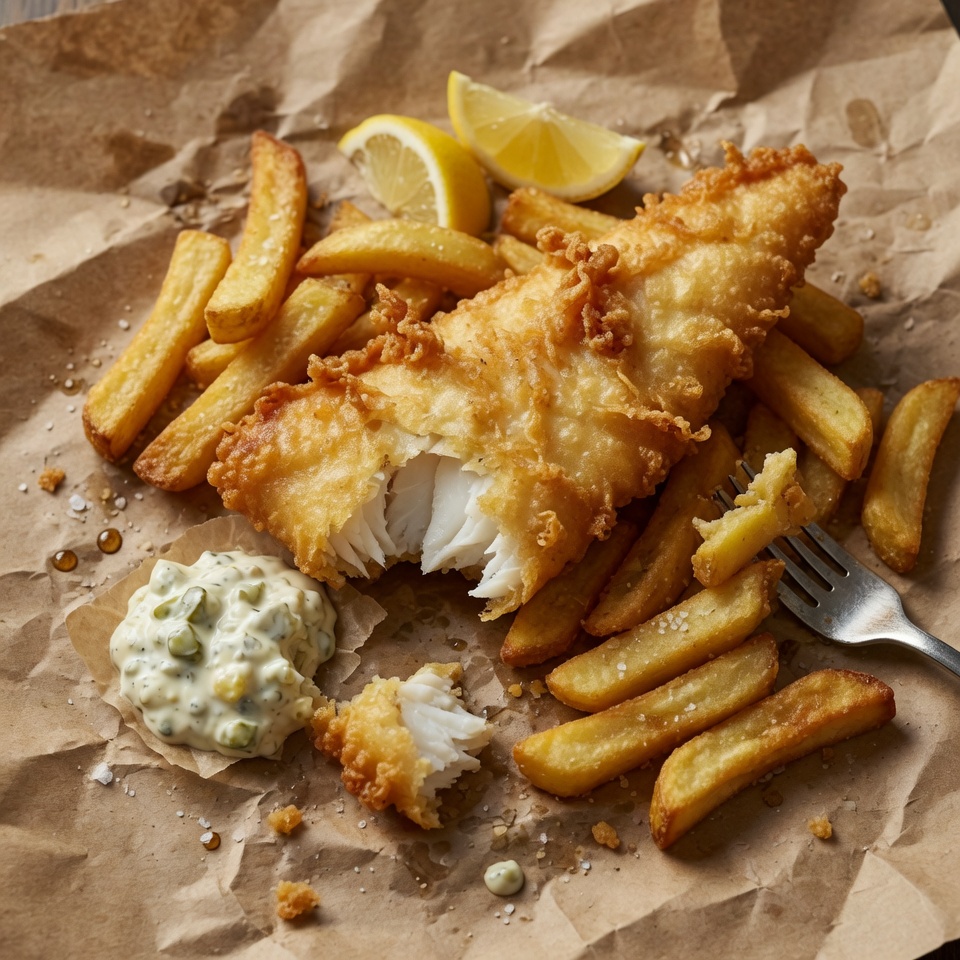
Shatteringly crisp beer batter meets flaky white fish and fluffy chips—double-fried for that authentic British crunch.
📋 In This Article
Introduction
There is a specific kind of sadness that comes with soggy takeout, but great Crispy Homemade Battered Fish & Chips is an art form worth mastering. It’s not just dinner; it’s a project. It’s the sound of batter hitting hot oil, the smell of malt vinegar, and that first bite where the crust shatters cleanly, revealing steamy, perfect white fish.
For years, I thought achieving that glass-like crunch was pure luck or the result of some secret industrial ingredient. Turns out, it’s just science. Specifically, it’s about managing moisture and gluten. By swapping some all-purpose flour for rice flour and introducing vodka into the liquid mix, we bypass the usual pitfalls of homemade frying. This isn’t just a recipe; it’s a blueprint for the perfect Friday night feast.
Why This Recipe Works: The Science of the Batter
The secret to Crispy Homemade Battered Fish & Chips isn’t just the frying—it’s what happens before the food hits the oil.
First, the flour blend. We use a 1:1 ratio of all-purpose flour to rice flour. Why? Wheat flour develops gluten when mixed with liquid, creating a stretchy, bread-like structure that turns chewy and tough as it cools. Rice flour is gluten-free; it creates a rigid, glassy structure that stays crisp long after it leaves the fryer.
Then there’s the liquid. We use vodka alongside cold beer. Vodka is more volatile than water or beer, meaning it evaporates much faster during frying. This rapid evaporation creates a violent release of steam bubbles, aerating the batter and setting the crust before the interior overcooks. It essentially dehydrates the batter faster than heat alone can.
Finally, temperature shock. A cold batter hitting hot oil creates maximum steam lift. If the batter is warm, you lose that initial expansion, resulting in a heavy, greasy coating.
Essential Ingredients for Authentic Fish & Chips
Success starts with the right raw materials. Here is what you need:
For the Fish
- White Fish: Stick to Cod or Haddock. These have large flakes that hold together but offer a mild flavor. You want fillets about 1-inch thick.
- All-purpose Flour & Rice Flour: The dynamic duo for texture. The AP flour provides structure, while the rice flour ensures shatterability.
- Vodka & Beer: The vodka aids in crispiness, while the beer—preferably a cold lager—adds flavor and carbonation for lift.
- Baking Powder: Just a bit to help the batter puff up slightly.
For the Chips
- Russet Potatoes: High starch content is non-negotiable. It gives you that fluffy interior.
- Peanut or Canola Oil: You need a neutral oil with a high smoke point. Save the olive oil for salad.
Accompaniments
- Tartar Sauce: Homemade is best—mayonnaise, capers, pickles, and lemon.
- Malt Vinegar: The traditional acidic finish that cuts through the richness.

Step-by-Step Guide: Crafting Your Crispy Fish & Chips
This is a two-step frying process. It takes a little longer, but it’s the only way to get fluffy interiors and crisp exteriors.
1. Prepare the Chips
Peel and cut your potatoes into thick chips, about ½ inch wide. Rinse them under cold water until it runs clear to remove excess starch. Dry them thoroughly. Wet potatoes = soggy chips.
2. The First Fry (Blanching)
Heat your oil to 325°F (163°C). Fry the chips in batches for 4-5 minutes. They shouldn’t brown much; they should just look matte and cooked through. This is starch gelatinization—the interior becomes fluffy. Remove and drain on a wire rack.
3. Make the Batter
While the chips cool, whisk the all-purpose flour, rice flour, baking powder, and salt. Pour in the vodka and beer. Mix until just combined. Lumps are okay. Over-mixing develops gluten, which makes the batter tough. Keep it cold.
4. The Fish Fry
Crank the heat. Bring the oil up to 375°F (190°C). Pat the fish dry—moisture is the enemy of adhesion. Dredge the fish in flour, then dip into the batter, letting the excess drip off. Lower gently into the oil. Fry for 4-5 minutes, turning once, until deep golden brown.
5. The Second Fry (The Crisp)
Rest the fish on a wire rack. Immediately drop the blanched chips back into the 375°F (190°C) oil. Fry for another 3-4 minutes until golden and crunchy. This second fry dehydrates the exterior, creating that satisfying crust.
⚠️ Common Mistakes to Avoid for Perfect Results
I’ve ruined enough fish to know exactly where things go wrong.
The biggest offender is overcrowding the pot. When you drop cold food into oil, the temperature plummets. If the oil drops below 300°F, the batter absorbs grease instead of searing. Fry in small batches.
Another error is skipping the dry phase. If your fish is wet when you batter it, the coating will slide right off during frying. Pat it down with paper towels aggressively.
Finally, watch your oil temp. If the oil is too cool (below 350°F), the crust turns greasy. If it’s too hot (above 400°F), the batter burns before the fish cooks through. An instant-read thermometer is your best friend here.
💡 Pro Tips from a Culinary Expert
To elevate your Crispy Homemade Battered Fish & Chips, consider these techniques.
Use a Wire Rack, Not Paper Towels. Paper towels trap steam, turning the bottom of your fish soggy within minutes. A wire rack allows air circulation, preserving that hard-earned crunch.
The Dredge Matters. Dip your fish in a light coating of flour before the batter. This dry layer gives the wet batter something to grab onto, preventing the dreaded “slip-off.”
Season Immediately. Salt needs to hit the hot oil to stick. If you wait until the fish is on the plate, the salt just bounces off.
Rest the Fish. It’s tempting to dive in, but letting the fish rest for 2 minutes on the rack allows the protein denaturation to finish and the internal juices to redistribute. Cut too early, and you lose moisture.
Frequently Asked Questions (FAQ)
+Why does my batter fall off the fish during frying?
Usually, this is due to moisture. If the fish is too wet, the batter can’t adhere. Pat the fish completely dry with paper towels and dust lightly with flour before dipping in the batter.
+Can I use water instead of beer in the batter?
You can, but you’ll lose flavor and lift. The carbonation in beer creates bubbles that make the batter light and airy. If you must avoid alcohol, use club soda or sparkling water for a similar textural effect.
+How do I know when the fish is fully cooked?
The internal temperature should reach 140°F (60°C). Visually, the batter should be a deep golden brown, and the fish should flake easily when poked with a fork. Remember, carryover cooking will raise the temp a few degrees after you pull it.
+Can I make this recipe gluten-free?
Yes. Substitute the all-purpose flour with a high-quality gluten-free flour blend. Keep the rice flour as is. Ensure your beer is also gluten-free.
Conclusion
Mastering Crispy Homemade Battered Fish & Chips is a culinary milestone. It moves you from “making dinner” to “crafting a meal.” The double-frying technique, the science-backed batter, and the attention to temperature all come together for a result that beats any takeaway box. It’s messy, loud, and absolutely worth it. Grab the malt vinegar and enjoy.

Crispy Battered Fish and Chips Recipe
Ingredients
Method
- For the fries:
- For the battered fish:
- For serving:
Nutrition
Notes
- For perfectly crispy fries, soak the cut potatoes in a mixture of cold water and vinegar for at least 30 minutes before frying. This helps remove excess starch and enhances their crispiness.
- Keep your frying oil at a steady temperature of around 350°F (175°C) for the best results. If the oil is too hot, the batter may burn before the fish cooks through; too cool, and you'll end up with soggy fish.
- To ensure your fish is cooked perfectly, look for a golden-brown color on the batter and check that the internal temperature reaches 145°F (63°C) for flakiness without dryness.
- If you want to make your batter lighter, try swapping half of the all-purpose flour for cornstarch, which will give you an even crispier texture.
- Leftover fish and chips can be stored in the fridge for up to 2 days. Reheat them in an air fryer or a preheated oven at 375°F (190°C) for about 10 minutes for the best texture.