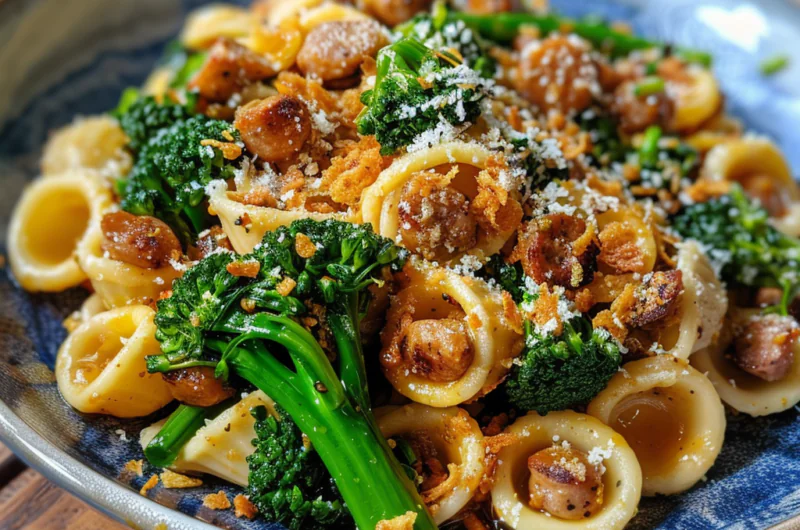
A rustic pasta dish where ear-shaped noodles catch every drop of spicy, sausage-infused sauce, finished with a crunch of golden breadcrumbs.
📋 In This Article
- Introduction
- Why This Recipe Works (and Outshines the Rest)
- The Star Ingredients: What You’ll Need
- Step-by-Step Culinary Journey: How to Make It
- Common Mistakes to Avoid (and How to Fix Them)
- Flavor & Texture Variations: Customize Your Creation
- Storage & Reheating Tips
- Chef’s Pro Tips: Elevate Your Orecchiette Game
- Frequently Asked Questions (FAQ)
Introduction
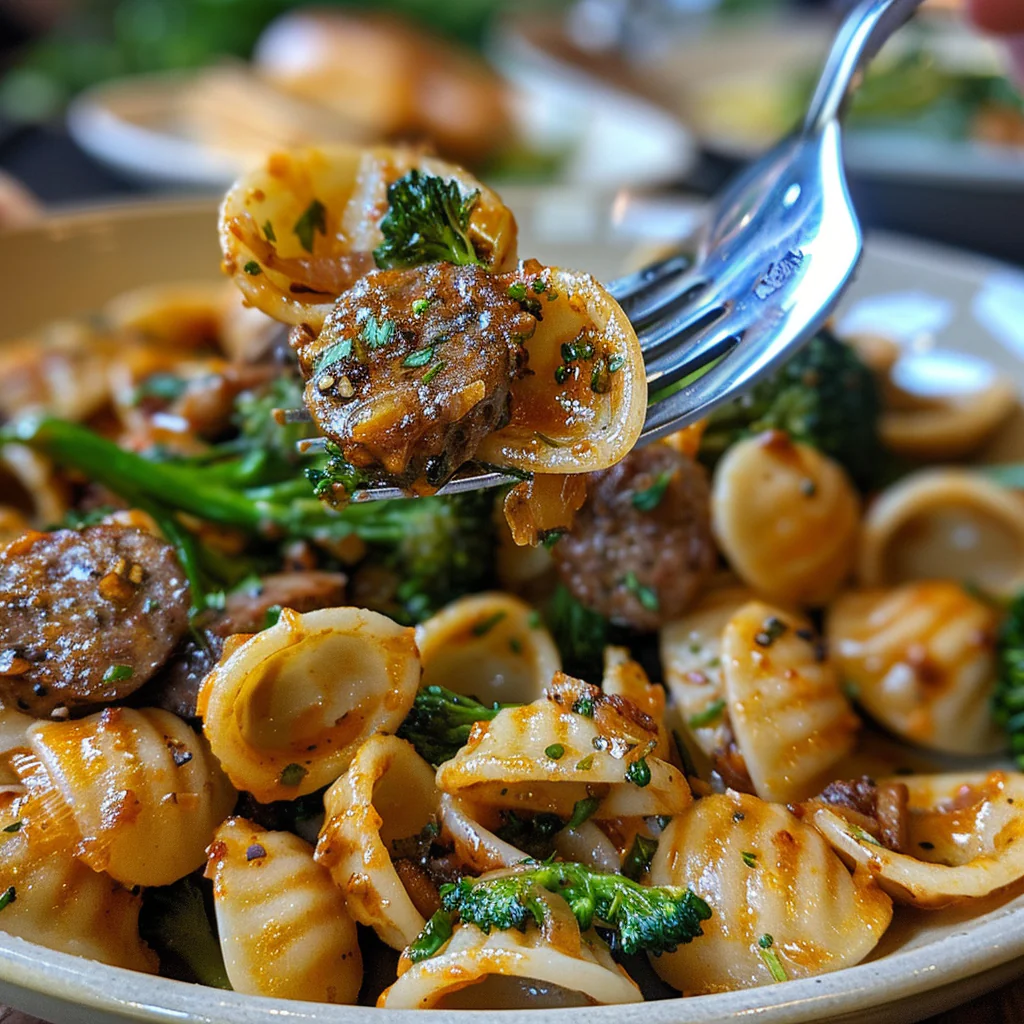
There is a specific kind of satisfaction found in the geometry of orecchiette. Those little “ears” are engineered to cup chunks of sausage and trap the savory sauce, ensuring you get the perfect bite every time. This Gourmet Spicy Sausage & Broccolini Orecchiette with Toasted Breadcrumbs is the weeknight hero you’ve been looking for—fast enough for a Tuesday, but bold enough for a Saturday dinner party.
The magic here isn’t just in the ingredients; it’s in the layering. We’re talking about the deep, savory umami of browned sausage, the bright, bitter crunch of broccolini, and a finishing touch of crispy breadcrumbs that adds a texture dimension most pasta dishes lack. It’s a masterclass in contrast.
Why This Recipe Works (and Outshines the Rest)
Most pasta recipes tell you to boil water and cook meat. This one teaches you how to build a pan sauce from scratch. The spicy sausage does the heavy lifting, rendering its fat into the pan—that liquid gold becomes the base for our sauce. When we deglaze, we aren’t just cleaning the pan; we are dissolving the fond (those sticky, browned bits of protein and sugar) back into the liquid, concentrating the flavor.
The broccolini isn’t just an afterthought. By sautéing it directly in the sausage drippings, we achieve a caramelization that roasting or steaming can’t match. Finally, the toasted breadcrumbs offer a textural counterpoint. While the pasta is tender and the sausage chewy, the crumbs provide a snap that wakes up the palate. It’s a complete sensory experience.
The Star Ingredients: What You’ll Need
For the Pasta & Base
- Orecchiette Pasta: The shape is crucial. If you can’t find orecchiette, campanelle or shells work, but the “ear” shape captures the crumbled sausage best.
- Spicy Italian Sausage: I prefer loose sausage, but links with casings removed work fine. The fat content here is key—don’t use lean sausage or the dish will be dry.
- Broccolini: Trim the woody ends. The florets and thin stalks cook quickly and offer a pleasant crunch.
- Olive Oil: Only needed if your sausage is very lean.
- Garlic & Red Pepper Flakes: For aromatic depth and a kick of heat.
For the Finish
- Panko Breadcrumbs: These toast up lighter and crispier than standard crumbs.
- Pecorino Romano: Salty and sharp, it cuts through the richness of the sausage better than Parmesan.
- Chicken Broth & White Wine: The deglazing liquids that build the sauce volume.
- Lemon Zest: Optional, but highly recommended to brighten the heavy flavors.
Step-by-Step Culinary Journey: How to Make It
1. Prepare the Breadcrumbs First
In a large skillet over medium heat, add a tablespoon of olive oil or a scoop of rendered sausage fat if you have it. Add the Panko Breadcrumbs and stir constantly.
- The Science: We are looking for even browning via the Maillard reaction—the same process that browns the sausage. Keep the crumbs moving to prevent scorching. Once golden, remove them from the pan immediately. They continue cooking off-heat, so take them off when they are slightly lighter than you want.
2. Brown the Sausage
In the same skillet (wipe it out if needed), add the spicy sausage over medium-high heat. Break it apart with a wooden spoon.
- Technique: Don’t stir constantly. Let the meat sit for a minute to develop a deep brown crust. This “fond” on the bottom of the pan is pure flavor. Cook until fully browned and cooked through, about 5-7 minutes.
3. Sauté Aromatics & Broccolini
Add the broccolini, minced garlic, and red pepper flakes to the sausage. Sauté for 3-4 minutes.
- Why this works: The broccolini absorbs the rendered fat from the sausage. If the pan looks dry or the garlic is browning too fast, add a splash of chicken broth to cool it down.
4. The Pasta Pivot
Meanwhile, cook the orecchiette in heavily salted water until just shy of al dente (about 1 minute less than package directions).
- Critical Step: Reserve at least 1 cup of the starchy pasta water before draining. This water is seasoned and full of starch, making it the perfect binding agent for your sauce.
5. Deglaze and Emulsify
Pour the white wine (or a splash of broth) into the sausage pan, scraping up the browned bits with a wooden spoon. Let it simmer until reduced by half. Add the cooked pasta directly to the skillet along with 1/2 cup of the pasta water.
- The Science: Toss vigorously. The starch from the pasta water mixes with the fat in the pan to create a creamy, emulsified sauce that clings to the noodles. Add more water if it looks dry.
6. Finish and Serve
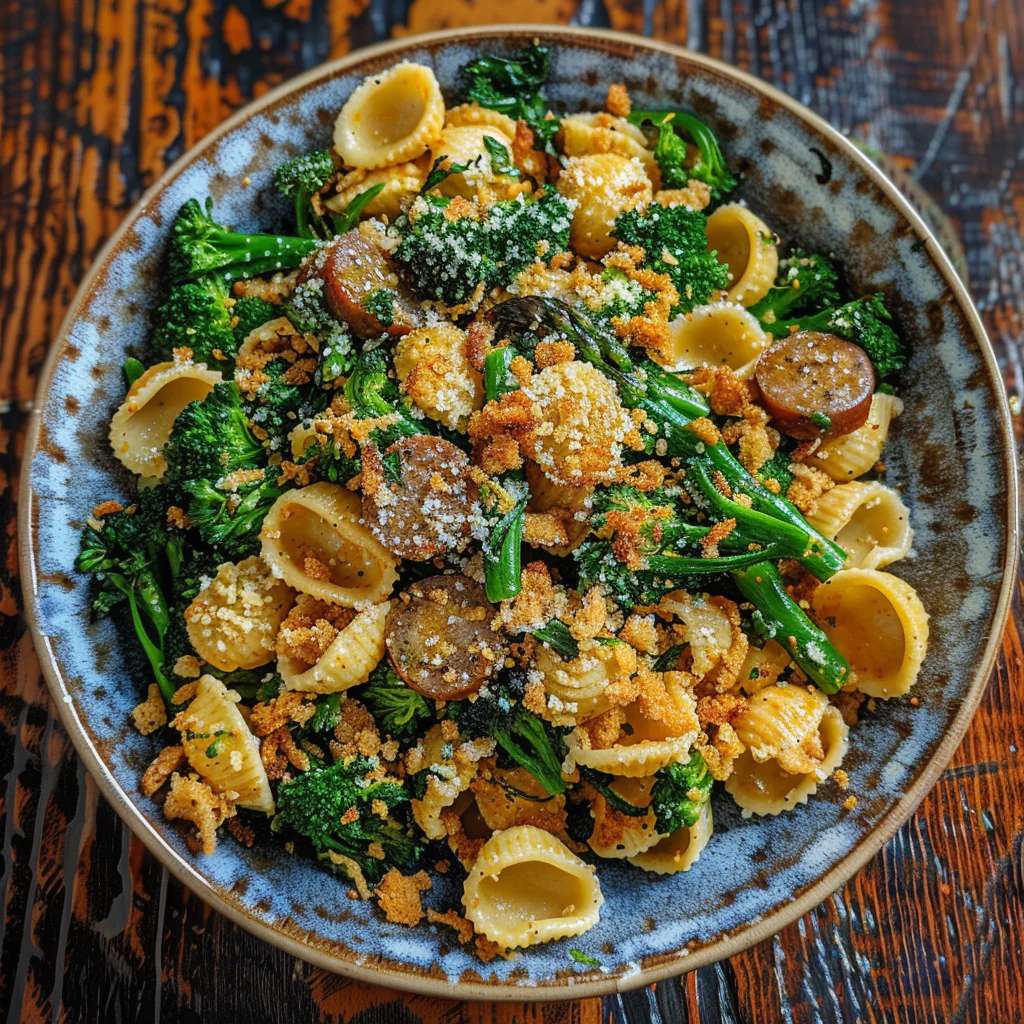
Remove from heat. Stir in the Pecorino Romano and lemon zest. Taste—adjust salt if needed (remember, the cheese is salty). Plate immediately and top generously with the toasted breadcrumbs.
⚠️ Common Mistakes to Avoid (and How to Fix Them)
Even simple dishes have pitfalls. Here’s how to steer clear of disaster.
- Overcooked, Mushy Pasta: Orecchiette is sturdy, but it turns gummy if overcooked. Pull it at al dente. It continues cooking in the sauce during the toss.
- Soggy Breadcrumbs: This is the most common tragedy. Do not top the pasta with breadcrumbs until the moment you serve it. If you mix them in, they absorb steam and lose their crunch instantly.
- A Dry, Clumpy Skillet: If your sauce evaporates before the pasta is done, the dish will be sticky. Keep that pasta water handy. A splash of starchy water re-loosens the sauce and helps it adhere to the meat and greens.
- Under-seasoned Water: Your pasta should be seasoned from the inside out. If the water isn’t salty enough, the dish will taste flat, no matter how much cheese you add later.
Flavor & Texture Variations: Customize Your Creation
This recipe is a template, not a law. Here’s how to swap things around.
- The Greens Swap: If broccolini isn’t your thing, broccoli rabe offers a more bitter punch (blanch it first to tame the bite), while spinach can be tossed in at the very end for a quick wilt.
- Protein Changes: Not a pork fan? Chicken sausage works well, though you may need to add extra olive oil since it renders less fat. For a vegetarian twist, use plant-based sausage or crumbled tempeh seasoned with fennel seeds.
- Spice Control: If you love heat, add extra red pepper flakes with the garlic. If you prefer mild, use sweet Italian sausage and skip the flakes entirely.
- The “Agliata” Twist: For a traditional Italian vibe, mix minced parsley and lemon zest into the toasted breadcrumbs before serving.
Storage & Reheating Tips
Leftovers happen, though rarely with this dish.
- Storage: Keep the pasta and breadcrumbs separate if possible. Store the pasta in an airtight container in the fridge for up to 3 days. Keep the breadcrumbs in a sealed bag at room temperature.
- Reheating: Skip the microwave. Reheat in a skillet over medium-low heat. Add a splash of water or broth to the pan to steam the pasta back to life and loosen the dried sauce. Top with fresh breadcrumbs.
💡 Chef’s Pro Tips: Elevate Your Orecchiette Game
- Save the Fat: If your sausage renders a lot of fat, don’t drain it all. That fat is carrying the spice and flavor profile. Use it to toast your breadcrumbs for a double-hit of sausage flavor.
- Grate Your Own Cheese: Pre-grated cheese is coated in cellulose (anti-caking agents) that prevent it from melting smoothly. Always grate your Pecorino fresh from the block for a silkier sauce.
- The “Mantecare” Technique: This is the Italian term for the final vigorous toss of pasta and sauce off the heat. It creates an emulsion. Don’t just stir; toss the pan to aerate the sauce.
- I used to rush the browning step—don’t. That deep color on the sausage is where the savory depth lives.
Frequently Asked Questions (FAQ)
+Can I use regular broccoli instead of broccolini?
Yes, you can. Cut the broccoli into small florets so they cook at the same rate as the sausage. You may need to add a splash of water and cover the pan for 2 minutes to steam them slightly before finishing the sauté.
+Why is my pasta sauce dry?
Pasta absorbs sauce as it sits. The fix is simple: always reserve pasta water. The starch in the water binds with the fat to create a creamy emulsion. Add it gradually while tossing to reach your desired consistency.
+Do I need to remove the casing from the sausage?
Yes, for this recipe, you want loose meat. If you buy sausage links, slice the casing open and crumble the meat into the pan. If you leave the casing on, you’ll have chunks of sausage that are hard to eat with the orecchiette.
+Can I make this dish ahead of time?
You can prep the components in advance. Cook the sausage mixture and store it separately. Cook the pasta fresh when you are ready to eat, then combine. The texture is best when the pasta is freshly boiled.
+What wine pairs well with this?
A high-acid white wine like Sauvignon Blanc or a dry Pinot Grigio cuts through the richness of the sausage and cheese. If you prefer red, a light Chianti won’t overpower the spice.
+How do I know when the broccolini is done?
It should be bright green and tender-crisp. You want it to have a slight snap when you bite it, not a mushy texture. If the stalks are thick, slice them in half lengthwise so they cook evenly.