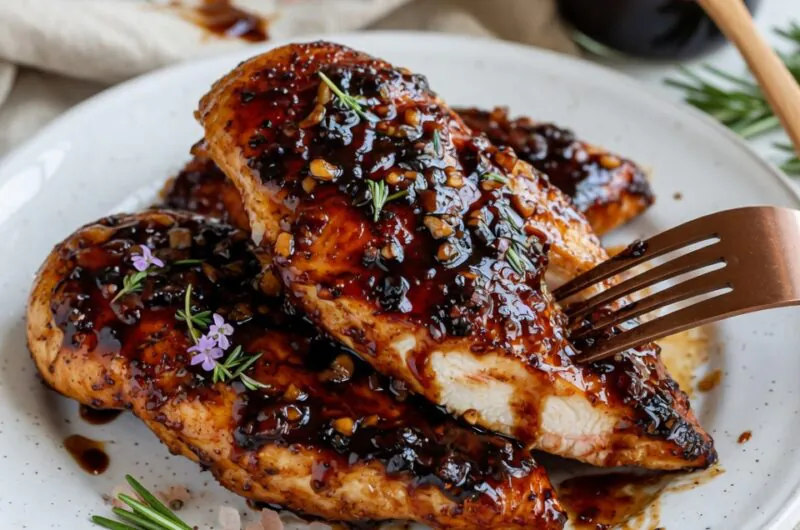
Golden-seared chicken breasts cloaked in a tangy-sweet, glossy reduction—this is weeknight cooking that hits the high notes without the fuss.
📋 In This Article
Introduction
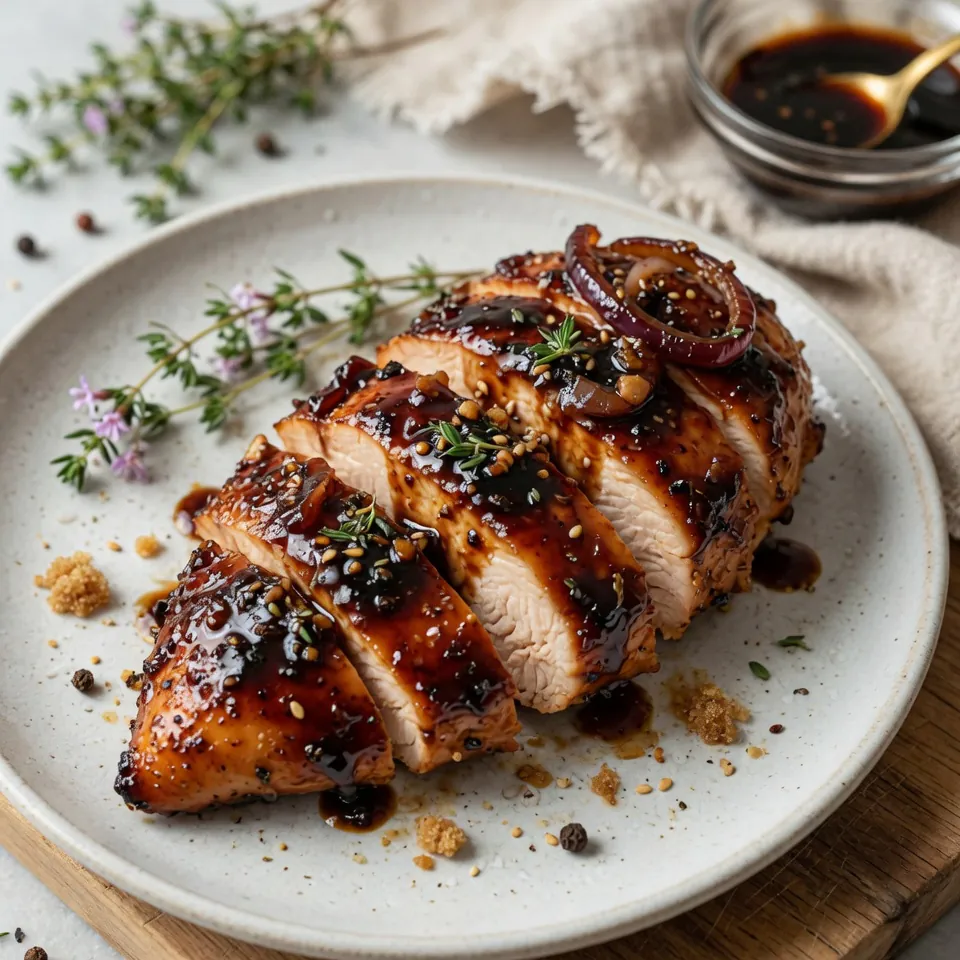
There is a specific kind of satisfaction in serving a dish that looks like it came from a white-tablecloth bistro but required the effort of a Tuesday night toast. That is the magic of Sticky Balsamic Glazed Chicken Breasts That Look Fancy But Are So Simple. It hits that elusive trifecta: it’s fast, it’s deeply flavored, and it looks stunning on the plate. The core appeal here is the glaze itself—a glossy, obsidian reduction that clings to the meat, delivering a punch of acidity mellowed by honey and savory umami. It transforms the lean, sometimes mild-mannered chicken breast into something succulent and complex. This isn’t just dinner; it’s a lesson in how a few high-impact ingredients can elevate the mundane into the memorable.
Why This Recipe Works (The Secret to the Sticky Glaze)
The brilliance of this recipe lies in the chemistry of the glaze and the physics of the cooking method. We aren’t just dumping ingredients in a pan; we are building layers of flavor.
First, the marinade. The balsamic vinegar serves a dual purpose. Its acidity acts as a tenderizer, slightly denaturing the muscle proteins on the surface of the chicken, which allows it to retain more moisture during cooking. Simultaneously, the sugars in the vinegar and honey are preparing to caramelize.
Then there is the sear. We start on the stovetop to trigger the Maillard reaction—the chemical process where amino acids and reducing sugars react under heat to create hundreds of new flavor compounds and that desirable golden-brown crust. This step provides the savory depth that roasting alone often misses. Finally, by reducing the marinade separately, we concentrate flavors and encourage evaporation, leaving behind a viscous, syrupy glaze that coats the meat rather than pooling at the bottom of the pan. This is how you get that restaurant-quality sheen.
Ingredients You’ll Need
- 2 large boneless, skinless chicken breasts (about 1 pound total) – Look for breasts that are relatively even in thickness.
- 1/4 cup high-quality balsamic vinegar – Aged vinegar has a syrupy consistency and less harsh acidity.
- 2 tablespoons honey – This provides the necessary sugar content for caramelization and stickiness.
- 3 cloves garlic, minced – Fresh is non-negotiable here for pungent heat.
- 2 tablespoons extra virgin olive oil – Used in the marinade and for searing.
- 1 tablespoon soy sauce (or tamari for gluten-free) – Adds the salty, umami base that balances the sweet.
- 1 tablespoon Dijon mustard – Acts as an emulsifier for the glaze and adds a sharp, tangy layer.
- 1 teaspoon fresh thyme (or 1/2 teaspoon dried) – An earthy herb note that cuts through the sugar.
- Salt and black pepper – Season generously.
Step-by-Step Instructions
1. Prepare the Marinade
In a medium bowl, whisk together the balsamic vinegar, honey, minced garlic, extra virgin olive oil, Dijon mustard, and fresh thyme. Whisk aggressively until the mixture is emulsified—this means the oil and vinegar are suspended together, creating a uniform, creamy liquid that will coat the chicken evenly.
2. Marinate the Chicken
Place the chicken breasts in a shallow dish or a resealable plastic bag. Pour the marinade over the top, massaging the bag or turning the meat to ensure every surface is coated. Let it sit at room temperature for 30 minutes. Do not skip this window; it is the sweet spot for flavor absorption without the acid turning the texture mushy.
3. Sear the Chicken
Heat a large oven-safe skillet over medium-high heat and add a drizzle of olive oil. Remove the chicken from the marinade—let the excess drip off, but do not wipe it clean—and place it in the hot pan. Reserve the leftover marinade in the bowl. Sear for 3-4 minutes per side. We are looking for a deep golden crust here. This browning is pure flavor development.
4. Reduce the Glaze
While the chicken sears, pour the reserved marinade into a small saucepan (or use the same skillet after removing the chicken if you are fast). Bring it to a boil, then reduce the heat to a simmer. Let it bubble gently for 5-7 minutes. Watch it closely in the final minutes. The glaze is ready when it coats the back of a spoon and leaves a clear trail when you run your finger through it.
5. Bake to Perfection
Preheat your oven to 400°F (200°C). If your skillet is oven-safe, keep the chicken in it; otherwise, transfer the seared breasts to a baking dish. Pour the reduced glaze over the chicken. Bake for 15-20 minutes. You are aiming for an internal temperature of 165°F (74°C) at the thickest part. The glaze will bubble and tighten, creating that signature sticky coating.
6. Rest and Serve
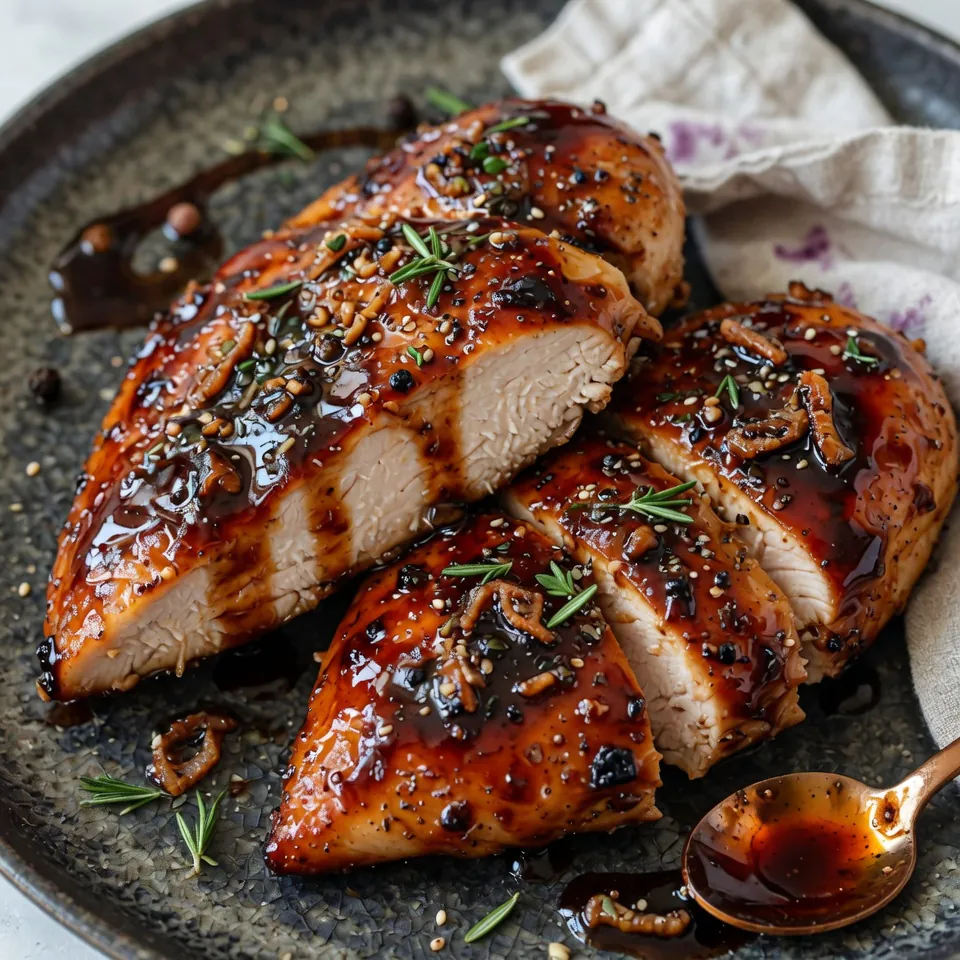
Remove the chicken from the oven and let it rest on the cutting board for 5 minutes. I know it’s tempting to slice right in, but cutting immediately allows the juices to run right out onto the board. Resting allows the muscle fibers to relax and reabsorb those juices. Drizzle the thickened pan drippings over the top before serving.
⚠️ Common Mistakes to Avoid
Even simple recipes have pitfalls. Here is how to avoid the most common errors when making Sticky Balsamic Glazed Chicken Breasts.
Overcooking the meat. Chicken breast is lean; it goes from perfect to dry in seconds. Do not guess. Use an instant-read thermometer and pull the chicken the moment it hits 165°F (74°C). Carryover cooking will do the rest.
Not reducing the glaze enough. If your glaze is watery, it won’t stick. It needs to reduce until it’s syrupy. If you are unsure, drip a bit on a cold plate—if it spreads slowly, it is ready. If it runs like water, keep simmering.
Burning the garlic. Garlic burns faster than you think. When searing the chicken, if you see the minced garlic bits falling off and turning black in the pan, the heat is too high. Scrape them up or lower the flame. Burnt garlic tastes bitter and ruins the glaze.
Uneven cooking. Chicken breasts are naturally thicker on one end. If you do not pound them to an even thickness or split them, the thin end will be dry by the time the thick end is cooked through.
Serving Suggestions & Pairings
The intense tang and sweetness of the glaze need sides that can stand up to the flavor while providing textural contrast.
Starches: Creamy polenta or a mound of buttery mashed potatoes acts as the perfect canvas for the sticky pan drippings. The richness balances the vinegar’s acidity. For a lighter option, a fluffy quinoa salad with lemon zest cuts through the sweetness.
Vegetables: Roasted root vegetables like carrots and parsnips echo the sweetness, while roasted Brussels sprouts offer a crispy, bitter contrast. A simple arugula salad with shaved parmesan and a lemon vinaigrette provides a peppery, fresh palate cleanser.
Wine Pairing: A light-bodied Pinot Noir with earthy notes complements the caramelized glaze, while a crisp Sauvignon Blanc offers a refreshing acidity match.
Flavor Variations & Customizations
This recipe is a template. Once you master the technique, you can riff on the flavors endlessly.
- Spice it Up: Whisk 1/2 teaspoon of red chili flakes or cayenne pepper into the marinade. The heat cuts the sugar and adds a back-of-the-throat warmth.
- Swap the Sweetener: Maple syrup works beautifully in place of honey, offering a darker, woodier sweetness that pairs exceptionally well with pork if you decide to swap proteins.
- Change the Herbs: Rosemary or oregano can replace thyme. Rosemary brings a piney aroma that holds up well to the strong balsamic flavor.
- Protein Switch: Chicken thighs are a great alternative—they stay juicy longer and have a richer flavor. Boneless thighs will need roughly the same cooking time, but bone-in will require longer in the oven.
- Gluten-Free Adaptation: Ensure you use Tamari instead of standard soy sauce. The flavor profile remains identical, keeping the dish accessible for everyone at the table.
Storage & Reheating Tips
To keep your Sticky Balsamic Glazed Chicken Breasts tasting their best, proper storage is key.
Refrigeration: Let the chicken cool completely before transferring it to an airtight container. It will keep well in the refrigerator for 3 to 4 days. The flavors often deepen after a day in the fridge, making this an excellent meal-prep option.
Freezing: For longer storage, freeze the cooked chicken in a single layer on a baking sheet before transferring to a freezer bag. This prevents the pieces from freezing together in a solid block. Freeze for up to 3 months.
Reheating: The microwave is fast but often dries out chicken. For the best texture, reheat in a 350°F (175°C) oven. Place the chicken in a baking dish with a splash of water or broth, cover tightly with foil, and heat for 15-20 minutes. The steam created inside the foil helps retain moisture.
💡 Pro Tips from a Chef
Want to take this from good to great? Pay attention to these details.
Pound the Chicken. I cannot stress this enough. Place the chicken breasts between two sheets of plastic wrap and pound them to an even 1/2-inch thickness. This ensures the chicken cooks evenly and quickly, preventing the dry, overcooked ends that plague so many baked chicken recipes.
Don’t Rush the Sear. When you place the chicken in the pan, do not move it. Let it sit. You want to hear a sizzle. The meat will release naturally from the pan once a good crust has formed. If it sticks, it hasn’t seared enough yet.
Baste for Brilliance. Halfway through baking, spoon the glaze from the bottom of the pan over the chicken. This builds layers of flavor and ensures the exterior stays sticky rather than drying out in the oven heat.
Resting is Mandatory. Cutting into the chicken immediately releases all the internal moisture onto the cutting board. Resting allows the proteins to relax. It’s the difference between a juicy bite and a dry one.
Frequently Asked Questions (FAQ)
+Why is my balsamic glaze not thickening?
If your glaze remains thin, it likely needs more time on the heat. Keep simmering it until it reduces by about half. Remember that it will thicken further as it cools down, so pull it when it coats a spoon lightly.
+Can I use chicken thighs instead of breasts?
Absolutely. Boneless, skinless chicken thighs are actually more forgiving because they have higher fat content. They stay juicy even if slightly overcooked. Keep the cooking time roughly the same, but always check for that 165°F (74°C) internal temperature.
+How long should I marinate the chicken?
A minimum of 30 minutes is essential for flavor penetration. You can marinate it for up to 4 hours, but avoid going longer than that. The acid in the vinegar can eventually break down the meat fibers too much, resulting in a mushy texture.
+What do I do if the glaze burns while baking?
If the sugars in the glaze are browning too fast but the chicken isn’t cooked through, tent a piece of aluminum foil loosely over the baking dish. This shields the surface from direct heat while allowing the chicken to finish cooking.
+Can I make this recipe ahead of time?
Yes. You can marinate the chicken and store it in the fridge up to a day in advance. You can also make the glaze reduction separately, store it in a jar, and pour it over the chicken just before baking.
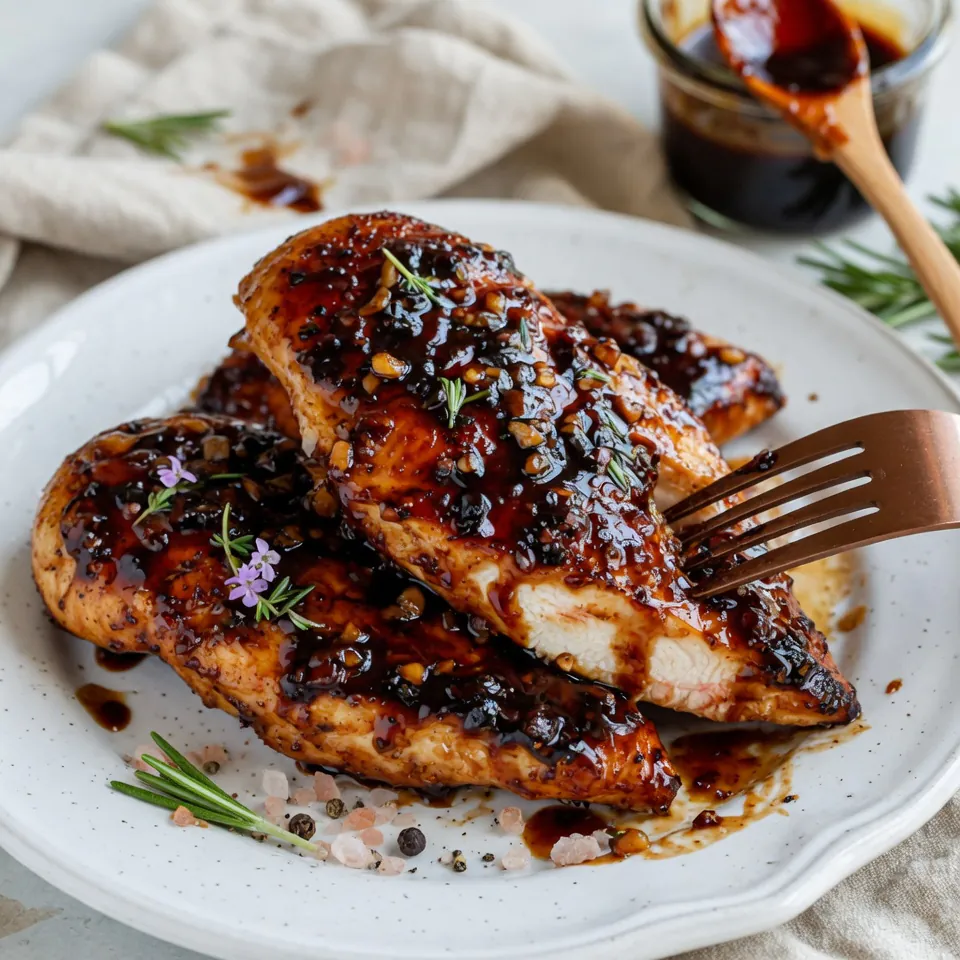
Easy Balsamic Chicken
Ingredients
Method
- In a large mixing bowl, whisk together the olive oil, balsamic glaze, tomato paste, honey and lemon juice. Add the garlic cloves, thyme, oregano and sweet paprika. Whisk again to combine.
- Pat the chicken dry and season generously with kosher salt and black pepper on both sides.
- Add the chicken to the mixing bowl and toss to coat with the balsamic marinade. Set aside briefly for a few minutes while you heat the oven (or if you have time, cover and refrigerate for a couple hours).
- Heat the oven to 425 degrees F and adjust a rack in the middle.
- Transfer the chicken to a baking dish or a heat-safe skillet. Bake on the center rack of the heated oven for about 25 to 30 minutes or until the chicken is fully cooked through (internal temperature of cooked chicken should register 165 degrees F).
Nutrition
Notes
- For perfectly cooked chicken, use a meat thermometer to ensure the internal temperature reaches 165°F; the chicken should be juicy and no longer pink in the center.
- To avoid dryness, be careful not to overbake the chicken; check it at 25 minutes and remove it once cooked through.
- If you're out of honey, feel free to substitute with pure maple syrup or agave nectar for a similar sweetness that balances the balsamic glaze.
- For a quick flavor boost, marinate the chicken for at least 15 minutes at room temperature; if you have more time, refrigerate for up to 2 hours for deeper flavor.
- Store any leftovers in an airtight container in the fridge for up to 3 days; reheating in the oven at 350°F helps keep the chicken moist.