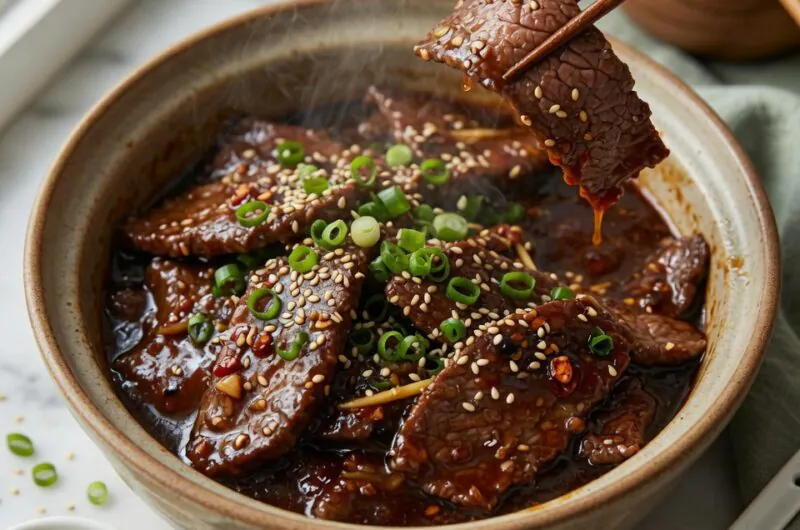
Tender slices of flank steak braised in a savory soy-ginger sauce—this is the weeknight win that puts takeout containers to shame.
📋 In This Article
- Introduction
- Why This Recipe Works (and Beats Takeout Every Time)
- Essential Ingredients for Authentic Mongolian Beef
- Step-by-Step Instructions: Your Guide to Slow Cooker Perfection
- Common Mistakes to Avoid for Perfect Results
- Delicious Variations & Serving Suggestions
- Storage & Reheating Tips
- Pro Tips for Next-Level Flavor
- Frequently Asked Questions (FAQ)
- Conclusion
Introduction
If you want a Slow Cooker Mongolian Beef recipe that actually lives up to the hype, you’re in the right place. We’ve all been there: you order takeout, excited for that sweet-savory glaze, only to get rubbery beef drowning in cloying sauce. This recipe fixes that. It delivers that sticky, glossy coating you crave, but with beef that falls apart the moment it hits your tongue. The best part? It requires about 10 minutes of actual work.
This dish works because it understands the assignment. Flank steak is naturally lean and full of beefy flavor, but treat it wrong, and it fights back. By slicing it correctly and letting the slow cooker work its magic, you transform a tough cut into something luxurious. It’s cheaper than delivery, faster than driving to the restaurant, and honestly? It tastes better.
Why This Recipe Works (and Beats Takeout Every Time)
Here’s the thing about takeout: speed often trumps quality. Restaurants frequently rush the cooking process, leaving you with chewy meat. Slow Cooker Mongolian Beef flips the script. The low, steady heat breaks down the connective tissues in the flank steak—provided you slice it right—turning potential toughness into pure tenderness.
But it’s not just about texture. It’s about the sauce. Store-bought versions often rely on heavy cornstarch slurries that gel up unappealingly. This recipe uses brown sugar not just for sweetness, but to encourage caramelization deep within the sauce, creating layers of flavor that a quick wok toss simply can’t achieve. You get deep umami notes from the soy sauce, a fragrant punch from fresh aromatics, and that glossy finish that clings to every strand of meat. It’s restaurant flavor with home-cooked soul.
Essential Ingredients for Authentic Mongolian Beef
You don’t need a pantry full of exotic ingredients to make this sing. You just need the right ones.
- Flank Steak: This is the workhorse. It’s a lean cut from the belly, known for distinct grain and robust flavor. Because it has little intramuscular fat, how you slice it matters immensely (more on that later).
- Soy Sauce: The salt and umami backbone. Don’t skimp here—a high-quality, naturally brewed soy sauce makes a difference.
- Brown Sugar: This provides the sweetness and helps the sauce reduce into a sticky glaze. It balances the saltiness of the soy and the sharp bite of the ginger.
- Fresh Ginger & Garlic: These are non-negotiable. Dried powders lack the volatile oils that give this dish its aromatic lift. Grate them fresh for the best result.
- Cornstarch: Essential for thickening the sauce into that signature velvety consistency.
- Sesame Oil: Used at the end for a nutty, aromatic finish. Toasted sesame oil is potent; a little drizzle goes a long way.
- Green Onions: More than a garnish, they add a necessary sharp, fresh contrast to the rich beef.
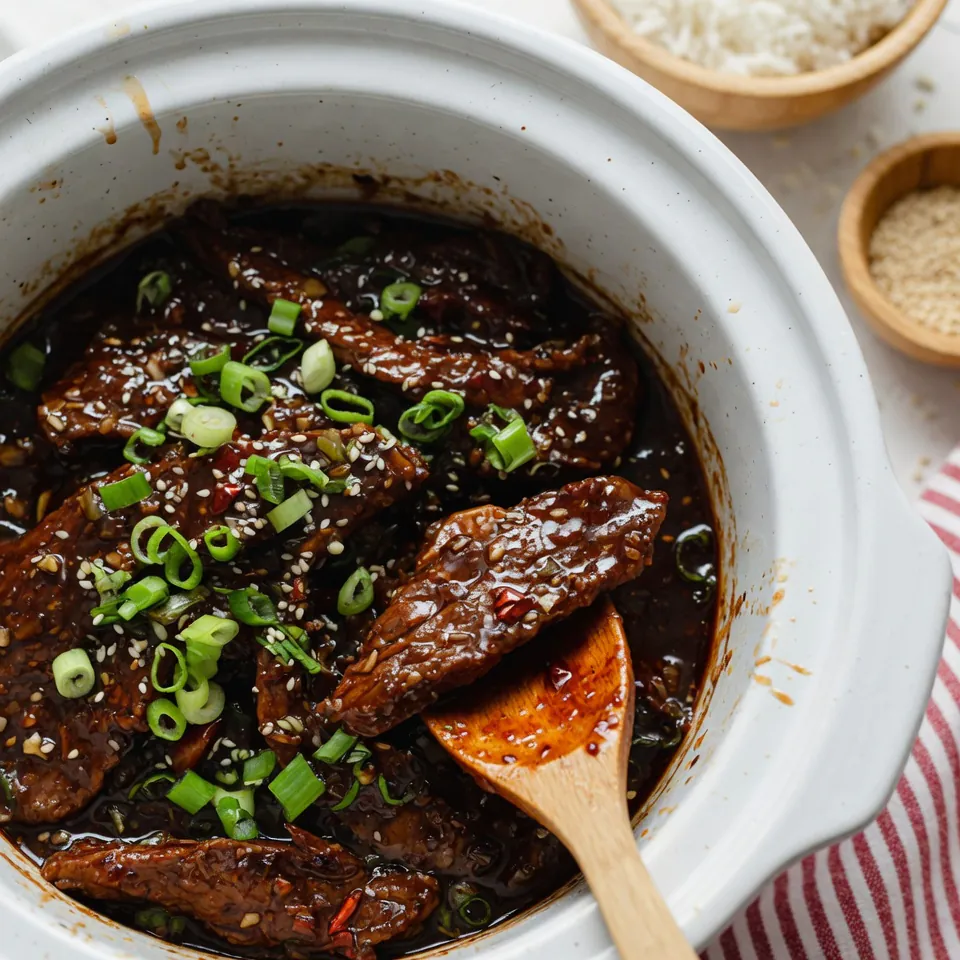
Step-by-Step Instructions: Your Guide to Slow Cooker Perfection
Prep Time: 10 minutes Cook Time: 4-6 hours on low
- Prepare the Flank Steak: Grab your flank steak and a sharp knife. Look closely at the meat—you’ll see lines running across it. That’s the grain. Slice against the grain into thin strips, about 1/4-inch thick. Cutting across the muscle fibers shortens them, ensuring the beef is tender rather than chewy. This is the single most important step.
- Whisk the Sauce: In a medium bowl, combine 1/2 cup soy sauce, 1/2 cup brown sugar, 1 tablespoon minced garlic, and 1 teaspoon grated fresh ginger. Whisk until the sugar dissolves. This ensures the flavor is evenly distributed from the get-go.
- Combine in the Slow Cooker: Place the sliced beef into the slow cooker insert. Pour the sauce over the top. Toss the beef to ensure every piece is coated. You don’t need to add water; the beef will release its own juices during cooking, creating a braising liquid.
- Set the Slow Cooker: Cover and cook on LOW for 4-6 hours. Why low? High heat can cause the lean flank steak to seize up and expel its moisture too quickly. Low and slow allows the fibers to relax and the collagen to soften without drying out the meat.
- Thicken the Sauce: About 30 minutes before serving, mix 1 tablespoon cornstarch with 1 tablespoon cold water to make a slurry. Stir this into the slow cooker. Turn the heat to HIGH. The sauce needs to bubble to activate the starch—this process, called gelatinization, is what turns a thin liquid into a glossy glaze.
- Serve: Once the sauce has thickened, serve immediately over steamed rice. Finish with sliced green onions and a drizzle of sesame oil.
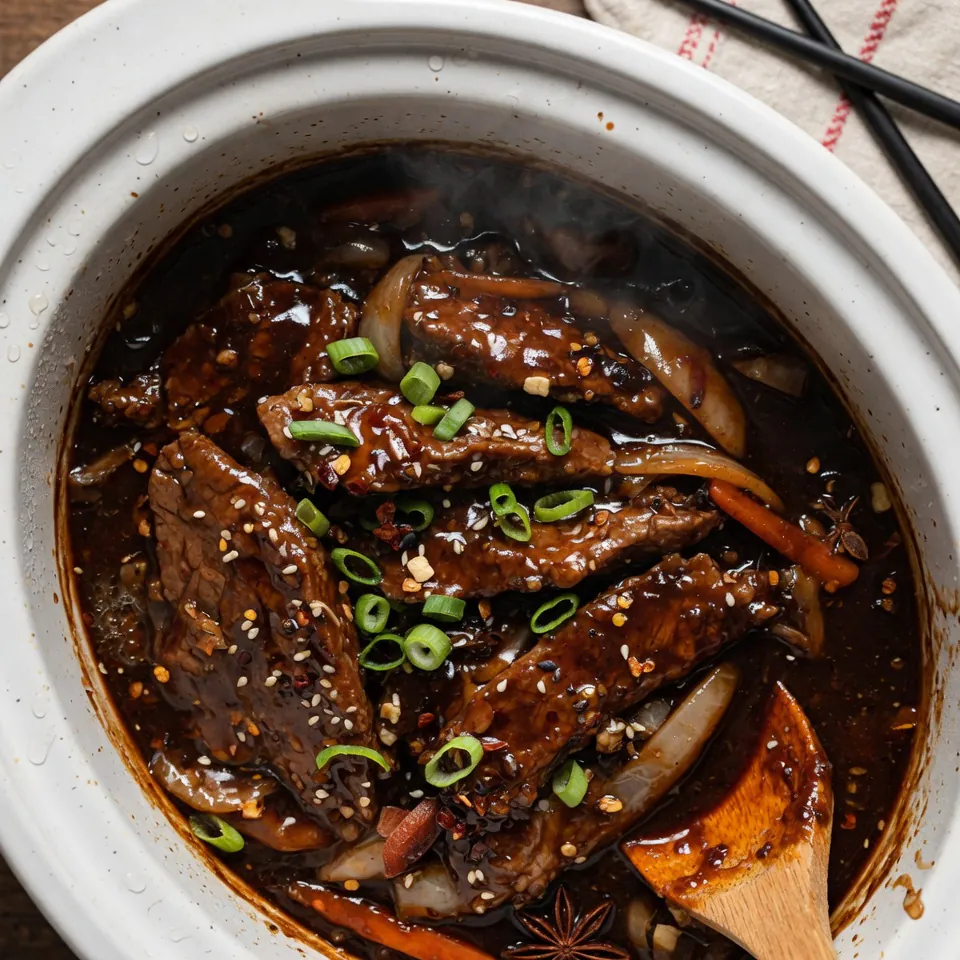
⚠️ Common Mistakes to Avoid for Perfect Results
Even a “set it and forget it” recipe has pitfalls. Here’s how to dodge them.
Overcooking the Beef: Flank steak is lean. While slow cooking is forgiving, there is a limit. If you cook it much beyond 6 hours on low, the meat can start to dry out and become stringy. Keep an eye on the clock.
Slicing with the Grain: I cannot stress this enough: slicing with the grain results in shoe leather. Always slice perpendicular to the lines you see running through the meat.
Adding the Thickener Too Early: If you add cornstarch at the beginning, it can break down over the long cook time and lose its thickening power. Wait until the end to ensure that perfect, velvety consistency.
Skipping the Finish: The dish needs brightness. A hit of fresh green onion and sesame oil at the end cuts through the richness and adds complexity that slow cooking alone can’t provide.
Delicious Variations & Serving Suggestions
Once you master the base recipe, play around with it.
- Add Vegetables: Throw in broccoli florets, snap peas, or sliced carrots during the last hour of cooking. They will soak up the sauce and add crunch.
- Spice It Up: Love heat? Add a teaspoon of red pepper flakes or a squirt of sriracha to the sauce before cooking.
- The Chuck Roast Swap: Want beef that truly shreds? Use a 2-pound chuck roast instead of flank steak. It has more fat and connective tissue, so it will pull apart easily after 8 hours on low. The texture will be different—more like a pot roast—but delicious.
Serve this over jasmine rice for a classic approach. For a low-carb twist, cauliflower rice works surprisingly well, acting as a sponge for that savory sauce.
Storage & Reheating Tips
Store leftovers in an airtight container in the refrigerator for up to 3 to 4 days. The flavors often deepen overnight, making lunch the next day even better.
To reheat, avoid the microwave if possible—it can toughen the beef. Instead, warm it gently in a saucepan over medium-low heat with a splash of water or broth. This steams the meat back to tenderness without drying it out. You can freeze this dish for up to 3 months, though the texture of the beef may change slightly upon thawing.
💡 Pro Tips for Next-Level Flavor
Want to elevate this from “good” to “incredible”? Try these techniques.
Velveting the Beef: This is a restaurant technique. Toss the raw sliced beef in a tablespoon of cornstarch and a splash of soy sauce before adding it to the slow cooker. This coating protects the meat from direct heat and keeps it juicy.
Sear First: I used to skip this step to save time. I was wrong. Taking 5 minutes to quickly sear the beef in a hot pan before tossing it in the slow cooker creates fond—those browned bits stuck to the pan. Deglaze the pan with a little water and pour that liquid into the slow cooker. That browned goodness translates directly into deeper, more complex flavor.
Toast Your Sesame Seeds: If you’re garnishing with sesame seeds, toss them in a dry pan for 30 seconds. Toasting releases their oils and turns a bland crunch into a nutty flavor bomb.
Frequently Asked Questions (FAQ)
+Why is my slow cooker beef tough?
If your beef is tough, you likely sliced it with the grain instead of against it, or you cooked it too long on high heat. Flank steak needs to be sliced thin and perpendicular to the grain to break up the muscle fibers. Also, lean cuts can dry out if overcooked, even in a slow cooker.
+Can I use a different cut of beef?
Yes. Chuck roast is a great alternative if you prefer a “shredded” beef texture. It has more fat, so it can handle longer cooking times (8 hours on low) and will pull apart easily. Flank steak remains in strips, while chuck shreds.
+Do I have to sear the beef first?
No, you don’t have to, but it makes a difference. Searing triggers the Maillard reaction, creating new flavor compounds that boiling or slow cooking alone cannot achieve. If you have an extra 5 minutes, do it. You won’t regret the extra depth of flavor.
+How do I know when the beef is done?
The beef is done when it is tender and easy to pierce with a fork. For flank steak, this usually happens around the 4-5 hour mark on low. If you are using chuck roast, it’s done when it shreds easily with two forks.
+Can I make this recipe gluten-free?
Absolutely. Simply swap the regular soy sauce for a high-quality tamari or coconut aminos. The flavor profile remains nearly identical, making it safe for those avoiding gluten.
Conclusion
Slow Cooker Mongolian Beef is more than just a dinner; it’s a strategy. It proves that you don’t need a wok or a culinary degree to achieve that elusive balance of sweet, savory, and tender. It’s about understanding the cut of meat, respecting the science of the slow cooker, and finishing with fresh, vibrant accents. The first time I made this, I skipped the cornstarch slurry and ended up with a soup—don’t do that. But once you nail that glossy glaze, you’ll realize takeout is no longer necessary. Give it a try, and let me know how it turned out in the comments below!