
Introduction
Spaghetti squash casserole is a wonderful way to enjoy the unique texture and flavor of this vegetable while delivering a comforting dish that the whole family will love. Its mild taste pairs perfectly with rich, cheesy ingredients and a variety of vegetables, making it a versatile option for any meal.
This casserole not only satisfies your comfort food cravings but also makes use of spaghetti squash, a nutritious substitute for traditional pasta. Whether you’re trying to eat healthier or simply looking for a new recipe to jazz up your weeknight dinners, this dish is sure to impress.
Ingredients
- 1 medium spaghetti squash (about 3 lbs)
Spaghetti squash is the star of this dish, offering a low-carb alternative to pasta. When cooked, its flesh transforms into spaghetti-like strands that provide a unique texture, perfect for soaking up flavors. - 2 cups shredded cheese (e.g., mozzarella, cheddar)
A blend of cheeses gives a creamy, rich taste to the casserole. Cheese melts beautifully, creating a delightful gooey texture that binds the ingredients together and enhances the overall flavor. - 1 cup diced tomatoes (canned or fresh)
Tomatoes add a burst of acidity and moisture to the casserole, balancing the richness of the cheese. They also contribute a layer of flavor and nutrition, packed with vitamins and antioxidants. - 1 cup chopped spinach or kale
Leafy greens add a nutritious punch and vibrant color to the dish. They provide essential vitamins and minerals while complementing the other ingredients with their subtle earthy flavor. - 1/2 cup diced onion
Onions bring a natural sweetness and depth of flavor to the casserole. They sauté down to a soft consistency, blending seamlessly with the other ingredients for a savory base. - 2 cloves garlic, minced
Garlic adds aromatic depth to the dish, enhancing the overall flavor profile. Fresh garlic provides a pungent and slightly spicy note that elevates the other ingredients. - 1 teaspoon Italian seasoning
This blend of herbs adds a classic Italian flavor that complements the cheese and vegetables beautifully. It infuses the casserole with warmth and a hint of earthiness. - Salt and pepper to taste
Seasoning helps to enhance the flavors of all the ingredients. Proper seasoning is crucial to ensure the dish is well-balanced and avoids tasting flat.
Directions & Preparation
Step 1: Preheat the oven to 400°F (200°C).
Preheating the oven establishes the correct cooking environment for the casserole, ensuring it cooks evenly. A hot oven promotes proper browning and melting of the cheese, leading to a beautifully golden top.
Step 2: Prepare the spaghetti squash: cut it in half lengthwise and remove the seeds.
Cutting the spaghetti squash is essential for cooking it evenly. Removing the seeds creates space for the flesh to soften and allows for easier access to scrape out the strands once cooked. Use a sturdy knife and be cautious!
Step 3: Place the squash halves cut-side down on a baking sheet and roast for 30-40 minutes.
Roasting the squash allows it to caramelize, intensifying its sweetness. Cooking it cut-side down traps steam, resulting in perfectly cooked, tender strands. Check for doneness by poking it with a fork; it should feel soft.
Step 4: While the squash roasts, sauté the onions and garlic in a pan over medium heat until translucent.
Sautéing onions and garlic enhances their flavors, as cooking releases their aromatic oils. This step builds the flavor base for the casserole and ensures the flavors meld nicely with the rest of the ingredients.
Step 5: Add the chopped spinach or kale, diced tomatoes, and Italian seasoning to the pan.
Incorporating the greens and tomatoes at this stage allows them to wilt and blend with the sautéed onions and garlic. This mixture creates a flavorful filling that enhances the overall taste of the casserole.
Step 6: Once the squash is cooked and cooled slightly, use a fork to scrape out the strands.
Scraping the cooked squash with a fork creates those desirable spaghetti-like strands. This technique ensures an appealing texture for the casserole, allowing it to hold together while still delivering that unique squash taste.
Step 7: In a large mixing bowl, combine the squash strands, sautéed vegetables, and half of the shredded cheese.
Mixing the ingredients in a bowl ensures even distribution, which helps every bite contain a balance of squash, vegetables, and cheese. The cheese will also melt slightly into the warm mixture, binding the ingredients together.
Step 8: Transfer the mixture to a greased baking dish and top with the remaining cheese.
Using a greased dish prevents sticking and makes for easy serving later. Topping the mixture with cheese creates a delightful crust that adds texture and flavor as it bakes, turning golden brown and bubbly.
Step 9: Bake for 20-25 minutes or until the cheese is melted and bubbly.
Baking allows all the components to meld together while the cheese becomes gooey and delicious. This step also helps to form a light crust on top that adds extra excitement to each serving.
Step 10: Remove from the oven and let cool for a few minutes before serving.
Allowing the casserole to cool slightly aids in setting the dish, making it easier to serve. It also prevents burns from the hot cheese and makes sure the flavors are well distributed throughout.

Nutritional Benefits of Spaghetti Squash
Spaghetti squash is not only a delicious alternative to pasta; it offers several health benefits as well. Low in calories and high in fiber, it supports digestion and keeps you feeling full longer. Additionally, it's rich in vitamins A and C, both important for maintaining a healthy immune system and skin health. Using spaghetti squash in your cooking can help incorporate more vegetables into your diet while satisfying your cravings for comfort food.
Customize Your Casserole: Add-Ins and Variations
One of the great aspects of spaghetti squash casserole is its adaptability. Feel free to enhance the base recipe with cooked protein such as shredded chicken, ground turkey, or beans for added nutrition. You can also swap out the vegetables based on what you have on hand or in season. Adding spices like red pepper flakes or cumin can give your casserole an unexpected kick, allowing you to create a new favorite every time.
Perfect Pairings for Spaghetti Squash Casserole
This cheesy casserole can be served as a standalone meal, but it also pairs wonderfully with other dishes. For a more filling meal, consider serving it alongside a crisp side salad drizzled with a light vinaigrette. Pairing it with garlic bread enhances the cozy comfort food experience, while a glass of white wine adds a delightful finish to your meal. Whether as a main or a side, this casserole complements many different entrees.
FAQs
What if my casserole turns out too thick?
If your casserole is too thick, it may be due to insufficient moisture. You can add a splash of vegetable or chicken broth to achieve the desired consistency. Alternatively, mixing in some additional crushed tomatoes can also help loosen it while adding flavor.
How can I adjust this recipe for a larger crowd?
To scale this recipe, simply double or triple the ingredients and use a larger baking dish. Monitor the baking time, as a larger quantity may require additional time to heat through completely, ensuring that the cheese melts and bubbles nicely.
What if it tastes bland?
If the casserole seems lacking in flavor, try adjusting the seasoning. Adding more salt and freshly cracked pepper can enhance visible flavors. You can also incorporate some hot sauce or fresh herbs just before serving for an extra burst of freshness.
Can I make this casserole ahead of time?
Yes, this casserole can be prepared ahead. Assemble it up to the point before baking, cover, and refrigerate. It may require additional time in the oven if baked straight from the fridge.
What if my cheese doesn't melt properly?
If the cheese doesn't melt nicely, ensure your oven is preheated adequately. You may need to increase the temperature slightly toward the end of baking, but watch closely to avoid burning. Using a combination of cheese types can also improve melt quality.
Can I substitute the spaghetti squash with another squash?
While spaghetti squash provides its distinctive texture, you can experiment with other squash varieties like butternut or acorn. However, be mindful that their flavors and textures will differ significantly, and adjustments may be needed in cooking times.
Conclusion
Making spaghetti squash casserole is a rewarding venture, combining elements of traditional comfort food with healthy ingredients. This dish not only fills your stomach but also nourishes your body with wholesome ingredients.
With the flexibility to adapt to your preferences and pantry staples, this recipe is sure to become a staple in your meal rotation. Embrace the unique charm of spaghetti squash and enjoy the delicious cheesy goodness in each comforting bite.
Recipe Card
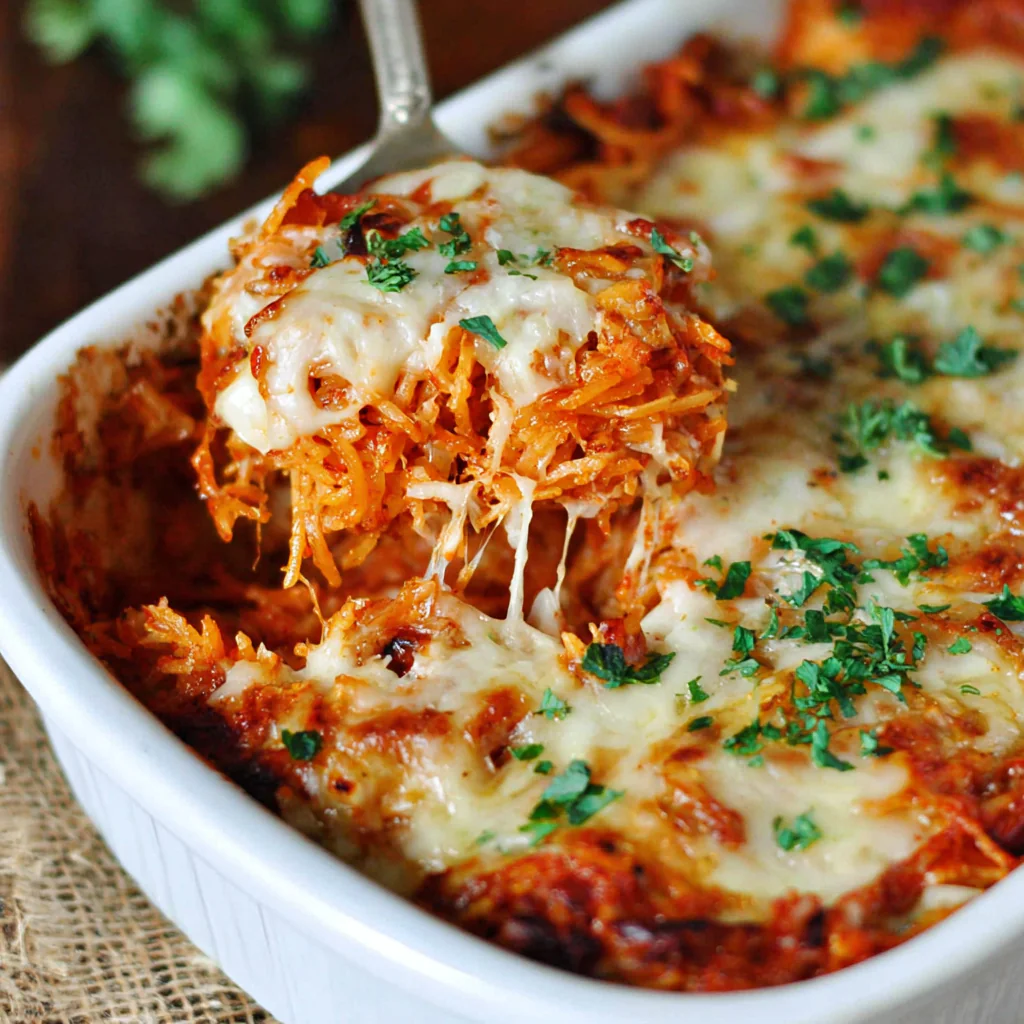
Deliciously Cheesy Spaghetti Squash Casserole
Ingredients
Method
- Preheat the oven to 400°F (200°C).
- Prepare the spaghetti squash: cut it in half lengthwise and remove the seeds.
- Place the squash halves cut-side down on a baking sheet and roast for 30-40 minutes.
- While the squash roasts, sauté the onions and garlic in a pan over medium heat until translucent.
- Add the chopped spinach or kale, diced tomatoes, and Italian seasoning to the pan.
- Once the squash is cooked and cooled slightly, use a fork to scrape out the strands.
- In a large mixing bowl, combine the squash strands, sautéed vegetables, and half of the shredded cheese.
- Transfer the mixture to a greased baking dish and top with the remaining cheese.
- Bake for 20-25 minutes or until the cheese is melted and bubbly.
- Remove from the oven and let cool for a few minutes before serving.
Tried this recipe?
Let us know how it was!Notes
Additional serving suggestions: pair with a crisp salad, garlic bread, or roasted seasonal vegetables for balance.
For make-ahead, prep components separately and assemble just before heating to preserve texture.
Taste and adjust with acid (lemon/vinegar) and salt right at the end to wake up flavors.