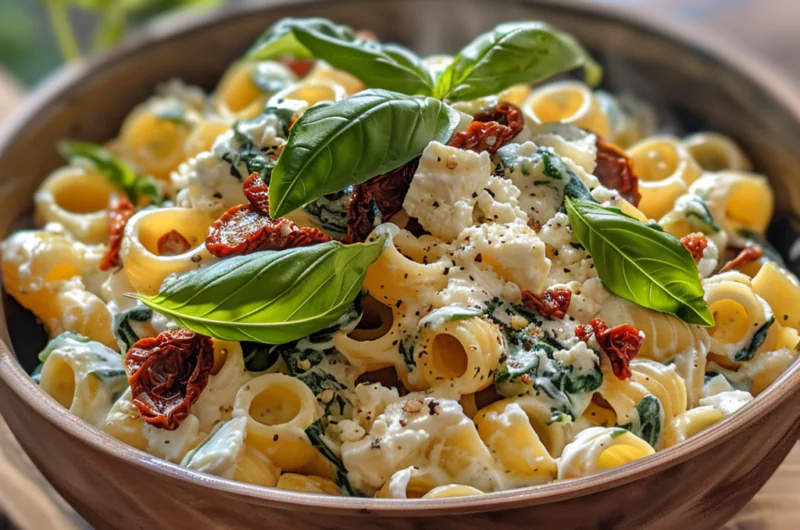
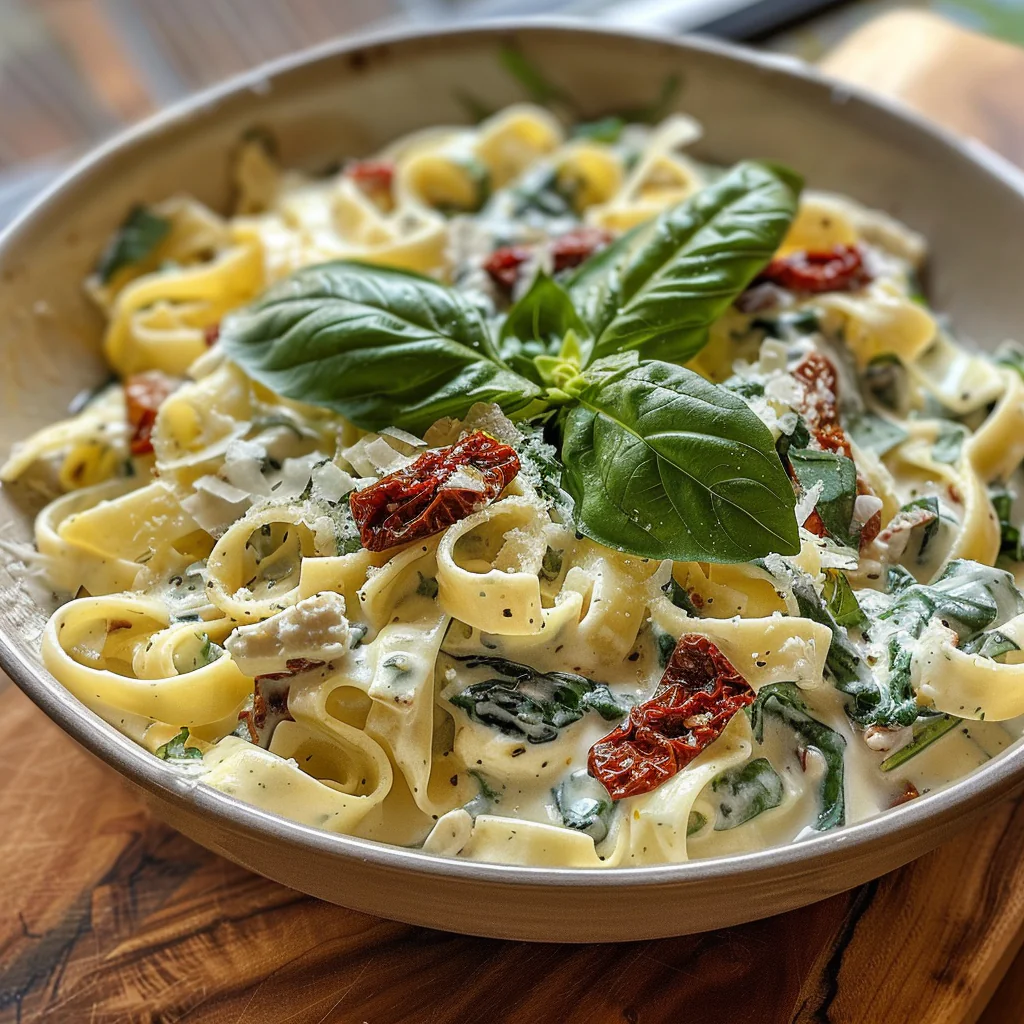
A vegetarian weeknight hero: al dente pasta swimming in a tangy, velvety feta sauce with bursts of sweet sun-dried tomatoes—all in a single pot.
📋 In This Article
- Introduction
- Why This One-Pot Wonder Works (Better Than the Rest!)
- Essential Ingredients for Your Creamy Feta & Spinach Pasta
- Step-by-Step: Crafting Your Creamy Feta & Spinach Pasta
- Common Mistakes to Avoid for Perfect One-Pot Pasta
- Flavorful Variations & Add-Ins
- Serving Suggestions & Perfect Pairings
- Storage & Reheating Tips
- Pro Tips for One-Pot Pasta Mastery
- Frequently Asked Questions (FAQ)
Introduction
Let’s be honest: weeknight cooking usually means choosing between flavor and sanity. This Effortless One-Pot Creamy Feta & Spinach Pasta with Sun-Dried Tomatoes refuses to compromise. It delivers the kind of savory, briny depth you usually only get from a restaurant kitchen, yet it requires just one pot and about 25 minutes of your time. The magic lies in the method—cooking the pasta directly in vegetable broth allows the starch to release into the liquid, creating a luscious, emulsified sauce that clings to every curve of the pasta.
I love this dish because it balances the sharp, salty punch of feta cheese against the sweet chew of sun-dried tomatoes and the earthy wilt of fresh spinach. It is, quite simply, the ultimate vegetarian dinner for when you want comfort food without the heavy lifting.
Why This One-Pot Wonder Works (Better Than the Rest!)
Most pasta recipes have you boil water in one pot, make a sauce in another, and then pray the timing aligns. This recipe ditches that dance. By toasting the pasta in aromatics and simmering it in a measured amount of broth, you trigger starch gelatinization. Essentially, the starch that usually washes away in a colander stays in the pot, thickening the cooking liquid into a glossy, velvety sauce.
This isn’t just about saving on dishes (though that’s a huge plus). It’s about flavor integration. The pasta absorbs the savory notes of the broth and the aromatics of the garlic and oil as it hydrates. The result? A creamy feta pasta where every bite is seasoned through and through, rather than just coated on the outside.
Essential Ingredients for Your Creamy Feta & Spinach Pasta
Success here relies on a few power players. You don’t need much, but quality matters.
- Pasta: Short shapes like penne, rotini, or farfalle are ideal. They have more surface area to hold the sauce and cook more evenly in a shallow pot than long spaghetti. If you use spaghetti, you’ll need to stir vigilantly to keep it submerged.
- Feta Cheese: This is non-negotiable. Buy a block of feta cheese packed in brine, not the pre-crumbled tubs. Pre-crumbled feta is coated in anti-caking agents (like cellulose) that prevent it from melting smoothly. You want that pure, tangy creaminess.
- Sun-Dried Tomatoes: Opt for the kind packed in oil. They are plumper and more flavorful than the dry, leathery variety. The oil they pack in is liquid gold—use a tablespoon of it to start your sauté for an instant flavor boost.
- Spinach: Fresh spinach wilts down perfectly. If you only have frozen spinach, thaw it and squeeze it absolutely dry before adding it; excess water will make your sauce runny.
- Vegetable Broth: Since this is the cooking medium, use a brand you actually like the taste of. If your broth is bland, your pasta will be too.
- Olive Oil & Garlic: The foundation. Don’t skimp on the garlic—four cloves might sound like a lot, but they mellow into a sweet, savory base.
Step-by-Step: Crafting Your Creamy Feta & Spinach Pasta
1. Sauté the Aromatics
In a large pot or deep skillet, heat olive oil over medium heat. Add your minced garlic and cook for about 1 minute. You want it fragrant and pale gold, not brown or crispy. Garlic has a high sugar content; if you burn it, it turns acrid and bitter instantly. If that happens, start over—there’s no saving a sauce with burnt garlic.
2. Toast and Simmer
Add your dry pasta to the pot and stir it around for 30 seconds to coat it in the garlicky oil. This “toasting” step adds a layer of nutty flavor. Pour in the vegetable broth and bring it to a boil. Once boiling, reduce the heat to a lively simmer.
3. The One-Pot Cook
Let the pasta cook uncovered for about 8-10 minutes (check the package for al dente time and subtract 1 minute). Stir occasionally to prevent sticking. As the pasta hydrates, the liquid level will drop, leaving behind a thickened, starchy cooking liquid. This is your sauce base.
4. Incorporate Sun-Dried Tomatoes
When the pasta is just shy of al dente and there is still about 1/2 cup of liquid left in the pot, stir in the chopped sun-dried tomatoes. They need a minute or two to soften and share their intense umami with the sauce.
5. The Emulsion Phase
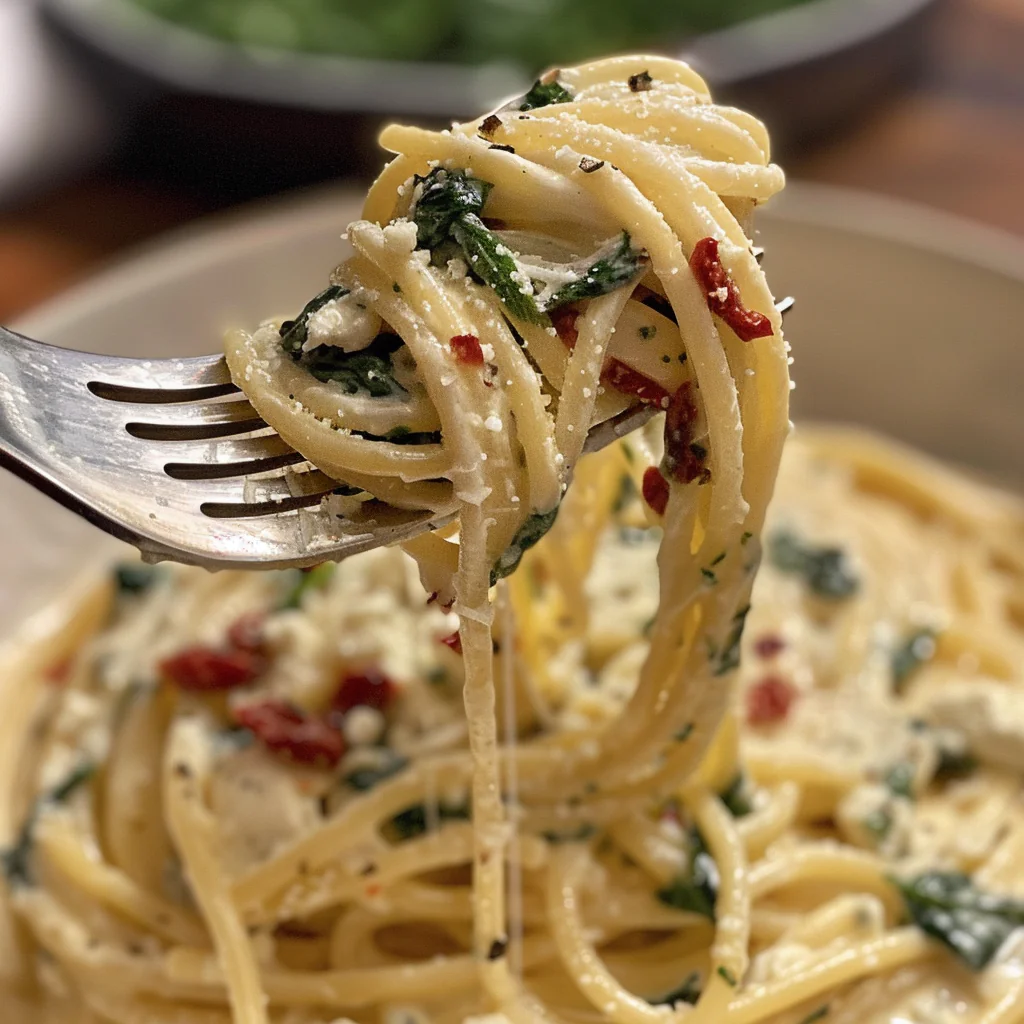
Remove the pot from the heat. This is crucial. Stir in the fresh spinach first—it will wilt instantly in the residual heat. Then, add the crumbled feta cheese. Stir gently but constantly. Off the heat, the residual starch in the liquid and the fat from the cheese will create an emulsion—a creamy, cohesive sauce. If you add feta while the pot is boiling, the high heat can cause the proteins to seize, resulting in a grainy, clumpy texture rather than a smooth one.
6. Season and Serve
Taste the pasta. Feta is naturally salty, so you may not need extra salt, but a generous crank of black pepper is essential. If the sauce is too thick, add a splash of water or broth. Serve immediately while the sauce is glossy and hot.
⚠️ Common Mistakes to Avoid for Perfect One-Pot Pasta
One-pot pasta is forgiving, but it has its pitfalls.
- Boiling vs. Simmering: If you keep the heat on high, the liquid will evaporate before the pasta cooks through, leaving you with crunchy noodles and a burnt bottom. Keep it at a steady simmer.
- The Wrong Liquid Ratio: Too much liquid, and you have soup; too little, and the pasta won’t cook. The general rule is to just cover the pasta with liquid. It should be swimming, not drowning.
- Neglecting the Stir: Pasta releases starch immediately. If you don’t stir occasionally during the simmer, that starch will glue your noodles to the bottom of the pot.
- Overcooking the Spinach: Add spinach at the very end. If you cook it with the pasta, it will turn an unappetizing olive-brown and lose its fresh flavor.
Flavorful Variations & Add-Ins
This dish is a template, not a strict rulebook.
- Protein Boost: Stir in a can of drained chickpeas or white beans during the last 5 minutes of simmering. They absorb the broth’s flavor and add satisfying heft.
- Spicy Kick: Add a pinch of red pepper flakes with the garlic at the start. The heat cuts through the richness of the cheese.
- Lemon Zest: A teaspoon of lemon zest stirred in at the end brightens the entire dish, balancing the salty feta.
- Creamier Still: For a decadent version, stir in a tablespoon of heavy cream or a dollop of Greek yogurt with the feta.
Serving Suggestions & Perfect Pairings
This pasta is rich and savory, so it pairs well with things that offer crunch or acid.
- Side Salad: A simple green salad with a sharp vinaigrette cuts through the creaminess of the sauce.
- Crusty Bread: Essential for mopping up any leftover sauce. A slice of toasted sourdough is perfect.
- Wine Pairing: A crisp Sauvignon Blanc or a dry Rosé complements the salty feta and acidic tomatoes beautifully. Avoid heavy reds, which will clash with the delicate cheese sauce.
Storage & Reheating Tips
Effortless One-Pot Creamy Feta & Spinach Pasta with Sun-Dried Tomatoes stores remarkably well. Transfer cooled leftovers to airtight containers and refrigerate for up to 3 days.
Reheating is where most people go wrong. The sauce will thicken into a solid mass in the fridge. To reheat, place the pasta in a pan with a splash of water or broth. Warm it over low heat, stirring gently. The added liquid reconstitutes the emulsion, bringing the sauce back to its original creamy consistency. Microwave reheating works, but stir halfway through and add a splash of water to prevent hot spots and drying.
Freezing is possible but not ideal. The texture of the pasta may become slightly mushy upon thawing, and the sauce can separate. If you must freeze, do so in an airtight container for up to one month, and thaw completely in the fridge before reheating gently on the stove.
💡 Pro Tips for One-Pot Pasta Mastery
Save a Splash of Liquid
Before you add the cheese, take a ladle of the starchy cooking liquid and set it aside. If your sauce tightens up too much when you add the cold cheese, pour a little of this hot starchy water back in. It helps loosen the sauce and re-emulsify the fats.
Don’t Walk Away
One-pot pasta cooks fast. The transition from “perfectly saucy” to “dry and stuck” happens in under a minute. Stay by the stove, especially during the last few minutes of cooking.
Finish with Acid
Feta is intensely salty. A squeeze of fresh lemon juice or a teaspoon of vinegar added at the very end balances that salinity and wakes up the other flavors. It’s a small step that makes a huge difference.
Frequently Asked Questions (FAQ)
+Why is my feta sauce grainy?
Graininess usually happens when feta is introduced to high heat or boiled. The proteins in the cheese tighten and separate from the fat. To fix this (or prevent it), always add the cheese off the heat. If it’s already grainy, a splash of hot water and vigorous stirring can sometimes smooth it out.
+Can I use frozen spinach instead of fresh?
Yes, but you must thaw it and squeeze out every drop of water. Frozen spinach holds a lot of moisture, and if you add it straight to the pot, it will dilute your sauce, making it watery rather than creamy.
+How do I know when the pasta is done?
Taste a piece. It should be al dente—tender but with a slight bite in the center. Remember that the pasta will continue to soften slightly in the residual heat of the sauce, so it’s better to pull it a minute early than a minute late.
+Can I make this recipe vegan?
You can. Swap the feta for a dairy-free feta alternative or a vegan cream cheese. The texture will be slightly different, but the method remains the same. Nutritional yeast is also a great addition for a cheesy, savory depth without the dairy.
+My sauce is too runny, what should I do?
If you finish cooking and the sauce is thin, simply let it simmer for another minute or two to evaporate excess liquid. If it’s still thin, the starch didn’t release properly; you can mash a few pasta pieces against the side of the pot to thicken it quickly.
+Can I use whole wheat or gluten-free pasta?
Absolutely. Whole wheat pasta takes slightly longer to cook and has a nuttier flavor. Gluten-free pasta varies wildly by brand; some release less starch, so you may need to start with less broth to avoid a soupy result.