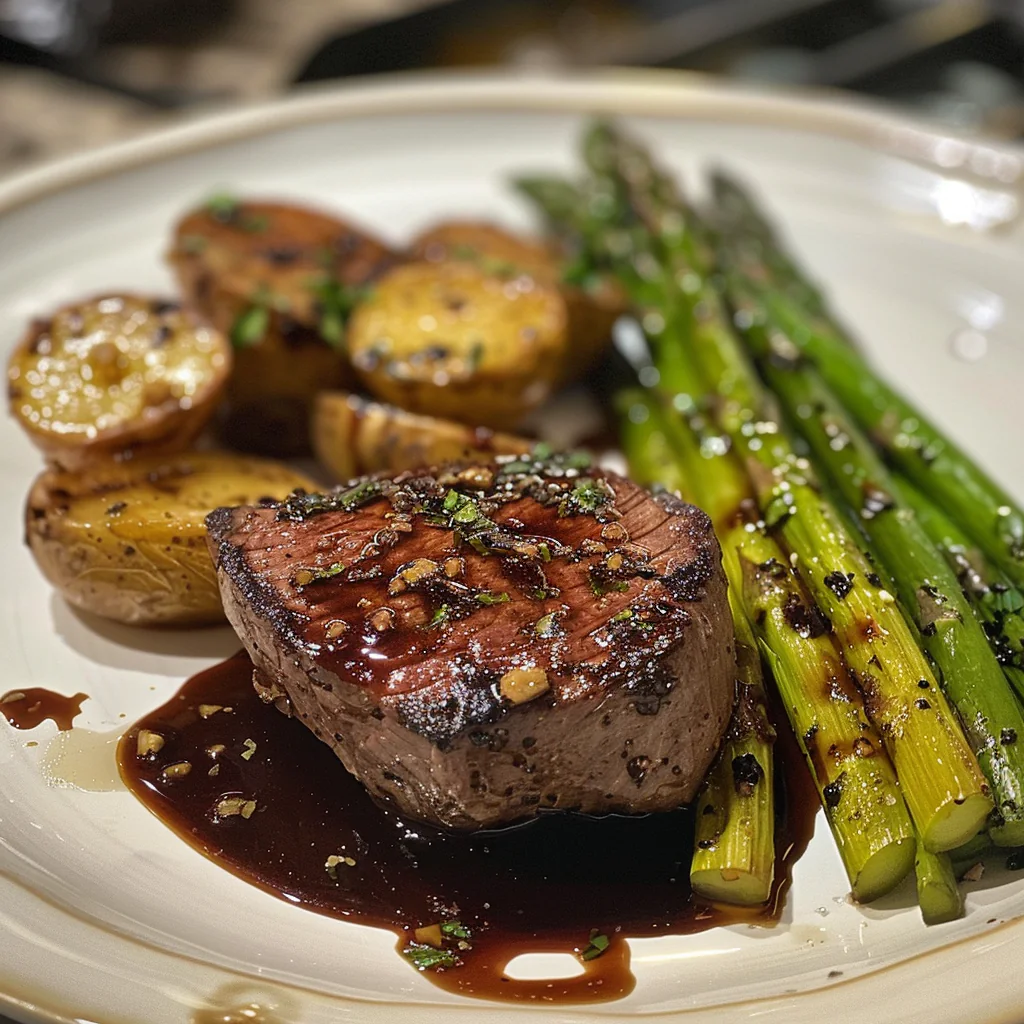
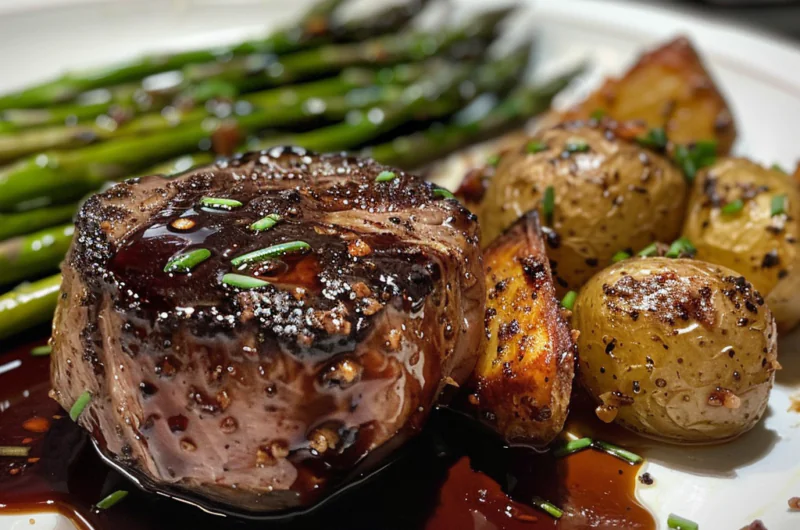
Seared beef medallions with an impossibly golden crust, finished with herb-flecked butter and a drizzle of glossy balsamic reduction — elegant enough for date night, simple enough for any night.
📋 In This Article
Introduction
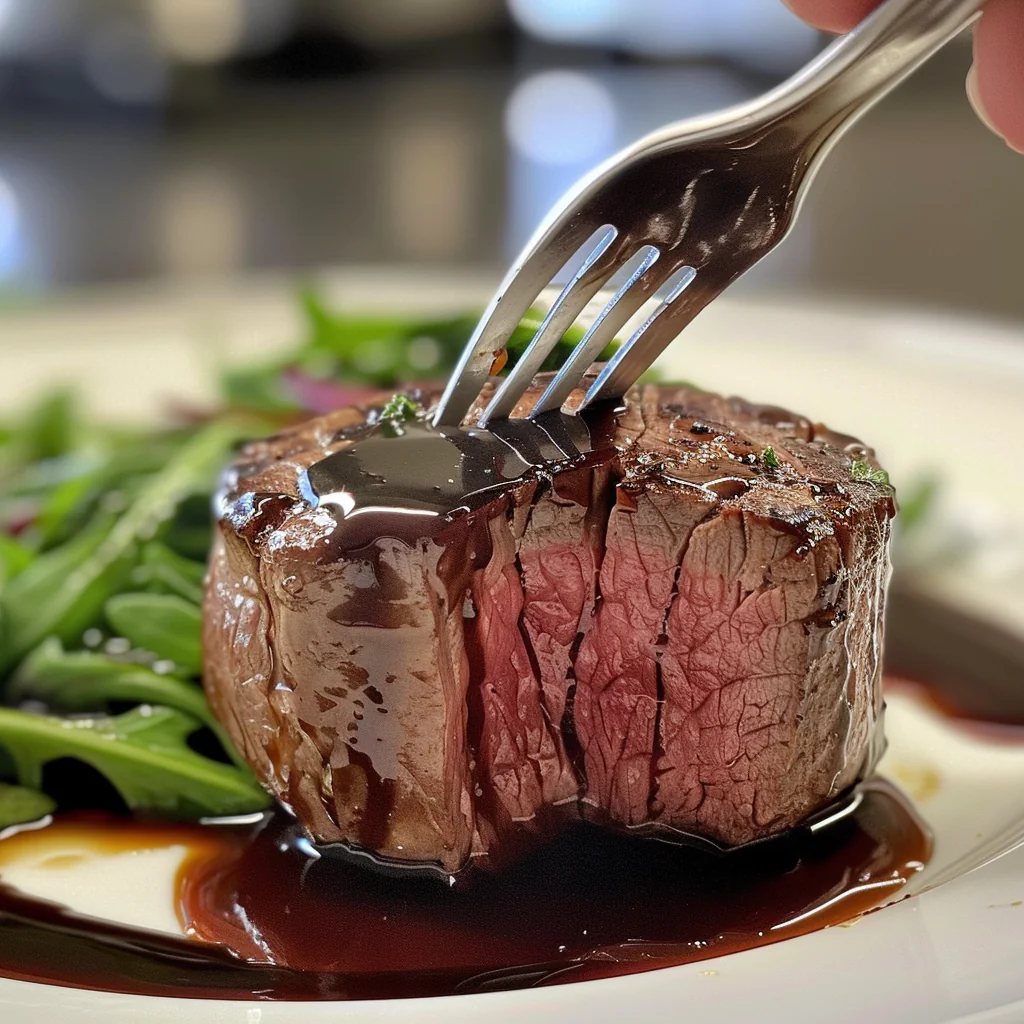
There’s a specific kind of magic that happens when beef tenderloin meets high heat. The exterior transforms — deep mahogany, fragrant with garlic and thyme — while the center stays rose-colored and yielding. Beef tenderloin medallions with garlic herb butter and balsamic glaze deliver exactly that contrast. This is the dish you cook when you want to impress without spending three hours in the kitchen. The tenderloin cut, prized for its buttery texture, needs little more than a generous sear and a finish in the oven. But the real secret? A compound butter that melts into the meat, creating its own sauce, followed by a balsamic reduction that cuts through the richness with sweet-tart intensity.
I’ve made this recipe more times than I can count — for anniversaries, dinner parties, and honestly, just Tuesday nights when I needed something that felt like an occasion. The technique is straightforward, but the payoff is enormous.
Why This Recipe Works
Three elements make this dish sing: the cut, the crust, and the contrast.
The tenderloin (also called filet mignon when cut into steaks) comes from the psoas major muscle — a muscle that does almost no work on the animal. That inactivity means minimal connective tissue, resulting in that melt-in-your-mouth texture. No chewing required. But here’s the trade-off: lean muscle lacks the intramuscular fat that gives ribeye or strip steak their beefy intensity. Which is exactly why we’re finishing with butter.
The sear creates the Maillard reaction — a complex chemical process where amino acids and sugars react under high heat, generating hundreds of new flavor compounds. That brown crust isn’t just color. It’s pure flavor. And finally, the balsamic glaze provides acid to balance the fat, sweetness to complement the savory beef, and a glossy visual element that makes the whole plate look intentional.
Ingredients
For the Beef
- 2 lb. beef tenderloin (center-cut, trimmed and cut into 1½-inch medallions)
- 2 tablespoons extra-virgin olive oil (for searing)
- Kosher salt and freshly cracked black pepper (generous amounts)
For the Garlic Herb Butter
- 4 tablespoons unsalted butter, softened to room temperature
- 4 cloves garlic, minced finely
- 1 tablespoon fresh rosemary, finely chopped
- 1 tablespoon fresh thyme leaves, stripped from stems
- 1 tablespoon fresh parsley, chopped
- ¼ teaspoon flaky sea salt (such as Maldon)
For the Balsamic Glaze
- ½ cup balsamic vinegar (quality matters here — look for aged vinegar from Modena)
- 1 teaspoon honey or brown sugar (optional, for balance)
- Pinch of salt
Step-by-Step Instructions
1. Prep the Beef
Remove the tenderloin from the refrigerator 45 minutes before cooking. Cold meat hits a hot pan and seizes — you want it closer to room temperature for even cooking. Pat the medallions dry with paper towels. Moisture is the enemy of browning. Season generously on all sides with salt and pepper. Let it sit with the seasoning for those 45 minutes; the salt will dissolve and reabsorb, seasoning the meat throughout rather than just on the surface.
2. Make the Compound Butter
While the beef comes to temperature, combine softened butter, minced garlic, rosemary, thyme, parsley, and flaky salt in a small bowl. Mash everything together with a fork until uniform. This is your finishing butter — it will melt over the hot meat, basting it from above. You can make this days ahead and keep it refrigerated; in fact, the flavors meld better over time.
3. Reduce the Balsamic
Pour balsamic vinegar into a small saucepan over medium heat. Bring to a gentle simmer and let it reduce by roughly half — about 10 to 15 minutes. You’re looking for a consistency that coats the back of a spoon. The vinegar will concentrate, becoming syrupy and complex. If it tastes too sharp, add honey or brown sugar to balance. Remove from heat and set aside. It will thicken further as it cools.
4. Sear the Medallions
Heat a cast-iron skillet or stainless-steel pan over medium-high heat for