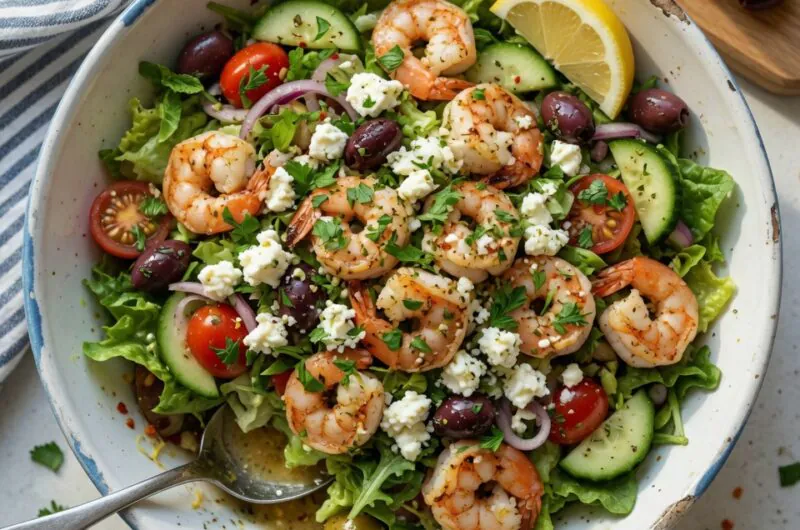
A vibrant, no-cook-main ready in 20 minutes, featuring succulent shrimp, briny olives, and creamy feta tossed in a bright lemon vinaigrette.
📋 In This Article
Introduction
If you’re looking for a dish that tastes like a summer vacation, Mediterranean Shrimp Salad with Feta & Olives is it. It’s the kind of meal that feels effortless but delivers maximum impact—succulent shrimp, crisp vegetables, and that unmistakable salty punch from feta and olives. I’ve spent years testing salad recipes, and the downfall is almost always the same: watery vegetables and rubbery protein. This recipe solves both problems with a few simple, science-backed techniques.
We aren’t just tossing ingredients in a bowl; we are building layers of flavor. The shrimp gets a quick sear for depth, the vegetables are prepped to maintain crunch, and the dressing is emulsified to cling to every bite. Whether you need a protein-packed lunch or a low carb dinner, this salad works overtime. It’s gluten-free, incredibly satisfying, and maybe the only recipe you need for hot weather dining. Greek Pasta Salad Recipe: Fresh, Flavorful & Foolproof.
Why This Mediterranean Shrimp Salad Works
This isn’t just a bowl of random ingredients. Mediterranean Shrimp Salad with Feta & Olives relies on the principle of contrast. You have the soft, sweet bite of shrimp against the crunch of English cucumbers and bell peppers. Then there’s the interplay of salt and acid—Kalamata olives and feta cheese provide the salinity, while a lemon vinaigrette cuts through the richness with bright acidity.
It is also a make-ahead champion. Because we use hearty vegetables that don’t wilt easily, this salad holds up beautifully in the fridge. It aligns perfectly with low carb and gluten-free diets without feeling like “diet food.” This is a nutritious, summer salad staple that delivers on the promise of Mediterranean flavors in under 30 minutes.
Key Ingredients for Success
The strength of this dish lies entirely in the quality of its components. Because the list is short, every item matters.
The Base
- Shrimp: Look for large or jumbo shrimp (16/20 count). Wild-caught Gulf or Argentinian shrimp offer a sweeter flavor and firmer texture than many farmed varieties.
- Feta Cheese: Avoid the pre-crumbled bits. Buy a block of feta cheese packed in brine—it has a creamier, less dry texture and a more complex tang.
- Olives: A mix is best. Kalamata olives bring a deep, wine-like brine, while Castelvetrano olives add a buttery, mild sweetness.
- Vegetables: English cucumbers (seedless and thin-skinned) are essential to prevent a watery salad. Cherry tomatoes should be firm and bright red.
The Flavor Boosters
- Chickpeas: These add a nutty, earthy note and extra fiber. Drain them thoroughly.
- Red Onion: Sliced paper-thin. If the bite is too harsh, soak the slices in ice water for 10 minutes.
- Fresh Herbs: Fresh parsley and dill are non-negotiable. They add a grassy, aromatic freshness that dried herbs simply cannot replicate.
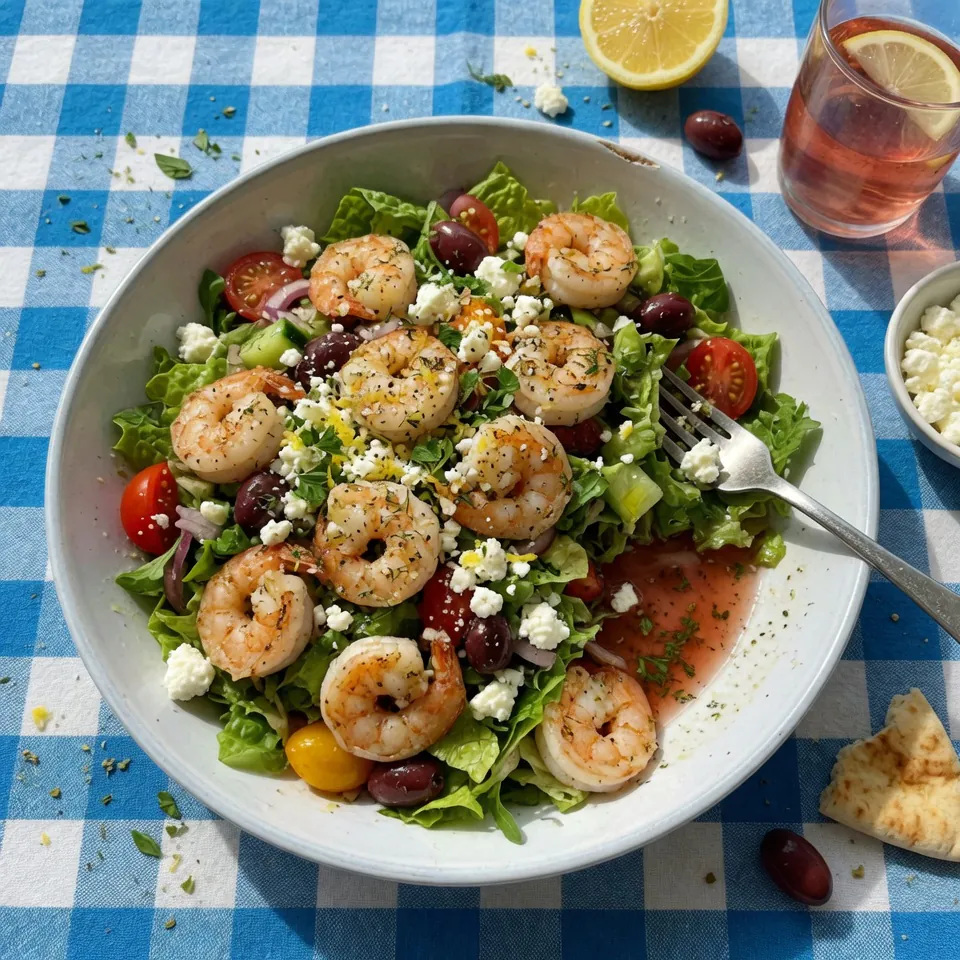
Step-by-Step Instructions
Follow these steps to ensure your salad has the texture of a restaurant dish, not a deli counter.
Step 1: Sear the Shrimp
Pat the shrimp completely dry with paper towels. Moisture is the enemy of browning. Season with garlic powder, onion powder, oregano, and salt. Heat a tablespoon of extra virgin olive oil in a skillet over medium-high heat until it shimmers.
Add the shrimp in a single layer. Do not crowd the pan—doing so drops the temperature and causes the shrimp to steam in their own juices rather than sear. Cook for 2-3 minutes per side until they turn pink and opaque.
Why do we sear? While shrimp are delicious poached, searing triggers the Maillard reaction on the surface, creating hundreds of new flavor compounds that add a savory depth to the salad. Remove them immediately to a plate to cool. Overcooking by even 30 seconds makes the texture rubbery.
Step 2: Emulsify the Dressing
In a jar with a tight lid, combine lemon juice, a dollop of Dijon mustard, minced garlic, and a pinch of salt. Add the extra virgin olive oil and shake vigorously for 30 seconds.
Science Note: The mustard acts as an emulsifier. It contains compounds that coat the oil droplets, keeping them suspended in the lemon juice. This creates a creamy, unified dressing that clings to the shrimp and vegetables rather than pooling at the bottom of the bowl.
Step 3: Prep the Vegetables
While the shrimp cool, chop the cucumbers, halve the tomatoes, and slice the bell peppers. If adding avocado, wait to cut it until just before serving to prevent oxidation. Toss the vegetables and drained chickpeas in a large mixing bowl. Sheet Pan Mediterranean Chicken & Zucchini Recipe.
Step 4: Assemble and Toss
Add the cooled shrimp to the bowl. Pour about three-quarters of the lemon vinaigrette over the salad and toss gently. Taste. Add more dressing if needed, then crumble the feta cheese and olives on top. Give it one final, gentle toss to combine without breaking up the cheese.
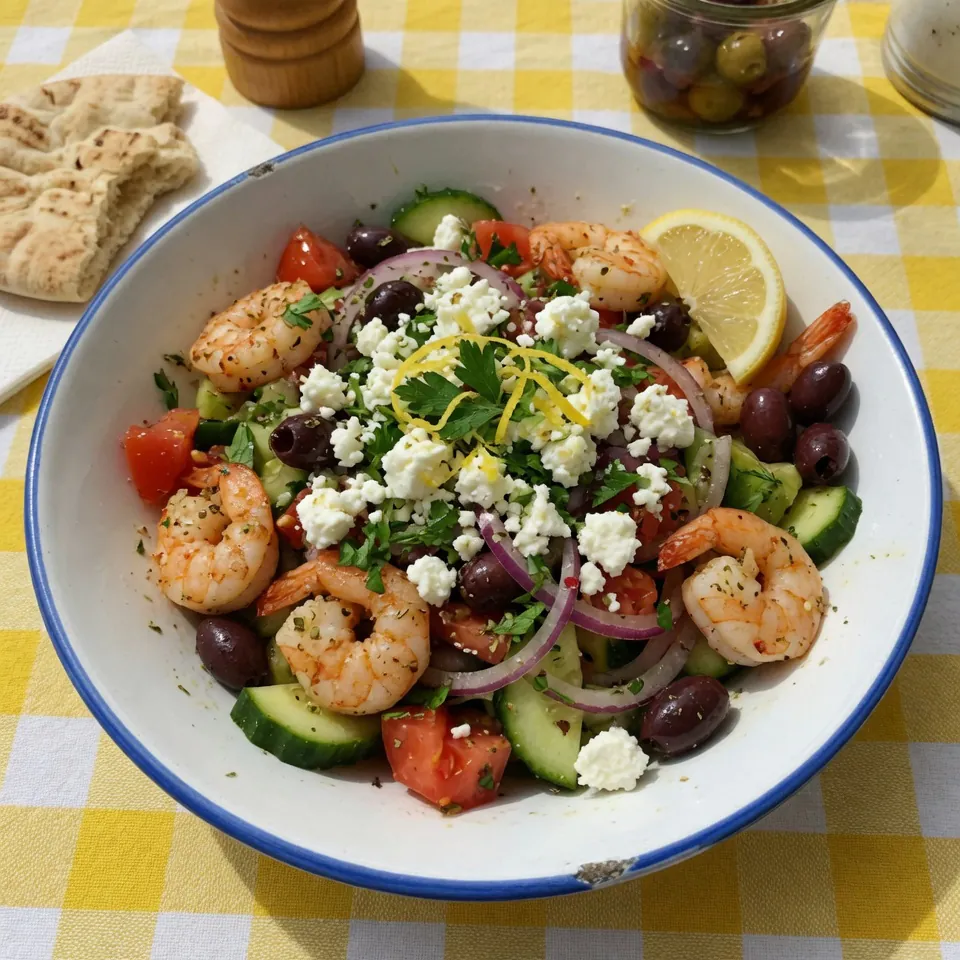
The Zesty Lemon-Herb Vinaigrette
The dressing is the bridge that connects the sea-sweet shrimp to the earthy vegetables. For this Mediterranean Shrimp Salad, we want a ratio that leans heavily on acid to cut through the rich feta cheese.
Use a high-quality extra virgin olive oil—it should taste grassy and peppery, not neutral. Fresh lemon juice provides a sharp, clean acidity that vinegar sometimes lacks. If you prefer a sweeter profile, a teaspoon of honey balances the sharpness, but I find the natural sweetness of the Castelvetrano olives usually does the job. Store any leftover dressing in the fridge for up to a week; just let it come to room temperature before using, as olive oil solidifies when cold.
⚠️ Common Mistakes to Avoid
Even simple recipes have pitfalls. Here is how to ensure your Mediterranean Shrimp Salad is flawless.
- Overcooking the Shrimp: This is the most common error. Shrimp cook incredibly fast. As soon as they form a “C” shape (rather than an “O”), they are done. An “O” shape means they are overcooked and tight.
- Soggy Vegetables: Never dress the salad until you are ready to eat. The acid and salt in the vinaigrette will draw moisture out of the cucumbers and tomatoes through osmosis, diluting the flavor and ruining the texture.
- Using Pre-Crumbled Feta: These lack the moisture and creaminess of block feta. They also contain anti-caking agents that prevent them from melting slightly into the dressing.
Creative Variations & Serving Suggestions
This recipe is a blueprint. Once you master the technique, you can adapt it to what you have on hand.
- Low Carb/Keto: Omit the chickpeas. The salad remains substantial thanks to the protein and healthy fats.
- Grain Bowls: Toss in cooked quinoa or couscous to bulk it up for a heavy dinner.
- Spicy Kick: Add a pinch of red pepper flakes to the olive oil when searing the shrimp.
- Serving Style: Serve it over a bed of greens, inside lettuce wraps for a handheld lunch, or alongside warm pita bread for scooping.
💡 Expert Tips for the Best Salad
I’ve made this dish dozens of times. Here are the small details that make a big difference.
- Dry Your Shrimp: I mentioned it before, but I’ll say it again. Wet shrimp boil; dry shrimp sear. Take the extra 30 seconds to pat them dry.
- Salt Your Tomatoes: Salting your cherry tomatoes and letting them sit for 10 minutes before assembling draws out some liquid and seasons them from the inside out.
- Chill the Bowl: If you have time, chill your serving bowl in the fridge. It keeps the salad cold and refreshing, especially on hot days.
- The Avocado Trick: If prepping ahead, store cut avocado with a squeeze of lemon juice in a separate bag to slow down browning.
Storage & Make-Ahead Guide
This salad is excellent for meal prep, but you must store it correctly.
Store the dressed salad (minus the avocado) in an airtight container in the refrigerator for up to 3 days. The flavors actually meld and improve after a few hours. However, if you plan to keep it longer than a day, I recommend storing the dressing separately. The vegetables will retain their crispness much better.
If you are adding avocado, add it fresh right before serving. Once cut, avocado oxidizes quickly, turning an unappetizing brown, even with lemon juice. Pineapple Cucumber Salad – A Refreshing and Healthy Recipe for Every Occasion.
Frequently Asked Questions (FAQ)
+Can I use frozen shrimp for this salad?
Yes, frozen shrimp are often fresher than “fresh” shrimp at the seafood counter, which may have been thawed days ago. Thaw them quickly by placing the sealed bag in a bowl of cold water for 15 minutes, then pat them thoroughly dry before seasoning.
+Why is my shrimp rubbery?
Rubbery shrimp is almost always the result of overcooking. Shrimp cook very fast—usually 2-3 minutes per side. Remove them from the heat as soon as they turn pink and opaque; carryover cooking will finish the process.
+Can I make this salad vegan?
Absolutely. Substitute the shrimp for canned cannellini beans or grilled tofu, and swap the feta cheese for a vegan feta alternative or diced avocado.
+Is Mediterranean Shrimp Salad healthy?
Yes, it is very healthy. It is high in protein, rich in healthy fats from olive oil, and packed with vitamins from the fresh vegetables. It fits well into low carb, gluten-free, and Mediterranean diets.
+What are the best olives to use?
I recommend a mix of Kalamata olives for their sharp, salty punch and Castelvetrano olives for their mild, buttery texture. This provides a more complex flavor profile than using just one type.
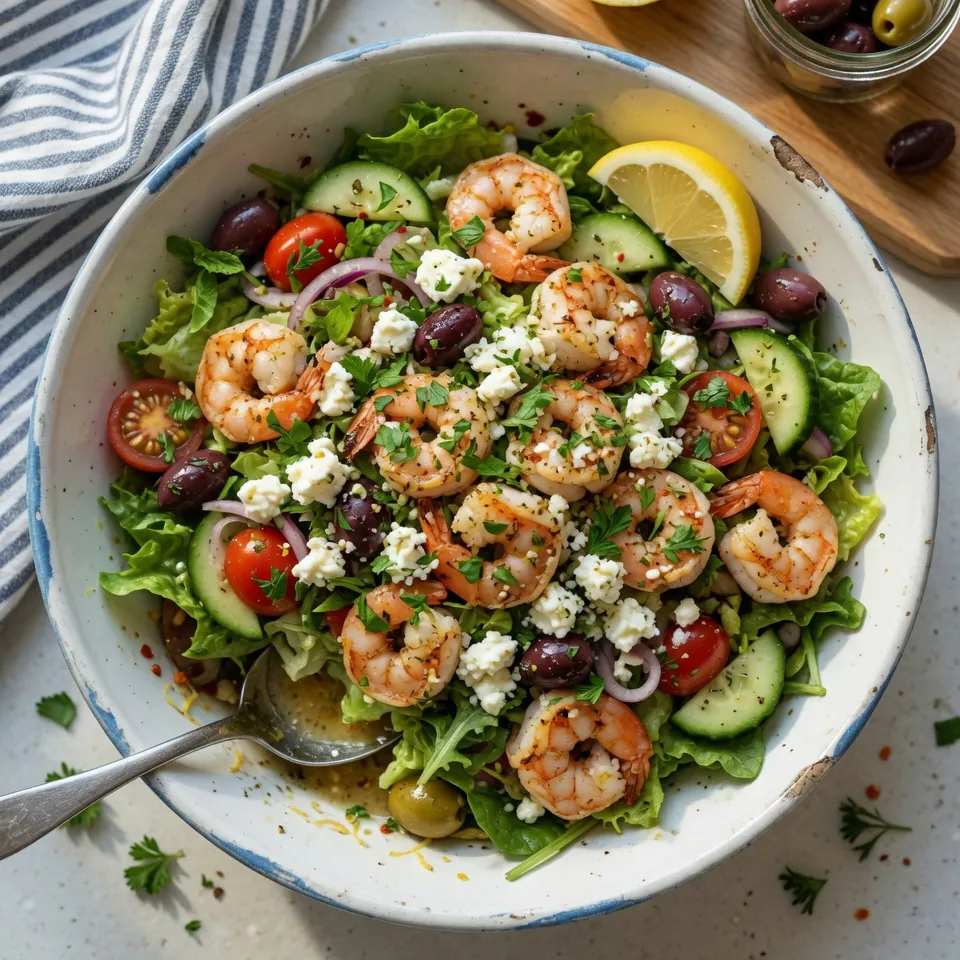
Mediterranean Shrimp Salad
Ingredients
Method
- Begin by preparing the shrimp. IF using frozen shrimp, be sure to thaw completely prior to cooking.
- Add shrimp to a bowl and add seasonings. Toss together.
- Drizzle olive oil in a pan over medium heat. Add shrimp and cook on each side For 3-4 minutes, until slightly curled and pink. Do not overcook! Remove From the pan and set aside.
- In a large bowl, combine drained chickpeas, sliced red onions, cucumbers, marinated artichoke hearts, radishes, green olives, black olives, roasted red pepper, avocado, cherry tomatoes, and shrimp. Top with Feta, sun-dried tomatoes, and fresh chopped parsley.
- Make the lemony vinaigrette. Combine extra virgin olive oil, lemon juice, fresh herbs, diced garlic, dijon mustard, honey, and salt and pepper to taste. Whisk together.
- Drizzle vinaigrette on top and enjoy! Serve with crusty bread for light dinners or an incredible side dish!
Nutrition
Notes
- For perfectly cooked shrimp, look for them to turn a bright pink color and curl slightly; avoid cooking them beyond this stage to prevent dryness.
- If using frozen shrimp, thaw them in cold water for about 20-30 minutes before cooking to ensure even cooking and prevent rubbery texture.
- Feel free to swap out the feta cheese for crumbled goat cheese or a dairy-free alternative if you're looking for a different flavor profile or dietary preference.
- Store leftover salad in an airtight container in the fridge for up to 2 days; the flavors will continue to meld, making it even tastier.
- For a quick and flavorful dressing, you can whisk the vinaigrette ingredients together while the shrimp is cooking, saving you time and keeping everything fresh.