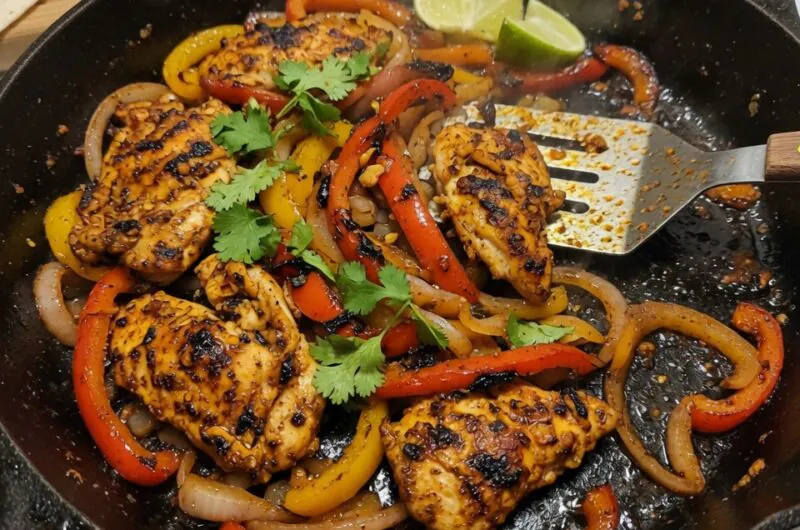
Charred, juicy chicken strips and sweet-crisp peppers with a custom spice blend—ready faster than delivery and infinitely better.
📋 In This Article
- Introduction
- Why Cast Iron Fajitas Reign Supreme
- Ingredients for Flavorful Chicken Fajitas
- Homemade Fajita Seasoning Blend
- Step-by-Step Cooking Instructions
- Marination Mastery for Tender Chicken
- Serving Suggestions & Toppings
- Common Mistakes to Avoid
- Variations & Dietary Adaptations
- Storage, Reheating, and Freezing Tips
- Pro Tips for Fajita Perfection
- Frequently Asked Questions (FAQ)
Introduction
There’s a reason Cast Iron Skillet Chicken Fajitas have become a weeknight staple in my house. The sizzle you hear when marinated chicken hits screaming-hot cast iron? That’s not just dinner—it’s the sound of the Maillard reaction working its magic, transforming simple proteins into something deeply savory and caramelized.
I’ve made this dish hundreds of times, and I’ll be honest: the first few attempts were forgettable. Rubbery chicken. Soggy peppers. A sad pile of grey meat that tasted like disappointment. The problem wasn’t the recipe—it was the technique. Once I understood the importance of high heat, proper marination time, and not overcrowding the pan, everything changed. Now this is the meal my family requests on repeat. Sheet Pan Chicken Fajitas: Easy, Flavorful Weeknight Dinner.
Why Cast Iron Fajitas Reign Supreme
Here’s the thing. You can make fajitas in a regular stainless skillet or even a nonstick pan, but you won’t get the same results. Cast iron holds heat like nothing else—once it’s hot, it stays hot, even when you drop in a pile of cold chicken. That thermal mass is what creates the deep char and crust development that makes restaurant fajitas so good.
A well-seasoned skillet also offers natural non-stick properties once properly heated. And that signature sizzle? It’s not just for show. The sound indicates moisture is vaporizing on contact, meaning you’re getting proper searing rather than steaming. Thin, flimsy pans can’t do this. They lose heat instantly, leaving you with grey, boiled meat.
Ingredients for Flavorful Chicken Fajitas
For the Chicken
- Chicken Breast: 1 ½ pounds boneless, skinless chicken breasts, sliced into ½-inch strips against the grain
- Lime Juice: 2 tablespoons freshly squeezed (about 1 lime)
- Oil: 2 tablespoons avocado or grapeseed oil (high smoke point is critical here)
- Fajita Seasoning: See blend below
For the Vegetables
- Bell Peppers: 1 red and 1 yellow bell pepper, seeded and sliced into ¼-inch strips
- Onion: 1 medium yellow onion, halved and sliced into ¼-inch half-moons
For Serving
- Tortillas: 8-10 small flour or corn tortillas, warmed
- Optional Toppings: Fresh cilantro, diced avocado, sour cream, lime wedges, hot sauce
Homemade Fajita Seasoning Blend
Mix this yourself and you’ll never go back to those salty packets. The flavor is brighter, more complex, and you control the heat level.
Combine in a small bowl:
- 2 tablespoons chili powder (use ancho for deeper flavor)
- 1 tablespoon ground cumin
- 1 tablespoon dried oregano (crush it between your palms to release oils)
- 1 tablespoon garlic powder
- 1 tablespoon paprika (smoked paprika adds a nice dimension)
- 1 teaspoon kosher salt
- 1 teaspoon black pepper
- ½-1 teaspoon cayenne pepper (depending on your heat tolerance)
This makes about ½ cup—enough for this recipe plus extra. Store it in an airtight jar for up to 3 months.
Step-by-Step Cooking Instructions
Step 1: Marinate the Chicken
Slice your chicken breasts across the grain into ½-inch strips. Cutting against the grain shortens the muscle fibers, making each bite more tender. Toss the strips with 2 tablespoons of your seasoning blend, the lime juice, and 1 tablespoon of oil.
Let it sit for at least 30 minutes. Here’s the science: the acid in lime juice partially denatures proteins on the surface of the meat, which helps it retain moisture during cooking. But don’t go longer than 4 hours—too much acid actually makes the texture mushy. I’ve tested both 15 minutes and overnight marination, and honestly? 45 minutes hits the sweet spot for flavor without compromising texture.
Step 2: Prep the Vegetables
While the chicken marinates, slice your peppers and onions. Keep the pieces uniform—about ¼-inch thick—so everything cooks at the same rate. Thinner strips will burn before thicker ones soften.
Step 3: Heat the Skillet
Place your cast iron skillet over medium-high heat for at least 5 minutes. It should be smoking slightly before you add anything. I hold my hand about 3 inches above the surface—if I can only hold it there for 2-3 seconds, the pan is ready.
Step 4: Sear the Chicken
Add 1 tablespoon of high smoke-point oil to the pan—it should shimmer and spread quickly. Add the chicken in a single layer. Do not crowd the pan. Work in batches if needed.
This is where most people mess up. When you overcrowd, the temperature drops and the chicken releases moisture, turning a sear into a braise. You want that hard, brown crust. Cook 3-4 minutes per side until the chicken develops deep golden-brown spots and reaches an internal temperature of 165°F. Remove and set aside on a plate.
Step 5: Cook the Vegetables
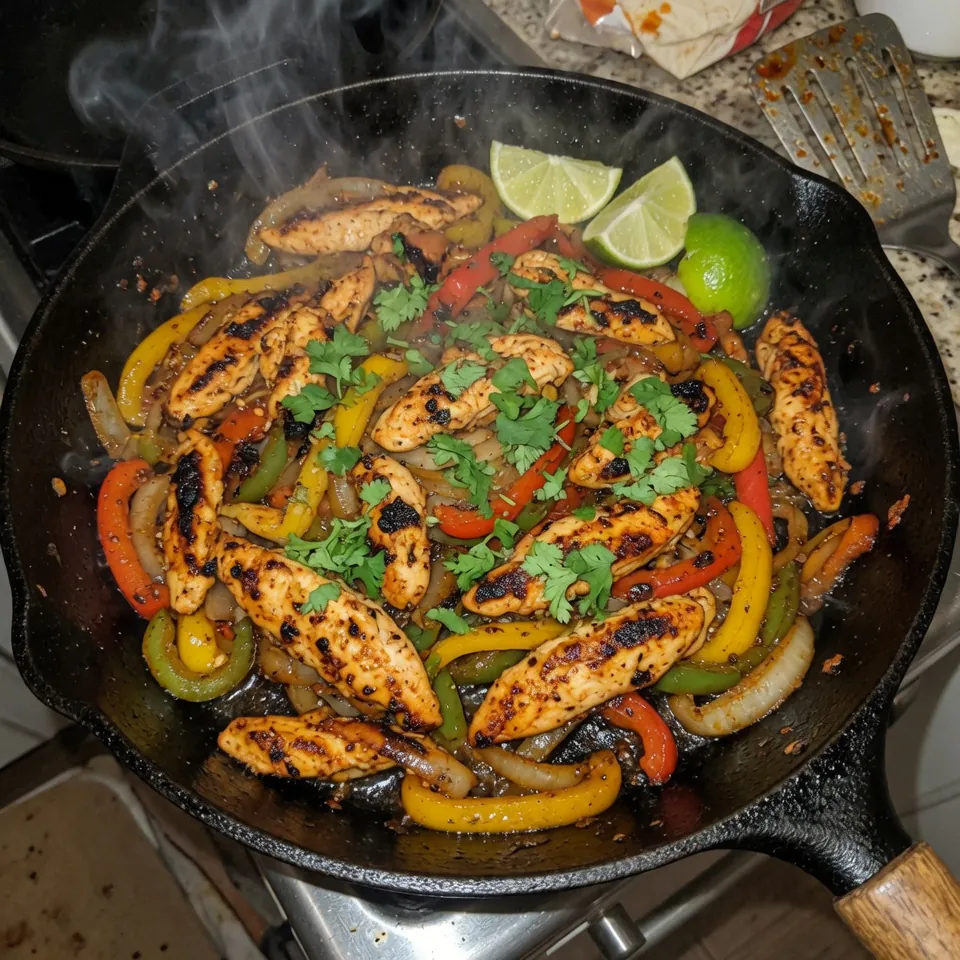
Add another tablespoon of oil to the skillet. Toss in the peppers and onions. Spread them out and let them cook undisturbed for 2 minutes—you want char, not a stir-fry. Then stir and cook another 3-4 minutes until they’re crisp-tender with blistered edges.
Step 6: Combine and Serve
Return the chicken to the skillet along with any accumulated juices on the plate. Toss everything together for about 1 minute just to heat through. Serve immediately with warm tortillas and your chosen toppings.
Marination Mastery for Tender Chicken
The difference between okay fajitas and great ones often comes down to what happens before the heat touches the meat. A good marinade needs three components: acid, fat, and aromatics.
Acid (lime juice, vinegar) breaks down surface proteins and adds brightness. Fat (oil) carries fat-soluble flavor compounds and helps the marinade coat evenly. Aromatics (garlic, cumin, chili powder) provide the actual flavor.
The timing matters more than people realize. A 15-minute dip gives you surface flavor. A 45-minute soak penetrates about ⅛ inch. Overnight? You’ll get flavor throughout, but the texture starts to suffer from prolonged acid exposure. For chicken fajitas, 30 minutes to 2 hours is the sweet spot.
Serving Suggestions & Toppings
The beauty of fajitas is the build-your-own format. I like to set everything out family-style and let people assemble their own.
Classic pairings:
- Warm flour tortillas (steam them under a damp towel in the microwave for 20 seconds)
- Fresh pico de gallo or your favorite salsa
- Sliced avocado or guacamole
- Sour cream or Mexican crema
- Pickled red onions (make a batch on Sunday—they last all week)
- Crumbled queso fresco or shredded pepper jack
Beyond tortillas: Serve the filling over cilantro-lime rice for a burrito bowl. Wrap it in butter lettuce for a low-carb version. Or pile it onto a baked sweet potato—sounds strange, but the sweetness plays beautifully against the smoky spices. Chicken Fajita Quesadillas: Easy & Delicious Tex-Mex Recipe.
⚠️ Common Mistakes to Avoid
I’ve made every one of these mistakes. Learn from my failures.
Overcrowding the skillet. This is the number one reason fajitas turn out soggy. When too much cold meat hits a hot pan, the temperature plummets. The chicken releases liquid and steams in its own juices. No browning, no flavor development. Cook in batches. It takes an extra 5 minutes and changes everything.
Underheating the pan. If your oil doesn’t shimmer and ripple when you add it, the pan isn’t hot enough. Wait until you see a wisp of smoke. That’s when you know you’ll get a proper sear.
Overcooking the chicken. Chicken breast goes from perfectly juicy to dry and stringy in a matter of minutes. Use a thermometer. Pull the chicken at 165°F and let it rest. Carryover cooking will push it a few degrees higher, but you won’t dry it out.
Uneven vegetable cuts. Thick pepper strips stay crunchy while thin ones burn. Take the extra minute to slice uniformly.
Variations & Dietary Adaptations
Chicken Thighs: Swap breasts for boneless, skinless thighs if you prefer dark meat. They’re more forgiving and stay juicier, but they’ll need an extra 2-3 minutes of cooking time.
Steak Fajitas: Use flank or skirt steak instead of chicken. Slice it against the grain into thin strips and cook 2-3 minutes per side for medium-rare.
Shrimp Fajitas: Large shrimp cook in 2-3 minutes total. Add them after the vegetables are done—they cook fast and turn rubbery if overdone.
Vegetarian: Skip the meat entirely and double the vegetables. Add portobello mushrooms or cubed firm tofu for protein. Press the tofu for 20 minutes first to remove excess moisture.
Low-Carb / Keto: Serve in lettuce cups or over cauliflower rice. Skip the tortillas entirely.
Gluten-Free: Use corn tortillas and verify your spices are certified gluten-free (some contain anti-caking agents with wheat).
Storage, Reheating, and Freezing Tips
Refrigeration: Store leftovers in an airtight container for up to 3 days. Keep the chicken and vegetables separate from tortillas—they’ll get soggy otherwise.
Reheating: Skip the microwave. It makes chicken rubbery and vegetables mushy. Instead, heat a skillet over medium, add a splash of broth or water, and toss the fajita filling until warmed through. The liquid creates steam that reheats without drying.
Freezing: Cooked chicken freezes well for up to 3 months. The vegetables? Not so much—they lose their texture and get watery. If you’re meal prepping, freeze the cooked chicken separately and make fresh vegetables when you’re ready to eat.
💡 Pro Tips for Fajita Perfection
Use high smoke-point oil. Avocado, grapeseed, or refined coconut oil can handle the 450°F+ temperatures you need for proper searing. Olive oil burns and turns bitter.
Let the chicken rest. When meat cooks, juices are forced toward the center. If you slice immediately, those juices end up on your cutting board instead of in the meat. A 5-minute rest lets the juices redistribute.
Deglaze the pan. Those browned bits stuck to the skillet after cooking the chicken? That’s called fond, and it’s pure concentrated flavor. When you add the vegetables, they’ll release moisture that loosens the fond, incorporating it back into the dish.
Warm your tortillas properly. Cold tortillas tear and taste like cardboard. Wrap them in foil and warm in a 300°F oven for 10 minutes, or char them directly over a gas flame for a few seconds per side. Tortilla Kitchen Essentials: Recipes, Health Tips, and FAQs.
Frequently Asked Questions (FAQ)
+Why is my chicken fajita meat tough?
Tough chicken usually means it was overcooked or sliced incorrectly. Always cut against the grain—this shortens the muscle fibers and makes each bite tender. And use a thermometer to pull the chicken at 165°F; anything higher dries out the meat quickly.
+Can I use chicken thighs instead of breast?
Absolutely. Thighs have more fat, so they stay juicier and are more forgiving if slightly overcooked. They’ll need an extra 2-3 minutes in the skillet compared to breasts.
+How do I know when chicken fajitas are done?
Use an instant-read thermometer inserted into the thickest piece of chicken. It should register 165°F. Visually, the meat should be opaque throughout with no pink, and the juices should run clear.
+Can I skip the marinating step?
You can, but you’ll sacrifice flavor. Even 15 minutes makes a difference. If you’re truly pressed for time, toss the chicken with the seasoning and a splash of oil right before cooking—it won’t penetrate as deeply, but you’ll still get decent flavor on the surface.
+How long do chicken fajitas last in the fridge?
Properly stored in an airtight container, cooked chicken fajita filling lasts 3-4 days in the refrigerator. Reheat in a skillet with a splash of liquid to keep the meat from drying out.
+What sides go well with chicken fajitas?
Mexican rice, refried beans, black beans with cilantro, or a simple green salad with lime vinaigrette all work beautifully. For something different, try elote (Mexican street corn) or a fresh corn salad.
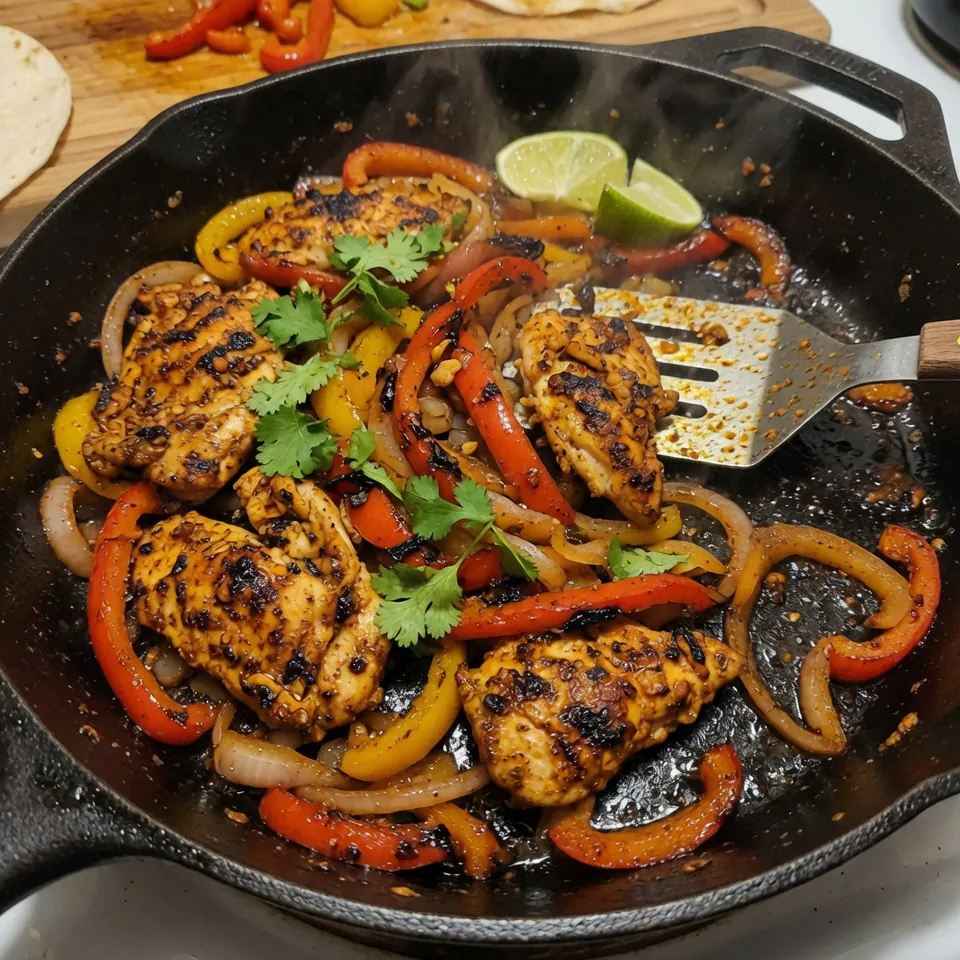
Skillet Chicken Fajitas
Ingredients
Method
- In a large bowl combine all of the chicken ingredients. Stir the chicken in the marinade until coated and let it marinate for 15-30 minutes.
- Preheat a 12 inch cast iron skillet over high heat with a tablespoon of olive oil. When the skillet is hot add in the sliced peppers, onion, chili powder, salt and pepper. Sauté the peppers and onions for about 4-5 minutes or until they are caramelized and have softened. Remove the peppers and onions from the skillet onto a plate and set aside.
- Add a little more oil to the hot skillet then dump in the chicken. Spread it into a single layer and let it sear without moving it for 2-3 minutes. Stir the chicken around and continue to cook until it's cooked through and no longer pink.
- Add the peppers and onions back into the skillet and cook everything for another minute. Remove from the heat and squeeze the other half of the lime over the fajitas. Serve with warm tortillas and your favorite toppings.
Nutrition
Notes
- For perfectly cooked chicken, aim for an internal temperature of 165°F; it should be white throughout with no pink in the center.
- To keep your fajitas juicy, avoid overcooking the chicken—once it’s no longer pink, remove it from the skillet immediately.
- If you're not a fan of cilantro, feel free to replace it with fresh parsley or simply leave it out entirely for a different flavor profile.
- Marinating the chicken for just 15 minutes will still impart great flavor, but for optimal taste, consider letting it soak for up to 2 hours in the fridge.
- Store any leftovers in an airtight container in the fridge for up to 3 days, and reheat gently in a skillet over medium heat to keep the chicken tender.