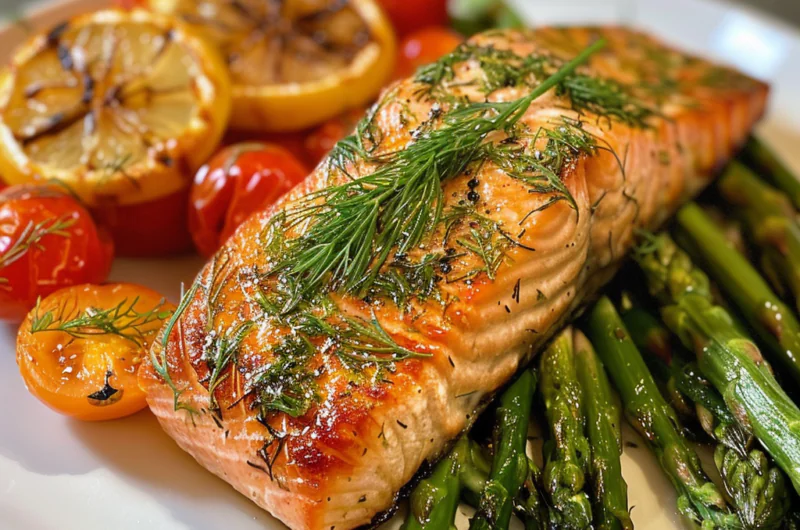
A perfectly roasted salmon fillet with tender-crisp vegetables—all on one sheet pan for minimal cleanup and maximum flavor.
📋 In This Article
- Introduction
- Why This Recipe Works (and Why You’ll Love It)
- Essential Ingredients for Your Lemon Herb Salmon
- Step-by-Step Perfection: How to Cook Your One-Pan Salmon
- Beyond the Basics: Flavor Boosters & Smart Substitutions
- Common Mistakes to Avoid for Perfect Salmon Every Time
- Meal Prep & Storage: Enjoying Your Salmon Later
- Pro Tips for a Restaurant-Quality One-Pan Salmon
- Frequently Asked Questions (FAQ)
Introduction
Let’s be honest: weeknight cooking is often a juggling act between exhaustion and the desire to eat something that actually tastes good. This One-Pan Lemon Herb Salmon is the solution to that specific chaos. It ditches the multiple pots and pans for a single sheet pan, roasting everything together to concentrate flavors while keeping your kitchen intact. The method here relies on high heat to caramelize the vegetables and gently cook the fish, ensuring the salmon stays silky rather than dry. It’s a straightforward approach that delivers a nutritious, vibrant dinner in under 30 minutes, leaving you with more time to unwind and less time scrubbing dishes.
Why This Recipe Works (and Why You’ll Love It)
This dish works because it understands the assignment: speed, health, and flavor. By roasting everything on a single sheet pan, we utilize dry heat to create texture that steaming or poaching simply can’t match. The high oven temperature triggers the Maillard reaction on the vegetables and salmon edges, creating complex, savory notes that bland boiled food lacks.
Beyond the science, it’s a nutritional powerhouse. You’re getting heart-healthy omega-3 fatty acids from the salmon and a heavy dose of fiber and vitamins from the medley of vegetables. It’s also incredibly forgiving. The technique is flexible enough to handle whatever vegetables you have wilting in the crisper drawer. Whether you are meal prepping for the week or need a fast family dinner, this recipe fits the bill without feeling like a compromise.
Essential Ingredients for Your Lemon Herb Salmon
The strength of this dish lies in the quality of its components. Because the ingredient list is short, every item plays a crucial role.
- Salmon Fillets: Look for center-cut fillets that are roughly the same thickness. This ensures even cooking. Whether you choose skin-on or skinless is personal preference, but skin-on provides a protective layer that keeps the flesh moist and crisps up beautifully.
- Lemon: We use the whole fruit here. The juice provides acidity to cut through the richness of the fish, while the zest contains essential oils that pack a massive aromatic punch without the sourness.
- Fresh Herbs: Dill and parsley are classic pairings for salmon. Dill offers a grassy, anise-like flavor, while parsley adds a clean, fresh finish. Chop them finely to release their aromatic oils.
- Olive Oil: A good extra virgin olive oil acts as a flavor carrier. It helps conduct heat into the fish and prevents sticking, but its primary job here is to emulsify with the lemon juice and herb drippings to create a light pan sauce.
- Hearty Vegetables: Asparagus, broccoli florets, and cherry tomatoes are ideal because they roast at the same rate as the fish. Their natural sugars caramelize in the oven, adding sweetness that balances the lemon’s tartness.
- Garlic: Minced cloves add a pungent depth. When roasted, garlic mellows and becomes sweet and nutty, losing its sharp bite.
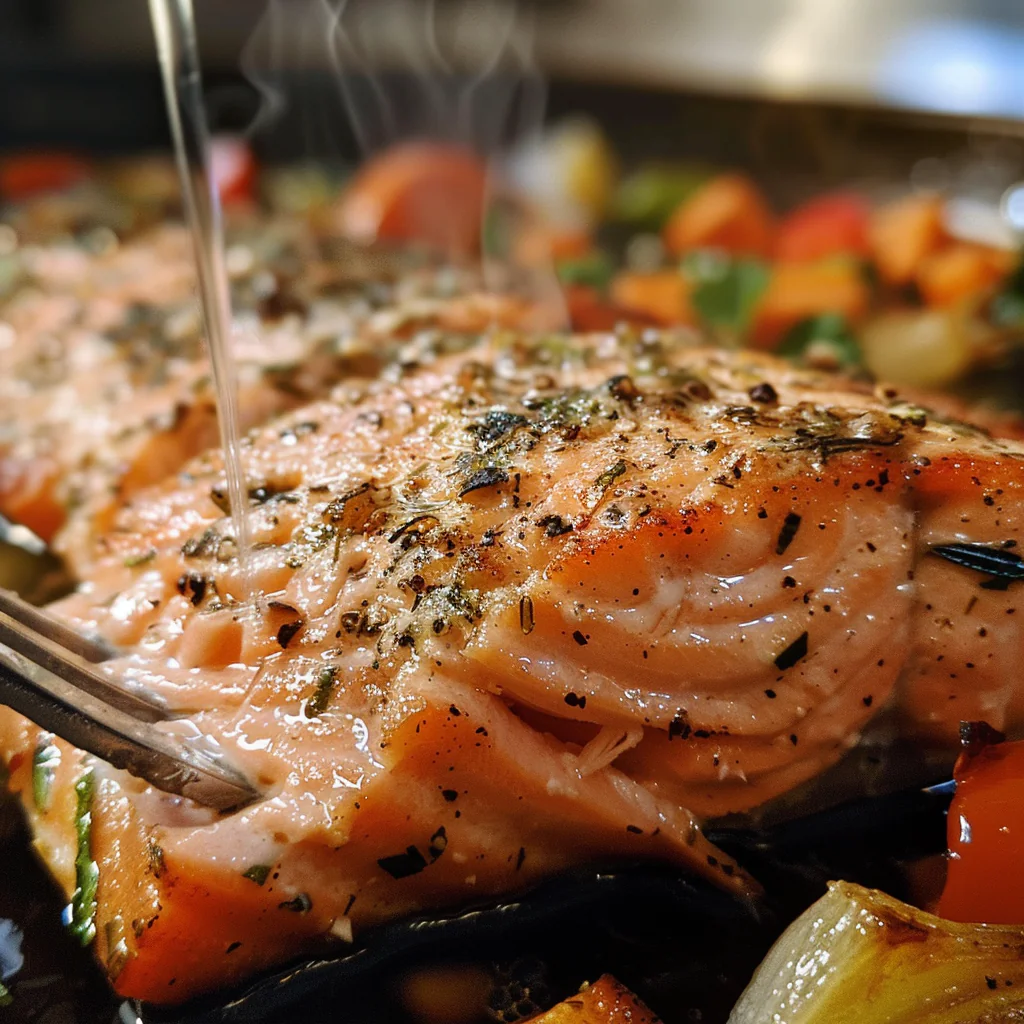
Step-by-Step Perfection: How to Cook Your One-Pan Salmon
Success here is about heat management and timing.
- Preheat and Prep: Crank your oven to 400°F (200°C). This temperature is the sweet spot—hot enough to brown the vegetables but not so aggressive that it burns the herbs before the fish cooks through. Line a large rimmed baking sheet with parchment paper. This isn’t just for cleanup; it prevents the fish’s natural sugars from sticking and tearing the delicate flesh.
- Season the Base: Toss your prepped vegetables (asparagus, broccoli, tomatoes) with olive oil, salt, pepper, and half of your minced garlic. Spread them out in a single layer. Do not overcrowd the pan. If the vegetables are stacked, they will steam and turn soggy rather than roast and caramelize.
- Prep the Fish: Pat the salmon fillets dry with paper towels. This is a non-negotiable step for good texture. Excess surface moisture creates steam, which prevents browning. Rub the fillets with olive oil, then season generously with salt, pepper, the remaining garlic, and lemon zest.
- The Roast: Place the salmon fillets among the vegetables on the baking sheet. Roast for 12 to 15 minutes, depending on thickness.
- Check for Doneness: Forget the old rule of “opaque all the way through.” For moist, tender salmon, aim for an internal temperature of 125°F to 130°F (52°C – 54°C) for medium-rare to medium. If you prefer it more well-done, pull it at 140°F (60°C), but be aware that carryover cooking will push the temperature up another 5 degrees as it rests.
- Rest and Finish: Let the pan rest for 5 minutes. This allows the muscle fibers in the fish to relax and reabsorb their juices, ensuring they don’t run out the moment you cut into it. Squeeze fresh lemon juice over everything right before serving.
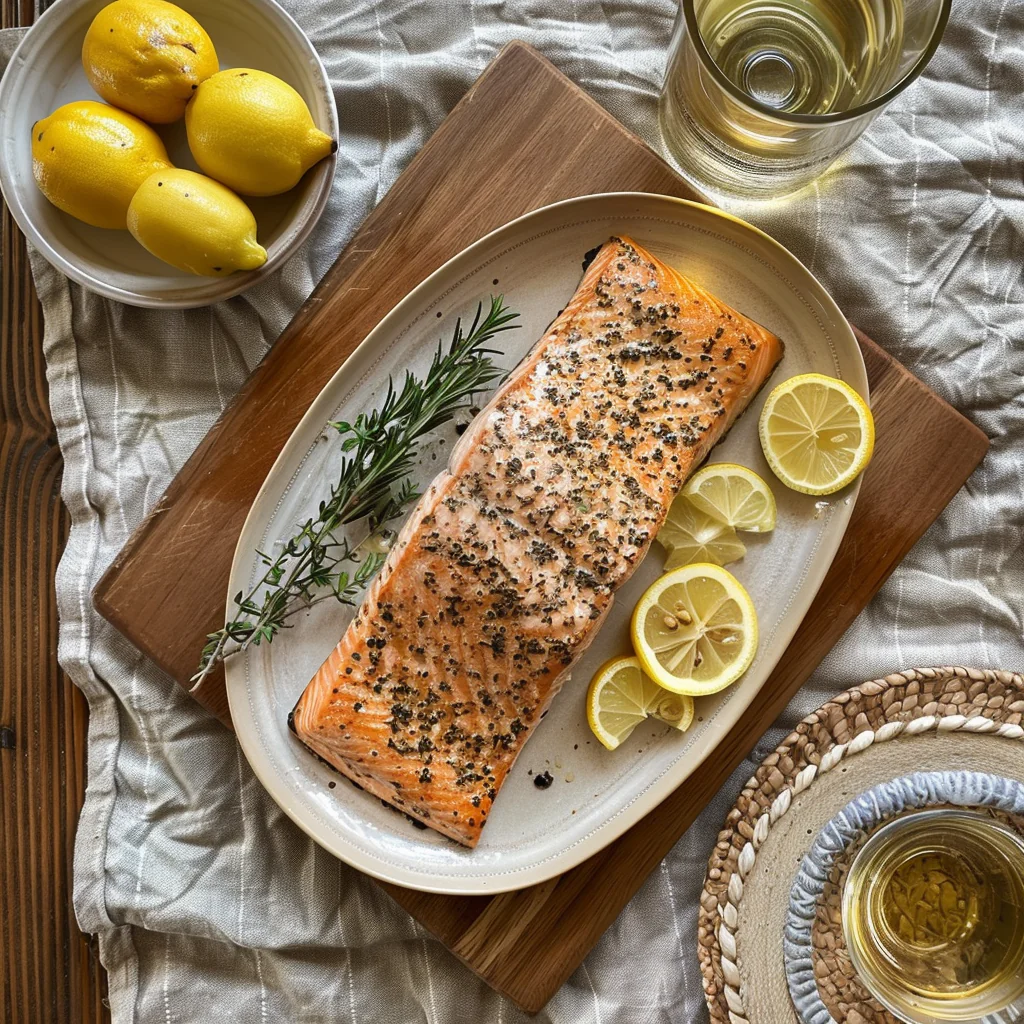
Beyond the Basics: Flavor Boosters & Smart Substitutions
Once you have the basic technique down, you can riff on this endlessly.
- The Acid Swap: Lemon is classic, but lime and orange work beautifully. Lime pairs well with chili powder for a Southwest twist, while orange offers a sweeter, floral acidity.
- Herb Variations: If dill isn’t your thing, try a mix of thyme and rosemary for an earthier, piney profile. These heartier herbs can withstand the roasting heat better than delicate basil.
- Low-Carb Base: To make this keto-friendly, skip the brown rice suggestion and serve the salmon over cauliflower rice or sautéed zucchini noodles. You can even roast the cauliflower right alongside the broccoli.
- The Finisher: A dollop of pesto or a drizzle of tahini sauce added after roasting introduces a creamy, nutty element that elevates the dish from simple weeknight fare to something special.
⚠️ Common Mistakes to Avoid for Perfect Salmon Every Time
Even simple recipes have pitfalls. Here is how to dodge them.
- Overcooking: This is the number one crime against salmon. Fish continues to cook after it leaves the oven (carryover cooking). If you wait until it looks fully done in the oven, it will be dry by the time it hits the plate. Pull it when it is just turning opaque in the center.
- Uneven Pieces: If one fillet is an inch thick and another is two inches, they will finish cooking at different times. Try to buy a whole side of salmon and cut it yourself, or ask your fishmonger for even portions.
- Skipping the Dry: I used to skip patting the fish dry—it seemed fussy. The result was steamed, grey fish instead of roasted, vibrant fillets. Take the extra ten seconds to dry the surface.
- Cold Fish: If your salmon is ice-cold from the fridge, the outside will overcook before the inside warms up. Let it sit on the counter for 15 minutes while the oven preheats.
Meal Prep & Storage: Enjoying Your Salmon Later
This recipe holds up surprisingly well for lunches, provided you store it correctly.
Cool the cooked salmon and vegetables completely before transferring them to an airtight container. This prevents condensation from making the fish soggy. Stored this way, it will keep in the refrigerator for up to three days.
For reheating, avoid the microwave if possible. It blasts the fish with uneven heat, destroying the texture. Instead, place the leftovers in a cold skillet, cover, and set the heat to low. The gentle residual heat will warm it through without drying it out. Alternatively, flake the cold salmon over a salad for lunch—no reheating required.
💡 Pro Tips for a Restaurant-Quality One-Pan Salmon
To take this from good to great, keep these professional pointers in mind.
- Check for Pin Bones: Run your fingers along the center of the fillet. If you feel small, prickly bones, remove them with fish tweezers or clean needle-nose pliers. Nothing ruins a bite of fish faster than a hidden bone.
- Use the Zest: Lemon juice adds sourness, but the zest adds intense lemon flavor without the acid. Grate the zest directly onto the fish before roasting to infuse it with fragrance.
- Temperature Spiking: If you want a deeper crust on the fish, you can crank the oven to broil for the last 2 minutes. Watch it like a hawk, though—the herbs can burn in seconds.
- Resting Matters: Resting isn’t just for red meat. It allows the coagulated proteins in the fish to relax, retaining moisture. Cut into it too soon, and you lose valuable juices onto the pan.
Frequently Asked Questions (FAQ)
+Why is my salmon dry and tough?
Dry salmon is almost always a result of overcooking. Salmon is done when it reaches an internal temperature of 125°F to 140°F, depending on your preference. Remember, the fish continues to cook after it is removed from the heat source, so pulling it a few degrees early is the secret to a moist fillet.
+Can I use frozen salmon fillets?
Yes, but thaw them completely in the refrigerator overnight before cooking. Cooking frozen salmon often leads to uneven doneness—overcooked edges and a raw center. Thawing ensures the heat penetrates evenly for the best texture.
+What vegetables can I substitute for asparagus?
Hearty vegetables that roast well are your best bet. Broccoli florets, bell pepper strips, zucchini rounds, or green beans all work excellently. Avoid delicate greens like spinach, which will burn or wilt too quickly under high heat.
+How do I know when the salmon is fully cooked?
The visual cue is opacity; the flesh should turn from translucent to opaque. For a more precise test, insert an instant-read thermometer into the thickest part of the fillet. A reading of 125°F yields a moist, medium-rare center, while 145°F is the USDA recommendation for fully cooked fish.
+Can I make this recipe dairy-free?
Absolutely. This recipe is naturally dairy-free as written, provided you serve it without a creamy yogurt sauce. The olive oil provides all the necessary richness and fat for cooking and flavor.
+How long does leftover salmon last in the fridge?
Properly stored in an airtight container, leftover salmon will keep for up to three days in the refrigerator. For the best quality, consume it within this timeframe to avoid the fishy odors that develop as fats oxidize.
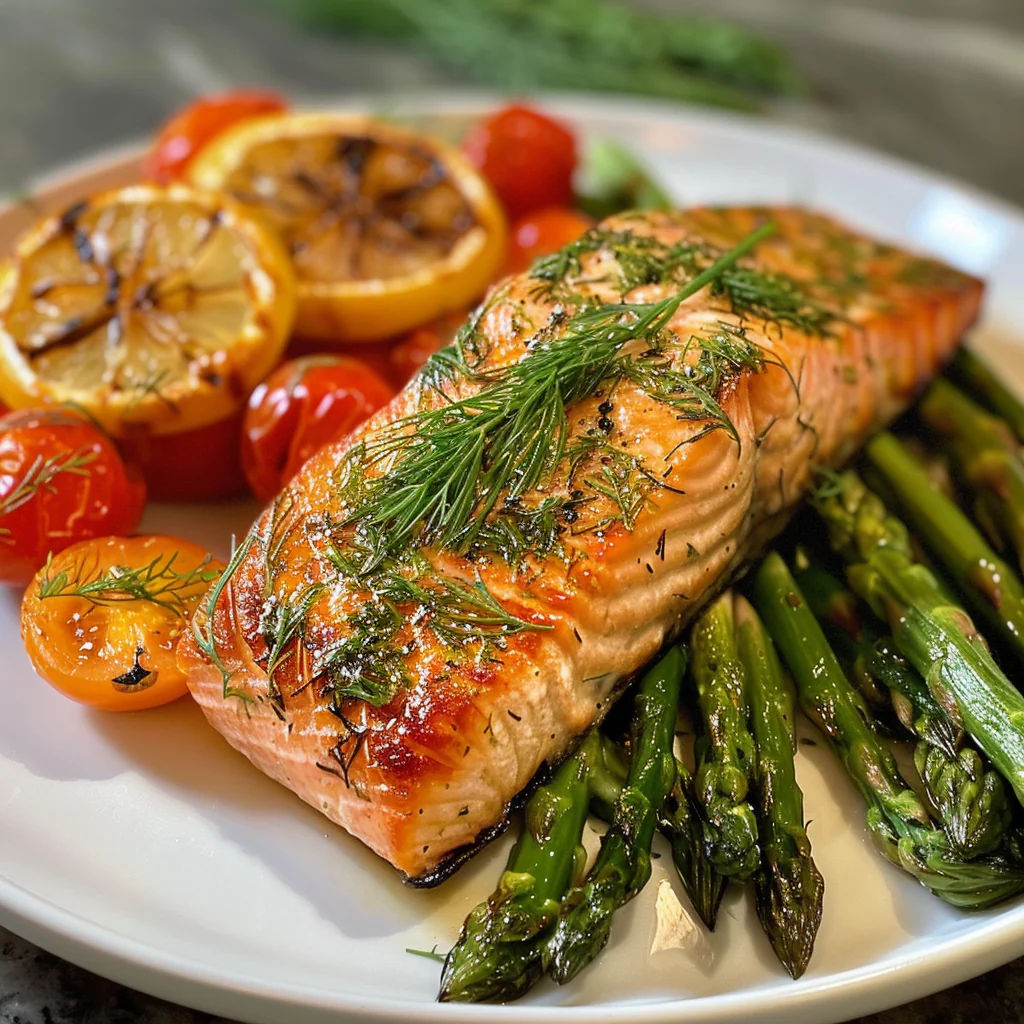
One Pan Salmon and Rice With Lemon & Herbs
Ingredients
Method
- In a large saute pan with a tight-fitting lid, heat the olive oil over medium-high heat. Add the minced shallot (reserve about 2 teaspoons for the yogurt sauce) and saute for about 3 minutes or until the shallot starts to turn golden. Add the rice, and let it toast for another 2-3 minutes until it starts to turn golden. Stir the shallot and rice so it doesn't burn.
- Add the broth or stock and 1/4 cup of lemon juice to the rice mixture and stir to combine. Cover, reduce the heat to low, and let the rice cook at a slow simmer. Set a timer for 35 minutes.
- While the rice is cooking, prep your salmon by seasoning it with sea salt and ground pepper. Snap the tough ends off the asparagus.
- When the rice has cooked for 35 minutes, place a few lemon slices (from the juiced lemons) over the rice and add the salmon on top of the lemon. Cover and let cook for five minutes.
- While the salmon and rice cook, make the yogurt sauce. In a blender, combine the reserved minced shallot, two teaspoons of lemon zest, two tablespoons of lemon juice, yogurt, and half of fresh herbs. Blend until smooth.
- Add the asparagus pieces to the pan with the rice and salmon, nestling them into the rice. If the rice seems dry, add an extra 1/4 cup of stock or water. Cover and let cook for five more minutes.
- Check the pan to see if the vegetables are tender and the salmon is opaque. Let it cook a few more minutes if needed. You may wish to remove the asparagus if it's finished, to avoid overcooking.
- Before serving, remove the salmon and vegetables. Add the remaining minced herbs and a teaspoon of lemon zest to the rice. Taste and season with salt as desired.
- To serve, drizzle some of the yogurt sauce over the salmon, rice, and asparagus.
Nutrition
Notes
- To ensure your salmon is perfectly cooked, look for it to turn opaque and easily flake with a fork. The ideal internal temperature is 145°F (63°C).
- To prevent the rice from sticking, make sure to stir it occasionally during the toasting step and check for doneness before adding the salmon and asparagus.
- If you're out of salmon, this recipe works beautifully with trout or even chicken thighs, just adjust cooking times accordingly.
- For a quicker prep, you can soak the brown rice in water for 30 minutes before cooking to reduce the cooking time by about 10 minutes.
- Store any leftovers in an airtight container in the fridge for up to 3 days. Reheat gently in the microwave, adding a splash of water to keep it moist.