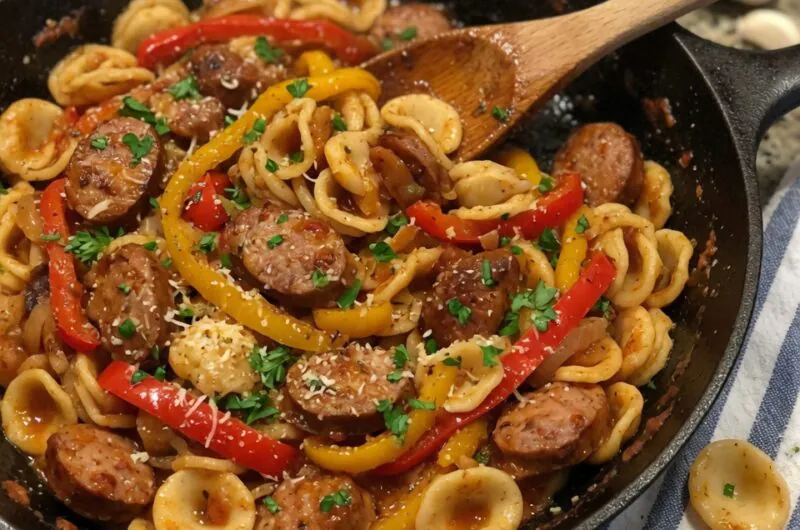
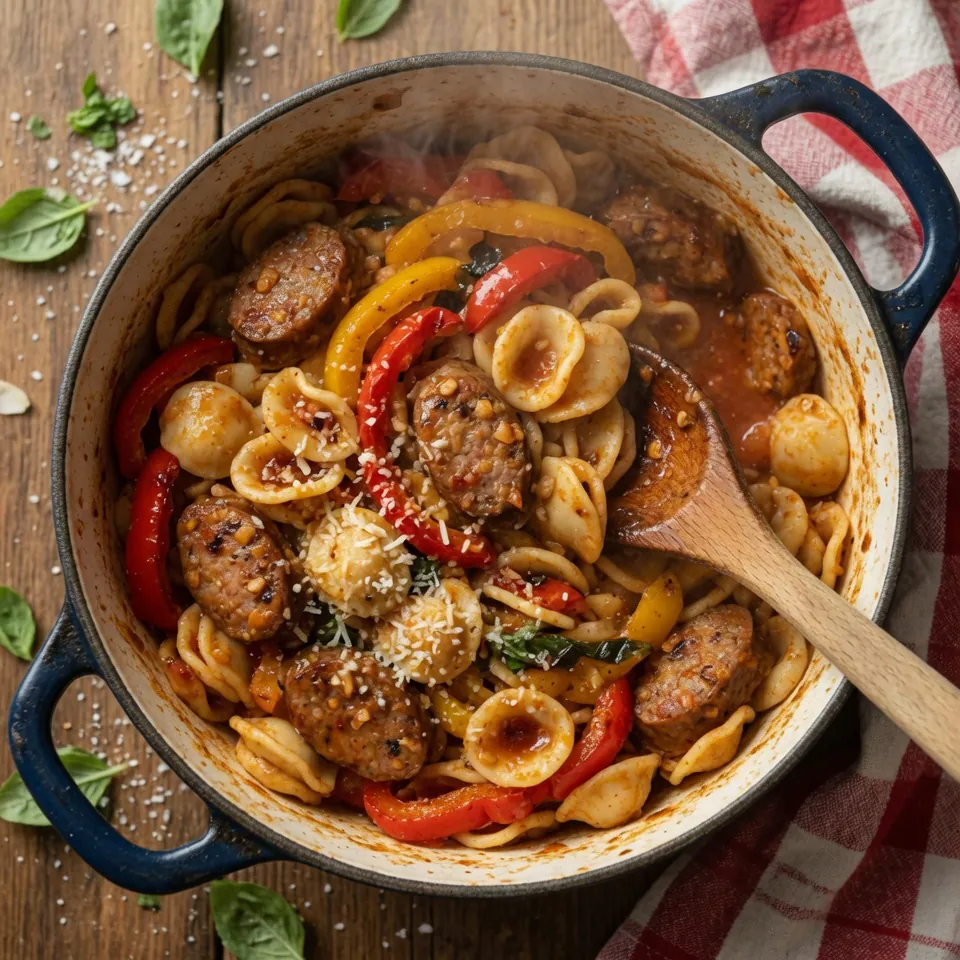
Savory Italian sausage, sweet bell peppers, and “little ear” pasta swim in a velvety, starchy sauce — all in a single pot.
📋 In This Article
Introduction
Let’s be honest: the term “one-pot meal” often feels like a trap. You promise yourself easy cleanup, but you end up with undercooked pasta, a scorched bottom of the pot, and a sauce that just won’t come together. I’ve been there. But this One-Pot Sausage & Bell Pepper Orecchiette is the exception that proves the rule. It works because it leans on food science rather than wishful thinking.
The technique here relies on the pasta’s own starch. As the orecchiette cooks directly in the broth and rendered sausage fat, it releases starch into the liquid, thickening it into a glossy, emulsified sauce that clings to every curve. You aren’t just boiling pasta; you are building a sauce from scratch in real-time. It’s a weeknight miracle that delivers on the promise of minimal cleanup without sacrificing an ounce of flavor.
Why This Recipe Works (and Why You’ll Love It)
The genius of this One-Pot Sausage & Bell Pepper Orecchiette lies in its efficiency. By browning the sausage first, we create fond—those sticky, caramelized bits of protein stuck to the bottom of the pot—which provides the savory backbone for the entire dish. When we deglaze with white wine, those flavor compounds dissolve right into the liquid.
Orecchiette, meaning “little ears” in Italian, is the perfect shape for this method. Its cup-like shape captures bits of sausage and pepper, while its rough exterior texture helps release starch efficiently to thicken the sauce. This isn’t just a throw-it-all-in-the-pot situation; it’s a strategic layering of flavors that results in a family-friendly meal ready in 30 minutes.
Ingredients
- 12 ounces uncooked sweet or hot Italian sausage, casings removed
- 12 ounces dry orecchiette pasta
- 2 bell peppers (red, yellow, or orange), diced
- 1 medium onion, chopped
- 3 cloves garlic, minced
- 2 tablespoons tomato paste
- 3 cups chicken broth
- 1/3 cup dry white wine
- 1/2 cup freshly grated Parmesan cheese, plus extra for serving
- 2 tablespoons olive oil
- Salt and freshly ground black pepper, to taste
- Red pepper flakes (optional, for heat)
- 1/4 cup fresh parsley, chopped (for garnish)
- 5 ounces baby spinach or other tender greens (optional)
Step-by-Step Instructions
Step 1: Sauté and Render
In a large pot or Dutch oven, heat 1 tablespoon of olive oil over medium heat. Add 12 ounces of Italian sausage. Use a wooden spoon to break the meat apart into small crumbles. Cook until the sausage is well-browned and the fat has rendered out, about 5-7 minutes.
Science Note: Don’t just cook the sausage until it’s gray; let it brown deeply. This triggers the Maillard reaction, creating hundreds of new flavor compounds that provide a savory depth you can’t get from boiling meat.
Step 2: Build the Base
Add the diced bell peppers and chopped onion to the pot. Sauté for 4-5 minutes until the vegetables have softened and the onions are translucent. Add the minced garlic and tomato paste, stirring constantly for about 1 minute until the garlic is fragrant and the tomato paste has darkened slightly in color.
Pour in 1/3 cup of dry white wine to deglaze. Use your wooden spoon to scrape up the browned bits from the bottom of the pot—this is pure flavor. Let the wine simmer for 2 minutes to reduce slightly, cooking off the harsh alcohol edge.
Step 3: The One-Pot Simmer
Add 12 ounces of orecchiette pasta and 3 cups of chicken broth to the pot. Season generously with salt and pepper. Stir well to submerge the pasta. Increase the heat to high to bring the liquid to a boil, then reduce the heat to medium-low, cover, and simmer for 10-12 minutes.
Crucial Step: Stir the pasta occasionally to prevent sticking. Orecchiette loves to nest inside itself. The liquid should be almost completely absorbed by the time the pasta is al dente.
Step 4: Finish with Greens
Remove the lid. If you are using 5 ounces of baby spinach, stir it in now. The residual heat will wilt the greens in about 1 minute. If the sauce looks too thin, continue cooking for another minute uncovered. If it looks too thick or dry, add a splash of water.
Step 5: Emulsify and Serve
Remove the pot from the heat. Stir in 1/2 cup of finely grated Parmesan cheese. The starch released from the pasta, combined with the fat from the sausage and cheese, creates a velvety emulsion that coats the pasta. Serve immediately, garnished with parsley and extra cheese.
⚠️ Common Mistakes to Avoid
Even a simple recipe has pitfalls. Overcooking the pasta is the most common error; remember that the pasta continues to cook in the residual sauce after you turn off the heat. Pull it when it’s just shy of perfect.
Under-seasoning is another issue. Because we aren’t draining the pasta water, you need to season the broth aggressively. Taste the liquid before adding the pasta—it should taste slightly salty, as the pasta will absorb salt as it cooks.
Finally, watch your liquid ratios. Too much liquid results in soup, not pasta sauce. If you prefer a thicker sauce, use the pasta water trick: reserve a mug of the cooking liquid before adding the pasta, and add it back only if the pot dries out.
Flavor Variations & Dietary Adaptations
This One-Pot Sausage & Bell Pepper Orecchiette is highly adaptable. For a Vegetarian Option, swap the sausage for a plant-based alternative or use hearty mushrooms like cremini or shiitake, which provide a meaty texture and umami depth.
If you crave a Spicy Version, use hot Italian sausage or add crushed red pepper flakes during the garlic step. The heat blooms in the oil, distributing the spice evenly throughout the dish.
For a Gluten-Free adaptation, use gluten-free pasta. Note that rice-based pastas release starch differently, so you may need to adjust the broth down to 2.5 cups to avoid a gummy texture.
Serving Suggestions & Pairings
This dish stands well on its own, but a simple side salad cuts the richness. Try mixed greens with a sharp vinaigrette. Crusty bread is excellent for mopping up the remaining sauce.
For wine, a Pinot Grigio or Sauvignon Blanc complements the sausage and peppers beautifully. If you prefer red, a light-bodied Sangiovese won’t overpower the delicate orecchiette.
Storage & Reheating Tips
Store leftovers in an airtight container in the fridge for up to 3 days. The pasta will absorb more sauce as it sits, so it may seem dry when you reheat it.
To reheat, add a splash of water or broth to the pan or microwave-safe dish. Heat gently on the stovetop over low heat or in the microwave in 30-second intervals, stirring in between.
💡 Pro Tips for Success
- Reserve Pasta Water: Even though this is a one-pot meal, if you accidentally cook off too much liquid, you can’t get it back. Keep a cup of hot water handy to loosen the sauce if needed.
- Don’t Rush the Fond: The first time I rushed browning the sausage, the dish tasted flat. Those browned bits are essential.
- Grate Your Own Cheese: Pre-grated cheese contains anti-caking agents that prevent it from melting smoothly. Always grate your own Parmesan for the best emulsification.
Frequently Asked Questions (FAQ)
+Can I use a different pasta shape?
Yes, but timing will vary. Shells (conchiglie) work well as they also capture sauce. If using penne or rigatoni, you may need slightly more broth and a few extra minutes of cooking time.
+Why is my pasta sticking to the pot?
Orecchiette has a high surface area and can stick if not stirred. Ensure you stir thoroughly when adding the pasta to the boiling broth, and give it a good stir every 2-3 minutes during the simmer.
+Can I make this ahead of time?
You can prep the ingredients (chop veggies, brown the sausage) ahead of time. However, I don’t recommend cooking the pasta ahead, as it will become mushy upon reheating.
+My sauce is too runny—what happened?
You may not have simmered it long enough, or your pot lid was too loose, allowing steam to escape slowly. Remove the lid for the last 2-3 minutes of cooking to help evaporate excess liquid.
+Can I use pre-cooked sausage?
You can, but you lose the rendered fat needed to cook the vegetables. If using pre-cooked sausage, sauté your veggies in 2 tablespoons of olive oil first, then add sliced sausage at the end just to warm through.
Conclusion
This One-Pot Sausage & Bell Pepper Orecchiette is a weeknight staple for a reason. It balances the robust savory notes of Italian sausage with the sweetness of bell peppers, all tied together with a starchy, velvety sauce. It proves that you don’t need a restaurant kitchen to produce a meal that feels considered and complete. With minimal cleanup and maximum flavor, it’s a recipe that respects your time without compromising on taste.
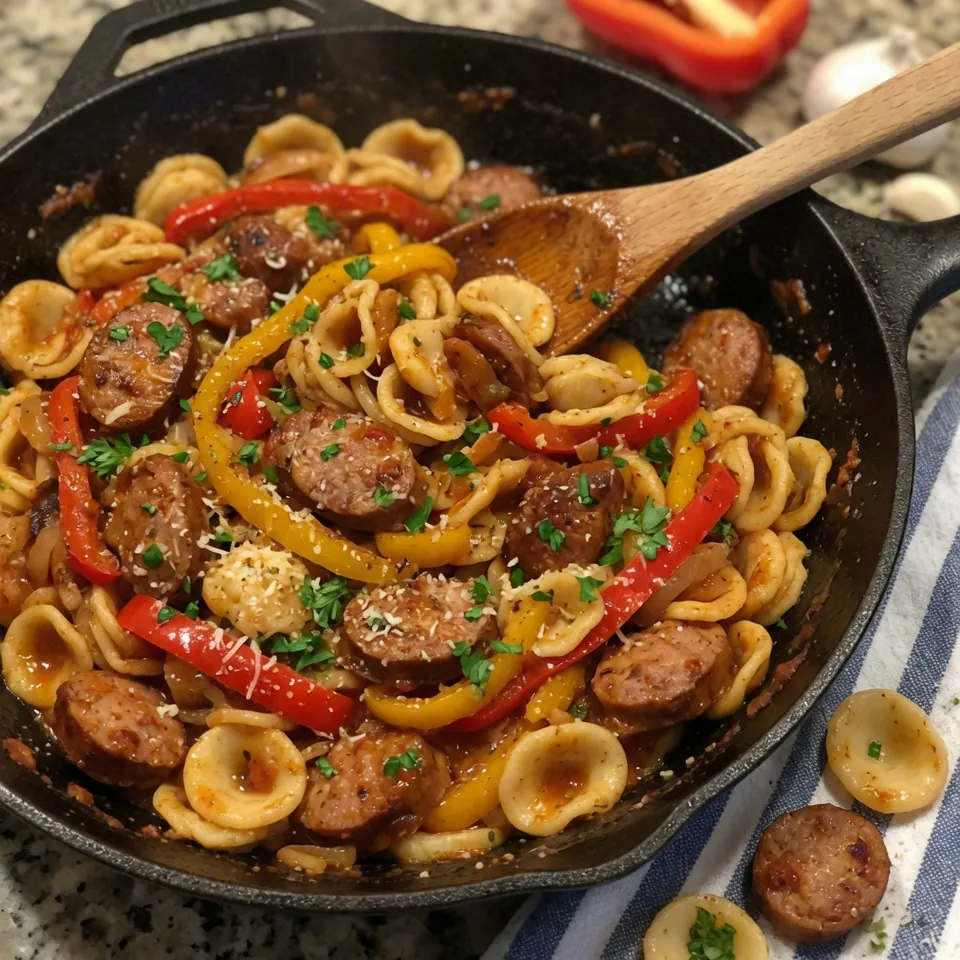
One-Pot Orecchiette with Sausage, Peppers, and Greens
Ingredients
Method
- Bring a large pot of water to a boil over high heat. Meanwhile, remove the casings from 12 ounces Italian sausage. Drain 1 (12-ounce) jar sliced roasted red peppers. Finely grate until you have 1/2 cup Parmesan cheese, plus more for serving.
- Salt the water generously and stir in 12 ounces orecchiette pasta. Reduce the heat to medium and cook until the pasta is al dente, about 10 minutes. Remove about 1 cup of the pasta water and set aside. Drain and set aside in the colander.
- Place the pot back over medium-high heat, and add 1 tablespoon olive oil to the pot. When the oil is shimmering, add the sausage and begin gently breaking up the links with a wooden spoon, but allow the sausage to begin to brown before aggressively stirring. Cook until golden brown and cooked through, about 5 minutes.
- Add 1/3 cup dry white wine and simmer for 2 minutes, scraping up any browned bits off the bottom of the pot. Stir in the red pepper strips. Add 5 ounces baby spinach or other tender greens and sprinkle lightly with salt and several grinds of pepper. Stir until the spinach is about halfway wilted.
- Add the pasta to the pot, along with 1 tablespoon unsalted butter and the Parmesan. Toss until well-combined and both the butter and cheese have melted into the barest slick of sauce, adding a splash of the reserved pasta water as needed to help it along. Serve straight from the pot with more grated Parmesan, if desired.
- Recipe Notes
Nutrition
Notes
- To ensure the sausage is cooked through, look for a golden-brown color and make sure it's no longer pink in the center; using an instant-read thermometer, aim for an internal temperature of 160°F.
- To prevent the sauce from becoming too dry, reserve extra pasta water and gradually add it as needed; this will help create a silky texture without making it watery.
- If you want to lighten the dish, substitute the sausage with turkey or chicken sausage, or for a vegetarian option, try using a plant-based sausage or mushrooms sautéed in olive oil.
- For quicker prep, you can use pre-cooked sausage; just skip the browning step and add it in with the wine to heat through and combine flavors.
- Leftovers can stay fresh in an airtight container in the refrigerator for up to 4 days; reheat gently on the stove over low heat, adding a splash of water or broth to loosen the pasta.