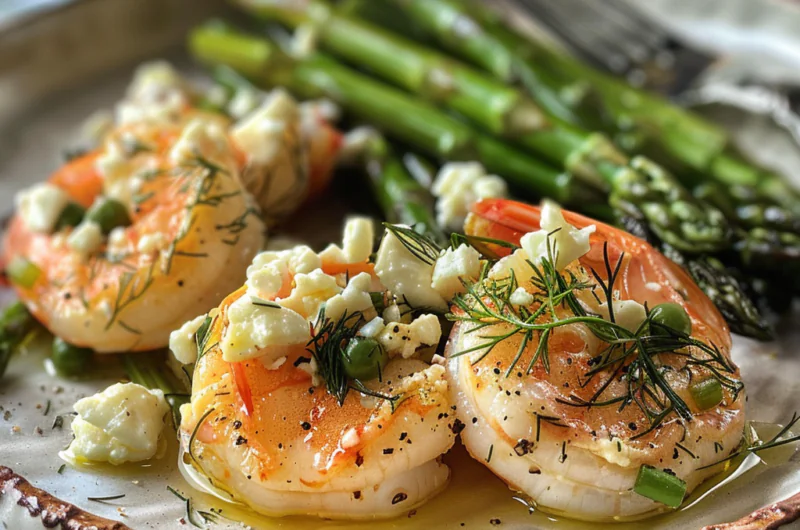
Juicy, lemon-garlic shrimp and crisp-tender asparagus roasted on one pan with creamy feta — dinner ready in 20 minutes with almost no cleanup.
📋 In This Article
Introduction
Here’s the thing about weeknight seafood: most people overthink it. They assume shrimp requires fancy technique or that asparagus needs blanching and shocking and all sorts of extra steps. But this Sheet Pan Lemon-Herb Shrimp and Asparagus with Feta proves otherwise. Everything hits one pan. The oven does the heavy lifting. And cleanup? Minimal.
I developed this recipe during a particularly chaotic spring when asparagus was everywhere and I needed something that felt elegant but demanded nothing from me. What emerged is a dish where the shrimp turn plump and sweet, the asparagus gets those caramelized edges we all chase, and the feta softens into creamy pockets without fully melting. The lemon brightens everything, the herbs add an aromatic lift, and the whole thing lands on the table in under 30 minutes.
Why This Recipe Works: The Science of High-Heat Roasting
Sheet pan cooking works because of one simple principle: dry heat creates flavor. When shrimp and asparagus hit a 400°F oven, two things happen simultaneously. First, surface moisture evaporates rapidly, which allows the natural sugars in asparagus to caramelize rather than steam. Second, proteins in the shrimp denature and firm up at around 120°F, turning opaque and tender — but push past 140°F, and they squeeze out moisture, becoming rubbery.
This is why timing matters so much here. Shrimp cook fast. Really fast. The asparagus needs a head start to develop that deep, roasted flavor, so we give it a few minutes alone on the pan before adding the shrimp. This staggered approach ensures both components finish perfectly.
The lemon plays a dual role: its zest contains aromatic oils that infuse the dish with bright fragrance, while its juice adds acidity that cuts through the richness of the olive oil and feta. Acid doesn’t just add flavor — it triggers salivation, making the entire dish taste more vibrant. Feta, meanwhile, brings salt and creaminess. It won’t melt like mozzarella (it lacks the right protein structure), but it softens into tangy, savory clumps that cling to the shrimp and asparagus.
Ingredients You’ll Need
- 2 pounds large raw shrimp, peeled and deveined (thawed if frozen)
- 1 bunch fresh asparagus, woody ends trimmed and cut into 2-inch pieces
- 1 cup good-quality feta cheese, crumbled
- 3 tablespoons olive oil, divided
- 4 cloves garlic, minced
- 2 teaspoons smoked paprika
- 1 teaspoon dried oregano
- 1 teaspoon fresh dill, chopped (or ½ teaspoon dried)
- 1 lemon, zest and juice divided
- Kosher salt and freshly ground black pepper, to taste
How to Make Sheet Pan Lemon-Herb Shrimp and Asparagus
Preheat your oven to 400°F (200°C). Line a large rimmed baking sheet with parchment paper for easier cleanup — trust me on this one.
Prepare the asparagus first. Toss the trimmed asparagus with 1½ tablespoons olive oil, half the garlic, half the smoked paprika, and a generous pinch of salt and pepper. Spread it in a single layer on the baking sheet. Give the spears some breathing room; overcrowding leads to steaming, and steaming leads to sad, flaccid asparagus.
Roast the asparagus for 5 minutes. This head start is crucial. Asparagus is dense and needs time to develop caramelization. The shrimp will join later.
While the asparagus roasts, prepare the shrimp. Pat them thoroughly dry with paper towels — moisture is the enemy of browning. In a large bowl, toss the shrimp with the remaining olive oil, garlic, smoked paprika, oregano, lemon zest, salt, and pepper. Use your hands to coat each shrimp evenly.
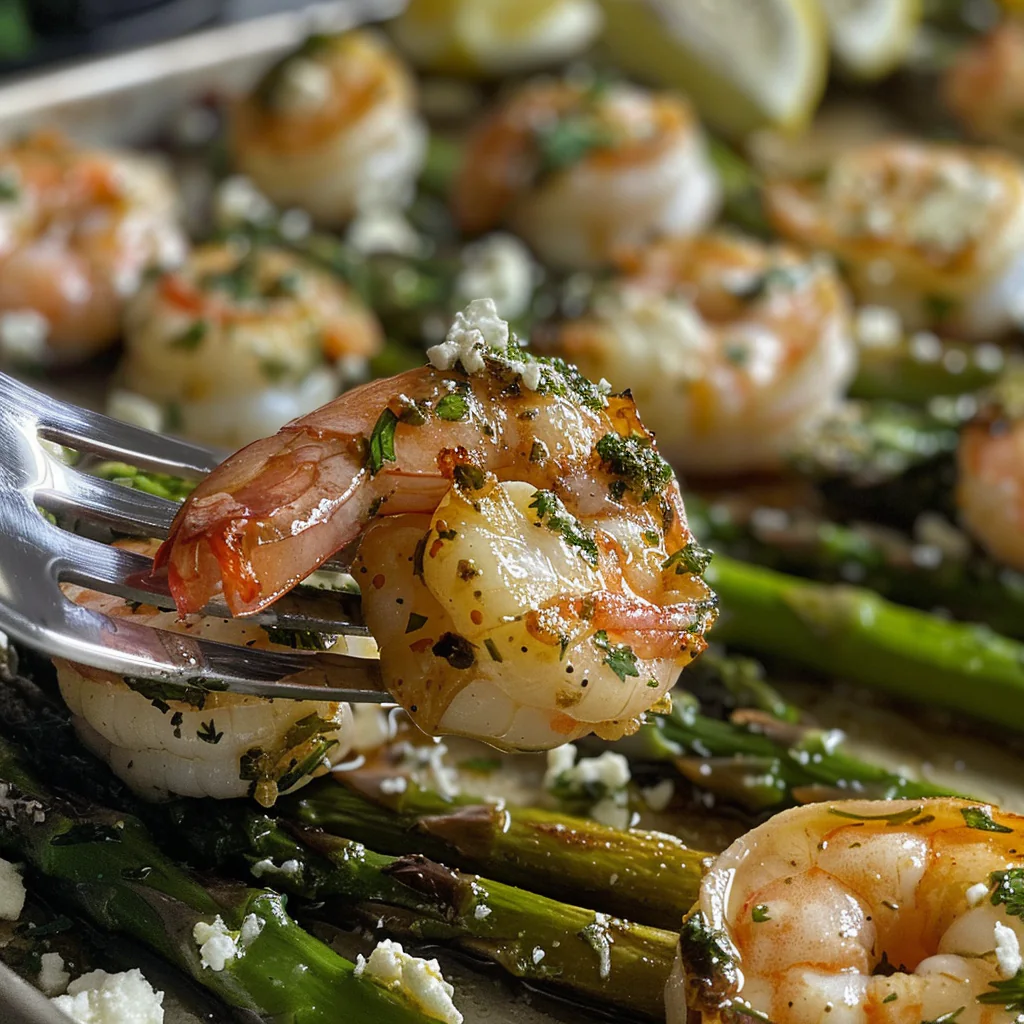
Add the shrimp to the pan. Remove the baking sheet from the oven and push the asparagus to the sides. Arrange the seasoned shrimp in the center in a single layer. Return to the oven and roast for 8-10 minutes, until the shrimp are pink, opaque, and just cooked through.
Add the feta. Sprinkle the crumbled feta over the shrimp and asparagus, then return to the oven for 1-2 minutes. The feta will warm through and soften slightly but won’t melt completely.
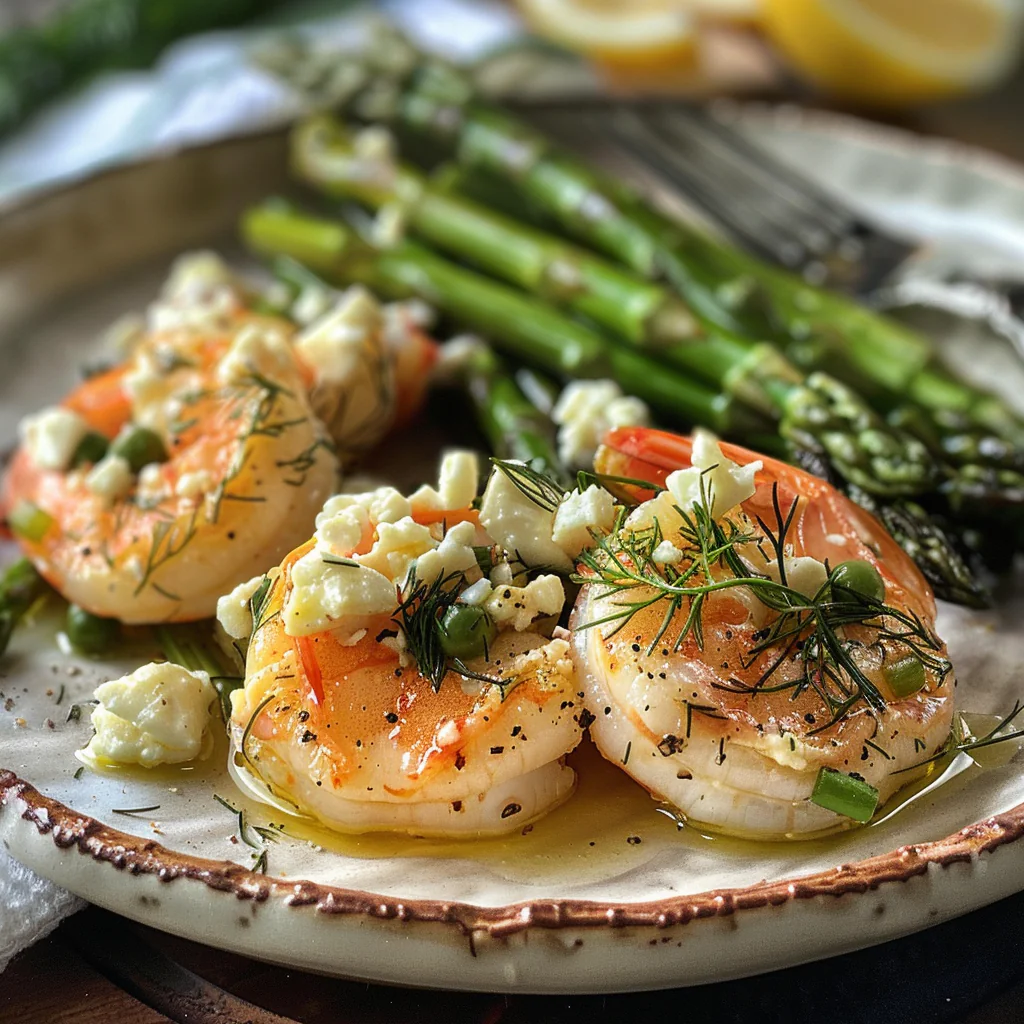
Finish and serve. Remove from the oven, drizzle with fresh lemon juice, and scatter with fresh dill. Serve immediately with lemon wedges on the side.
⚠️ Common Mistakes to Avoid
Overcrowding the pan. I learned this the hard way years ago — when ingredients touch, they steam instead of roast. Steam produces that gray, rubbery texture nobody wants. Give everything space, or use two pans if necessary.
Skipping the dry-off. Wet shrimp steam. Dry shrimp roast and develop actual flavor. Take the extra 30 seconds to pat them dry.
Overcooking the shrimp. Shrimp go from perfect to rubbery in about 60 seconds. They’re done when they form a loose “C” shape — if they curl into a tight “O”, they’re overcooked. Pull them when they’re just opaque; carryover cooking will finish the job.
Adding feta too early. Feta doesn’t melt like other cheeses. Add it at the end just to warm through. If it sits too long in the oven, it can become grainy and overly salty as moisture evaporates.
Flavor Variations and Serving Ideas
This recipe is endlessly adaptable. Here are some proven directions:
Vegetable additions: Cherry tomatoes burst and create a natural sauce. Thinly sliced bell peppers add sweetness. Zucchini rounds work well but add them with the asparagus for proper cooking time.
Protein swaps: Chicken sausage, sliced into rounds, makes a heartier version. Halloumi cheese can replace the shrimp entirely for a vegetarian option — it holds its shape beautifully under high heat.
Herb variations: Fresh basil or parsley instead of dill shifts the flavor profile toward Mediterranean. A pinch of red pepper flakes adds warmth without overwhelming the dish.
Serving suggestions: This dish stands alone, but a side of crusty bread for soaking up the pan juices never hurts. Coconut rice adds subtle sweetness that plays well with the smoky paprika. A simple quinoa salad turns it into a more substantial meal.
Storage and Reheating
Leftovers keep well in an airtight container in the refrigerator for up to 3 days. The asparagus will soften over time, but the flavors continue to meld.
For reheating, avoid the microwave if possible — it makes shrimp rubbery. Instead, spread leftovers on a baking sheet and warm in a 350°F oven for 8-10 minutes. The gentle, even heat preserves texture better than aggressive microwaving.
💡 Pro Tips for Sheet Pan Success
Start with room-temperature shrimp. Cold shrimp straight from the fridge cook unevenly. Let them sit at room temperature for 15 minutes before seasoning.
Use the largest shrimp you can find. U15 or 16/20 count shrimp (meaning 16 to 20 per pound) hold up better to roasting and stay juicy. Smaller shrimp overcook too quickly.
Don’t skip the lemon zest. The zest contains the essential oils that provide bright, floral aroma. Juice alone adds acidity but misses the aromatic dimension.
Consider a broiler finish. For slightly charred edges, switch the oven to broil for the final 60 seconds. Watch closely — the line between caramelized and burnt is thin.
Season aggressively. Feta and olive oil mellow the seasoning. What tastes like too much salt before cooking will taste perfectly balanced after.
Frequently Asked Questions
+Can I use frozen shrimp?
Yes, but thaw them completely first. The best method is overnight in the refrigerator, or place the sealed bag in cold water for 30 minutes. Pat thoroughly dry before cooking to prevent steaming.
+How do I know when shrimp are fully cooked?
Shrimp are done when they turn pink and opaque throughout and curl into a loose “C” shape. The internal temperature should reach 120-130°F for juicy results. If they curl tightly into an “O” shape, they’ve overcooked.
+Why is my shrimp rubbery?
Rubbery shrimp are almost always overcooked. Shrimp cook quickly — usually 8-10 minutes in a 400°F oven. Pull them as soon as they turn opaque, as carryover cooking will finish the process.
+What can I substitute for feta cheese?
Crumbled goat cheese offers a similar tang with a creamier texture. Cotija works well for a firmer, saltier bite. For a dairy-free version, skip the cheese entirely and finish with a sprinkle of nutritional yeast.
+What sides pair well with this dish?
Crusty bread or garlic knots soak up the pan juices beautifully. A simple grain like rice or quinoa stretches the meal. For a low-carb option, serve over cauliflower rice or alongside a fresh green salad.
+Can I make this ahead of time?
You can prep the components in advance — trim the asparagus, clean the shrimp, and mix the seasoning — but don’t roast until you’re ready to eat. Reheated shrimp never quite matches the texture of freshly cooked.
Ingredients
Method
- Preheat oven to 450 degrees.
- In a large bowl, season the shrimp with olive oil, garlic, lemon juice, salt, pepper, smoked paprika, and oregano.
- Place the asparagus on a baking sheet, place seasoned shrimp on top of asparagus and top with red onion slices. Bake for 10 to 15 minutes depending on the size of the shrimp.
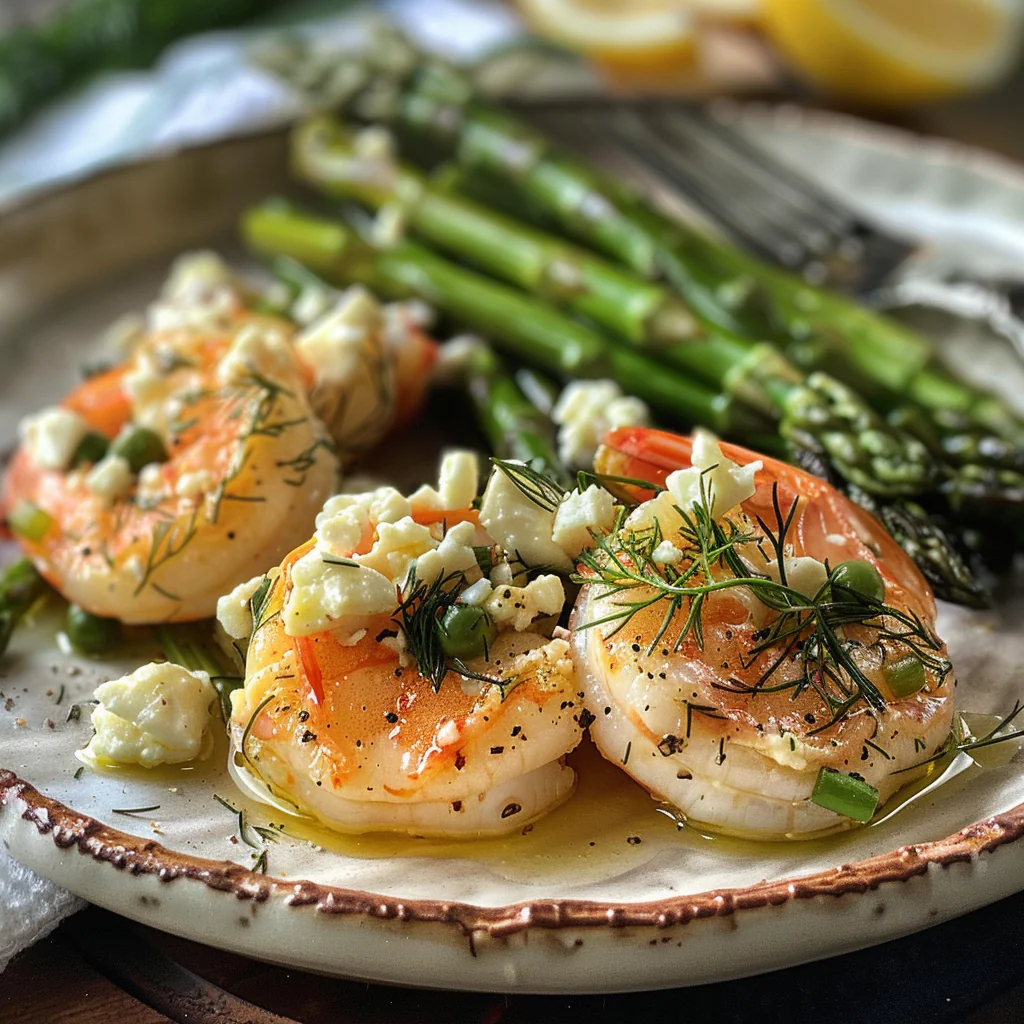
- Remove shrimp from the oven, top with crumbled feta, olives and parsley. Serve with warm garlic bread and enjoy!
Nutrition
Notes
- Make sure to dry the shrimp thoroughly with paper towels before seasoning; this helps achieve a nice sear and prevents the dish from becoming watery.
- Keep an eye on the shrimp during baking; they should turn pink and opaque, usually around 10 to 15 minutes, depending on their size.
- If you're short on time, you can substitute fresh asparagus with frozen; just adjust the cooking time down to avoid overcooking.
- For a flavor boost, marinate the shrimp for 30 minutes before baking; it enhances the seasoning significantly without needing to wait overnight.
- Store any leftovers in an airtight container in the fridge for up to 2 days, and reheat gently in the oven at 350°F to maintain the shrimp's texture.