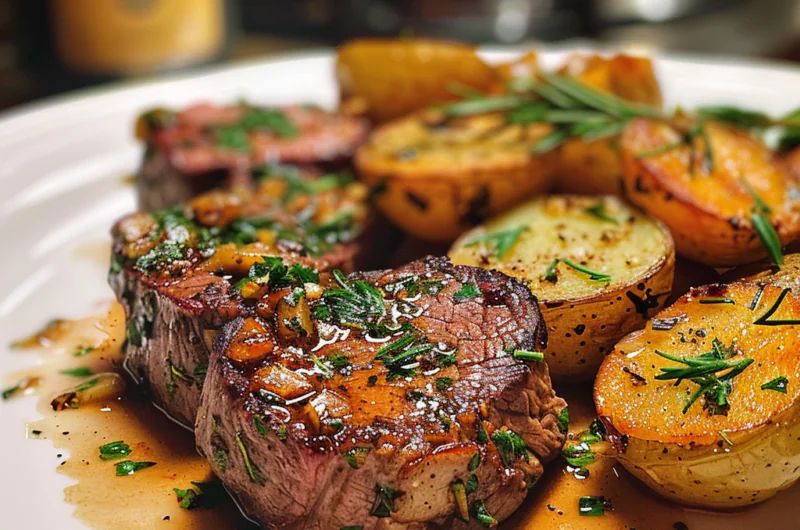
Golden-seared beef tenderloin medallions basted in garlic butter, served alongside rosemary-roasted potatoes with impossibly crispy edges — a special occasion dinner that delivers restaurant results at home.
📋 In This Article
- Introduction
- Why This Recipe Works (The Science of Deliciousness)
- Ingredients You’ll Need
- Step-by-Step Instructions: Mastering Steakhouse Medallions & Crispy Potatoes
- Common Mistakes to Avoid
- Variations & Pairings: Customizing Your Gourmet Experience
- Pro Tips for a Truly Steakhouse-Level Meal
- Storage & Reheating: Enjoying Your Leftovers
- Frequently Asked Questions
Introduction
Some dinners are just dinner. And then there’s Hearty Steakhouse-Style Garlic Butter Beef Tenderloin Medallions with Crispy Rosemary Potatoes for a Special Occasion Dinner — the kind of meal that turns a random Tuesday into an anniversary, or a quiet weekend into something worth remembering. I’ve spent years testing steakhouse techniques in my home kitchen, and here’s what I’ve learned: the magic isn’t in expensive equipment. It’s in understanding a few key principles and executing them with confidence.
This recipe combines two showstoppers. First, beef tenderloin medallions seared until they develop that deeply caramelized crust we chase at steakhouses. Second, baby potatoes roasted at high heat until their exteriors shatter into golden crispness while their interiors stay fluffy. The garlic butter ties everything together, carrying aromatic compounds directly into the meat’s surface. It’s the kind of dish that looks impressive but relies on technique, not tricks.
Why This Recipe Works (The Science of Deliciousness)
Let’s talk about what’s actually happening when you cook this dish, because understanding the “why” changes everything.
The Maillard reaction is the star here. When beef hits a screaming-hot pan at temperatures above 300°F, amino acids and sugars on the surface undergo a complex chemical transformation. This isn’t just “browning” — it’s the creation of hundreds of new flavor compounds that give seared meat its distinctive savory depth. The reaction intensifies as temperatures climb, which is why a properly preheated pan matters more than almost anything else.
Then there’s the garlic butter baste. Fat is an incredible solvent for aromatic compounds. When you melt butter with minced garlic and spoon it over searing meat, you’re essentially infusing the surface with those aromatics while the high heat mellows garlic’s sharp edges into something sweet and nutty. The butter also promotes even browning across the meat’s surface, filling in gaps where contact with the pan might be uneven.
For the potatoes, high heat triggers starch gelatinization. At 425°F, the exterior starches break down and form a rigid structure that crisps beautifully. Meanwhile, the interior moisture converts to steam, creating that fluffy texture we want. Rosemary’s piney compounds are volatile, meaning they dissipate quickly with heat — adding them partway through roasting preserves their fragrance instead of cooking it away.
Ingredients You’ll Need
The quality of your ingredients directly impacts this dish. Here’s what to look for:
For the Beef:
- Center-cut beef tenderloin (1.5 pounds): Ask your butcher for the center-cut section, which offers the most consistent thickness and tenderness. Filet mignon comes from this cut, so you’re essentially buying premium steak at a fraction of restaurant prices.
- Unsalted butter (4 tablespoons): Unsalted lets you control the seasoning. Cold butter works best for basting — it melts gradually, giving you more control.
- Fresh garlic (4 cloves): Skip the pre-minced jar stuff. Fresh garlic contains allicin, the compound responsible for that sharp, pungent heat. Pre-minced garlic has often been treated to prevent spoilage, which dulls its flavor.
- Fresh rosemary and thyme: Woody herbs like rosemary can withstand high heat, while thyme adds subtle earthiness without overpowering the beef.
For the Potatoes:
- Baby potatoes (1.5 pounds): I prefer baby potatoes because their thin skins crisp beautifully without peeling. If you can only find larger potatoes, cut them into 1.5-inch chunks.
- Olive oil (2 tablespoons): A neutral oil works too, but olive oil adds subtle fruitiness that complements the rosemary.
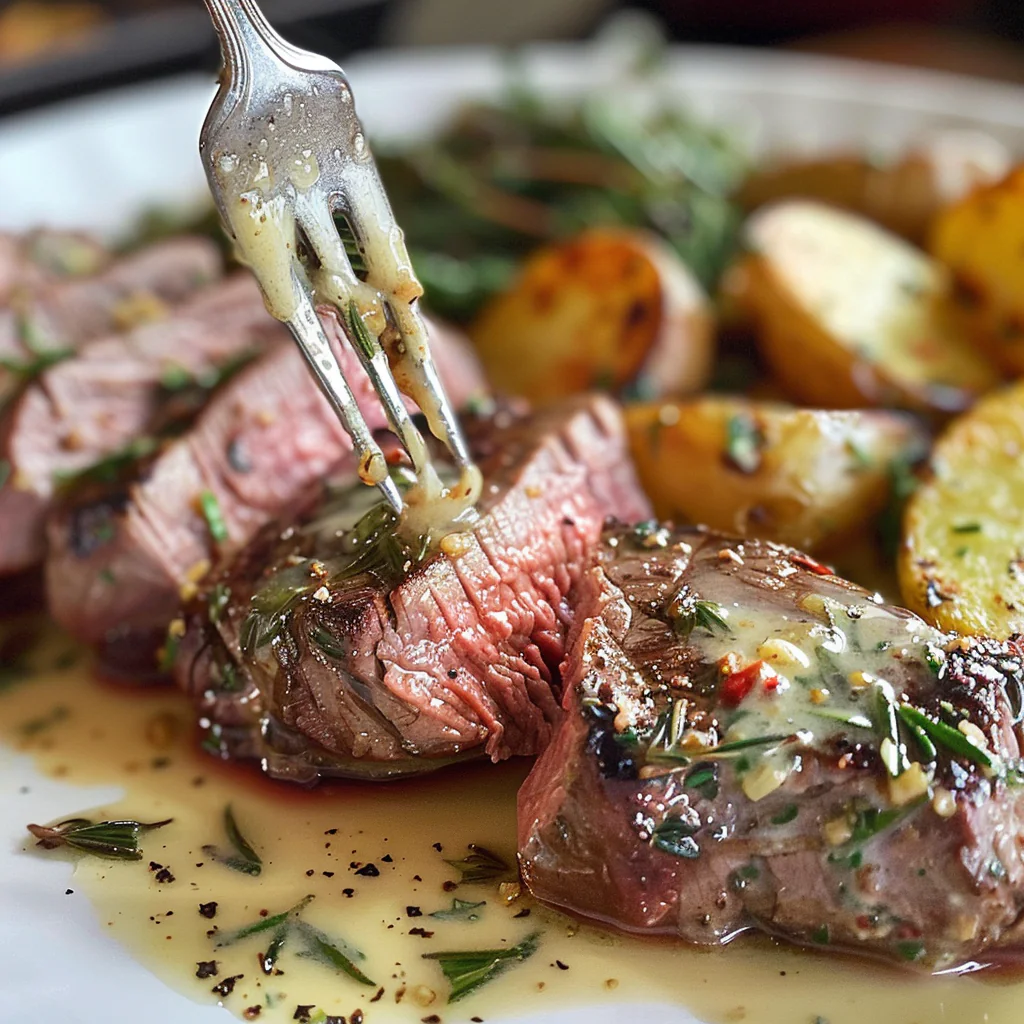
Step-by-Step Instructions: Mastering Steakhouse Medallions & Crispy Potatoes
Preparing the Crispy Rosemary Potatoes
- Preheat your oven to 425°F (220°C). This temperature is non-negotiable for crispy potatoes. Lower temperatures produce baked potatoes — soft all the way through. Higher temperatures risk burning the exterior before the interior cooks through.
- Wash and halve 1.5 pounds of baby potatoes. Uniformity matters here. Halves cook at the same rate, which means no fighting over the “good” crispy ones. Pat them completely dry with a kitchen towel. Moisture is the enemy of crispiness.
- In a large bowl, toss the potatoes with 2 tablespoons olive oil, 1 tablespoon chopped fresh rosemary, 1 teaspoon kosher salt, and ½ teaspoon black pepper. Use your hands. Really coat them. The oil should glisten on every surface.
- Spread the potatoes cut-side down on a rimmed baking sheet. The cut side has more exposed starch, which means more contact area for crisping. Don’t crowd the pan — overcrowding traps steam and turns crispy into soggy.
- Roast for 25-30 minutes, flipping halfway through. You’ll know they’re done when the cut sides are deeply golden and a paring knife slides through the center with zero resistance.
Cooking the Beef Tenderloin Medallions
- Slice 1.5 pounds beef tenderloin into 1-inch thick medallions. One inch isn’t arbitrary — it’s the sweet spot where the exterior develops a beautiful crust before the interior overcooks. Season generously on all sides with 1½ teaspoons kosher salt and 1 teaspoon black pepper.
- Heat a large cast iron skillet over medium-high heat for 3-4 minutes. Add 2 tablespoons of high-smoke-point oil (avocado or grapesea work beautifully). Wait until the oil shimmers — that’s your signal the pan is hot enough for proper searing.
- Sear the medallions for 3-4 minutes per side. Don’t move them. Don’t peek. Just let them cook. When you flip, the surface should be deeply browned with a caramelized crust. For medium-rare, you’re targeting an internal temperature of 130°F.
- In the last minute of cooking, add 4 tablespoons butter and 4 cloves minced garlic. Tilt the pan slightly and use a spoon to baste the melting butter over the meat continuously. This is where the magic happens — the garlic toasts in the butter while the butter itself browns slightly, developing nutty notes.
- Remove the medallions and let them rest for 5 full minutes. I know it’s tempting to cut in immediately. Don’t. During cooking, heat pushes juices toward the center. Resting allows those juices to redistribute throughout the meat. Cut too early, and you’ll lose 40% of that liquid onto your cutting board.
Making the Pan Sauce
- Pour off excess fat from the skillet, leaving the browned bits (the fond) behind. Those stuck-on bits are concentrated flavor — pure Maillard reaction goodness.
- Add ½ cup beef broth and bring to a simmer, scraping up the fond with a wooden spoon. The liquid dissolves those caramelized proteins, transforming them into an instant sauce base.
- Whisk in 1 tablespoon Dijon mustard and simmer for 2-3 minutes until slightly reduced. The mustard adds acidity and body. Remove from heat and stir in 1 tablespoon fresh parsley.
- Serve immediately. Drizzle the sauce over the rested medallions and arrange the crispy potatoes alongside. This dish doesn’t wait.
⚠️ Common Mistakes to Avoid
Even experienced cooks stumble on this dish. Here’s what trips people up:
Overcooking the tenderloin. Tenderloin is lean — there’s no fat marbling to keep it moist past medium. Pull the meat at 125-130°F for medium-rare; carryover cooking will bring it to the perfect 130-135°F range as it rests.
Skipping the drying step. Wet meat steams instead of sears. That beautiful brown crust? It won’t form if moisture is blocking direct contact with the pan. Pat the meat completely dry before seasoning.
Overcrowding the pan. This is probably the most common mistake I see. When too many medallions hit the pan simultaneously, the temperature drops dramatically. Instead of searing, the meat stews in its own juices. Cook in batches if necessary — your crust will thank you.
Under-seasoning the potatoes. Potatoes need more salt than you think. Their bland interior acts as a blank canvas, and undersalted potatoes taste flat no matter how much sauce you add later. Season confidently.
Rushing the rest period. Cutting into meat immediately after cooking releases juices that should stay inside the muscle fibers. Five minutes of patience yields exponentially juicier results.
Variations & Pairings: Customizing Your Gourmet Experience
Once you’ve mastered the base recipe, consider these adaptations:
Herb Variations
Thyme, oregano, or even fresh sage can replace or complement rosemary. Each brings distinct aromatic qualities — thyme adds subtle earthiness, while sage introduces a savory, slightly peppery note that pairs beautifully with beef.
Potato Techniques
For extra-crispy potatoes, try the smash technique: boil baby potatoes until tender, gently flatten them with a glass, then roast at 450°F. The increased surface area means more crispy edges. Alternatively, cut into wedges for a heartier bite.
Sauce Variations
A red wine reduction elevates this dish further. After deglazing with broth, add ¼ cup red wine and reduce by half. For something decadent, whisk in a tablespoon of cold butter off-heat for a velvety finish. Blue cheese butter — compound butter crumbled with gorgonzola — melts beautifully over hot medallions.
Wine Pairing
Cabernet Sauvignon is the classic choice. Its tannic structure cuts through the richness of beef while complementing the garlic butter. Merlot offers a softer alternative if you prefer less astringency.
Side Dishes
Balance the plate with something green. Roasted asparagus with lemon zest, creamed spinach, or a simple arugula salad with shaved parmesan all provide brightness against the rich meat.
💡 Pro Tips for a Truly Steakhouse-Level Meal
These techniques separate good from great:
Invest in a reliable instant-read thermometer. Visual cues work for experienced cooks, but for everyone else, a thermometer eliminates guesswork. Insert it into the thickest part of the medallion — 125°F for rare, 130°F for medium-rare, 135°F for medium.
Use cast iron when possible. Cast iron retains heat exceptionally well, which means the pan temperature won’t drop dramatically when cold meat hits it. That consistent heat is crucial for developing a proper crust.
Dry brine 24 hours ahead. Salting meat in advance and leaving it uncovered in the refrigerator does two things: it allows salt to penetrate deeply for seasoned meat throughout (not just on the surface), and it dries the exterior for better browning. This technique transforms good steak into great steak.
Make compound butter in advance. Mix softened butter with minced garlic, herbs, and a pinch of salt. Roll it into a log in plastic wrap and refrigerate. Slice a round off and let it melt over hot meat — instant sauce with zero last-minute effort.
Finish with flaky sea salt. A final sprinkle of Maldon or Jacobsen salt just before serving adds texture and bright salinity that lifts all the flavors.
Storage & Reheating: Enjoying Your Leftovers
Leftovers happen, even with a dish this good. Here’s how to handle them properly:
Storage: Wrap beef tenderloin medallions tightly in plastic wrap or store in an airtight container. Keep for up to 3 days in the refrigerator. Store potatoes separately in a breathable container — trapped moisture turns crispy edges soggy overnight.
Reheating beef: Skip the microwave. Instead, place medallions in a 250°F oven for 15-20 minutes until warmed through. This gentle heat prevents further cooking while bringing the internal temperature up gradually. For faster results, sear briefly in a hot pan for 30 seconds per side — just enough to warm without cooking.
Reheating potatoes: Re-crisp in a 400°F oven or air fryer for 5-8 minutes. The microwave is the enemy of crispy potatoes — it creates steam that softens everything you worked to achieve.
Make-ahead tip: The compound butter can be made up to a month in advance and frozen. Potatoes can be par-cooked (boiled until just tender), cooled, and refrigerated for up to 2 days before roasting.
Frequently Asked Questions
+Why is my beef tenderloin tough?
Tough tenderloin usually means overcooking. This cut has almost no fat or connective tissue, so it stays tender only up to medium doneness. Beyond that, the muscle fibers contract tightly, squeezing out moisture. Use a thermometer and pull at 130°F for medium-rare.
+Can I use filet mignon instead?
Filet mignon is simply beef tenderloin cut into individual steaks, so yes — they’re the same cut. If you’re buying pre-cut filets, adjust cooking time slightly since they’re often thicker than medallions you’d slice yourself.
+How do I know when the tenderloin is done?
A thermometer is most reliable, but visual cues help. For medium-rare, the meat should feel like the base of your thumb when you touch your thumb and middle finger together — firm with slight give. The center will be warm pink, not bright red or gray.
+Can I make garlic butter ahead of time?
Absolutely. Compound butter keeps for 2 weeks refrigerated or 3 months frozen. Mix softened butter with minced garlic, herbs, and salt, then roll into a log. Slice off what you need and let it melt over hot meat.
+How long does beef tenderloin last in the fridge?
Raw tenderloin keeps 3-5 days refrigerated. Cooked medallions last 3-4 days stored properly. For longer storage, freeze cooked meat for up to 3 months — though texture may suffer slightly upon thawing.
+What sides go with beef tenderloin?
Beyond the crispy potatoes, consider roasted vegetables (asparagus, Brussels sprouts, carrots), creamed spinach, polenta, or a fresh salad with vinaigrette to cut the richness. The key is balancing the rich, buttery beef with something bright or acidic.