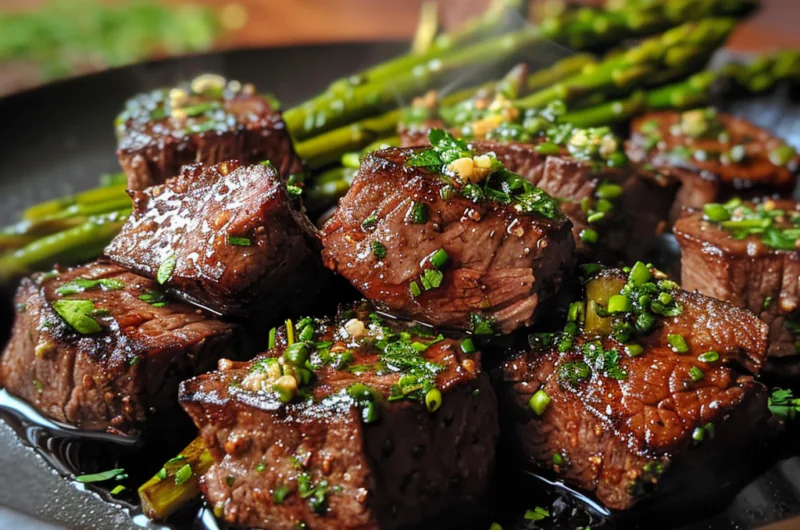
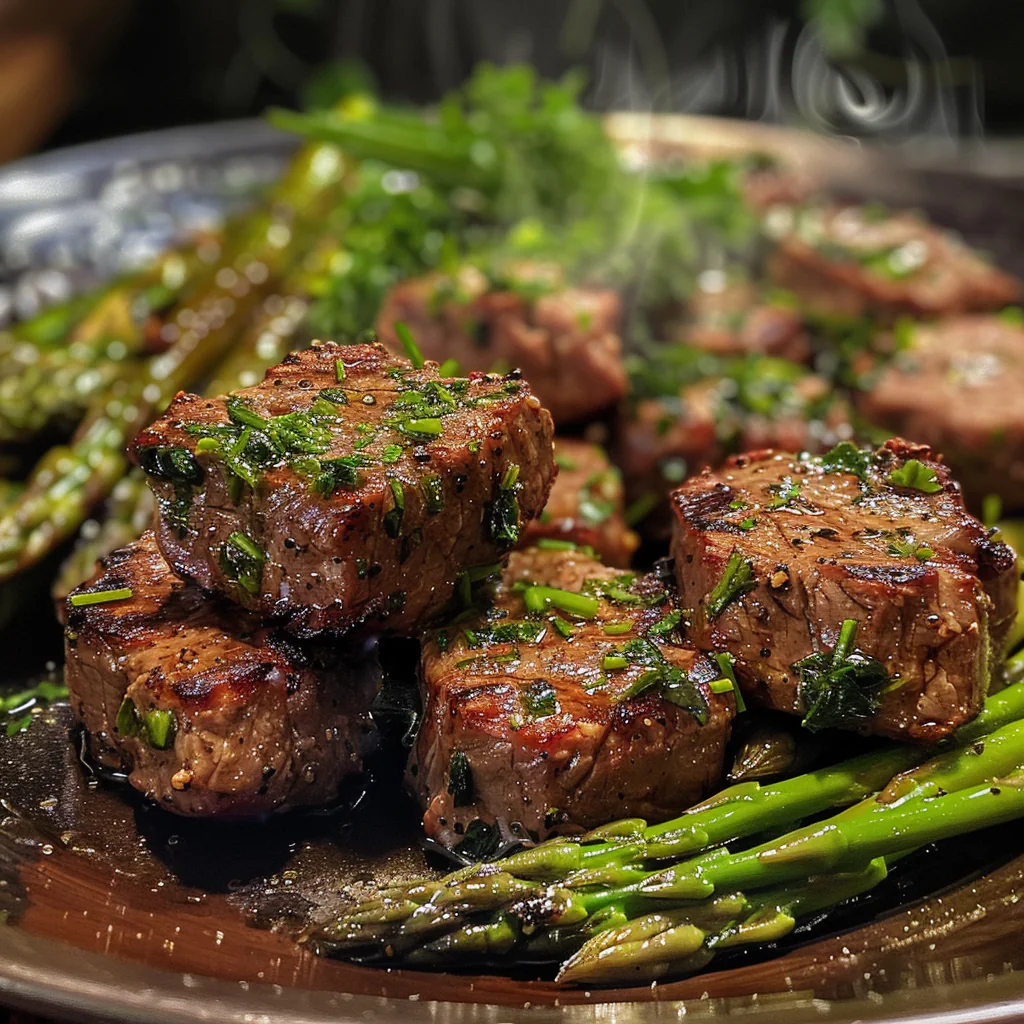
Tender, deeply seared steak bites with crisp-tender asparagus in a garlic herb butter sauce — done in 25 minutes with just one pan.
📋 In This Article
Introduction
Weeknight Garlic Butter Herb Steak Bites & Asparagus Skillet for Quick Beef Dinner solves the eternal weeknight problem: you want something that tastes like you spent an hour cooking, but you have about 20 minutes before everyone gets hangry. Here’s the thing — steak bites cook in literally 4 minutes. Asparagus takes 5. The garlic butter sauce? Another 2. That’s 11 minutes of active cooking for a meal that hits every note: savory, buttery, garlicky, with that slight char you get from proper high-heat searing.
I’ve made this recipe probably 40 times at this point. The first few attempts taught me what not to do (crowding the pan, using low heat, adding garlic too early). Now it’s muscle memory. The technique is straightforward, but the details matter more than you’d think.
Why This Recipe Works
This dish delivers on three fronts: speed, flavor intensity, and minimal cleanup. The steak bites sear quickly over high heat, developing a deeply caramelized exterior through the Maillard reaction — that’s the chemical process where amino acids and sugars create hundreds of new flavor compounds at temperatures above 300°F. You’re not just “browning” the meat; you’re fundamentally transforming its flavor profile.
The asparagus cooks in the same pan, absorbing the fond (those sticky brown bits left behind by the steak) and any rendered fat. Then comes the garlic butter, which emulsifies with the pan drippings to create a velvety sauce that coats everything.
One pan. Maybe 12 minutes of actual cooking. And the result tastes like something you’d order at a restaurant, not something you threw together on a Tuesday.
Essential Ingredients for Success
For the Steak:
Steak: Use sirloin for budget-friendliness, ribeye for richness, or filet for maximum tenderness. Cut into 1-inch cubes. The key is uniform size — uneven pieces cook at different rates, leaving you with some bites overdone and others raw in the center.
Butter: Unsalted butter lets you control the seasoning. You’ll need about 4 tablespoons for the sauce. The milk solids in butter start browning around 250°F, which adds a nutty flavor — but they burn past 350°F, so add the butter after the high-heat searing is done.
Garlic: Fresh cloves, minced. Not garlic powder, not jarred minced garlic. The fresh stuff releases oils when crushed that infuse the butter differently than dried alternatives.
For the Vegetables:
Asparagus: Look for thick spears — they hold up better to high-heat cooking than pencil-thin ones. Snap off the woody ends (they’ll naturally break at the right spot) and cut into 2-inch pieces.
Fresh herbs: Thyme, rosemary, or a combination. Dried herbs work in a pinch, but fresh herbs release their oils into the butter, creating a more aromatic sauce.
Olive oil: A tablespoon for the initial sear. Butter burns at high heat, so start with oil for the steak, then add butter later.
Step-by-Step Cooking Instructions
Step 1: Prep Everything Before You Turn on the Stove
Cut the steak into 1-inch cubes. Season generously with salt and pepper — and I mean generously. The seasoning needs to penetrate the surface area of all those individual pieces. Trim and cut the asparagus. Mince the garlic. Chop the herbs. Have everything ready before you start cooking because once the pan gets hot, things move fast.
Step 2: Sear the Steak Bites
Heat a large cast-iron or heavy-bottomed skillet over medium-high heat for 2-3 minutes. Add a tablespoon of oil. When it shimmers, add the steak in a single layer.
Here’s where most people mess up: they crowd the pan. Don’t do it. When too many pieces hit the pan at once, the temperature drops, and instead of searing, the steak steams in its own juices. You want that aggressive sizzle. If your pan isn’t big enough, cook in two batches.
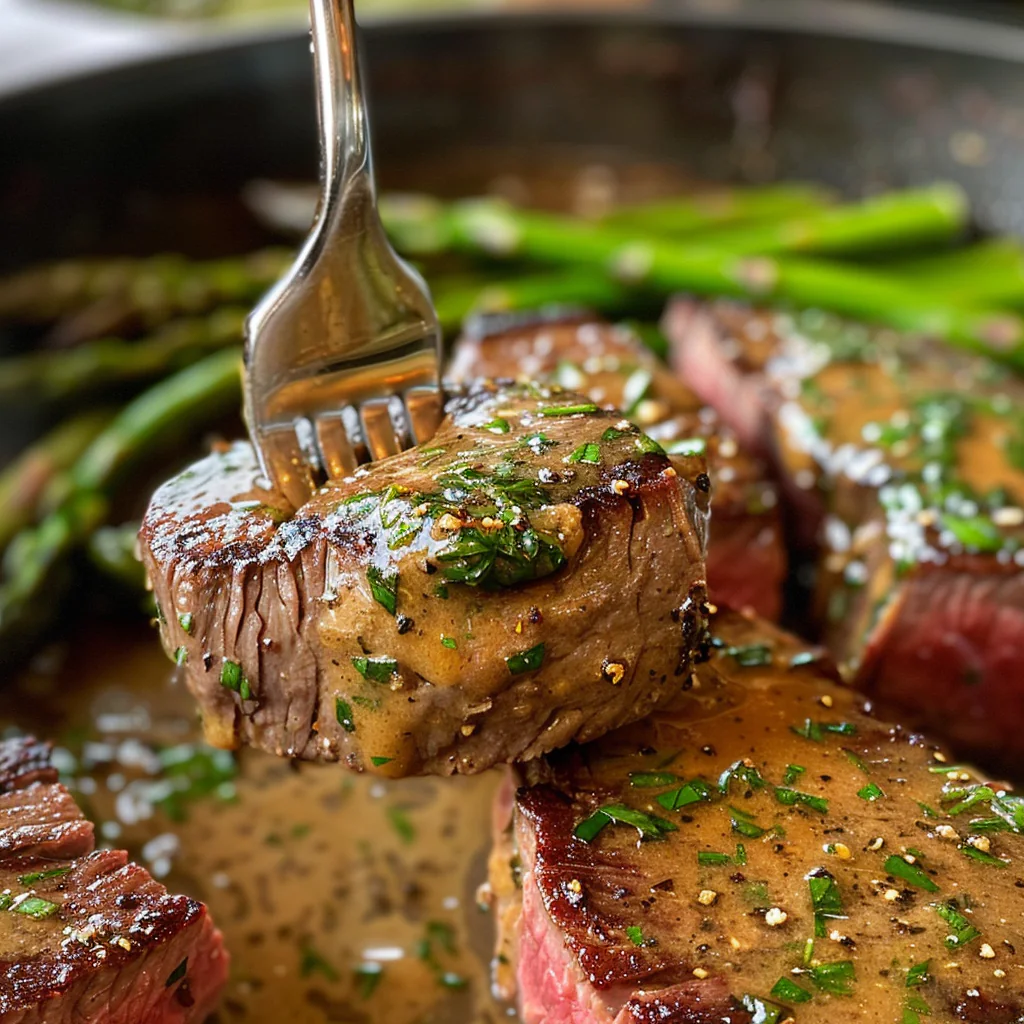
Sear for 2-3 minutes per side. You’re looking for a deep brown crust — not pale grey, not burnt. Use a meat thermometer if you’re unsure: 120°F for rare, 130°F for medium-rare, 140°F for medium. Remove the steak and let it rest on a plate.
Step 3: Cook the Asparagus
Add the asparagus to the same pan. No need to clean it — those brown bits are flavor. Sauté for 5-7 minutes until tender with slight char. Thick spears take longer; thin ones cook faster. You want them crisp-tender, not floppy.
Step 4: Make the Garlic Butter Sauce
Reduce heat to medium. Add the butter, garlic, and herbs. Let the butter melt and bubble gently — you’ll see it start to foam. The garlic should sizzle but not brown immediately; if it darkens within seconds, your pan is too hot.
Stir to scrape up the fond from the bottom of the pan. This deglazing step incorporates all those concentrated beef flavors into your sauce.
Step 5: Combine Everything
Return the steak to the pan along with any juices that collected on the plate. Toss everything in the garlic butter for 1-2 minutes. The residual heat will finish cooking the steak to your desired doneness.
Serve immediately. This dish doesn’t improve with sitting.
Pro Tip: Let the steak rest for 5 minutes after searing before adding it back to the pan. When meat cooks, the juices migrate to the center. Resting allows those juices to redistribute. Cut into it immediately and you’ll lose about 40% of the moisture onto your cutting board.
⚠️ Common Mistakes to Avoid
Overcrowding the pan: This is the number one error. When the steak touches other pieces, it steams instead of sears. Steam = grey, rubbery meat. Sear = brown, flavorful crust. If necessary, cook in batches.
Using low heat: High heat is non-negotiable for proper searing. The Maillard reaction doesn’t happen significantly below 300°F. A properly heated pan should make the steak hiss aggressively the moment it touches the surface.
Adding garlic too early: Garlic burns in seconds at high heat. Burnt garlic is bitter and acrid. Always add it after you’ve reduced the heat and introduced butter.
Skipping the rest period: I used to skip this step — don’t. Cutting into steak immediately after cooking releases juices that should stay inside the meat. Five minutes of patience = dramatically juicier results.
Overcooking the asparagus: Mushy asparagus is sad asparagus. Pull it when it still has some bite. Carryover cooking will finish it.
Delicious Variations & Pairings
Protein Swaps:
- Ribeye for more marbling and richness
- Sirloin for a leaner, more affordable option
- Strip steak for a balance of tenderness and beefy flavor
- Chicken thighs (cut into pieces) — adjust cooking time to 6-8 minutes
Vegetable Additions:
- Sliced bell peppers for sweetness and color
- Cremini mushrooms for umami depth
- Zucchini coins for a summer variation
- Snap peas for crunch
Herb Combinations:
- Thyme and rosemary (classic)
- Parsley and oregano (Mediterranean)
- Basil and tarragon (anise notes)
Side Dish Pairings:
- Crusty bread to soak up the sauce
- Roasted baby potatoes
- Creamy mashed potatoes
- A simple arugula salad with lemon vinaigrette
Wine Pairing:
A Cabernet Sauvignon or Malbec stands up to the beef. For something lighter, a Pinot Noir works well with the garlic and herbs.
Storage & Reheating Tips
Store leftovers in an airtight container in the refrigerator for up to 3 days. The asparagus will soften over time — it won’t have the same texture as fresh.
Reheating: Skip the microwave. It makes steak rubbery and uneven. Instead, use a skillet over medium heat. Add a splash of water or broth, cover, and heat until warmed through. The steam helps retain moisture.
Freezing isn’t ideal — the texture of both the steak and asparagus suffers significantly. But if you must, freeze in an airtight container for up to 2 months. Thaw overnight in the refrigerator before reheating.
💡 Pro Tips for a Perfect Skillet
Use a meat thermometer: Doneness is about internal temperature, not cooking time. Pull the steak at 125°F for medium-rare (it’ll rise to 130°F during resting). Eyeballing works for experienced cooks, but a thermometer guarantees results every time.
Pat the steak dry: Moisture is the enemy of browning. Pat the steak cubes dry with paper towels before seasoning. Wet meat steams; dry meat sears.
Preheat the pan properly: A cold pan = uneven cooking. Let it heat for 2-3 minutes before adding oil. The oil should shimmer and spread quickly across the surface.
Don’t stir constantly: Let the steak develop a crust before flipping. Constant stirring prevents proper browning. Give each side 2-3 minutes of undisturbed contact with the pan.
Use the fond: Those sticky brown bits on the bottom of the pan? That’s concentrated flavor. When you add the butter and garlic, scrape them up. They dissolve into the sauce and make everything taste better.
Frequently Asked Questions (FAQ)
+Why is my steak tough and chewy?
Tough steak bites usually mean one of two things: the steak was overcooked, or it was cut with the grain instead of against it. For tender bites, slice the steak against the grain (you’ll see the muscle fibers running in one direction — cut perpendicular to them). And always pull the steak from heat when it’s 5 degrees below your target temperature — carryover cooking finishes the job.
+Can I use a different cut of steak?
Absolutely. Sirloin is the most budget-friendly option and works well. Ribeye adds more fat and flavor but costs more. Filet mignon is the most tender but also the most expensive. Avoid tough cuts like chuck or round — they need slow cooking to become tender.
+How do I know when steak bites are done?
Use a meat thermometer for accuracy: 120-125°F for rare, 130-135°F for medium-rare, 140-145°F for medium. Without a thermometer, cut into one piece — the center should be pink but not raw for medium-rare. The exterior should always be deeply browned.
+Can I make this recipe ahead of time?
You can prep the ingredients (cut steak, trim asparagus, mince garlic) up to a day ahead. But cook everything right before serving. Reheated steak is never as good as freshly seared, and asparagus loses its texture quickly.
+What sides go with steak bites and asparagus?
Crusty bread or mashed potatoes to soak up the garlic butter sauce. A simple green salad with vinaigrette cuts through the richness. Roasted potatoes or rice pilaf also work well for a heartier meal.
+How long do leftovers last in the fridge?
Properly stored in an airtight container, leftovers keep for 3 days. The steak may toughen slightly, and the asparagus will soften, but the flavors actually improve after a day as everything melds together.
Conclusion
This Garlic Butter Steak Bites & Asparagus Skillet delivers restaurant-quality flavor in the time it takes to scroll through delivery apps. The combination of properly seared beef, crisp-tender asparagus, and an emulsified garlic butter sauce creates a complete meal that feels indulgent without the effort. Once you master the technique — high heat, don’t crowd the pan, rest the meat — this becomes a weeknight staple you’ll return to again and again.