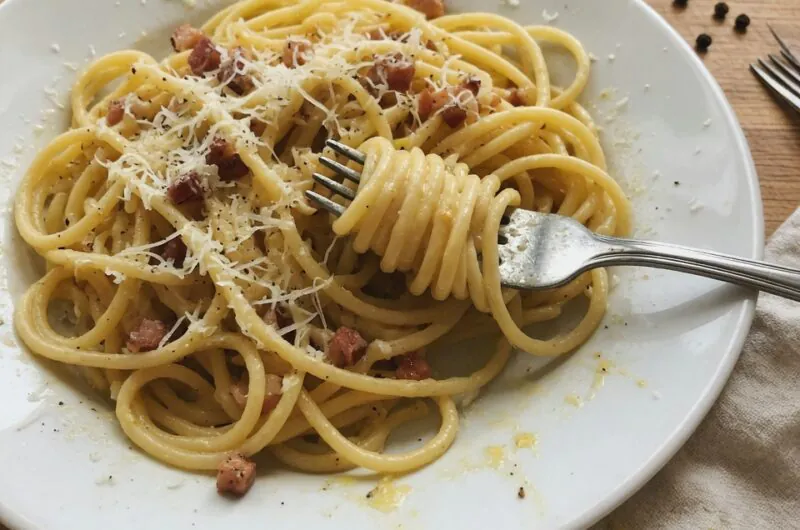
Silky, rich, and deceptively simple, this is the authentic Roman method for spaghetti carbonara—absolutely no cream required.
📋 In This Article
- Introduction
- The Science of Creaminess (Why No Cream?)
- The Essential Ingredients for Carbonara
- Step-by-Step Instructions: Crafting Perfect Carbonara
- Common Carbonara Mistakes to Avoid
- Expert Tips for Carbonara Perfection
- Serving Suggestions & Pairing
- Variations on a Theme (Respectfully!)
- Storage & Reheating Tips
- Frequently Asked Questions About Carbonara
Introduction
There is a specific kind of magic in a Roman kitchen. It smells of cured pork and toasted pepper. Authentic Classic Spaghetti Carbonara is often misunderstood outside of Italy, usually buried under heavy cream and unnecessary garlic. But the true dish? It’s a study in emulsification. It relies on the tension between the sharp bite of Pecorino Romano, the unctuous fat of guanciale, and the silky binding power of egg. When done right, you don’t get a sauce that sits on top of the noodles; you get a creamy, clinging sheath that coats every strand of spaghetti. It is humble, fast, and exacting. One wrong move, and you have scrambled eggs. But master the technique, and you have a cream-free carbonara that reigns supreme.
The Science of Creaminess (Why No Cream?)
Why does Authentic Classic Spaghetti Carbonara feel so lush without a drop of dairy? It comes down to food science. The “sauce” is actually an emulsion. Egg yolks contain lecithin, a natural emulsifier that binds water and fat. When you toss hot pasta with rendered pork fat and egg yolks, the shear force of the tossing disperses the fat droplets into the starchy water. This creates a stable, velvety matrix.
The starch in the pasta cooking water is the unsung hero here. As pasta boils, amylose leaches out into the water. When you add this starchy liquid to the egg and fat mixture, it interferes with the egg proteins, preventing them from coagulating too tightly. This keeps the sauce fluid and glossy rather than curdled. If you use cream, you bypass this delicate chemical reaction, resulting in a dish that feels heavy and dull on the palate. The traditional method yields a lighter, more complex flavor profile.
The Essential Ingredients for Carbonara
You only need five components. Because the ingredient list is short, the quality of each item is non-negotiable.
- Guanciale: This is cured pork jowl. Unlike belly (pancetta) or side (bacon), the jowl has a higher fat-to-meat ratio. When heated, that fat renders down into a liquid gold that forms the base of your sauce. The meat becomes crispy, providing a textural contrast.
- Pecorino Romano: A sharp, salty sheep’s milk cheese. It provides the necessary salinity and umami punch. Cow’s milk cheeses like Parmesan are milder; Pecorino stands up to the rich pork fat.
- Eggs: You need both yolks and whites, though a higher yolk ratio ensures richness. The yolks provide the emulsifying power and color, while the whites add structure.
- Spaghetti: A thick spaghetti or rigatoni works best. You need a shape with enough surface area to grab the sauce.
- Black Pepper: Freshly cracked, always. Pre-ground pepper lacks the aromatic oils necessary to cut through the richness.
Ingredient Deep Dive: Guanciale vs. Pancetta vs. Bacon
The pork product you choose dictates the final flavor profile of your Authentic Classic Spaghetti Carbonara.
Guanciale is the gold standard. Cured with salt, pepper, and often herbs, it has a delicate, sweet pork flavor that isn’t smoky. The fat renders out completely, leaving behind crispy “pillows” of meat.
Pancetta is cured pork belly. It is a respectable substitute if you cannot find guanciale. It is leaner and has a slightly more subtle flavor. Be careful not to overcook it, or it will become tough.
Bacon is the American default, but it introduces smoke. Smoked meat can overpower the delicate balance of egg and cheese. If bacon is your only option, blanch it first in boiling water to remove some of the smokiness and excess salt.
Step-by-Step Instructions: Crafting Perfect Carbonara
- Prep the Eggs and Cheese: In a large bowl, whisk together 3 large eggs (plus one extra yolk) and about 100g of finely grated Pecorino Romano. Add a generous amount of freshly cracked black pepper. Whisk until it forms a thick paste.
- Boil the Pasta: Bring a large pot of water to a boil. Salt it generously—it should taste like the sea. Add 400g of spaghetti. Cook until al dente (usually 1-2 minutes less than the package instructions).
- Render the Guanciale: While the pasta cooks, cut 150g of guanciale into small strips or cubes. Place them in a cold skillet and turn the heat to medium. Cooking cold allows the fat to render slowly. Cook until the fat has liquified and the meat is crispy, about 5-7 minutes. Turn off the heat.
- The Marriage: Here is the crucial moment. Transfer the hot pasta directly into the skillet with the rendered fat. Toss to coat every strand. Remove the skillet from the heat entirely. Wait 30 seconds. I used to rush this step—don’t. If the pan is too hot, the eggs will scramble instantly.
- Emulsify: Pour the egg and cheese mixture over the pasta. Toss vigorously and continuously. The residual heat from the pasta will cook the eggs gently. If the sauce looks too tight, add a splash of the reserved starchy pasta water. The motion of tossing creates the creamy texture.
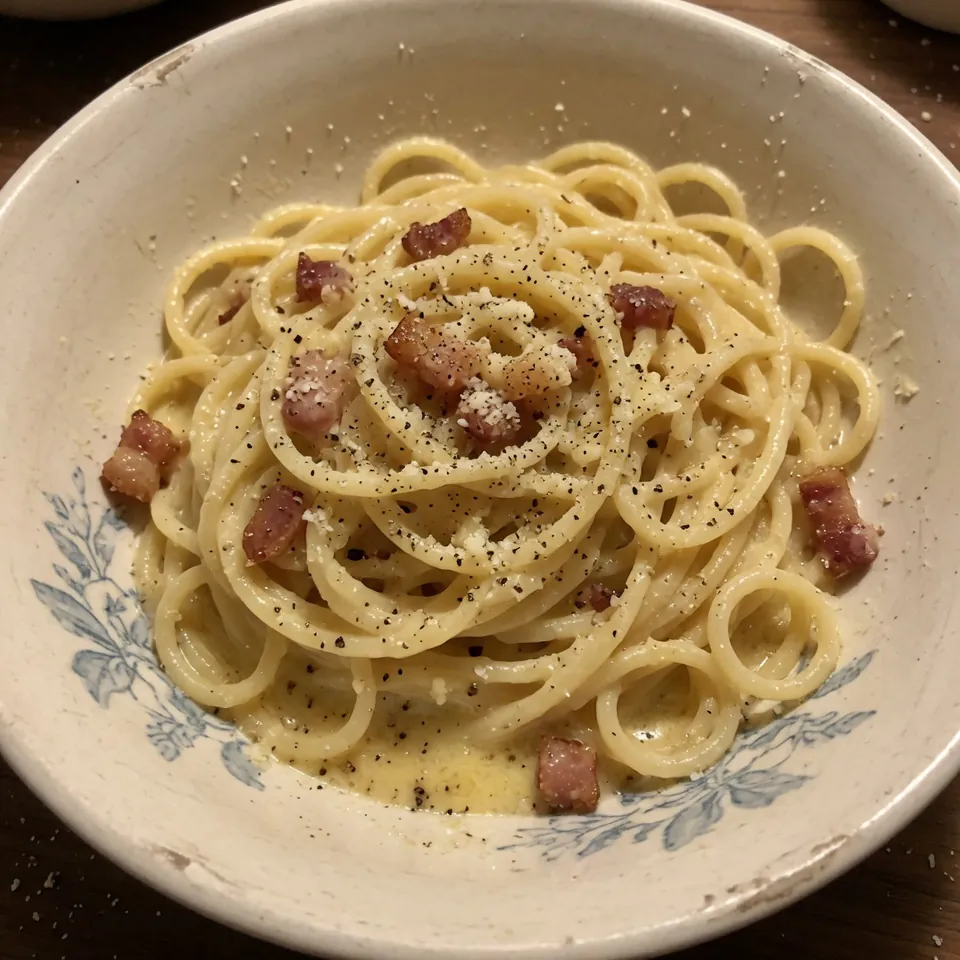
- Serve: Plate immediately. The sauce should be glossy and coating the noodles, not pooling at the bottom. Top with more Pecorino and pepper.
⚠️ Common Carbonara Mistakes to Avoid
Even seasoned cooks falter with this dish. The margin for error is slim.
- Scrambled Eggs: This is the most common failure. It happens when the pan is too hot or the eggs aren’t tempered. Always remove the pan from the heat before adding the eggs. If you see curds forming, you’ve lost the emulsion.
- Clumpy Sauce: If your cheese clumps, it wasn’t grated finely enough, or you added it to the pan over direct heat. Grate your cheese to a snow-like consistency to ensure it melts into the sauce smoothly.
- Using Cream: Adding cream makes it “Alfredo with Bacon,” not carbonara. It masks the flavor of the guanciale and creates a heavy, cloying texture that contradicts the Roman philosophy of the dish.
- Over-salting: Both the guanciale and Pecorino are incredibly salty. Taste the pasta water before adding it back in; if it’s aggressively salty, you may not need extra salt in the final dish.
💡 Expert Tips for Carbonara Perfection
To elevate your Authentic Classic Spaghetti Carbonara from good to legendary, pay attention to these nuances.
The Pasta Water Reserve: Before draining the pasta, reserve at least one cup of the cooking water. This “liquid gold” is essential for adjusting the viscosity of your sauce. The starch in the water helps the sauce adhere to the pasta rather than sliding off.
Temperature Control: Remember that eggs coagulate (scramble) around 140°F to 149°F. Your pasta will be hotter than that initially. By removing the pan from the heat and tossing vigorously, you lower the temperature quickly while distributing the heat evenly. This technique, similar to making a custard, ensures safety without curdling.
The Cheese Grate: Never use pre-shredded cheese. Anti-caking agents prevent it from melting smoothly. Buy a wedge of Pecorino Romano and grate it yourself just before cooking.
Taste as You Go: Guanciale varies in saltiness. Render a small piece first, taste the fat, and adjust your pasta water salinity accordingly.
Serving Suggestions & Pairing
Carbonara waits for no one. As soon as it hits the plate, the sauce begins to cool and tighten. Serve it immediately in warm bowls to maintain that luxurious, velvety texture.
For wine, skip the heavy reds. A crisp white wine like Pinot Grigio or a dry Vermentino cuts through the richness. If you prefer red, a light Chianti or Sangiovese works well, provided it isn’t too oaky.
On the side, keep it simple. A plate of arugula with a lemon vinaigrette provides a sharp, bitter contrast to the savory pasta. Don’t serve garlic bread—the garlic will fight with the black pepper.
Variations on a Theme (Respectfully!)
While purists (myself included) stick to the script, there are respectful variations that honor the Roman Recipe lineage.
Cacio e Pepe: Essentially Carbonara without the eggs and pork. It relies solely on Pecorino, pepper, and pasta water for its creamy sauce. It is the ultimate test of emulsification technique.
Amatriciana: This takes the guanciale and Pecorino base but adds tomatoes. It swaps the egg for tomato sauce, creating a bright, tangy alternative.
Gricia: Often called the “grandmother of carbonara,” this is Amatriciana without the tomatoes—just guanciale, Pecorino, and black pepper.
Dietary Adjustments: For a gluten-free version, use high-quality gluten-free spaghetti. Note that gluten-free pasta releases less starch, so you may need to rely more heavily on the egg mixture for binding.
Storage & Reheating Tips
Let’s be honest: Authentic Classic Spaghetti Carbonara is best eaten the moment it is made. However, if you have leftovers, store them in an airtight container in the refrigerator for up to 2 days.
Reheating is tricky. The microwave will almost certainly scramble the eggs. Instead, place the cold pasta in a skillet over very low heat. Add a splash of water or broth. Toss gently until warmed through. The texture won’t be quite the same—some of the silkiness is lost—but it will still be tasty.
Freezing is not recommended. The egg-based sauce separates upon thawing, resulting in a grainy texture that no amount of tossing can fix.
Frequently Asked Questions About Carbonara
+Why does my carbonara sauce separate?
If your sauce looks oily or greasy rather than creamy, the emulsion has broken. This usually happens because the heat was too high or you didn’t toss vigorously enough. The fat separated from the egg proteins. You can try whisking in a tablespoon of cold water off the heat to bring it back together.
+Can I use Parmesan instead of Pecorino Romano?
You can, but it changes the flavor profile. Parmesan (Parmigiano-Reggiano) is cow’s milk cheese with a nuttier, sweeter flavor. Pecorino is sheep’s milk cheese with a sharper, saltier tang. For the most authentic taste, stick to Pecorino Romano.
+How do I know when the guanciale is done?
The guanciale is ready when the fat has rendered out and turned translucent, and the meaty parts are golden brown and crispy. Don’t rush this step. If the heat is too high, the meat burns before the fat renders.
+Can I make carbonara without guanciale?
Yes. Pancetta is the next best thing. Bacon is a distant third due to its smoky flavor. If you must use bacon, try to find unsmoked slab bacon and cut it into matchsticks.
+Is it safe to eat raw eggs in carbonara?
The eggs in carbonara are technically cooked by the residual heat of the pasta. While they don’t reach a boil, the temperature rises enough to pasteurize the mixture gently. If you are concerned about food safety, use pasteurized eggs or ensure your pasta is piping hot when you mix it.
Carbonara (real)
Ingredients
Method
- Guanciale - Cut into 0.5cm / 1/5" thick slices then into batons.
- Carbonara sauce - Place eggs and yolks in a large bowl. Whisk to combine. Then stir in the parmesan and pepper.
- Cook pasta - Bring 4 litres (4 quarts) of water to the boil with the salt. Add pasta and cook per the packet directions.
- Reserve pasta water - Just before draining, scoop out 1 cup of pasta cooking water, then drain the pasta.
- Cook guanciale - While the pasta is cooking, place guanciale in a non stick pan over medium high heat. Cook for 4 to 5 minutes until golden. No oil needed - as the guanciale heats up, the fat will melt so it fries in its own fat. If using garlic, add it in the last minute.
- Pasta in pan - Tip the hot pasta into the pan and toss to coat in guanciale fat.
- Mix pasta in sauce - Transfer the pasta and any residual fat in the pan into the bowl with the egg. Add 1/2 cup (125 ml) pasta cooking water. Stir vigorously using the handle of a wooden spoon for 1 minute and watch as the sauce transforms from watery to creamy and clings to the pasta strands!
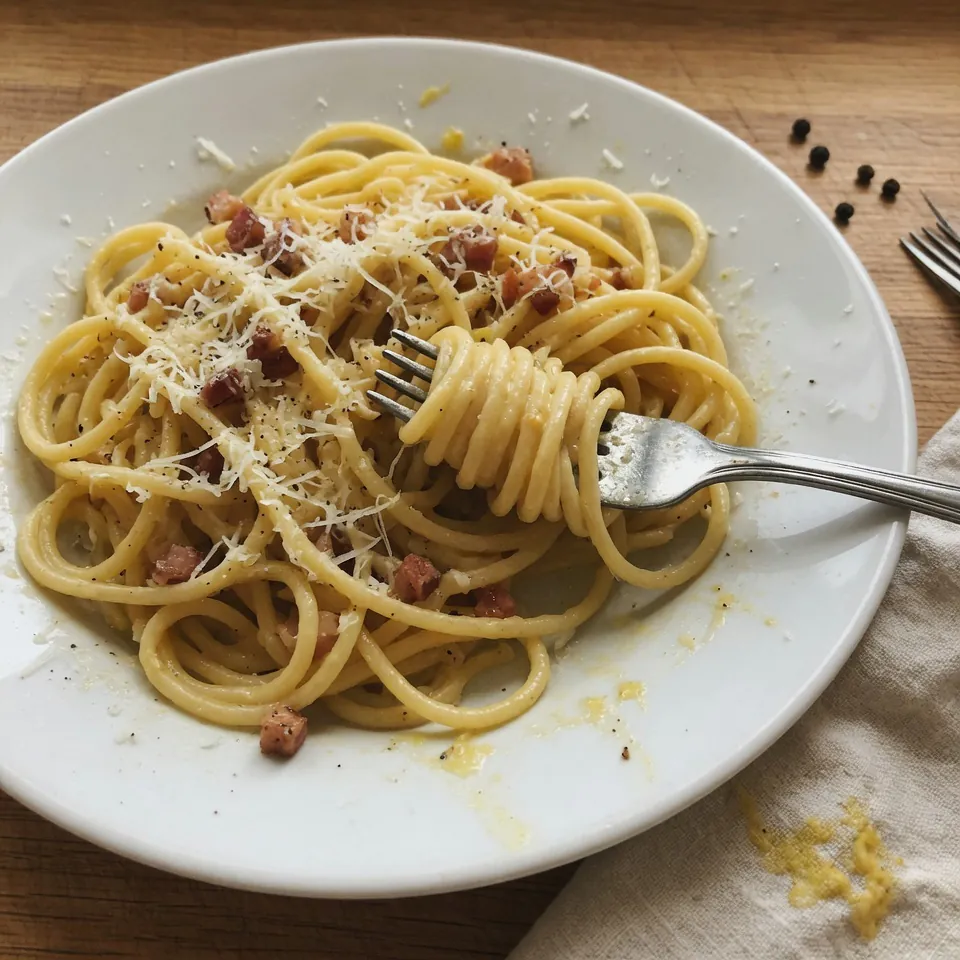
- Serve - Transfer into warm bowls. Serve immediately, garnished with a little extra parmigiana reggiano if desired, and a pinch of black pepper and finely chopped parsley.
Nutrition
Notes
- For the creamiest sauce, make sure to mix the pasta with the egg mixture off the heat; the residual heat from the pasta will cook the eggs gently without scrambling them.
- If your sauce appears too thin after adding the pasta water, continue tossing for another minute; it will thicken as the starches from the pasta release into the sauce.
- For a smoky flavor, use pancetta or streaky bacon if guanciale is unavailable, but opt for block form to ensure you can cut it into the ideal batons.
- Always use freshly grated Parmigiano Reggiano or Pecorino Romano instead of pre-grated cheese, as the latter won't melt smoothly into the sauce.
- Carbonara is best enjoyed fresh, but if you have leftovers, store them in an airtight container in the fridge for up to 2 days; reheat gently in a pan with a splash of water to revive the creaminess.