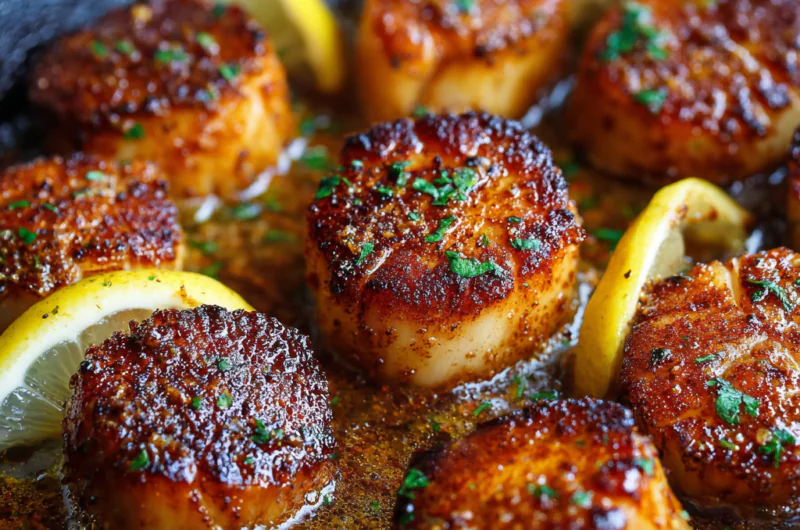
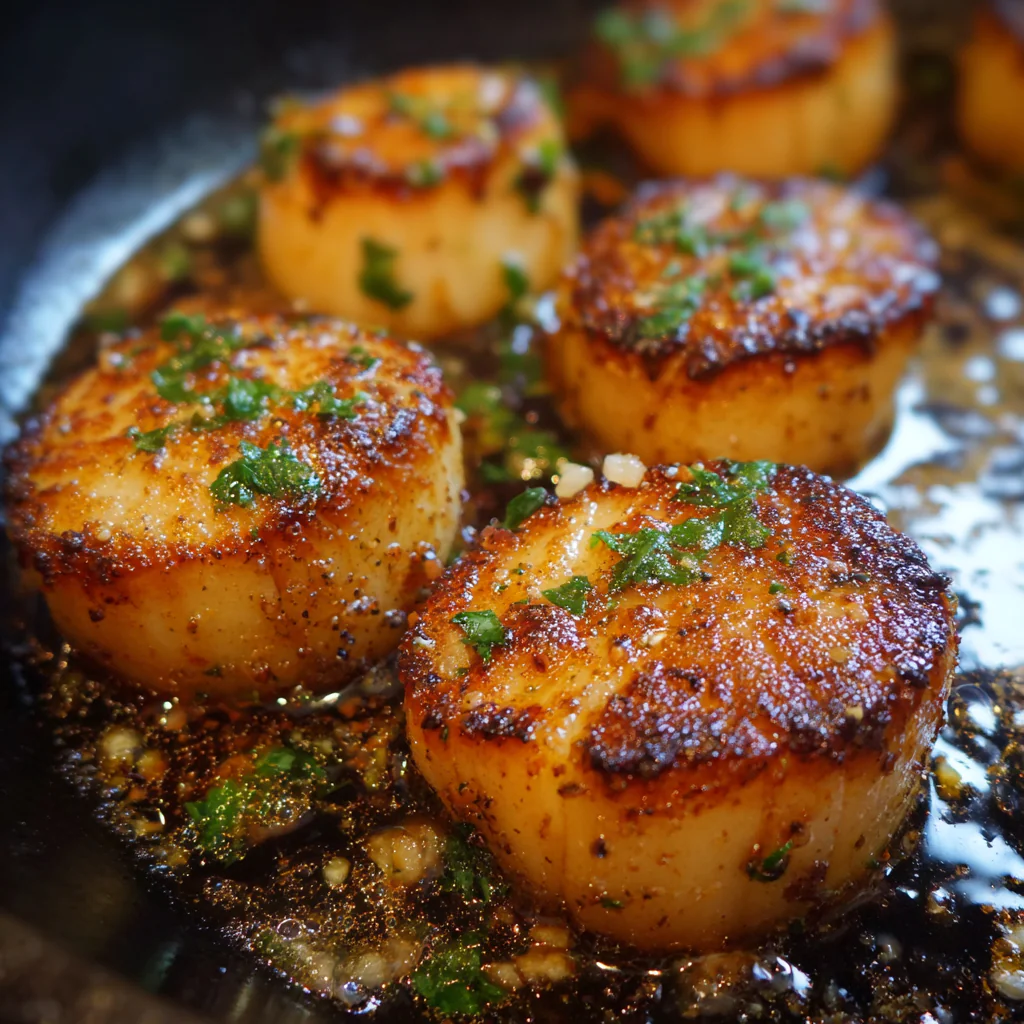
Golden, juicy sea scallops with a spicy Cajun crust, basted in sizzling butter—ready in under 10 minutes.
📋 In This Article
Introduction
There is a specific kind of magic that happens when a hot pan meets a dry scallop. We’re talking about that deeply savory, golden-brown crust that shatters under your fork, giving way to a tender, sweet interior. If you’ve ever been intimidated by cooking shellfish at home, let this be the recipe that changes everything. This is the ultimate guide to Cajun Butter Scallops Pan-Seared Until Perfectly Golden in Under 10 Minutes.
Look, I won’t sugarcoat it: most home cooks get one thing wrong. They crowd the pan. Or worse, they skip the drying step. The result? Gray, steamed rubber discs. But when you respect the technique—specifically high heat and patience—you achieve that restaurant-quality sear that usually costs you $30 a plate. This recipe balances the intense heat needed for the crust with a rich, spicy butter baste that mellows the heat just enough to let the natural sweetness of the scallop shine through.
Why It Works: The Science of Sizzle
We aren’t just cooking here; we’re engineering flavor.
The Maillard Reaction: That gorgeous golden crust isn’t just “browned.” It’s the result of the Maillard reaction, a chemical process where amino acids and reducing sugars react under high heat (usually above 300°F). This creates hundreds of new, complex flavor compounds that make the scallop taste nutty and savory. If the scallop is wet, the water boils first (212°F), keeping the temperature too low for browning. That’s why drying is non-negotiable.
Fat as a Flavor Carrier: The Cajun spices—paprika, cayenne, garlic—are oil-soluble. Water-based marinades slide right off. By blooming these spices in butter, we emulsify the flavor compounds, allowing the fat to cling to the protein and penetrate the crust during the basting stage.
Carryover Cooking: Scallops are lean protein with very little connective tissue. They cook incredibly fast. We pull them when the center is slightly translucent because the residual heat will finish the job. If you wait until they look fully opaque in the pan, you’ve already overcooked them.
Ingredients
For the Cajun Butter:
- 200g Unsalted Butter: Unsalted lets you control the sodium; European-style has a higher fat content for better browning.
- 2 tsp Garlic Powder
- 2 tsp Onion Powder
- 2 tsp Italian Seasoning
- 2 tsp Smoked Paprika: Essential for that deep, smoky backbone.
- 1 tsp Cayenne Pepper: Adjust down if you’re sensitive to heat.
- 1 tsp Coarse Black Pepper
- ½ tsp Salt
- ½ tsp Crushed Red Pepper Flakes
- 25g Honey: Just a touch to balance the heat and help caramelization.
For the Sea Scallops:
- 500g Sea Scallops: Look for “dry-packed” scallops. They aren’t treated with STP (sodium tripolyphosphate), which means they sear rather than steam.
- Cooking Oil (High Smoke Point): Avocado or grapeseed oil is best for the initial sear.
Optional Garnishes:
- Fresh parsley (chopped)
- Lemon wedges
Step-by-Step Instructions
1. Make the Cajun Butter
In a small saucepan, melt the 200g of butter over low heat. You don’t want it to brown yet, just melt. Add the garlic powder, onion powder, Italian seasoning, smoked paprika, cayenne, black pepper, salt, red pepper flakes, and honey. Stir until the spices are fully hydrated and the mixture is aromatic. Remove from heat and keep warm.
2. Prep the Scallops
This is the step most people rush. Don’t. Check each scallop for a small, tough side muscle on the side (it looks like a little tag). Peel it off and discard—it’s tough and chewy. Rinse the scallops briefly under cold water, then pat them bone-dry with paper towels. I mean, really dry. Like “no moisture left on the surface” dry. Season them lightly with salt.
3. Sear the Scallops
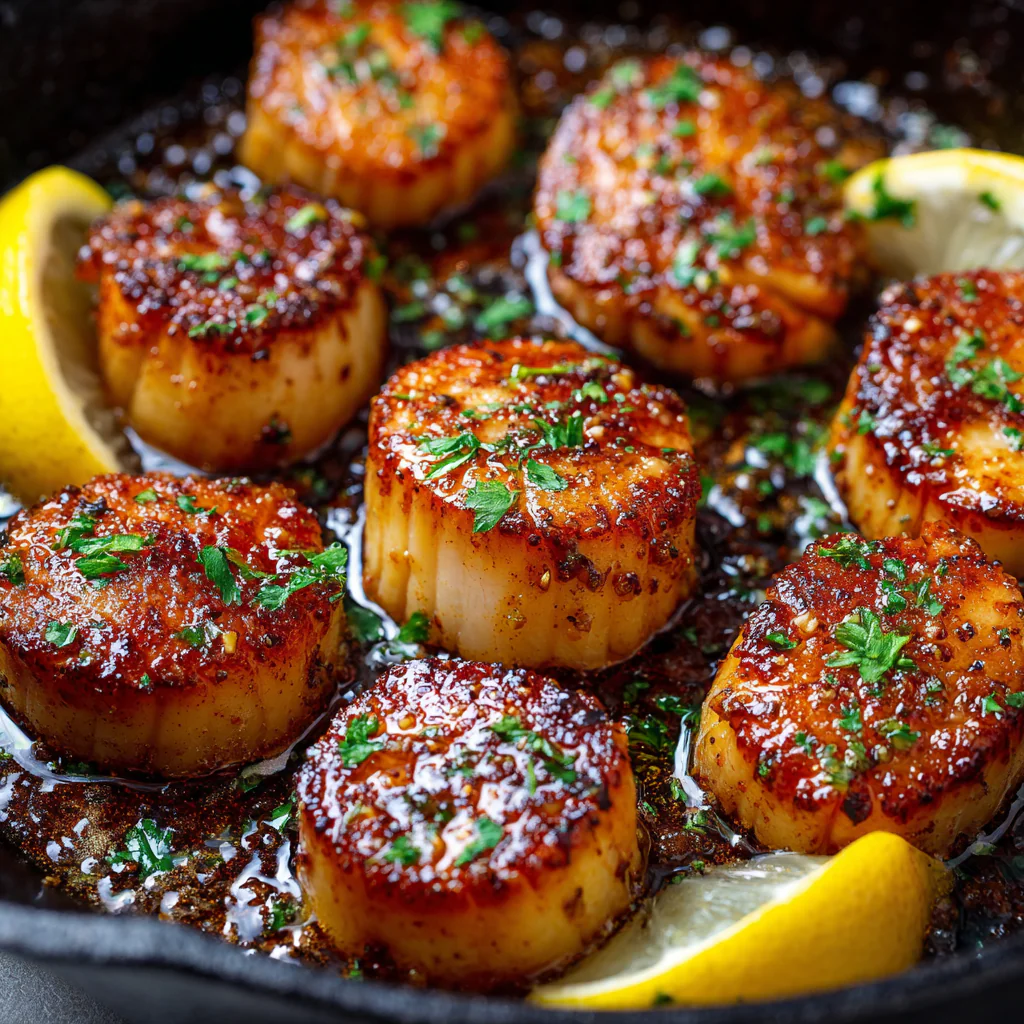
Heat a cast iron skillet or stainless steel pan over high heat. Add a tablespoon of high-smoke-point oil. Once the oil is shimmering—almost smoking—carefully place the scallops in the pan. Do not crowd them. If they touch, they steam. Work in batches if you have to.
Let them cook undisturbed for 2 minutes. Do not poke them. Do not move them. This is the foundation of your crust.
4. Flip and Baste
Flip the scallops. They should release easily; if they stick, they aren’t ready. Add a generous tablespoon of your prepared Cajun butter to the pan. As it melts and sizzles, tilt the pan and spoon the hot butter over the scallops repeatedly for 1 minute. This cooks the sides and infuses the crust with flavor.
5. Serve Immediately
Transfer the scallops to a plate. Drizzle with the remaining hot butter from the pan. Squeeze a lemon wedge over the top to cut the richness. Eat them immediately—scallops wait for no one.
⚠️ Common Mistakes to Avoid
The Wet Scallop Trap: If you put wet scallops in a hot pan, the water turns to steam, dropping the pan temperature. You end up boiling them in gray water. Dry them aggressively.
Overcrowding the Pan: This is the cardinal sin of searing. Adding too much cold protein at once drops the pan temperature below the searing threshold. Give them space.
Using “Wet” Scallops: Scallops treated with phosphates absorb water. They will never sear properly, no matter how hot your pan is. They will also taste slightly soapy. Ask your fishmonger for “dry” scallops.
Burning the Butter: Butter solids burn around 350°F. We sear at much higher temps. That’s why we use oil for the initial sear and add the butter after flipping, or use clarified butter if you want to sear directly in butter fat.
Variations & Pairings
Acid Balance: The richness of butter needs acid. A squeeze of fresh lemon is classic, but a splash of dry white wine in the pan after flipping adds a sharp, aromatic dimension.
Herbaceous Notes: Stir fresh thyme or chopped parsley into the butter right at the end. The residual heat wilts them without turning them black.
Sides: You need something to soak up that sauce. Creamy grits are the classic Southern pairing—the texture contrast is unbeatable. Alternatively, a crisp asparagus or roasted broccoli cuts through the heaviness. For a starch, a garlic-parmesan risotto creates a luxurious base for the spicy butter.
Storage and Reheating Tips
Scallops are best eaten the moment they hit the plate, but leftovers happen. Store cooked scallops in an airtight container in the fridge for up to 2 days.
Reheating is tricky. Microwaves will destroy the texture, turning them rubbery. Instead, remove them from the fridge 30 minutes early to take the chill off. Warm a skillet over low heat, add a splash of water or stock, and gently warm the scallops just until heated through. The goal is to raise the temperature without further cooking the proteins.
💡 Pro Tips for Perfect Scallops Every Time
Dry vs. Wet Scallops: If you can’t find dry-packed, soak wet scallops in a solution of 1 quart cold water and 1 tablespoon salt for 30 minutes. This helps draw out some absorbed phosphates, then dry them thoroughly. It’s not perfect, but it helps.
Pan Choice: Cast iron is king here. It retains heat exceptionally well, meaning the pan temperature won’t crash when the cold scallops hit the metal. Stainless steel works, but avoid non-stick; you can’t get it hot enough to develop a proper Maillard crust without damaging the coating.
Uniformity Matters: Buy scallops of similar size. If one is huge and one is tiny, one will be raw while the other is rubber. If you have mixed sizes, put the larger ones in the pan 30 seconds before the smaller ones.
The “Gimme” Test: When you lay a scallop down, lay it flat. If it wobbles, trim a tiny sliver off the bottom so it sits flat. Full contact with the metal equals even browning.
Frequently Asked Questions (FAQ)
+Why are my scallops rubbery?
You likely overcooked them. Scallops have very little connective tissue. Once the proteins tighten (which happens quickly), they squeeze out moisture. Remove them from the heat when the center is still slightly translucent; carryover heat will finish the job.
+Can I use frozen scallops?
Yes, but thaw them properly. Place them in the refrigerator overnight or run them under cold water in a sealed bag until pliable. Never thaw in the microwave. Once thawed, you must pat them dry even more vigorously than fresh ones, as freezing ruptures cell walls and releases more moisture.
+What is the white muscle on the side of the scallop?
That is the adductor muscle, which the scallop uses to open and close its shell. It is edible but tough and chewy. It’s best to pinch it and pull it off before cooking. Most high-quality “dry” scallops have already had this removed.
+Can I make Cajun butter ahead of time?
Absolutely. You can mix the spices into softened butter and roll it into a log in plastic wrap (compound butter). Keep it in the fridge for up to a week or freeze it for a month. Slice off a coin of butter whenever you need a flavor boost.
+How do I know when the pan is hot enough?
Wait until the oil starts to shimmer and move like water in the pan. You should see a faint wisp of white smoke. That’s the sweet spot around 400°F. If the oil is smoking heavily, it’s too hot and will burn the spices instantly.