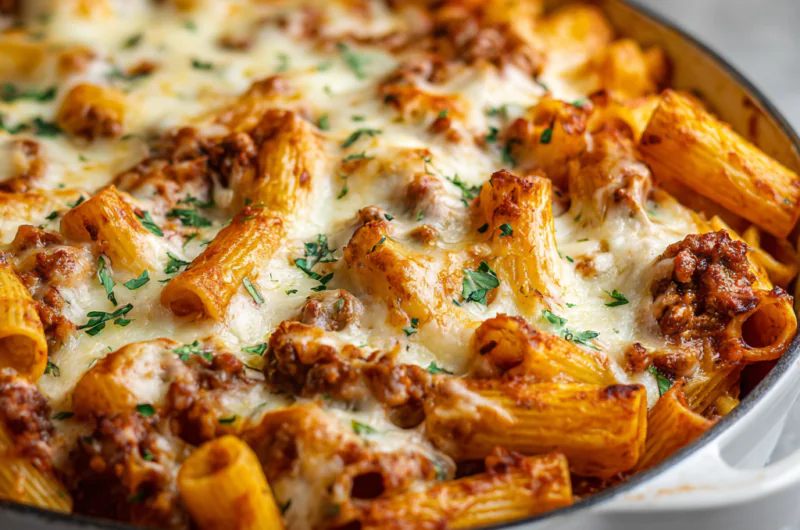
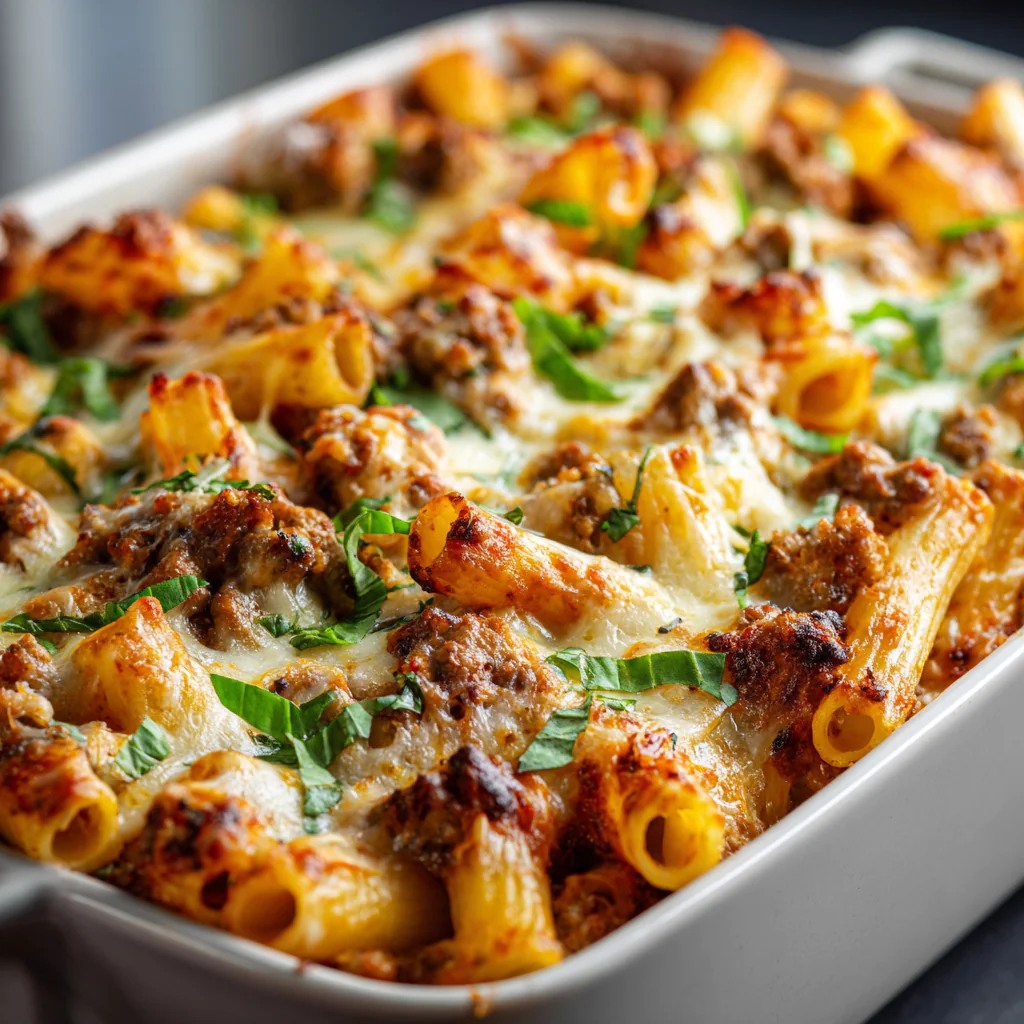
Golden, bubbling, and loaded with two kinds of melted mozzarella — this rigatoni bakes up with a rich homemade sauce that clings to every ridge.
📋 In This Article
Introduction
Some dishes earn a permanent spot in your rotation. Cheesy Baked Rigatoni With Italian Sausage and a Rich Homemade Marinara is one of them. It’s the kind of meal that makes the whole house smell like an Italian grandmother’s kitchen — garlic and onions hitting hot oil, tomatoes reducing into something velvety, cheese bubbling into golden patches. The al dente rigatoni grab onto every bit of that sauce, and the Italian sausage brings a savory depth that premade sauces just can’t match.
Here’s what sets this apart: we’re building a homemade marinara from San Marzano tomatoes, then letting it simmer until it coats the back of a spoon. That sauce meets browned sausage and two kinds of mozzarella, bakes until the top is blistered and the edges are practically caramelized. It’s comfort food, yes. But it’s also technique-driven comfort food — the kind where every step has a reason. Loaded Chicken Parmesan Casserole Recipe – Comfort Food at Its Best.
Why This Rigatoni Works So Well
Most baked pasta recipes treat the sauce as an afterthought. Not this one. The foundation is a rich homemade marinara built from whole San Marzano tomatoes, crushed by hand so they break down unevenly — some chunks, some sauciness. That texture matters. When you toss the pasta in that sauce, those irregular tomato pieces nestle into the rigatoni’s ridges, creating pockets of concentrated flavor.
Then there’s the sausage. Italian sausage brings fat and fennel and heat. Browning it properly — really letting it develop a deep mahogany color — creates fond on the pan. That’s pure flavor. Deglaze that with a splash of wine or even a little pasta water, and you’ve just built another layer into your sauce.
The cheese strategy matters too. We use low-moisture mozzarella for the melt — it stretches and bubbles without turning watery — plus fresh mozzarella for creamy pockets throughout. A dusting of Parmesan on top creates that savory, slightly sharp finish that cuts through the richness.
The Sauce: Building Flavor from the Bottom Up
The Sauce: Building Flavor from the Bottom Up
A marinara is only as good as its components. Start with San Marzano tomatoes — specifically the D.O.P.-certified ones from the Agro Sarnese-Nocerino region if you can find them. They’re grown in volcanic soil near Mount Vesuvius, which gives them a natural sweetness and low acidity that regular plum tomatoes lack. No need to add sugar to compensate.
The aromatics matter more than you’d think. Six cloves of garlic, finely chopped, go into olive oil that’s shimmering but not smoking. You want them to soften and release their oils, not brown and turn bitter. Same with the onion — dice it small so it melts into the sauce rather than staying in distinct pieces.
Here’s the thing about simmering: patience pays. That sauce needs 20 to 30 minutes at a gentle bubble to concentrate flavors and cook out the raw tomato taste. Stir it occasionally, and don’t cover it completely — you want some evaporation. A thick sauce means better texture in the final bake. Watery sauce makes for soggy pasta, and nobody wants that.
You can make this sauce up to three days ahead. In fact, it tastes better after sitting overnight — the flavors marry and mellow. Store it in the refrigerator, then bring it to room temperature before assembling the dish.
Ingredients You’ll Need
The ingredients list isn’t long, but quality matters. Here’s what goes into this baked rigatoni masterpiece:
For the Homemade Marinara
- San Marzano Tomatoes: 1 (28 oz) can, whole peeled, crushed by hand
- Olive Oil: ¼ cup, for sautéing and finishing
- Garlic: 6 cloves, finely chopped
- Onion: 1 medium, diced small
- Fresh Basil: ¼ cup, chopped, plus more for garnish
- Dried Oregano: 1 tsp
- Red Pepper Flakes: ½ tsp (optional, for warmth)
- Salt and Black Pepper: to taste
For the Baked Rigatoni
- Rigatoni Pasta: 1 lb, the ridged tubes that trap sauce beautifully
- Italian Sausage: 1 lb (mild or hot), removed from casings
- Low-Moisture Mozzarella Cheese: 8 oz, shredded (skip the pre-shredded bags — they contain anti-caking agents that prevent proper melting)
- Fresh Mozzarella Cheese: 8 oz, drained and torn into pieces
- Parmesan Cheese: ½ cup, grated, plus extra for serving
- Ricotta Cheese: 1 cup, for the creamy middle layer
- Fresh Spinach: 2 cups (optional, for color and nutrition)
A note on the sausage: if you buy it in links, squeeze the meat out of the casings. You want crumbles, not slices. And if you prefer a leaner dish, you can drain some of the rendered fat after browning — but keep a tablespoon or two. That fat carries flavor.
Step-by-Step: How to Assemble and Bake
The process is straightforward, but a few techniques make the difference between good and memorable.
Step 1: Get Your Oven Ready
Preheat to 375°F (190°C). This temperature is high enough to melt and brown the cheese but not so aggressive that it burns the top before the interior heats through.
Step 2: Boil the Pasta — But Not All the Way
Cook the rigatoni in a large pot of well-salted water. The water should taste like a properly seasoned soup — that’s how much salt you need. Cook for 8 to 10 minutes, but stop when it’s just shy of al dente. It should have a tiny bite in the center.
Why? The pasta continues cooking in the oven, absorbing sauce as it bakes. If you fully cook it on the stovetop, you’ll end up with mush. Drain it, but don’t rinse. The starch on the surface helps the sauce adhere.
Step 3: Brown the Sausage Properly
In a large skillet over medium-high heat, cook the Italian sausage, breaking it into small pieces with a wooden spoon. Don’t rush this. Let the pieces develop a deep brown color before stirring — that’s the Maillard reaction creating hundreds of new flavor compounds. The fond (those browned bits stuck to the pan) is gold. Cook for 5 to 7 minutes until no pink remains.
Once the sausage is browned, add your homemade marinara to the pan, scraping up all those flavorful bits. Let it simmer together for 5 minutes so the sausage flavor permeates the sauce.
Step 4: The Toss
Combine the cooked rigatoni with the sausage-marinara mixture in a large bowl. Make sure every piece gets coated. If you’re adding fresh spinach, toss it in now — the residual heat will wilt it slightly without turning it into mush.
Step 5: Layer with Purpose
Grease a 9×13 baking dish. Spread half the pasta mixture on the bottom. Dollop the ricotta in small spoonfuls across the surface — don’t spread it, just let it create pockets. Scatter half the fresh mozzarella pieces and a third of the shredded mozzarella.
Add the remaining pasta. Top with the rest of the mozzarella and all the Parmesan. The Parmesan on top will brown and create a savory crust.
Step 6: Bake in Two Stages
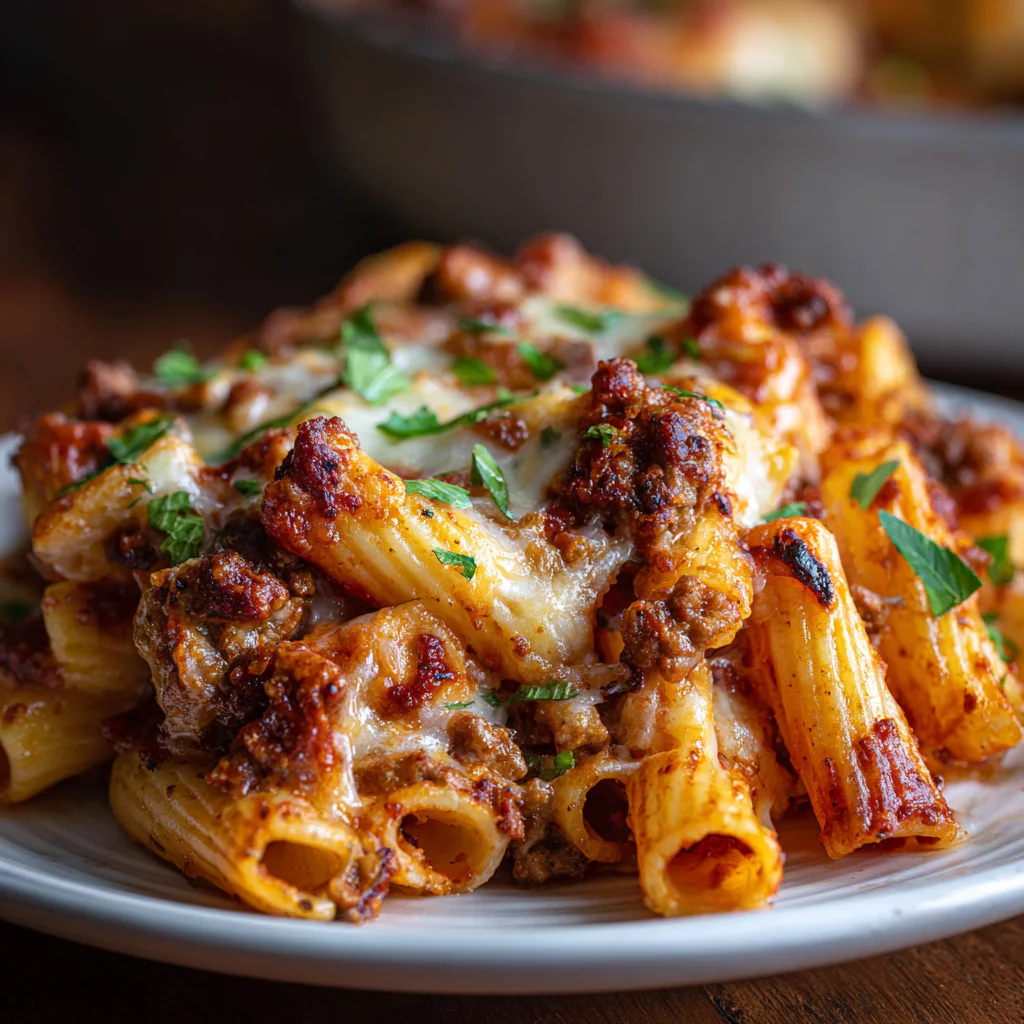
Cover tightly with aluminum foil. Bake for 20 minutes at 375°F — this heats everything through without drying it out. Then remove the foil and bake for another 15 to 20 minutes until the cheese is bubbling and spotted with golden brown.
If you want more color, run it under the broiler for 2 minutes. Watch it closely. Cheese goes from golden to burnt in seconds.
Step 7: The Rest Matters
Let the dish rest for 10 minutes before serving. I used to skip this step — don’t. When pasta bakes, the internal steam pressure pushes moisture toward the center. Resting allows that pressure to equalize and the cheese to set slightly. Cut into it too early, and you’ll have a pool of sauce instead of distinct layers. Layered Meat Pasta Pie Recipe.
⚠️ Common Mistakes to Avoid
Even a straightforward recipe has pitfalls. Here’s what trips people up:
Overcooking the pasta. This is the number one error. Remember, it bakes for 35 to 40 minutes total. That’s a lot of additional cooking time. Pull the pasta when it’s still firm in the center.
Watery sauce. If your marinara is thin, reduce it further before mixing with the pasta. Excess liquid makes the final dish soupy. The sauce should coat a spoon and leave a trail when you drag your finger through it.
Skipping the rest period. I’ll say it again: wait 10 minutes. The difference between a slice that holds its shape and one that collapses is entirely about patience.
Underseasoning. Pasta needs more salt than you think. The sauce needs to taste slightly over-seasoned on its own because the pasta will dilute it. Taste at every stage and adjust.
Using pre-shredded cheese. Those bags contain potato starch and cellulose to prevent clumping. They also prevent proper melting. Buy a block and shred it yourself. It takes 90 seconds and makes a noticeable difference.
Variations and Customizations
This recipe is a template. Once you understand the structure, you can adapt it endlessly.
Vegetarian Version: Skip the sausage and add roasted vegetables instead. Eggplant, zucchini, and bell peppers all work beautifully. Roast them first to concentrate their flavor and remove excess moisture.
Spicy Kick: Use hot Italian sausage instead of mild, or add red pepper flakes to the sauce. A teaspoon will give you noticeable warmth without overwhelming the dish.
Protein Swaps: Ground beef works, though it lacks the fennel complexity of sausage. Grilled chicken is another option — dice it and add it to the sauce to absorb flavor.
Gluten-Free: Use gluten-free rigatoni. The texture has improved dramatically in recent years. Just check the cooking time, as it varies by brand.
Extra Vegetables: Spinach, kale, or Swiss chard can be stirred in with the pasta. Sautéed mushrooms add umami depth. Just cook out any excess moisture first.
Storage and Make-Ahead Tips
This dish reheats beautifully, making it ideal for meal prep or leftovers.
Refrigeration: Store leftovers in an airtight container for up to 3 days. The flavors actually improve overnight as they continue to meld.
Freezing: Assemble the dish but don’t bake it. Wrap tightly in plastic, then foil, and freeze for up to 3 months. Thaw overnight in the refrigerator before baking, then add 10 to 15 minutes to the covered baking time.
Reheating: For best results, reheat in a 350°F oven covered with foil for 20 to 25 minutes until heated through. Microwaving works for individual portions but won’t restore the crispy cheese top.
Make-Ahead Components: The marinara can be made up to 5 days ahead and refrigerated. The pasta can be cooked and tossed with a little olive oil to prevent sticking, then stored for 2 days. Assemble everything on the day you plan to bake.
💡 Pro Tips for the Best Results
A few restaurant techniques translate beautifully to home cooking:
Deglaze the sausage pan. After browning the sausage, add a splash of red wine to the hot pan. It will bubble and release all that stuck-on fond. Scrape it up with a wooden spoon. That liquid becomes part of your sauce, carrying concentrated flavor.
Use two cheeses for the top. Low-moisture mozzarella melts evenly and browns well. Parmesan adds a savory, salty punch. Together, they create a more complex topping than either alone.
Don’t skip the ricotta layer. It creates creamy pockets throughout the dish. Dollop it rather than spreading it — those concentrated bits of cheese are more satisfying than a uniform layer.
Let it brown naturally. The foil-covered stage heats everything through. The uncovered stage creates the crust. Don’t rush the uncovered time — those golden spots are where the flavor concentrates.
Frequently Asked Questions
+Why is my baked rigatoni dry?
Dry pasta usually means one of two things: not enough sauce, or overcooking. The pasta absorbs liquid as it bakes, so you need more sauce than seems necessary. If your sauce is properly thick and you’re still getting dry results, reduce the baking time or increase the sauce quantity by about ½ cup.
+Can I make this ahead and bake it later?
Yes. Assemble everything, cover tightly, and refrigerate for up to 24 hours before baking. Add 10 minutes to the covered baking time since it will be cold going into the oven. You can also freeze it unbaked for up to 3 months.
+What pasta shapes work besides rigatoni?
Penne, ziti, and mostaccioli all work well — they’re tube-shaped and hold sauce similarly. Avoid long shapes like spaghetti or linguine; they don’t work as well in baked dishes. Shells are another option, though they hold less sauce per piece.
+Can I use jarred marinara instead of homemade?
You can, though you’ll lose some depth of flavor. If using jarred, look for one with minimal added sugar and whole tomatoes as the first ingredient. Add a clove of fresh garlic sautéed in olive oil to brighten it up
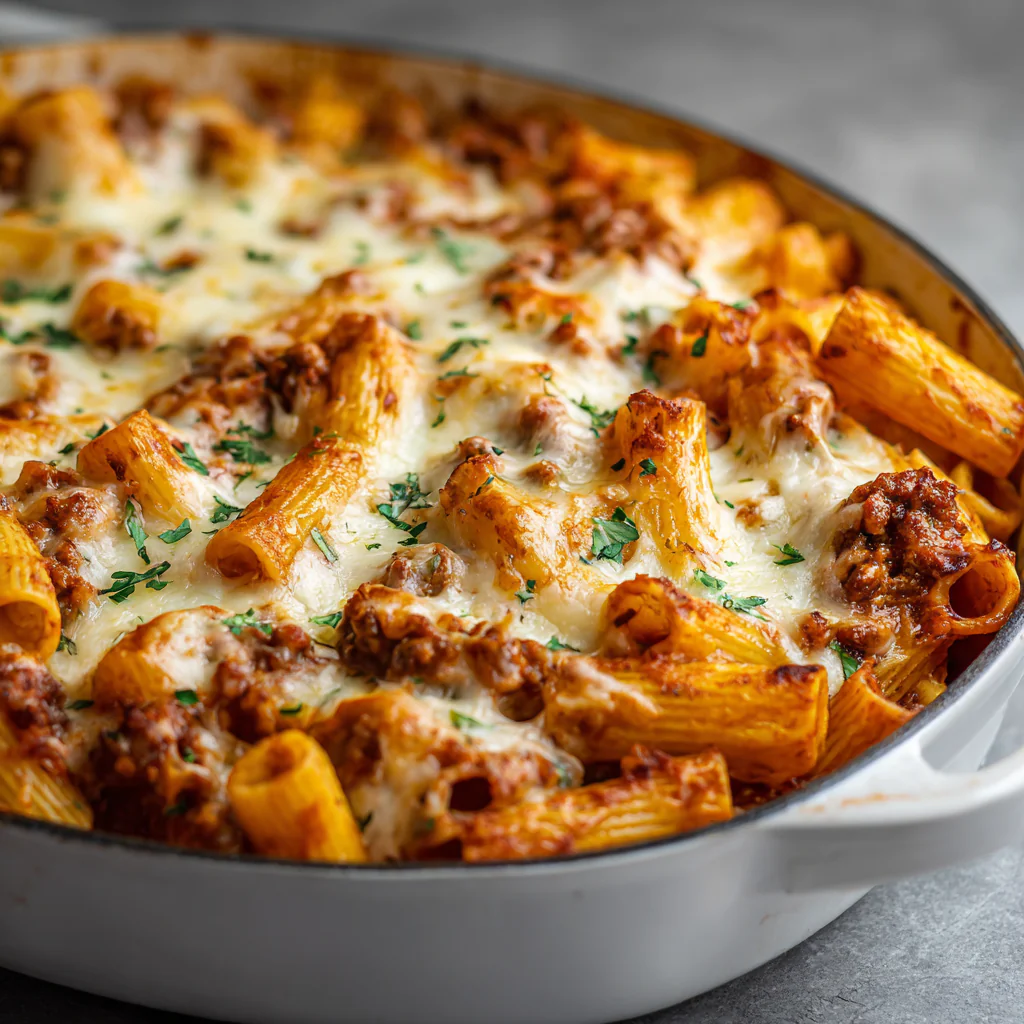
Cheesy Baked Rigatoni with Italian Sausage & Spinach
Ingredients
Method
- Preheat the oven to 450°F. Place the sausage links onto a sheet pan and drizzle with olive oil. Rub to coat. Roast for about 12 minutes, or until just cooked through. Transfer the sausage to a cutting board. Once cool enough to handle, slice the sausage into ¼” pieces.
- Meanwhile, bring a large pot of generously salted water to a boil. Once boiling, drop the rigatoni. Stir well and cook for 2 minutes less than the package’s instructions.
- Simultaneously, heat a large, heavy-bottomed pot over medium-high heat. Add the ¼ cup of olive oil. Once hot, add the sliced sausage. Cook for 2-3 minutes, or until browned. Add the cherry tomatoes and a pinch of salt. Cook for another 3 minutes or so until the tomatoes burst open and release some juice. Stir in the garlic, oregano, and red pepper flakes.
- Pour in the marinara sauce and stir in the spinach. Retrieve a ½ cup of starchy pasta water from the pot and add it to the sauce. Bring the sauce to a simmer as the spinach wilts. Stir in the parmesan cheese and let it melt.
- Drain the pasta when it’s done and add it right to the sauce, along with the parsley. Stir to combine.
- Grease a 12” cast iron skillet (or 9x13x3” baking dish) with olive oil. Pour in half of the pasta. Top with half of the shredded mozzarella. Pour in the remaining pasta. Top with the sliced fresh mozzarella and remaining shredded mozzarella.
- Bake for 8 minutes, or until the cheese is melted. Broil on high for 1-2 more minutes until golden. Serve with a pinch of parsley and grated parmesan over top.
Nutrition
Notes
- For perfectly cooked sausage, look for a golden-brown exterior and ensure it reaches an internal temperature of 160°F before slicing.
- To prevent your pasta from drying out after baking, make sure to reserve that starchy pasta water; it helps keep the sauce creamy and cohesive.
- If you’re short on time, you can substitute pre-cooked sausage or even ground turkey for a quicker prep without sacrificing flavor.
- When broiling the rigatoni, keep a close eye on it as it can go from perfectly golden to burnt in just a minute or two.
- This dish can be stored in the fridge for up to 3 days; for reheating, cover it with foil and warm it in the oven at 350°F to maintain moisture and avoid drying out.