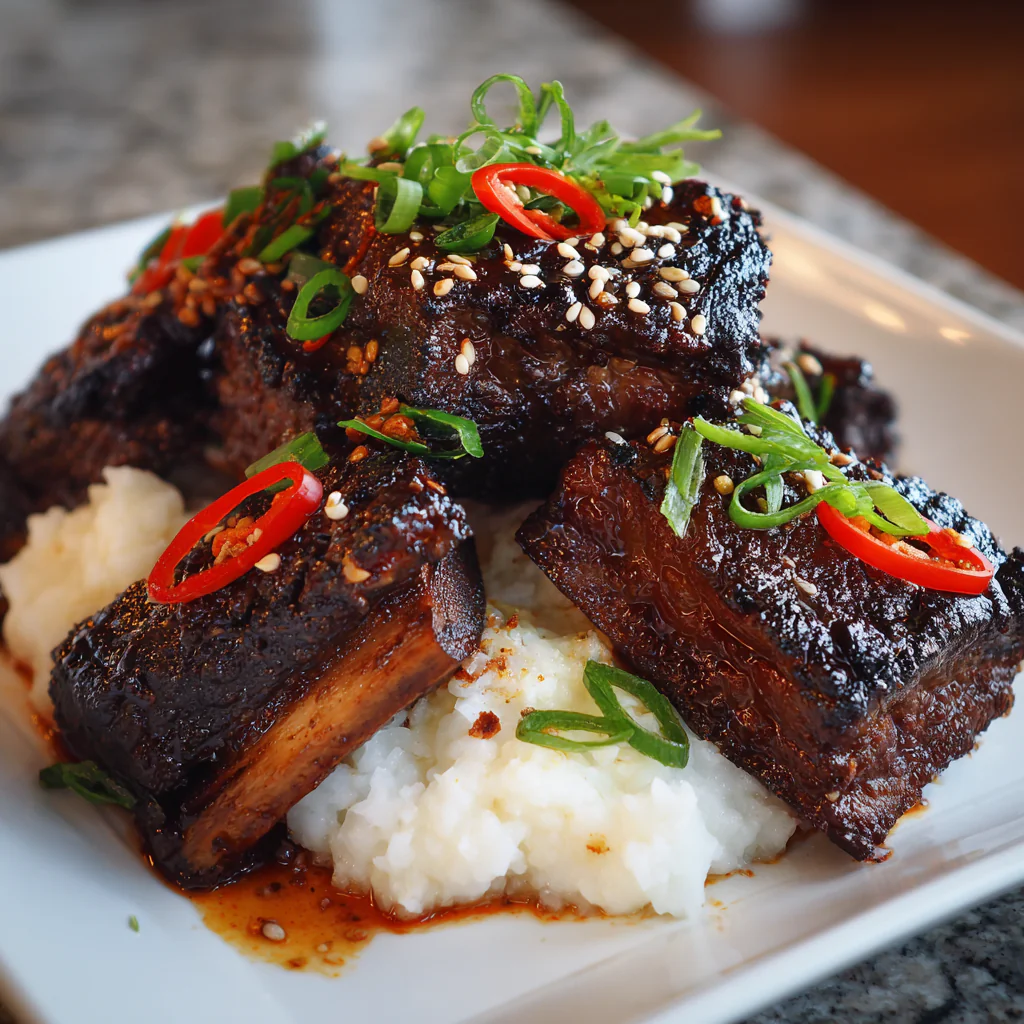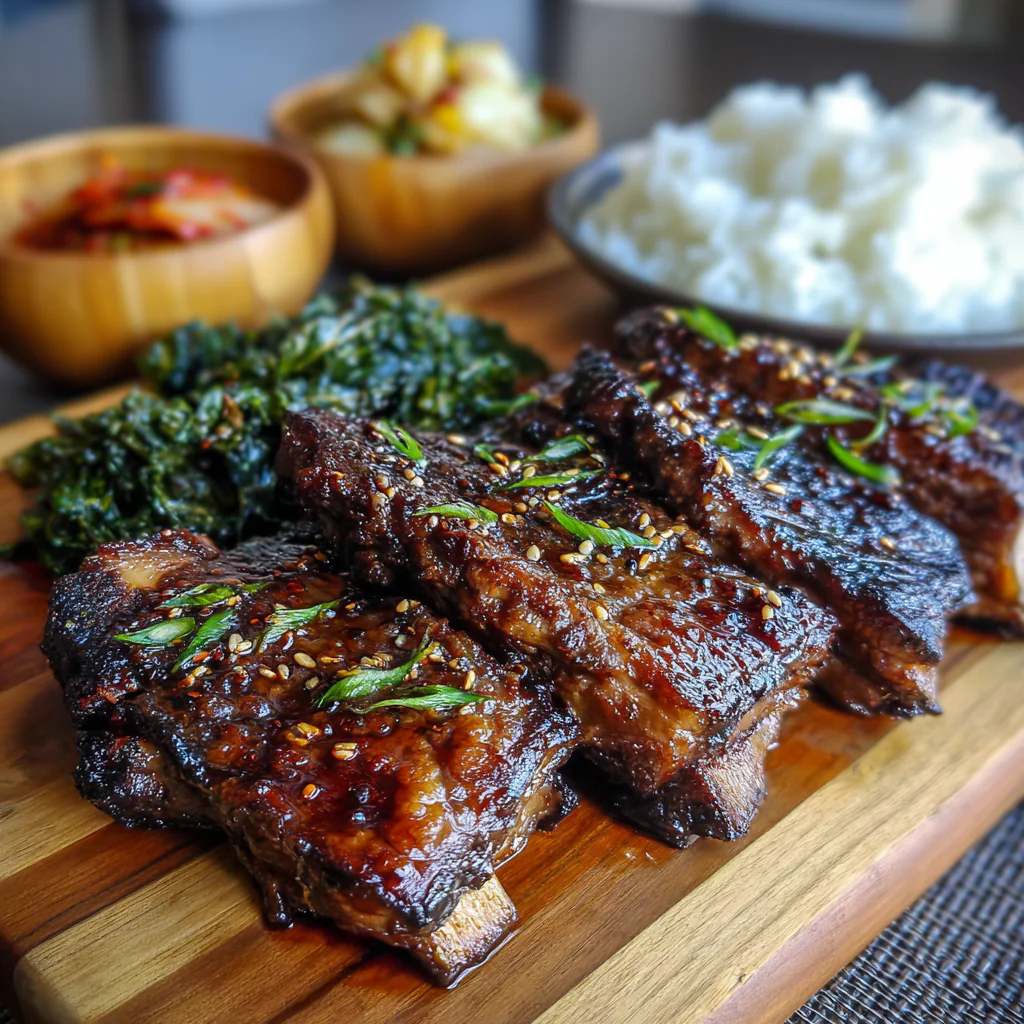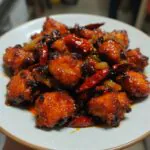
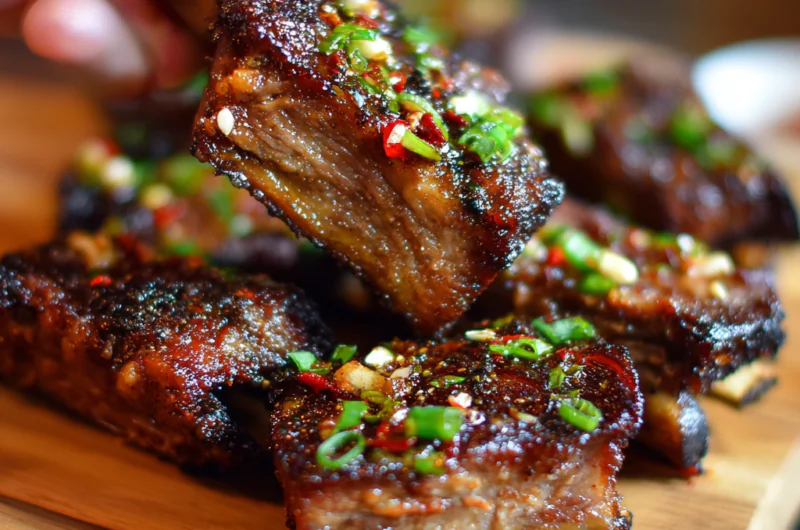
Thinly sliced, umami-rich flanken ribs bathed in a fruity soy marinade, then seared until the sugars caramelize into a sticky, charred glaze.
📋 In This Article
Introduction
There is a specific kind of chaos that makes Korean BBQ so irresistible. The sizzle of fat hitting the grill, the cloud of fragrant smoke, and the pile of banchan crowding the table. Korean BBQ Beef Short Ribs Marinated Overnight and Grilled to Sticky Perfection—often called Galbi—is the undisputed star of that spread. Sugar, soy, and smoke. That’s the holy trinity here. The flanken cut takes on a velvety texture when given time to soak, and the high heat of the grill turns those sugars into a lacquered, charred crust. You’ll be fighting over the last piece.
Why Overnight Marination is Key
A quick dip won’t cut it. During a 12 to 24 hour soak, the proteolytic enzymes in kiwi, pear, and pineapple go to work. Specifically, actinidin in kiwi and bromelain in pineapple trigger protein denaturation, breaking down tough muscle fibers without turning the meat to paste. Meanwhile, the soy sauce draws moisture out through osmosis, then the umami-rich liquid gets pulled back in, carrying deep flavor right to the bone. A 2-hour marinade gives you about 60% flavor penetration; overnight gets you 100%. Short on time? Score the meat deeply to speed up the process.
Understanding Your Cut: Choosing and Preparing Beef Short Ribs for Galbi
The cut makes the dish. For authentic galbi, you need the flanken cut (also known as LA galbi). This slices across the bone, creating thin, 1/2-inch pieces that maximize marinade absorption and cook in minutes. The English cut, sliced parallel to the bone, is thicker and better suited for braising. When you visit your butcher, ask specifically for flanken. You also want bone-in short ribs—the bone adds richness and prevents the edges from shrinking up. Trim the excess fat, but leave a thin layer so it can render on the grill, basting the meat from the outside in.
Ingredients for the Ultimate Galbi Marinade
The Base
- 1 cup soy sauce: The foundation, providing savory depth.
- 2 tablespoons sesame oil: Adds a rich, nutty aroma.
- 1/4 cup brown sugar: Essential for caramelization and balancing the salt.
- 2 tablespoons mirin: Sweet rice wine that contributes complexity.
- 1 tablespoon rice wine vinegar: Brightens the heavy notes.
The Tenderizers & Aromatics
- 4 cloves garlic, minced: Pungent and absolutely non-negotiable.
- 1 tablespoon ginger, grated: Adds warmth.
- 1 ripe pear, pureed: The primary tenderizer, adding subtle sweetness.
- 1 kiwi, pureed (optional): A powerful tenderizer. Use sparingly.
- **1 onion