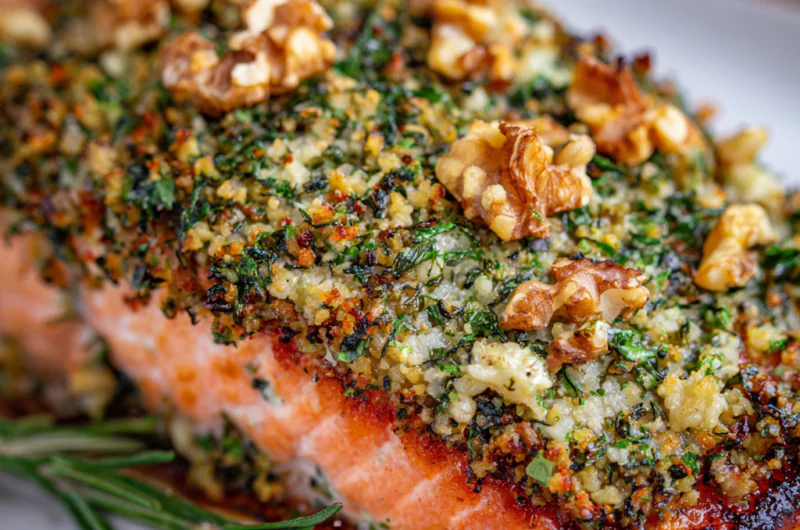
A nutrient-dense dinner that comes together on one sheet pan — crisp walnut topping, tender fish, and perfectly roasted asparagus in under 30 minutes.
📋 In This Article
Introduction
Here’s the thing about Healthy Baked Salmon With a Walnut Herb Crust and Roasted Asparagus: it solves the weeknight dinner problem without sacrificing an ounce of flavor. The walnut crust creates a textured, savory topping that transforms simple baked fish into something that feels almost indulgent. Meanwhile, the asparagus roasts alongside the salmon, absorbing those aromatic juices and becoming tender-crisp in the process.
I’ve tested this recipe more times than I can count, and the technique holds up. The combination of omega-3 rich salmon and heart-healthy walnuts delivers genuine nutritional benefits — we’re talking anti-inflammatory properties, brain-supporting fats, and a serious protein punch. But here’s what matters: none of that health messaging lands if the food doesn’t taste good. This does. The Dijon acts as both flavor booster and binding agent, helping the walnut-herb mixture adhere to the fish while adding a subtle tang that cuts through the richness. Flaky Baked Lemon Herb Cod with Crispy Parmesan Crust.
Why This Recipe Works: The Science Behind the Flavor
The magic of this dish lies in how its components work together. Salmon naturally contains high levels of Omega-3 fatty acids — those essential fats your body can’t produce on its own. When you bake salmon at 350°F, you’re cooking at a temperature low enough to allow the proteins to denature gently, keeping the flesh moist rather than pushing out all the internal moisture too quickly.
The walnut crust brings more than crunch. Walnuts contain polyphenols and omega-3 ALA (alpha-linolenic acid), compounds linked to reduced inflammation and improved cardiovascular markers. When toasted in the oven, those natural oils in the walnuts undergo slight oxidation that deepens their flavor — a subtle Maillard reaction happening right on the crust surface. This creates hundreds of new aromatic compounds that plain breadcrumbs simply can’t deliver.
Asparagus contributes fiber, folate, and vitamins A, C, and K. Roasting concentrates its natural sugars through caramelization, making the vegetable sweeter and more palatable than steaming ever could. The high heat breaks down the cellular structure just enough to soften those fibrous stalks while preserving a satisfying snap when you bite down.
Ingredients You’ll Need
For the Salmon
- Salmon Fillet (8 oz): Wild-caught offers a more robust flavor and slightly leaner profile than farmed, but both work beautifully here. Look for fillets of even thickness — they’ll cook uniformly.
- Walnuts (1/4 cup, finely chopped): Fresh is non-negotiable. Rancid walnuts ruin everything. Give them a sniff before using; they should smell nutty and sweet, not bitter or sharp.
- Green Onion (1 stalk, finely chopped): Adds a mild allium note without overpowering the herbs.
- Dijon Mustard: The unsung hero. It provides acidity and acts as the “glue” for your crust.
For the Herb Mixture
- Italian Seasoning (1/2 tsp): A blend typically containing dried oregano, basil, rosemary, and thyme. This shortcuts the herb prep while delivering complex flavor.
- Sea Salt (1/4 tsp): Enhances all other flavors. Don’t skip it.
- Lemon Juice (1/2 tsp): Freshly squeezed, always. The acid brightens the entire dish and helps cut through the natural richness of both salmon and walnuts.
- Extra Virgin Olive Oil (1 tbsp): Binds the crust ingredients and helps everything brown evenly.
For the Asparagus
- Fresh Asparagus (2 cups, trimmed): Look for stalks with tightly closed tips and firm stems. Thick or thin spears both work — just adjust cooking time accordingly.
- Olive Oil & Salt: For coating and seasoning.
Step-by-Step Instructions
Step 1: Preheat and Prep
Set your oven to 350°F (176°C). This temperature hits the sweet spot: hot enough to develop flavor through browning reactions, but not so aggressive that the exterior burns before the interior reaches a safe temperature. While the oven heats, line a baking sheet with parchment paper — this prevents sticking and makes cleanup trivial.
Step 2: Build Your Walnut Herb Crust
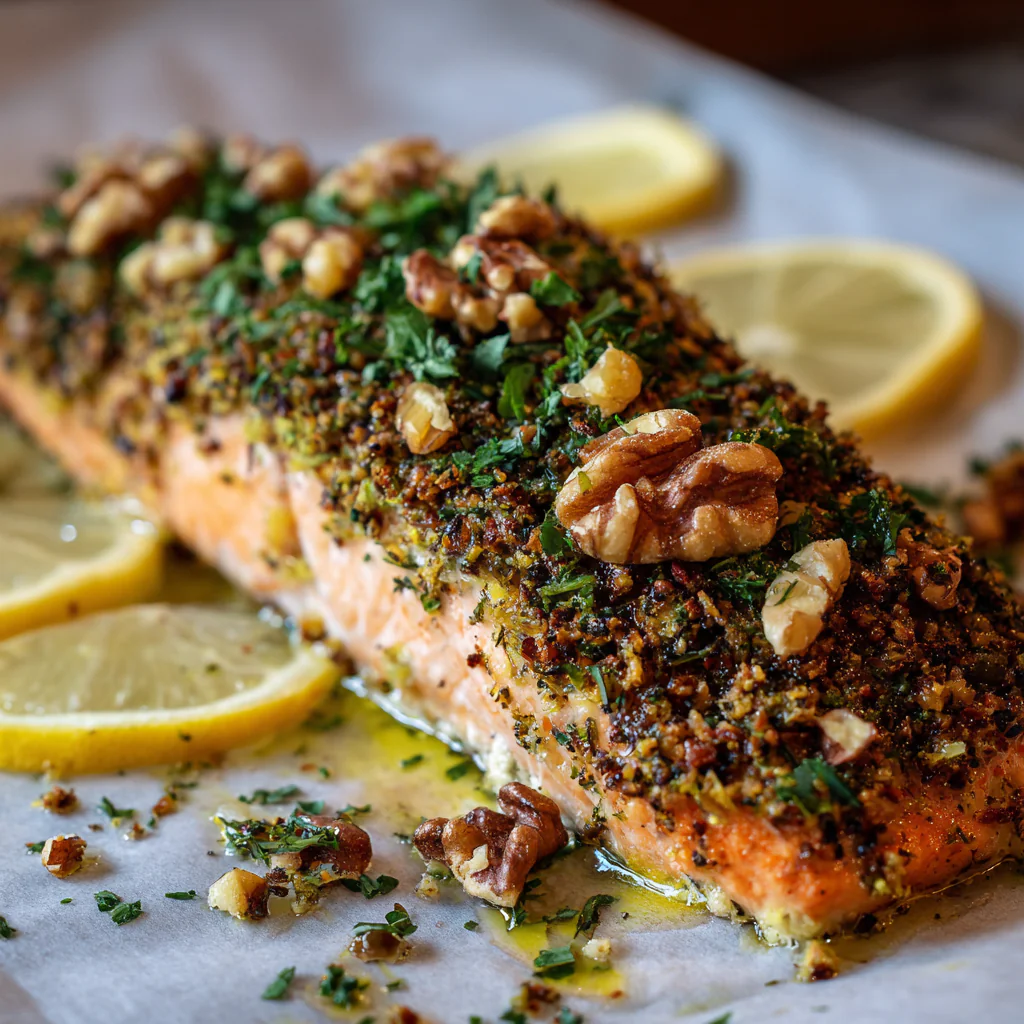
In a small bowl, combine the chopped walnuts, green onion, Italian seasoning, sea salt, and lemon juice. Pour in the olive oil and stir until the mixture resembles damp sand. The first time I made this crust without enough oil, it fell right off the salmon mid-bake — learn from my mistake. You want the mixture just moist enough to hold together when pressed, but not so wet it becomes paste.
Why this matters: The oil coats the walnut particles and helps them toast evenly. Without it, you’d get uneven browning and a mealy texture.
Step 3: Prepare the Salmon
Pat your 8 oz salmon fillet completely dry with paper towels. This step isn’t optional — surface moisture creates steam in the oven, and steam prevents proper browning. No crisp crust on wet fish. Drizzle about a third of your remaining olive oil over the salmon, coating all surfaces.
Place the fillet skin-side down on your prepared baking sheet. Spoon the walnut mixture onto the top surface, then gently press it down with your fingers or the back of a spoon. You’re not trying to compress it into a brick — just ensure good contact between the crust and the fish.
Step 4: Prep the Asparagus
Toss your trimmed asparagus with the remaining olive oil and a generous pinch of salt. Arrange the spears on the same baking sheet, giving them space. Crowded asparagus steams instead of roasts, and you lose that caramelized exterior that makes roasted vegetables actually good.
Science note: Roasting triggers caramelization in the asparagus’s natural sugars. This happens at temperatures above 320°F, creating new flavor compounds that raw asparagus simply doesn’t have.
Step 5: Bake
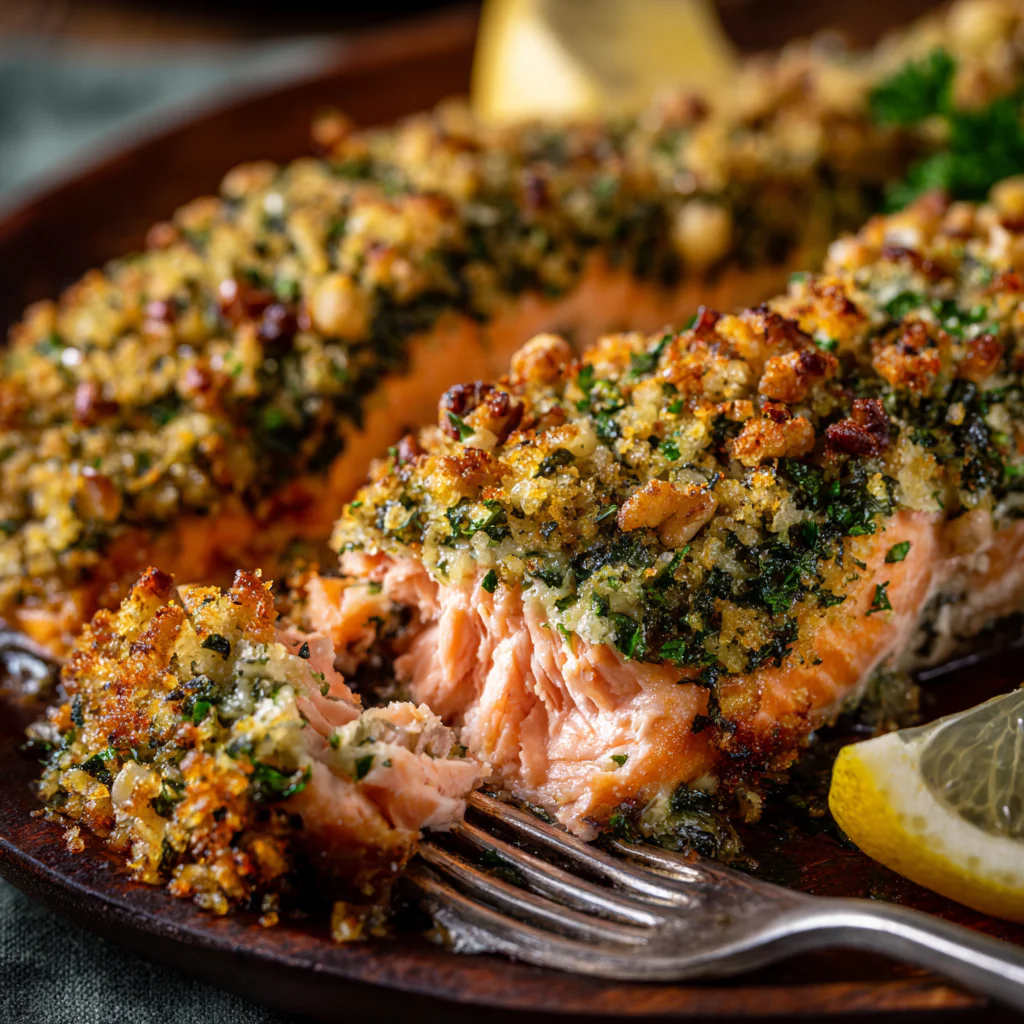
Slide the baking sheet into your preheated oven. Bake for 12 to 15 minutes, until the salmon reaches an internal temperature of 145°F (63°C) at its thickest point. If you don’t have a thermometer, the salmon should flake easily when pressed with a fork but still show a hint of translucency at the very center — carryover cooking will finish the job.
What’s happening inside: At 145°F, the salmon’s proteins have coagulated enough for food safety, but they haven’t yet squeezed out all their moisture. Go much above 155°F, and you’ll see significant juice loss. The fish becomes dry and chalky. Trust the temperature, not the clock.
Step 6: Rest and Serve
Remove the baking sheet from the oven and let everything rest for 2–3 minutes before serving. This brief pause allows the muscle fibers in the salmon to relax and reabsorb juices that were driven toward the center during heating. Cut into it immediately, and you’ll lose a significant portion of that moisture onto your plate.
⚠️ Common Mistakes to Avoid
Even simple recipes have failure modes. Here’s what goes wrong and how to prevent it:
Overcooking the salmon: This is the most common error. Salmon goes from perfectly done to dry in a matter of minutes at 350°F. Start checking at 12 minutes. The moment it flakes easily but still has a tiny bit of resistance at the very center, pull it. Carryover cooking adds another 5–10 degrees.
Soggy crust: Too much liquid in the walnut mixture creates a wet, paste-like topping that never crisps. The fix is straightforward: add oil gradually and stop when the mixture just holds together when pressed. It should look like slightly damp breadcrumbs, not cookie dough.
Underseasoning: Salmon can handle salt. So can walnuts. And asparagus definitely needs it. Season each component independently — don’t assume the crust will carry the entire flavor burden. A light sprinkle on the asparagus and a pinch directly on the fish before adding the crust makes a measurable difference.
Crowding the pan: When vegetables touch each other on a baking sheet, they steam instead of roast. The result is limp, pale asparagus with none of that sweet, concentrated flavor. Spread everything out. Use two pans if necessary.
Flavorful Variations & Dietary Adaptations
Healthy Baked Salmon With a Walnut Herb Crust and Roasted Asparagus adapts well to different flavor profiles and dietary needs. For a Mediterranean direction, swap the Italian seasoning for a mixture of dried oregano, lemon zest, and a pinch of smoked paprika. The paprika adds depth while the citrus brightens the walnut crust.
Herb variations: Fresh dill, parsley, or chives can replace or supplement the Italian seasoning. Each brings a different aromatic profile — dill leans Scandinavian, parsley keeps things clean and neutral, chives add a mild onion sweetness.
Nut alternatives: Pecans work beautifully and bring more natural sweetness. Almonds provide a harder crunch but need to be chopped finer. For nut-free versions, sunflower seeds or pumpkin seeds offer similar textural contrast, though the flavor profile shifts considerably.
Dietary modifications: This recipe is naturally gluten-free and dairy-free. For keto and paleo diets, simply ensure any optional breadcrumbs are omitted — the walnut mixture binds perfectly well without them. The entire dish clocks in at roughly 20g protein and under 10g net carbs per serving, making it appropriate for most low-carb approaches.
Vegetable swaps: Broccoli florets, trimmed Brussels sprouts, or bell pepper strips can replace the asparagus. Adjust cooking time slightly — denser vegetables like Brussels sprouts may need an extra 3–5 minutes. Consider giving them a head start in the oven before adding the salmon.
Storage & Reheating Tips for Leftovers
Proper storage preserves both texture and food safety. Allow the salmon and asparagus to cool completely — this typically takes 30–45 minutes at room temperature. Placing hot food directly into a closed container creates condensation, and condensation is the enemy of crispy crusts.
Store leftovers in an airtight container in the refrigerator. Salmon keeps for up to three days; asparagus is best consumed within two days as its texture deteriorates faster. For longer storage, wrap the cooled salmon tightly in plastic wrap or foil, then place in a freezer-safe container. Frozen salmon maintains quality for up to three months.
Reheating: The microwave is not your friend here — it creates steam that turns your carefully developed crust into something resembling wet sand. Instead, use an oven or air fryer. Preheat to 350°F (175°C) and reheat the salmon for 8–10 minutes until warmed through. For an air fryer, 350°F for 5–7 minutes works well. This method revives the crust’s texture while gently warming the interior.
Asparagus reheats best in a skillet with a small splash of water, covered, for 2–3 minutes over medium heat. This preserves more of its texture than oven reheating.
💡 Chef’s Pro Tips for Success
After making this dish countless times, a few techniques have proven their worth:
Dry the salmon thoroughly. I cannot emphasize this enough. Surface moisture is the primary reason crusts fail to adhere and fish steams instead of bakes. Use paper towels and press firmly. The surface should feel dry to the touch before you add any oil or seasoning.
Select fillets of even thickness. A tapered tail piece cooks unevenly — the thin end overcooks while the thick center remains raw. If your fillet has significant taper, fold the thin end under itself to create more uniform thickness, or simply buy center-cut pieces.
Use a thermometer. Visual cues for doneness — flaking, opacity, color change — are unreliable. A digital thermometer reading 145°F at the thickest point guarantees safety without sacrificing moisture. This investment costs less than a single ruined salmon dinner.
Rest the fish. Those 2–3 minutes matter. Muscle fibers contract during cooking, squeezing internal juices toward the center. Resting allows fibers to relax and reabsorb those juices. Cut immediately, and you’ll lose a significant portion on the cutting board.
Frequently Asked Questions (FAQ)
+Why is my walnut crust falling off?
The culprit is usually moisture or insufficient binding. Pat the salmon completely dry before adding any oil. The Dijon mustard or oil in the crust mixture acts as adhesive — if you’ve reduced the oil too much, the crust won’t stick. Press the mixture down firmly but gently; it needs physical contact with the fish surface to adhere properly.
+Can I use pecans or almonds instead of walnuts?
Absolutely. Pecans bring more sweetness and a softer crunch, while almonds provide a harder texture. Both work well, though you may want to adjust seasoning slightly — pecans pair beautifully with a touch of cinnamon or maple in the crust mixture, while almonds benefit from more herbaceous notes.
+How do I know when salmon is fully cooked?
The FDA recommends 145°F internal temperature, measured at the thickest part of the fillet. At this temperature, the salmon flakes easily with a fork but still retains moisture. If you prefer medium-rare salmon (as many restaurants serve it), 125–130°F is the target, though this falls below federal safety guidelines.
+Can I make this recipe without Dijon mustard?
You can substitute with whole grain mustard for a different texture and milder flavor, or use a mixture of mayonnaise and a squeeze of lemon juice. The mustard serves two purposes: flavor and binding. Any alternative needs to provide enough moisture and tackiness to hold the crust in place.
+How long does leftover salmon keep in the refrigerator?
Properly stored in an airtight container, leftover salmon remains safe to eat for three days. Quality declines after day two — the crust softens and the fish loses some of its fresh character. For best results, consume leftovers within 48 hours and reheat gently to preserve texture.
+What vegetables pair well with this dish?
Beyond asparagus, consider roasted broccoli, Brussels sprouts, or green beans. Each brings different flavor profiles — broccoli offers nuttiness that echoes the walnut crust, Brussels sprouts provide earthy depth, and green beans contribute a fresh, grassy note. Root vegetables like carrots or sweet potatoes also work, though they require longer roasting times.