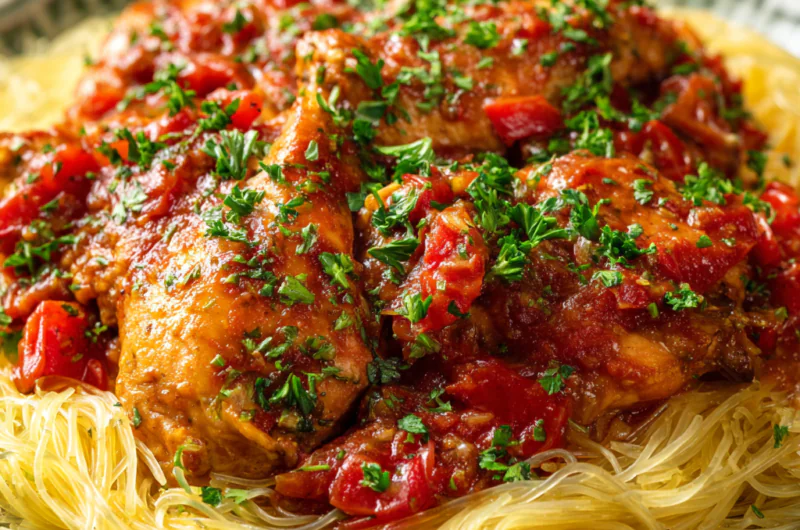
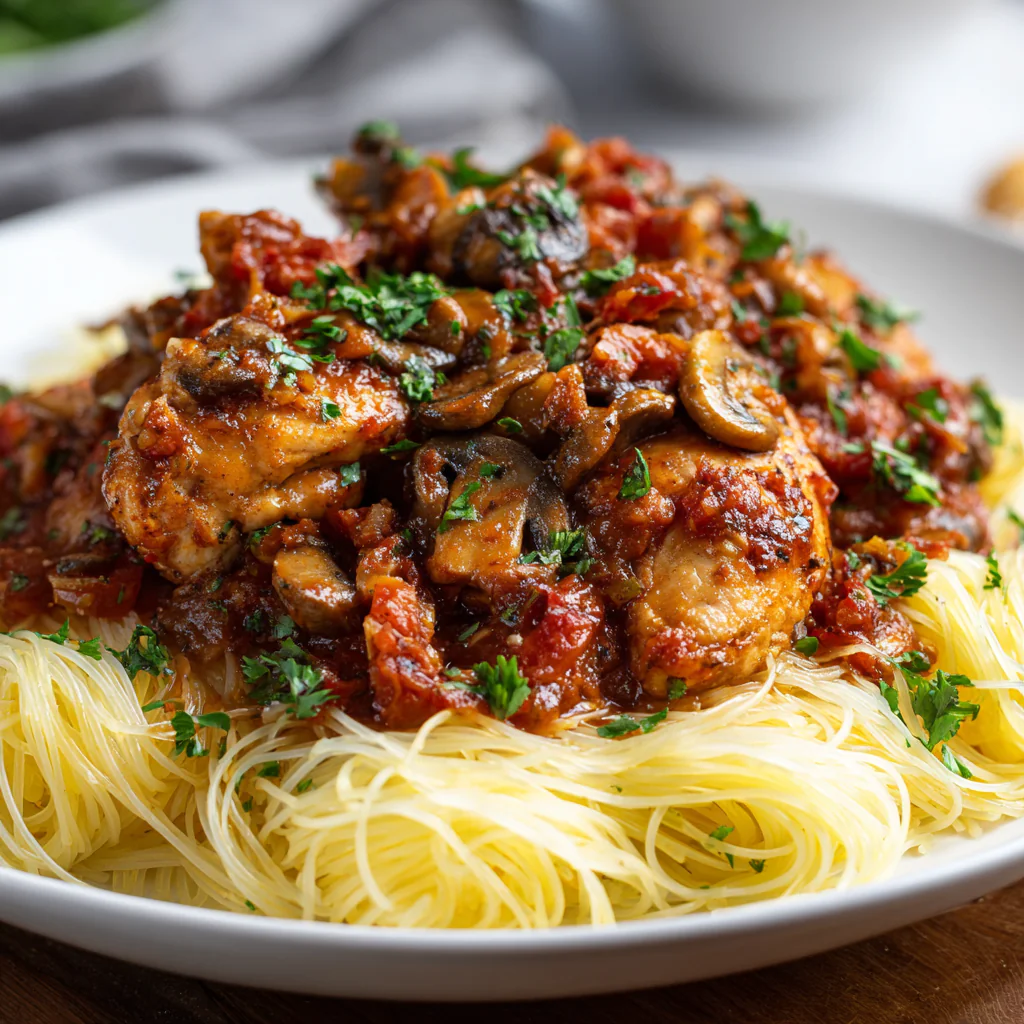
Juicy chicken thighs braised in a rich, rustic tomato-pepper sauce, served over delicate angel hair for a 30-minute weeknight classic.
📋 In This Article
Introduction
There is a specific kind of comfort found in a braised chicken dish, but traditional Chicken Cacciatore often demands hours of simmering time that most weeknights simply don’t allow. This version of Easy Chicken Cacciatore Served Over a Bed of Steaming Angel Hair Pasta bridges the gap between rustic Italian flavor and modern reality. We are trading the long braise for a strategic sear and a quick simmer, utilizing boneless thighs for speed without sacrificing the tender texture that makes this dish famous.
The “hunter’s style” flavors are all here—bell peppers, onions, tomatoes, and herbs—but the technique is streamlined. By swapping wider noodles for angel hair, the sauce clings to the pasta rather than drowning it, ensuring every bite is balanced. It’s dinner that feels like a bistro meal but comes together fast enough for a Tuesday.
Why It Works: The ‘Easy’ Advantage
Traditional cacciatore often starts with whole chicken pieces that need lengthy cooking to become tender. This recipe takes a different approach. By using boneless, skinless chicken thighs, we cut the cooking time drastically while maintaining juiciness. Thighs have more intramuscular fat and connective tissue than breasts, meaning they stay moist even if you accidentally overcook them by a minute or two.
The sauce relies on pantry staples like crushed tomatoes and tomato paste for depth, bypassing the need for fresh tomato peeling or long reduction times. We build layers quickly. The angel hair pasta acts as a delicate carrier for the robust, savory sauce, absorbing the flavors without overpowering the dish.
Ingredients You’ll Need
To make Easy Chicken Cacciatore Served Over a Bed of Steaming Angel Hair Pasta, you’ll want to gather a few essential ingredients that pack a flavorful punch without complicating the cooking process. Here’s what you need:
Proteins
- Chicken Thighs (4 pieces, boneless and skinless recommended) or Chicken Breasts (2 large)
Vegetables
- Bell Peppers (2 medium, sliced—red or green for sweetness)
- Onion (1 medium, diced)
- Garlic (4 cloves, minced)
- Mushrooms (1 cup, sliced)
- Olives (1/2 cup, pitted and sliced, optional for added tang)
Pantry Staples
- Crushed Tomatoes (1 can, 28 oz)
- Tomato Paste (2 tablespoons)
- Red Wine (1/2 cup, for deglazing and flavor)
- Chicken Broth (1 cup, low-sodium preferred)
- Olive Oil (2 tablespoons, for sautéing)
- Salt (to taste)
- Black Pepper (to taste)
Herbs
- Dried Oregano (1 teaspoon)
- Dried Basil (1 teaspoon)
- Fresh Thyme (1 tablespoon, chopped, if available)
Pasta
- Angel Hair Pasta (8 oz, for serving)
Gathering these staples not only simplifies your shopping list but also ensures that your Easy Chicken Cacciatore is infused with robust flavors that everyone will love.
Step-by-Step Cooking Instructions
- Prepare the Ingredients: Start by gathering all ingredients. Dice 1 onion, slice 2 bell peppers, and mince 4 cloves of garlic. Slice the mushrooms. Having everything prepped before you turn on the stove makes the process seamless.
- Sear the Chicken: In a large skillet, heat 2 tablespoons of olive oil over medium-high heat. Season 4 chicken thighs generously with salt and pepper. Once the oil is shimmering—this is crucial, or the chicken won’t release properly—add the chicken. Sear for about 5-7 minutes on each side until golden brown.
Why sear? Searing triggers the Maillard reaction, creating hundreds of new flavor compounds on the surface and leaving behind browned bits called fond on the bottom of the pan. This is pure flavor concentrate.
- Sauté Vegetables: Remove the chicken and set aside. In the same skillet, add the mushrooms, onions, and bell peppers. Sauté for about 4-5 minutes until the vegetables are softened and the mushrooms have lost their raw look. Add the garlic during the last minute to prevent burning.
- Build the Sauce: Add the tomato paste to the vegetables and stir for 30 seconds to cook out the raw, metallic taste. Pour in the red wine to deglaze the pan, scraping up the browned bits from the bottom with a wooden spoon. This step incorporates the fond back into the sauce. Add the crushed tomatoes, chicken broth, oregano, and basil. Stir well.
- Simmer: Return the chicken to the skillet, nestling it into the sauce. Reduce the heat to low. Cover and let it simmer for 20 minutes. This allows the flavors to meld and the chicken to finish cooking through.
- Cook the Pasta: While the chicken simmers, bring a large pot of salted water to a boil. Add 8 ounces of angel hair pasta and cook according to package instructions, usually about 4-5 minutes. Drain the pasta, reserving a splash of pasta water if you like a looser sauce.
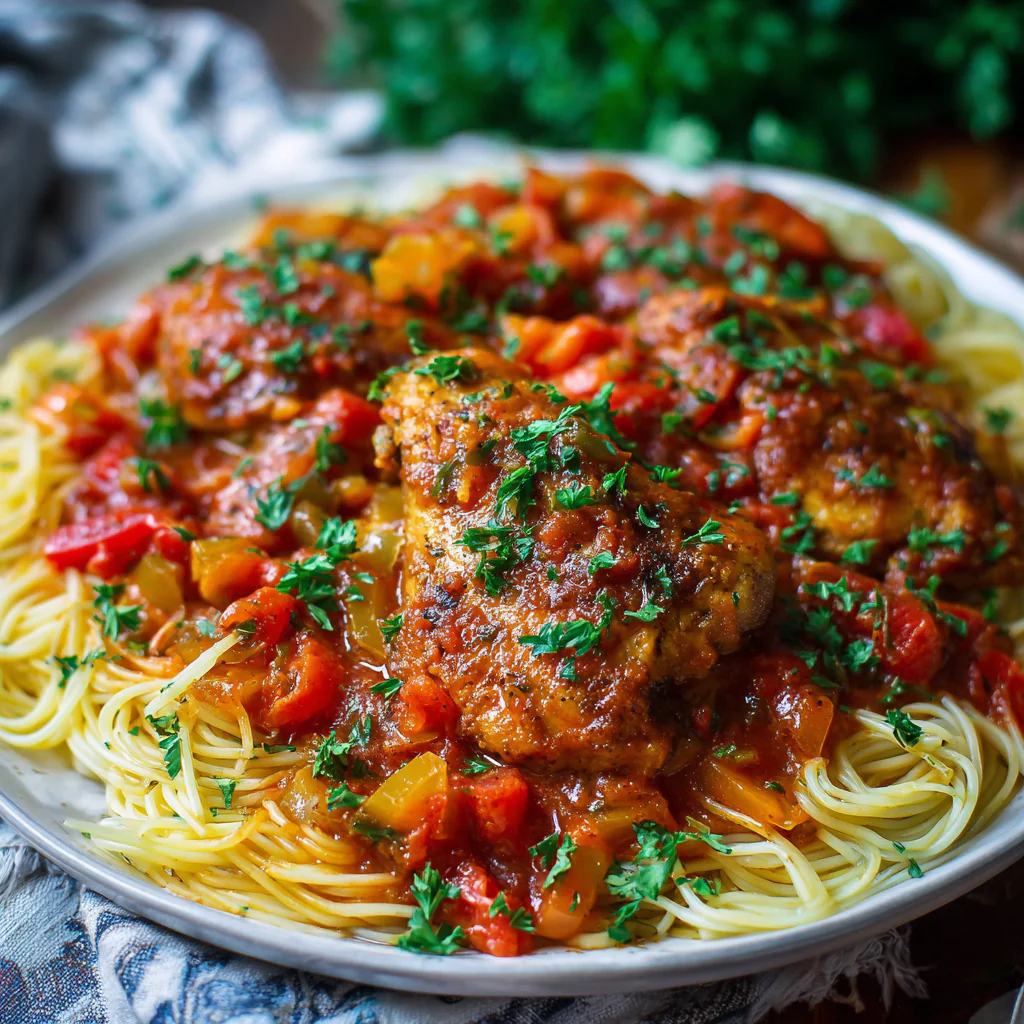
- Combine and Serve: Once the chicken is cooked through and the sauce has thickened, serve it over a bed of steaming angel hair pasta. Garnish with fresh thyme or parsley if desired, and sprinkle with Parmesan cheese for added flavor.
⚠️ Common Mistakes to Avoid
When preparing Easy Chicken Cacciatore Served Over a Bed of Steaming Angel Hair Pasta, several common mistakes can detract from the dish’s flavor and texture.
Overcrowding the pan during the sear. This is the most frequent error. If the chicken pieces are too close together, they steam rather than sear, turning an unappealing gray instead of golden brown. Use a larger pan or cook in batches. You want that deep, caramelized crust for maximum flavor.
Under-seasoning the layers. A bland sauce is a tragedy. Season the chicken before it hits the pan. Taste the tomato sauce after it simmers for a few minutes—add more salt or a pinch of sugar if the tomatoes taste too acidic. Seasoning should be adjusted throughout the cooking process, not just at the end.
Overcooking the angel hair. Angel hair is delicate; it goes from al dente to mushy in seconds. Overcooked pasta creates a gummy texture that can’t support the robust cacciatore sauce. Always check for doneness a minute or two before the package instructions suggest. Drain it immediately.
Neglecting the fond. Those sticky brown bits on the bottom of the pan after searing are culinary gold. Do not scrub them off or pour them down the sink. Deglazing with wine or broth dissolves that fond, injecting deep, savory complexity directly into your sauce.
Flavorful Variations & Customizations
The beauty of Easy Chicken Cacciatore Served Over a Bed of Steaming Angel Hair Pasta lies in its adaptability.
Spicy Kick: For a version with heat, add 1/2 teaspoon of red chili flakes when you add the garlic. The heat infuses the oil and spreads throughout the sauce.
Vegetable Boost: Zucchini and carrots make excellent additions. Add diced carrots with the onions to ensure they soften, and sliced zucchini during the last 10 minutes of simmering so they retain some texture.
Dietary Swaps: For a gluten-free option, simply swap the angel hair for your favorite gluten-free pasta or serve the cacciatore over creamy polenta. For a vegetarian take, replace the chicken with hearty portobello mushrooms or chickpeas, and use vegetable broth instead of chicken broth.
Finishing Touches: A tablespoon of capers or sliced olives added in the last 5 minutes of simmering introduces a briny salinity that cuts through the richness of the tomatoes.
Storage & Reheating Tips
To ensure the best quality for your Easy Chicken Cacciatore Served Over a Bed of Steaming Angel Hair Pasta, proper storage is key.
Storage: Allow the chicken cacciatore to cool to room temperature before transferring it to an airtight container. It can be stored in the refrigerator for up to 3 days. For longer storage, freeze the sauce and chicken (without the pasta) for up to 2-3 months.
Reheating: Reheat the cacciatore on the stovetop over medium heat until heated through, stirring occasionally. If frozen, thaw it in the refrigerator overnight. For the pasta, fresh is best, but you can reheat it quickly by dunking it in boiling water for 30 seconds. Always ensure the chicken reaches an internal temperature of 165°F (74°C) before serving.
💡 Pro Tips for Perfection
Use room temperature chicken. Take the chicken out of the fridge 20 minutes before cooking. Cold chicken hits the hot pan and seizes up, leading to uneven cooking. Room temperature meat browns more evenly and cooks faster.
Don’t skip the wine. The alcohol in the wine acts as a solvent, releasing flavor compounds in the tomatoes and fond that water or oil alone cannot reach. Most of the alcohol cooks off, leaving behind a depth of flavor that is essential for a restaurant-quality result.
Rest the chicken. If you have time, let the chicken rest in the sauce for 5 minutes off the heat before serving. This allows the muscle fibers to relax and reabsorb juices, ensuring the meat remains succulent.
Save pasta water. Before draining the angel hair, scoop out a half-cup of the starchy cooking water. Tossing a splash of this water into the sauce helps it emulsify and cling to the delicate noodles.
Frequently Asked Questions (FAQ)
+What does “cacciatore” mean?
Cacciatore translates to “hunter” in Italian, referring to a rustic dish prepared “hunter-style” with tomatoes, onions, herbs, and often bell peppers or wine.
+Can I use chicken breasts instead of thighs?
Yes, but thighs are more forgiving. Chicken breasts contain less fat and can dry out quickly during the simmering process. If using breasts, check for doneness at the 15-minute mark to ensure they stay juicy.
+Why is my cacciatore sauce watery?
If the sauce is too thin, remove the lid during the last 5-10 minutes of simmering to allow excess liquid to evaporate. The tomato paste should also help thicken the consistency.
+How do I know when the chicken is done?
The most accurate method is using an instant-read thermometer. Insert it into the thickest part of the thigh; it should read 165°F (74°F). At this temperature, harmful bacteria are eliminated, and the proteins have set for a tender bite.
+Can I make this in a slow cooker?
Absolutely. Sear the chicken and sauté the vegetables first, then transfer everything to a slow cooker. Cook on low for 4-6 hours or high for 2-3 hours. The flavors will develop even further over the longer cooking time.