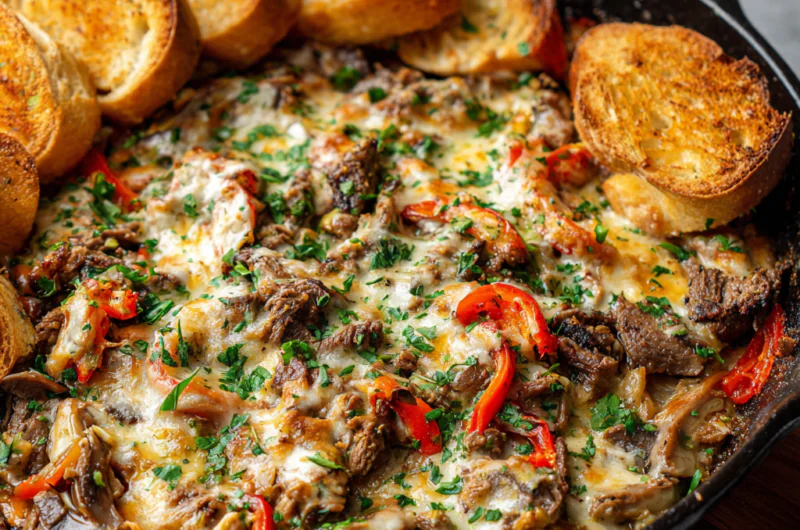
Thin-sliced ribeye, caramelized onions, and peppers tossed in a cheesy, savory mess—ready in 30 minutes.
📋 In This Article
Introduction
Let’s be honest: the best part of a cheesesteak is the messy, savory filling, not the structural integrity of the bread. That’s where this Classic Philly Cheesesteak Skillet Served With Toasted Hoagie Rolls changes the game. It delivers all the salty, meaty, cheesy satisfaction of the Philadelphia icon, but without the fuss of toasting hoagie rolls perfectly or worrying about a sandwich falling apart in your hands.
We are essentially deconstructing the sandwich to focus entirely on flavor development. By moving to a skillet, we gain the ability to control the Maillard reaction on the beef and the caramelization of the onions much more precisely than you can on a flat-top grill. It’s a weeknight dinner that feels like a treat, and cleanup is a dream.
Why It Works
This isn’t just “steak and peppers in a pan.” The brilliance of the Classic Philly Cheesesteak Skillet Served With Toasted Hoagie Rolls lies in the layering of fats and flavors. We start by rendering the vegetables to draw out their natural sugars, creating a sweet-savory base.
Then, we sear the ribeye. Because we aren’t constrained by a sandwich shape, we can get a proper crust on the meat—essential for that deep, beefy flavor. Finally, the cheese isn’t just a topping; it becomes a binding agent. Whether you use Provolone or American, the cheese emulsifies with the pan drippings to coat every strip of meat and vegetable in a rich, savory glaze. You can scoop it onto toasted hoagie rolls for the traditional experience, or eat it straight from the bowl for a low-carb feast.
Ingredients
For the Skillet
Meat Options:
- 1 lb Ribeye Steak: The gold standard. The heavy marbling renders quickly, keeping the meat tender while basting the vegetables.
- 1 lb Skirt Steak: A chewier, beefier alternative that shines when sliced paper-thin against the grain.
- 1 lb Flat Iron Steak: A great middle ground—tender, flavorful, and usually more affordable than ribeye.
Vegetables:
- 1 medium Onion: Sliced thinly. Yellow or Vidalia onions work best for maximum sweetness.
- 1 Bell Pepper: Green is traditional for a slight bitterness, but red adds sweetness.
- 8 oz Mushrooms: Cremini or button, sliced. These absorb the rendered beef fat beautifully.
Cheese Choices:
- 8 oz Provolone: Delivers a sharp, tangy bite and a satisfying cheese pull.
- 8 oz American Cheese: The secret to a velvety, creamy melt that coats the meat effortlessly.
- 8 oz Cheez Whiz: For the purists who want that authentic, gooey “steak shop” texture.
Cooking Essentials:
- 2 tbsp Olive Oil: Needed to kickstart the vegetable sauté.
- 1 tsp Salt: Divided between seasoning the meat and vegetables.
- ½ tsp Black Pepper: Freshly ground for aromatic heat.
- 1 tsp Garlic Powder: Integrates flavor without the risk of burnt fresh garlic bits.
- 1 tbsp Worcestershire Sauce: The umami bomb that ties the beef and veggies together.
Serving Component:
- 4 Hoagie Rolls: Toasted and buttered, ready for scooping.
Equipment
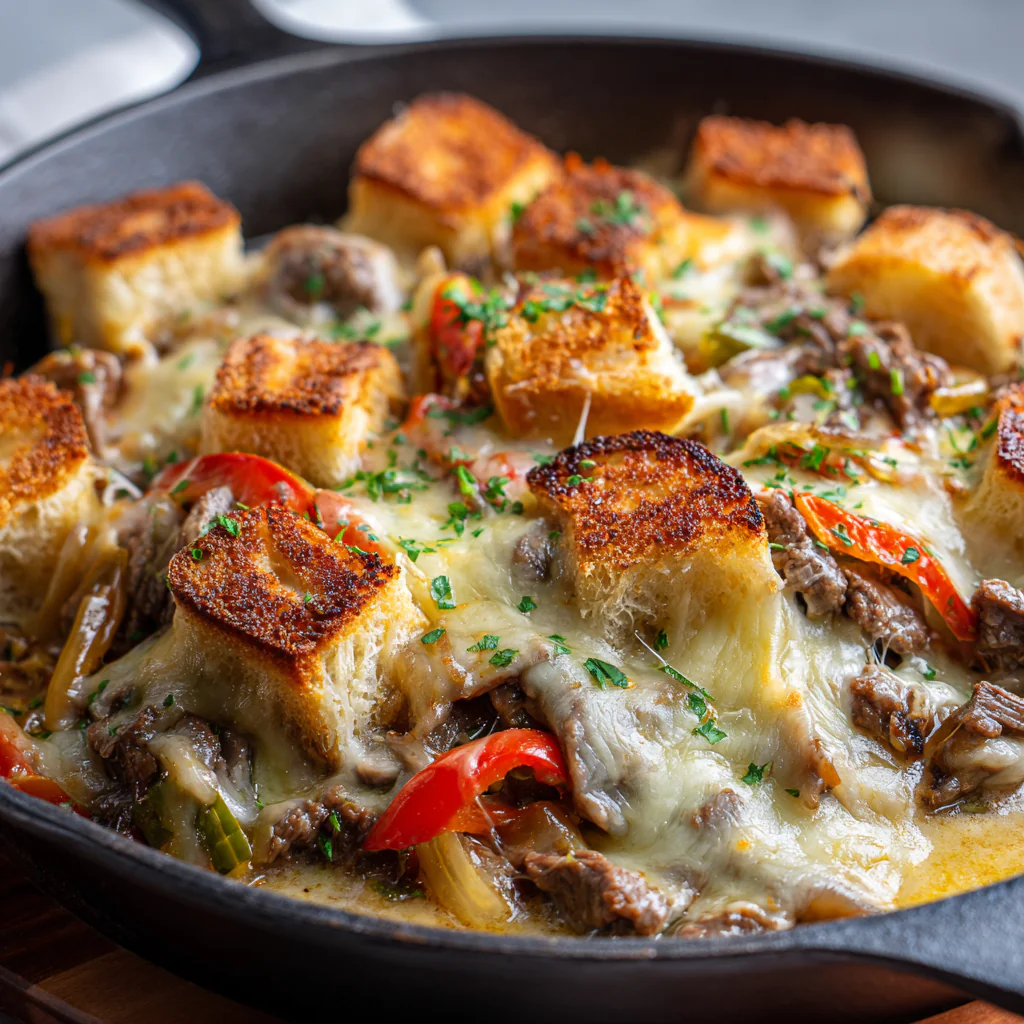
You don’t need much, but the right gear makes a difference. A large cast-iron skillet is non-negotiable here. Cast iron retains heat like a champion, which is critical when you add the cold meat to the pan—it won’t drop in temperature, ensuring a proper sear. You’ll also need a sharp chef’s knife for slicing (dull knives mangle the meat fibers) and a sturdy metal spatula for chopping and scraping up the fond.
Instructions
- Prepare the Meat: This is the most critical step. Place your steak in the freezer for 20 minutes. Firming up the muscle fibers makes it significantly easier to slice the meat into paper-thin strips, which is the hallmark of a great cheesesteak texture. Slice against the grain into 1/8-inch strips.
- Caramelize the Vegetables: Heat the olive oil in your cast iron skillet over medium heat. Add the onions, peppers, and a pinch of salt. Cook, stirring occasionally, for 8–10 minutes. You want deep golden-brown edges. Caramelization happens when natural sugars break down under heat, creating complex, nutty flavors you just can’t get from a quick sauté.
- Sear the Steak: Push the vegetables to the outer edges of the pan to clear the center. Crank the heat to medium-high. Add the steak in a single layer. Let it sit for 2 minutes. Do not touch it. This allows the Maillard reaction—the chemical reaction between amino acids and reducing sugars—to create a flavorful brown crust. Flip and cook for another minute until just browned.
- Season and Deglaze: Mix the meat and vegetables together. Add the Worcestershire sauce, garlic powder, and black pepper. Scrape the bottom of the pan with your spatula. Deglazing releases the fond (those sticky, flavorful browned bits) into the mix, ensuring no flavor is left behind.
- Melt the Cheese: Reduce heat to low. Lay the cheese slices over the mixture. Cover the pan with a lid for 2 minutes. Trapping the steam helps the cheese melt evenly without overcooking the meat.
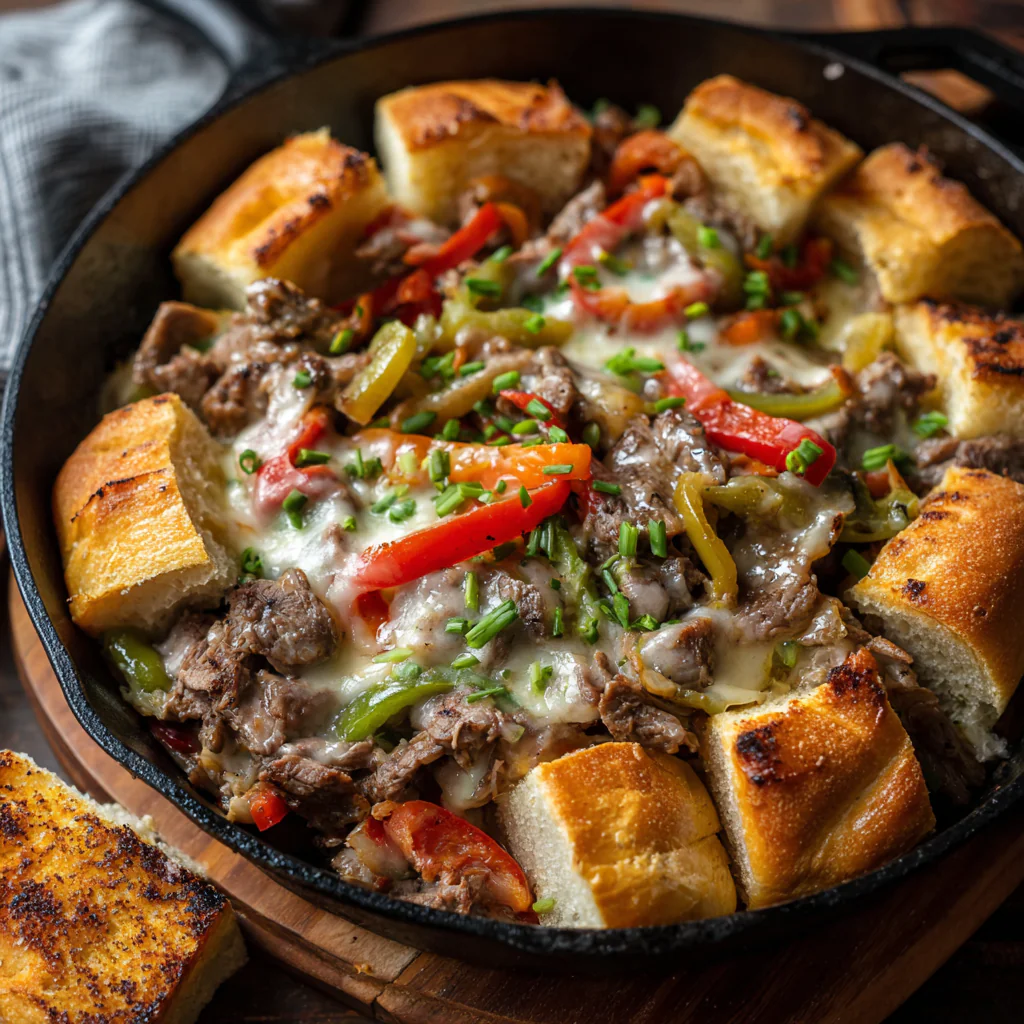
- Toast and Serve: While the cheese melts, toast your hoagie rolls. Spoon the cheesy filling into the rolls. Serve immediately while the cheese is still molten.
⚠️ Common Mistakes to Avoid
Even a simple dish has pitfalls. The most common error is overcrowding the pan. If the meat is piled high, it will steam in its own juices rather than sear, turning grey and rubbery. If your skillet is on the smaller side, cook the meat in two batches.
Another issue is slicing with the grain. If you cut parallel to the muscle fibers, the meat will be chewy and difficult to eat. Cutting against the grain shortens the fibers, making the meat tender. Finally, watch your cheese. Overheating cheese can cause the proteins to tighten and the fat to separate, resulting in a greasy texture rather than a creamy melt.
Variations
This recipe is a blueprint. For a Chicken Cheesesteak, swap the beef for chicken breast cutlets, pounded thin and sliced. It’s lighter but still hearty. If you’re avoiding meat entirely, a Portobello Mushroom Cheesesteak uses thick slices of mushroom to mimic the texture of steak; just be sure to cook the moisture out of them first.
For the carb-conscious, skip the hoagie roll entirely. Serve the skillet mixture over cauliflower rice or wrap it in large butter lettuce cups. The flavor profile remains intact, but the carb count drops significantly.
Serving Suggestions
This is heavy, comfort food. It begs for something acidic and crunchy to cut through the richness. A simple side salad with a sharp vinaigrette works wonders. Or, lean into the diner vibe and serve it with French Fries or Onion Rings. Pickled peppers or a spicy giardiniera are also excellent table-side additions.
Storage and Reheating
Store any leftover filling in an airtight container in the refrigerator for up to 4 days. The flavors actually improve after a day as they meld together.
To reheat, avoid the microwave if possible—it turns the meat rubbery. Instead, place the mixture in a skillet over medium-low heat. Add a splash of water or beef broth. Cover with a lid to create steam. This gently reheats the meat and revives the melted cheese texture without drying it out.
💡 Pro Tips
- The Freezer Trick: I cannot stress this enough—partially freezing the meat is the difference between jagged, uneven chunks and the paper-thin shavings found in authentic Philly shops. Twenty minutes in the freezer is all it takes.
- Don’t Drain the Fat: Ribeye renders a significant amount of fat. Do not drain it. That rendered fat carries immense flavor and helps sauté the vegetables and emulsify with the cheese sauce.
- Cheese Blend: For the best of both worlds, use a blend of sharp Provolone for flavor and American cheese for texture. The sodium citrate in American cheese acts as an emulsifier, keeping the Provolone from separating.
Frequently Asked Questions (FAQ)
+What cut of meat is best for a Philly Cheesesteak Skillet?
Ribeye is the top choice because its high fat content keeps the meat juicy during the high-heat sear. Skirt steak is a close second if you prefer a beefier chew, provided you slice it very thin against the grain.
+Do I have to use Cheez Whiz?
No. While Cheez Whiz is the “authentic” Philly street vendor choice, many prefer Provolone for its sharpness or American cheese for its superior melting quality. Use whatever cheese melts your heart.
+Why is my steak tough?
It usually comes down to two things: slicing with the grain instead of against it, or overcooking. Remember, the meat is thin; it only needs 2–3 minutes total to cook through.
+Can I make this ahead of time?
You can slice the meat and vegetables a day in advance to save prep time. However, cook the dish just before serving to preserve the texture of the meat and the melt of the cheese.
+Can I use a different type of pepper?
Absolutely. While green bell peppers are traditional, some people find them bitter. Red, yellow, or orange peppers are sweeter and work beautifully in this skillet.
Conclusion
This Classic Philly Cheesesteak Skillet Served With Toasted Hoagie Rolls is the kind of recipe that disappears from the table in minutes. It captures everything we love about the sandwich—the tender meat, the sweet onions, the gooey cheese—but simplifies the process for the home cook. It’s hearty, flavorful, and versatile enough to please a crowd. Give it a try on your next busy weeknight, and don’t be surprised if it lands in your regular dinner rotation.