
Introduction
Thanksgiving stuffing is more than just a side dish; it's a cherished tradition that brings warmth and flavor to the holiday table. Whether it's nestled inside a turkey or served alongside it, the right stuffing can elevate your meal with a delightful blend of textures and tastes.
With countless variations, from classic bread-based recipes to those packed with seasonal ingredients, every cook can add their personal touch. This article will guide you through creating a homemade stuffing that perfectly balances savory and sweet, making it an unforgettable part of your feast.
Ingredients
- 1 loaf of day-old bread, cubed
Using day-old bread helps to absorb the broth without becoming mushy, allowing for a pleasantly textured stuffing. A crusty bread enhances the overall structure of the dish, providing a hearty base to build upon. - 1 cup diced onion
Onions add a rich, aromatic base to your stuffing. They caramelize beautifully as they cook, contributing sweetness and depth to the overall flavor profile. - 1 cup diced celery
Celery brings a refreshing crunch that balances the softer components. Its mild flavor allows it to meld well with the other ingredients, while adding a crucial vegetable note. - 2 cloves garlic, minced
Garlic infuses the stuffing with a robust flavor. It enhances the other ingredients while adding warmth, making the dish even more aromatic and savory. - 1/2 cup unsalted butter
Butter serves as a flavor booster and binding agent. It enriches the mixture, keeping the stuffing moist and adding a rich, indulgent taste. - 2 cups vegetable or chicken broth
Broth is essential for hydration, helping the bread to soak and penetrate with flavor. Choosing the right broth can influence the overall taste; homemade broth is often the most flavorful. - 1 tablespoon dried sage
Sage is a classic herb associated with Thanksgiving stuffing. Its earthy flavor complements the richness of the dish, enhancing the comforting quality of the stuffing. - 1 tablespoon dried thyme
Thyme adds a subtle, herby note that brightens the overall flavor. It works well in conjunction with sage, creating a balanced herbaceous profile. - Salt and pepper to taste
Seasoning is crucial for bringing out the natural flavors of each ingredient. Salt enhances flavor while pepper adds a gentle heat, ensuring the stuffing is well-rounded. - 1 cup chopped pecans or walnuts (optional)
Nuts provide crunch and richness, making the stuffing more complex. They also add a subtle nutty flavor that complements the bread and herbs beautifully. - 1 cup dried cranberries or raisins (optional)
Dried fruit introduces a touch of sweetness and a pop of color, creating a delightful contrast with the savory elements of the stuffing.
Directions & Preparation
Step 1: Preheat your oven to 350°F (175°C).
Preheating the oven is crucial for ensuring that the stuffing cooks evenly. Starting with a hot oven also helps to develop a nice crust on top if you're baking it in a dish, giving a contrast in texture.
Step 2: In a large skillet, melt the butter over medium heat.
Melting the butter before adding vegetables allows them to absorb the fat and enhance their flavors. This step builds a robust base for the stuffing, allowing the aromas of sautéed vegetables to bloom.
Step 3: Add the diced onion and celery to the skillet and sauté for about 5-7 minutes until softened.
Cooking the onion and celery until softened is vital for extracting their flavors. This step adds sweetness and depth to the stuffing, allowing the vegetables to meld beautifully with the bread.
Step 4: Stir in the minced garlic and cook for another minute until fragrant.
Garlic should be added toward the end of the sautéing process to prevent burning, which can create a bitter taste. This short cooking time enhances the aroma and infuses the stuffing with its rich flavor.
Step 5: In a large bowl, combine the cubed bread, sautéed vegetables, and herbs.
Mixing the bread and vegetables in a large bowl ensures even distribution of flavors. Incorporating the herbs at this stage allows their essence to permeate the bread, enriching it with a savory aroma.
Step 6: Pour in the broth gradually, stirring to moisten the bread evenly.
Gradually adding the broth allows for better absorption and prevents excess liquid. The moisture from the broth hydrates the bread, creating a well-balanced stuffing that holds together without becoming soggy.
Step 7: Add any optional ingredients like nuts or dried fruit, and season with salt and pepper.
This is the moment to personalize your stuffing. Optional ingredients can enhance texture and flavor, while seasoning adjusts the overall taste profile to suit your palate.
Step 8: Transfer the mixture to a greased baking dish.
Choosing a greased dish helps prevent sticking and ensures that the stuffing cooks evenly. The size of the dish can also influence cooking time; a deeper dish may require longer baking.
Step 9: Cover the dish with aluminum foil and bake for 30 minutes.
Covering the dish initially traps moisture, allowing the stuffing to steam and cook through. This step is important for creating a tender interior before the top develops a golden crust.
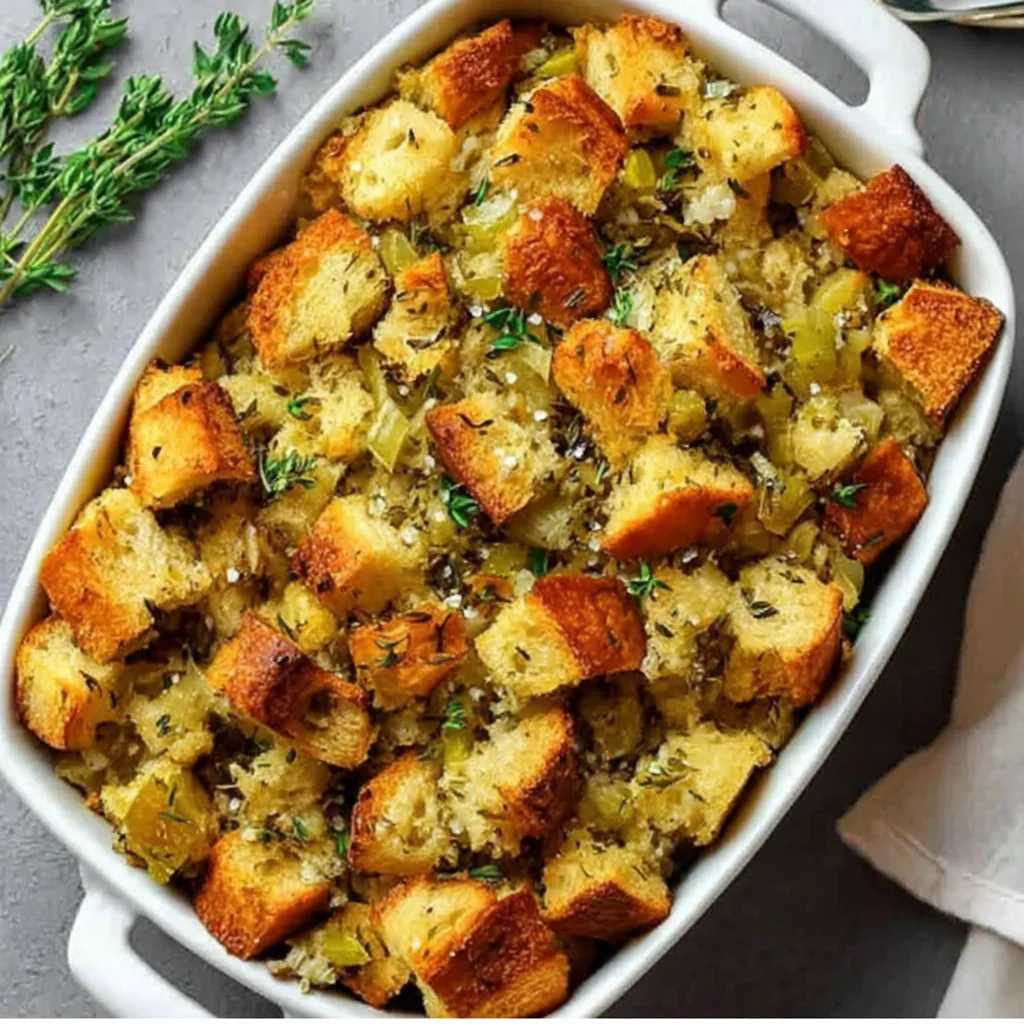
Step 10: Remove the foil and bake for an additional 15-20 minutes until golden brown.
Baking uncovered creates a crispy top that contrasts beautifully with the moist stuffing underneath. The final browning step is essential for achieving that perfect texture and flavor balance.
Step 11: Let it rest for 10 minutes before serving.
Allowing the stuffing to rest helps stabilize the texture, making it easier to serve without falling apart. This short resting period also allows the flavors to meld further.

Herb Selection for Unique Flavors
While sage and thyme are traditional, experimenting with other herbs can yield exciting new flavors. Consider adding rosemary for a piney note or parsley for freshness. Combining different herbs allows you to create a stuffing that reflects your personal taste, adding an element of surprise to this holiday staple.
Texture Variation for a Well-Balanced Stuffing
Incorporating various components like crunchy nuts or sweet dried fruits can deliver enjoyable contrasts in texture. A mix of crispy and soft elements can elevate the stuffing, providing a richer eating experience. Think about the balance of flavors and textures; adding a twist can make all the difference.
Beyond Thanksgiving: Using Leftover Stuffing Creatively
Don't let leftover stuffing go to waste after the holiday. Use it as a filling for stuffed peppers or in a savory bread pudding. You can even transform it into croquettes for a quick snack. With a little creativity, leftover stuffing can shine in new dishes, extending its delicious life past the Thanksgiving table.
FAQs
What can I do if my stuffing turns out too dry?
If your stuffing is too dry, adding a bit more broth before serving can help. Sprinkle some over the top and gently mix to moisten it evenly, ensuring it's more succulent when served.
Can I scale this recipe for a larger crowd?
Absolutely! Simply multiply the ingredient amounts accordingly. Ensure to check your baking dish's size and the cooking time, as larger batches may require additional time for even cooking.
Why does my stuffing seem bland?
If your stuffing tastes bland, it may need more seasoning. Make sure to taste the mixture before baking and adjust with salt and pepper, or add a splash of flavorful broth to enhance its character.
What if my stuffing is too thick?
Should your stuffing be too thick, gradually incorporate more broth while mixing until it reaches your desired consistency. Don't be afraid to adjust; the right balance is key for a flavorful texture.
Can I add sausage to my stuffing recipe?
Certainly! Adding cooked sausage can introduce richness and a depth of flavor. Cook it separately before adding to the vegetables, allowing the meat to combine well with the rest of the ingredients.
Is there a way to make this stuffing spicier?
For a spicier stuffing, consider adding diced jalapeños, crushed red pepper flakes, or a dash of hot sauce. Start with small amounts and adjust until you achieve your desired heat level.
Conclusion
Crafting your own Thanksgiving stuffing allows for creativity while honoring tradition. It's a dish where every flavor can shine, providing a personal touch to your holiday meal.
So whether you opt for a classic recipe or add in your unique elements, this Thanksgiving stuffing will surely become a family favorite. Enjoy the process and share it with your loved ones for a truly memorable gathering.
Recipe Card
Crafting a Flavorful Thanksgiving Stuffing
Ingredients
Method
- Preheat your oven to 350°F (175°C).
- In a large skillet, melt the butter over medium heat.
- Add the diced onion and celery to the skillet and sauté for about 5-7 minutes until softened.
- Stir in the minced garlic and cook for another minute until fragrant.
- In a large bowl, combine the cubed bread, sautéed vegetables, and herbs.
- Pour in the broth gradually, stirring to moisten the bread evenly.
- Add any optional ingredients like nuts or dried fruit, and season with salt and pepper.
- Transfer the mixture to a greased baking dish.
- Cover the dish with aluminum foil and bake for 30 minutes.
- Remove the foil and bake for an additional 15-20 minutes until golden brown.
- Let it rest for 10 minutes before serving.
Tried this recipe?
Let us know how it was!Notes
Additional serving suggestions: pair with a crisp salad, garlic bread, or roasted seasonal vegetables for balance.
For make-ahead, prep components separately and assemble just before heating to preserve texture.
Taste and adjust with acid (lemon/vinegar) and salt right at the end to wake up flavors.