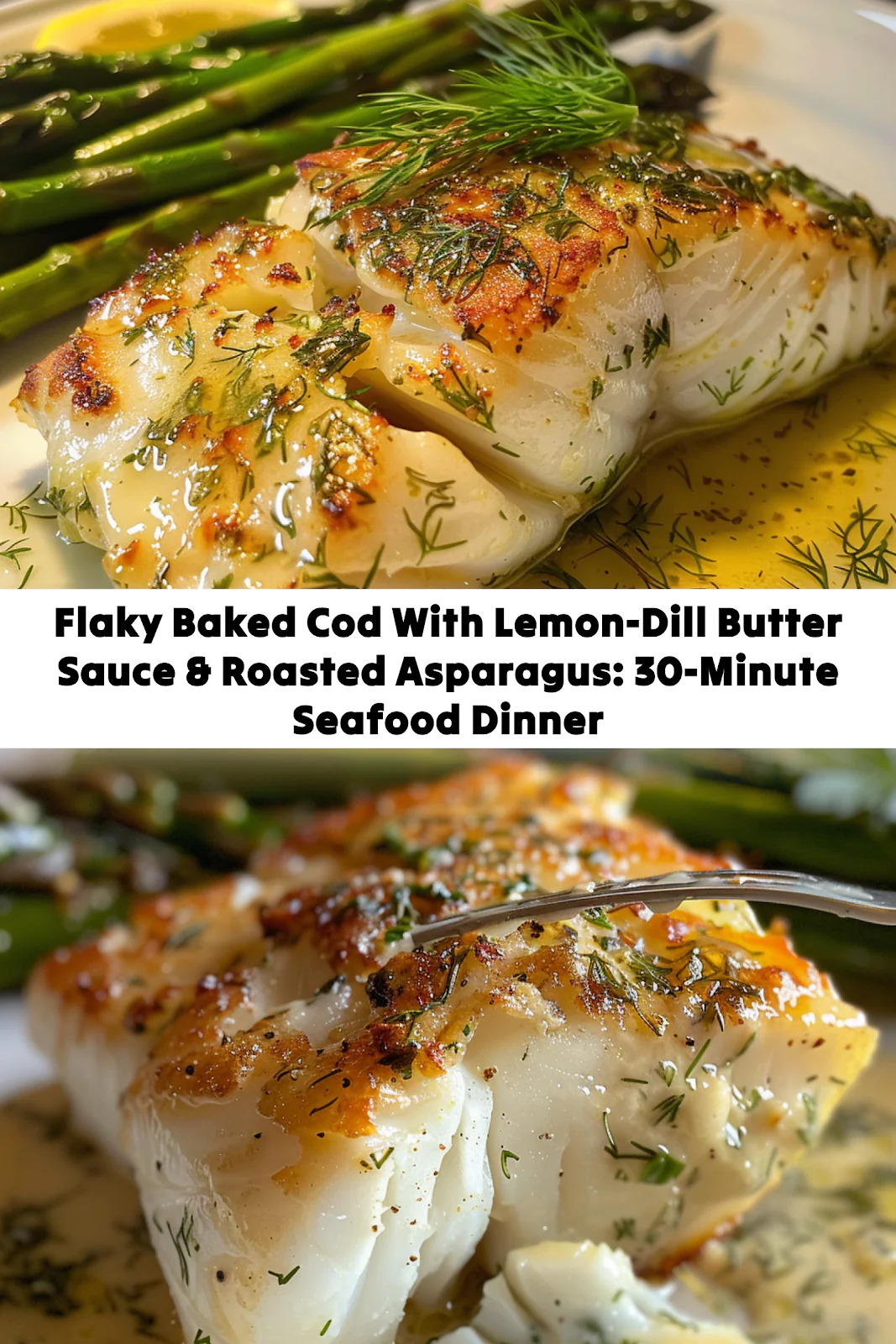
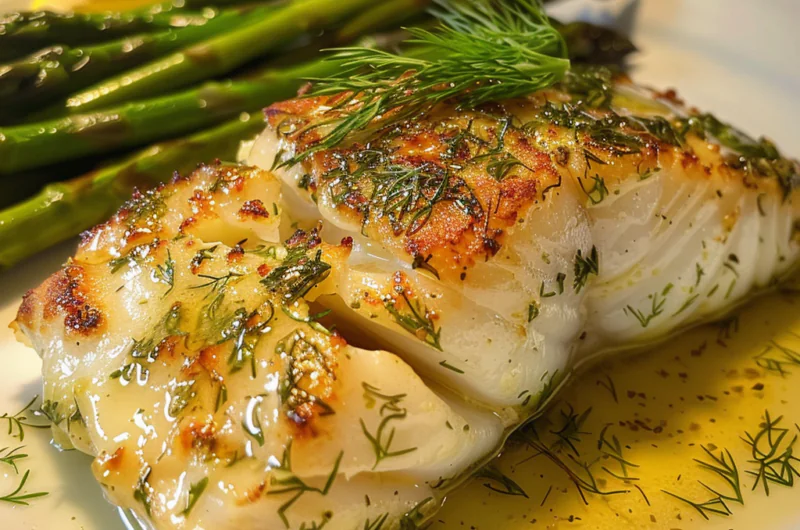
Tender, flaky white fish roasted alongside crisp asparagus, finished with a bright, velvety lemon-butter sauce—all on the table in 30 minutes.
📋 In This Article
Introduction
Let’s be honest: getting a wholesome, elegant dinner on the table on a Tuesday night is often harder than it looks. This Flaky Baked Cod with Lemon-Dill Butter Sauce & Roasted Asparagus is the solution to that weeknight dilemma. It takes the stress out of cooking seafood by using a hands-off roasting method that guarantees moist, tender fish every single time.
I’ve spent years testing fish recipes, and the biggest hurdle is usually the timing. Nobody wants dry, chalky cod. This method solves that problem by roasting the asparagus and fish in a single heavy skillet or baking sheet. It’s a “set it and forget it” approach, save for a quick check with a thermometer. The real magic happens with the sauce—a simple emulsion of butter, lemon, and dill that transforms the mild flavor of cod into something vibrant and restaurant-worthy without requiring culinary school skills.
Why This Recipe Works
The brilliance of this 30-Minute Seafood Dinner lies in thermal efficiency and flavor layering. By roasting the cod and asparagus together at 400°F (200°C), we create an environment where the fish cooks gently in the ambient heat while the asparagus gets the high heat it needs for caramelization.
Cod is a lean protein with very little fat, which makes it susceptible to drying out. We counteract this by coating it in a portion of the lemon-butter mixture before it hits the oven. Fat acts as a heat conductor and a moisture barrier, essentially basting the fish as it roasts. Meanwhile, the asparagus benefits from the “Maillard reaction”—the chemical process that gives browned food its distinctive flavor—because we roast it at a high enough temperature to encourage browning rather than steaming. This dual approach ensures you get a nutrient-dense meal—packed with omega-3s from the fish and vitamins K and A from the asparagus—without sacrificing texture.
Ingredients List
For the Fish and Vegetables
- 4 (6-ounce) fresh cod fillets: Look for wild-caught if possible; it has a sweeter, cleaner flavor. If using frozen, thaw completely and pat obsessively dry.
- 1 bunch fresh asparagus: Trim the woody ends. I prefer snapping them off; they naturally break where the tender part begins.
- 2 tablespoons olive oil: Extra virgin is great, but regular olive oil works fine here since we aren’t searing.
- Salt and black pepper: Essential for seasoning. Don’t skimp on the pepper.
- 1 tablespoon fresh parsley: Chopped, for a pop of color at the end.
For the Lemon-Dill Butter Sauce
- 4 tablespoons unsalted butter: This allows you to control the salt level. Cut into cubes for even melting.
- 1 medium lemon: Zested and juiced. You want about 2 tablespoons of juice.
- 2 tablespoons fresh dill: Finely chopped. Dill loses its potency quickly, so add it at the end.
- 3 cloves garlic: Minced. Don’t let it burn in the butter, or it turns bitter.
- 1/4 cup white wine (optional): Dry varieties like Sauvignon Blanc add acidity and depth.
Equipment Needed
You don’t need much, but the right gear makes the 30-minute timeline realistic.
- Large Baking Sheet or Oven-Proof Skillet: A rimmed baking sheet is standard, but a cast-iron skillet retains heat better for a superior crust on the fish.
- Parchment Paper: Optional, but it saves you from scrubbing the pan later.
- Small Saucepan: For the sauce. A heavy-bottomed one prevents the butter from scorching.
- Whisk: To emulsify the sauce ingredients.
- Instant-Read Thermometer: The only way to truly know when fish is done. Visual cues are unreliable.
Step-by-Step Instructions
Step 1: Preheat and Prep
Preheat your oven to 400°F (200°C). This temperature is the sweet spot—high enough to roast the vegetables but gentle enough to keep the lean cod moist.
Step 2: Season the Asparagus
Place the trimmed asparagus on your baking sheet or skillet. Toss with the olive oil, a generous pinch of salt, and black pepper. Make sure the spears are in a single layer. If they are crowded, they will steam and turn limp rather than roasting. Place the sheet in the oven for 5 minutes. This head start ensures the asparagus is tender-crisp by the time the fish finishes.
Step 3: Prep the Cod
While the asparagus gets a head start, pat the cod fillets dry with paper towels. This step is non-negotiable for good texture. Surface moisture creates steam, which prevents browning and dilutes flavor. Season the fillets lightly with salt and pepper.
Step 4: Add the Fish
Remove the baking sheet from the oven. Toss the asparagus slightly to ensure even cooking, then push the spears to the edges to make room for the fish. Place the cod fillets in the center. Return the pan to the oven and roast for 12 to 15 minutes.
Step 5: Make the Lemon-Dill Butter Sauce
While the fish roasts, melt the butter in your small saucepan over medium-low heat. Add the garlic and sauté for just 30 seconds until fragrant—don’t let it brown. Pour in the lemon juice and white wine (if using). Let the mixture simmer gently for 2 minutes to reduce slightly. Remove from the heat and stir in the fresh dill and lemon zest.
Step 6: Check for Doneness
Use your thermometer. The cod is ready when it reaches an internal temperature of 140°F (60°C) in the thickest part. Remove it from the oven immediately; carryover cooking will bring the temp up to the FDA-recommended 145°F (63°C) as it rests. If you wait until 145°F in the oven, you’ll have dry fish by the time it hits the plate.
Step 7: Serve
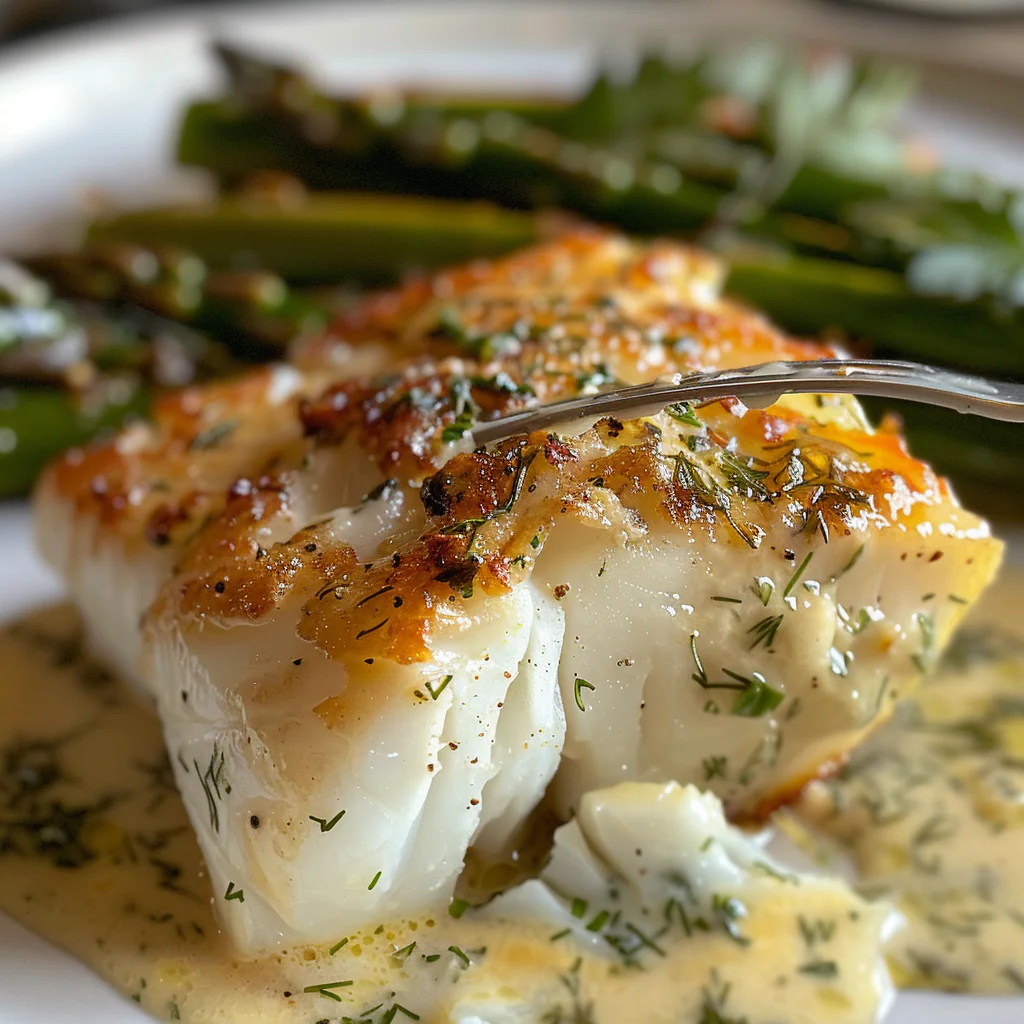
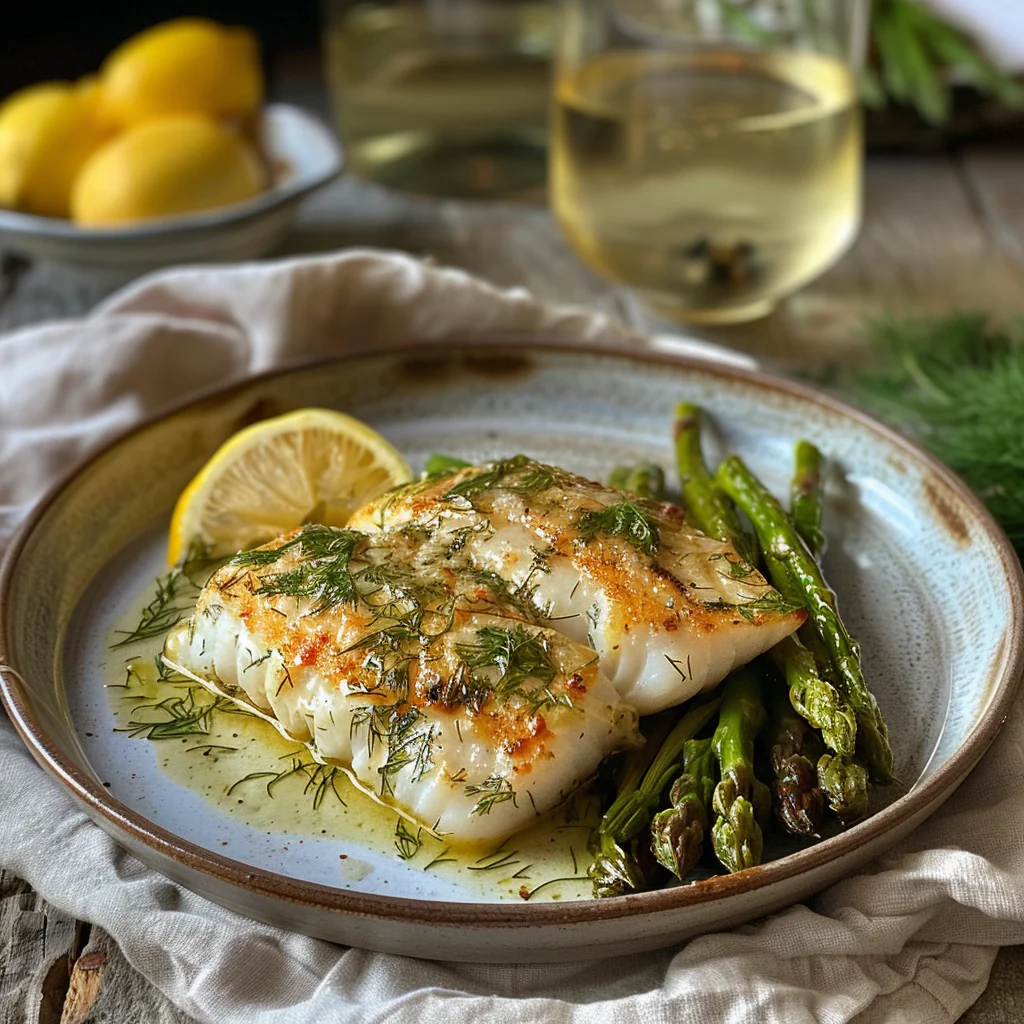
Plate the cod and asparagus. Pour the warm sauce generously over the fish. The heat of the sauce will meld with the juices from the cod, creating a rich, silky glaze. Sprinkle with parsley.
💡 Pro Tips for Perfect Flaky Cod & Crispy Asparagus
To achieve the perfect Flaky Baked Cod, you need to understand protein denaturation. Fish proteins contract and squeeze out moisture as they heat. If you overcook them, the fibers tighten like a wrung-out sponge.
Don’t trust the “flake test” blindly. While flaking is a sign of doneness, by the time a cold fork flakes the fish, it’s often already overcooked. Use a thermometer. I learned this the hard way years ago—relying on looks alone cost me many a good fillet.
Size matters for asparagus. Thick stalks can handle the heat, but thin “pencil” asparagus will roast much faster. If you have thin stalks, roast them for just 3 minutes before adding the fish, or they will turn to mush.
Rest your fish. Just like a steak, cod needs a minute or two to rest. This allows the muscle fibers to relax and reabsorb the juices that were pushed toward the center by the oven heat. Cutting into it immediately results in a puddle of lost flavor on your plate.
⚠️ Common Mistakes to Avoid
Even simple recipes have pitfalls. Here is how to avoid the most common ones:
- Overcooked Cod: This is the number one complaint. Cod is lean; it has no fat to render. Once it passes 145°F internally, the texture turns from velvety to rubbery almost instantly. Watch the thermometer like a hawk.
- Soggy Asparagus: This happens when the spears are crowded on the pan. Moisture released from the vegetables needs space to evaporate. If the pan is crowded, the moisture gets trapped and turns to steam. Use two pans if necessary.
- Broken Sauce: If your butter sauce looks greasy or separated, your heat was too high. Butter is an emulsion of fat and milk solids; high heat breaks that bond. Keep the heat medium-low and whisk constantly to maintain a velvety consistency.
Variations & Pairings
This dish is a template, not a rulebook. The Lemon-Dill Butter Sauce is versatile enough to pair with other proteins, and the roasting method works for many vegetables.
- Fish Substitutes: If cod isn’t available, haddock is the closest relative with a similar mild flavor. Halibut is a premium alternative with a meatier texture, though it may need a few extra minutes. Salmon works beautifully but brings a stronger, oilier flavor profile.
- Herb Swaps: Dill isn’t everyone’s favorite. Fresh parsley or chives offer a milder onion flavor. For a bolder kick, try tarragon, which has a subtle anise note that pairs incredibly well with seafood.
- Vegetable Sides: If asparagus is out of season, broccoli florets or green beans roast well in the same timeframe. Just be sure to cut them into uniform sizes so they cook evenly.
- Dairy-Free Option: You don’t need butter for a rich sauce. Use a high-quality dairy-free butter alternative or a splash of olive oil emulsified with the lemon juice. The key is the acid-fat balance.
What to Serve Alongside: A chilled glass of Sauvignon Blanc mirrors the acidity of the lemon sauce. For a heartier meal, serve with a simple potato salad or a loaf of crusty bread to mop up the extra sauce.
Storage & Reheating
Seafood is best enjoyed fresh, but leftovers happen. Store the cod and asparagus in an airtight container in the refrigerator for up to 2 days. Keep the sauce separate if possible; storing it on the fish can make the delicate flakes soggy.
Reheating: Microwaves are the enemy of leftover fish. They heat unevenly and rubberize the texture. Instead, place the cod in a baking dish, add a splash of water or broth, cover with foil, and heat in a 275°F (135°C) oven for about 15 minutes. This gentle heat warms the fish without cooking it further.
Frequently Asked Questions (FAQ)
+Why did my cod come out watery?
You likely didn’t pat the fillets dry enough before seasoning. Fish often carries moisture from the store or thawing process. That water turns to steam in the oven, preventing the natural sugars in the fish from caramelizing and leaving you with a poached, rather than roasted, texture.
+Can I use frozen cod fillets?
Absolutely. Frozen cod is often fresher than “fresh” fish at the counter because it was flash-frozen on the boat. Just thaw it overnight in the fridge or run the sealed bag under cold water. Crucial step: Pat them extremely dry with paper towels before seasoning to remove every drop of surface moisture.
+How do I know when the cod is fully cooked?
The USDA recommends 145°F, but I recommend pulling it at 140°F. The residual heat will carry it over the finish line. Visually, the flesh should turn from translucent to opaque white, and it should flake easily when gently pressed with a fork. If it feels firm or hard, it’s overcooked.
+Can I make this recipe without the wine?
Yes, the wine is optional. It adds a layer of acidity and complexity, but you can substitute it with a tablespoon of water or fish stock. You may need to add an extra squeeze of lemon juice to balance the flavors since wine provides a specific acidity profile.
+Can I use dried dill instead of fresh?
You can, but use it sparingly. Dried herbs are more potent than fresh. Use one teaspoon of dried dill in the sauce, but I highly recommend fresh if you can find it—the bright, grassy notes of fresh dill are a key part of this sauce’s flavor profile.
📌 Pin this Recipe for Later!