
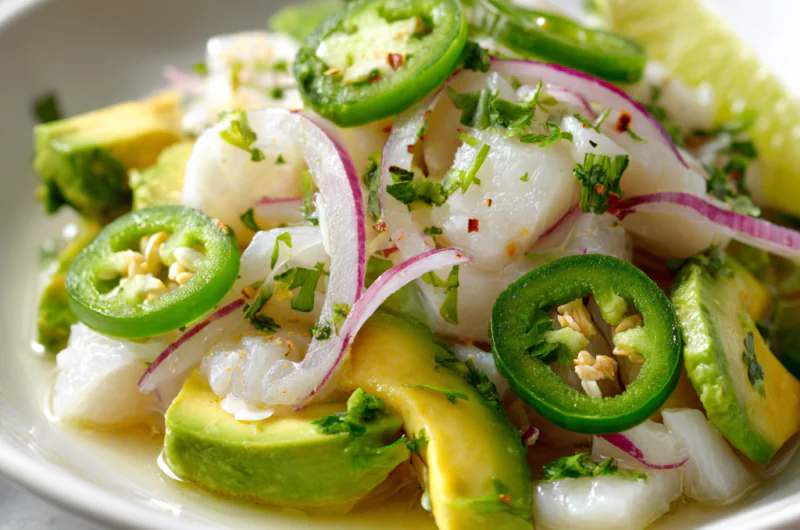
Cool, creamy avocado meets firm, citrus-cured halibut in this 20-minute appetizer that defines summer eating.
📋 In This Article
- Introduction
- Why This Recipe Works (The Science of Ceviche)
- Is Halibut Ceviche Safe to Eat?
- Ingredients You’ll Need
- Step-by-Step Instructions
- Common Mistakes to Avoid
- Variations & Customizations
- Serving Suggestions & Pairings
- Storage & Make-Ahead Tips
- Pro Tips for Ceviche Perfection
- Frequently Asked Questions (FAQ)
Introduction
There is a specific kind of magic that happens when fresh fish meets citrus. It isn’t heat, but it’s close. Fresh Halibut Ceviche With Avocado and Jalapeño, No Cooking Required is my go-to when the temperature rises and the thought of turning on a stove is offensive. Halibut is the star here—it’s firm enough to hold its shape during the “cooking” process but tender enough to melt on the tongue. Originating from Latin America, ceviche is a celebration of fresh seafood, relying on a citrus marinade to transform raw fish into a safe, zesty dish. It’s the ultimate warm-weather appetizer: bright, nutrient-dense, and impossibly refreshing.
Why This Recipe Works (The Science of Ceviche)
We need to talk about what actually happens in the bowl. Most people think the lime juice “cooks” the fish. It doesn’t. Real cooking requires heat. Instead, the high acidity of the lime juice triggers protein denaturation. The citric acid unwinds the tightly coiled protein structures in the raw halibut. As they unravel, these proteins tangle up with each other, turning the flesh opaque and firm—mimicking the texture of heat-cooked fish.
This process creates a unique texture: firm on the outside, raw and tender on the inside. However, it’s crucial to clarify that while the acid alters the protein structure, it does not kill bacteria or parasites the way heat does. This is why food safety and sourcing are non-negotiable.
Is Halibut Ceviche Safe to Eat?
Yes, but only if you start with the right raw material. You must use sushi-grade fish. This label usually means the fish has been flash-frozen at specific temperatures to eliminate parasites. When selecting fresh halibut, always source it from a trusted purveyor. Look for fish that has a bright, translucent appearance and smells clean, like the ocean, not “fishy.” The denaturation process that occurs when the fish is marinated in citrus juice mimics cooking by altering the protein structure, resulting in the opaque texture and flavor profile of cooked fish. However, remember that while this method makes the fish texturally pleasant, it does not sterilize it. For optimal taste and safety, consume your ceviche shortly after preparation.
Ingredients You’ll Need
To create a vibrant and refreshing dish, gather the following high-quality ingredients:
- 1 pound of sushi-grade halibut: Dice into small cubes for optimal texture and flavor absorption.
- 1/2 cup of freshly squeezed lime juice: This acts as the acidic marinade to ‘cook’ the fish.
- 1 ripe avocado: Diced for creaminess.
- 1 finely chopped jalapeño: Adjust according to your heat preference.
- 1/4 cup of finely diced red onion: Provides a crunch and a hint of sweetness.
- 1/4 cup of chopped fresh cilantro: Adds herbal freshness.
- 1/2 teaspoon of salt: To enhance all the flavors.
- 1 cup of halved cherry tomatoes: For added color and juiciness.
- tortilla chips: For a perfect crunchy accompaniment!
Step-by-Step Instructions
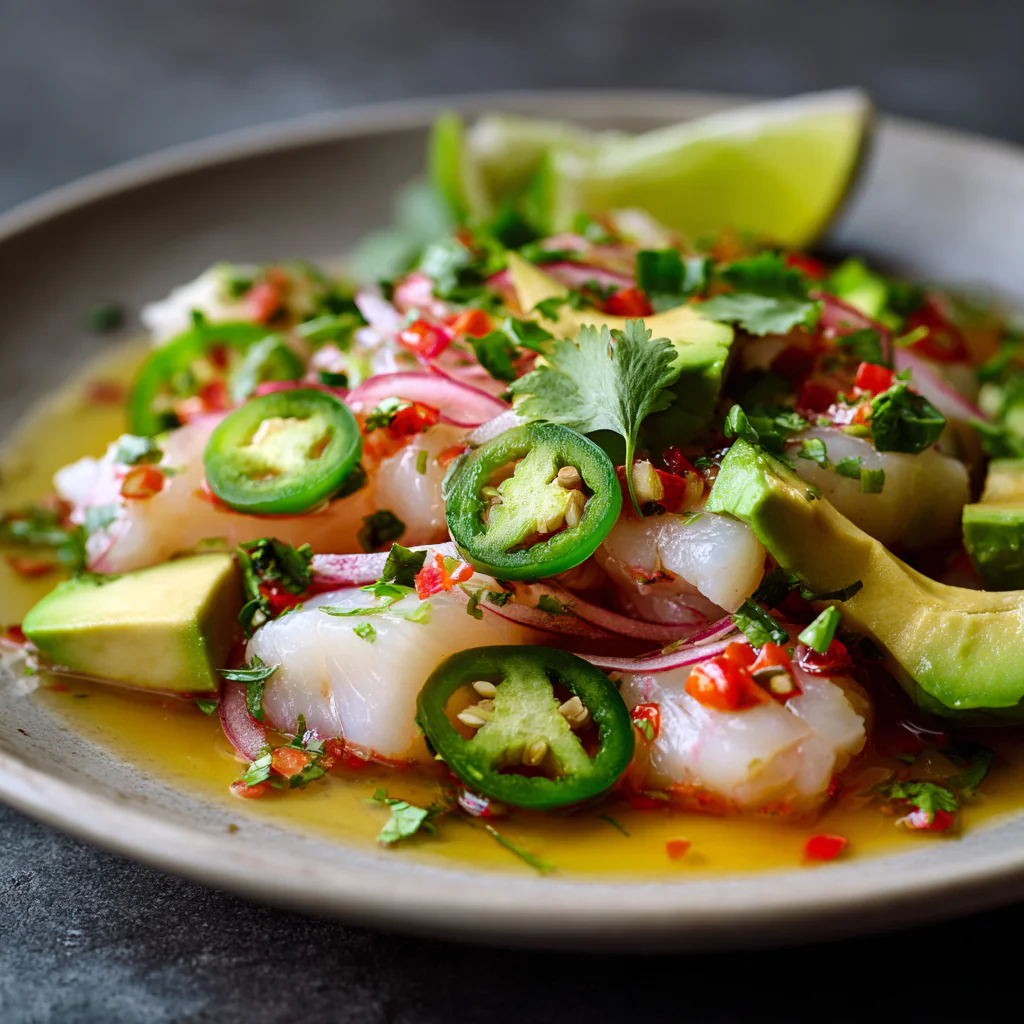
- Prepare the Fish: Start by selecting sushi grade fresh halibut. Using a sharp knife, dice the halibut into small, uniform cubes (about ½ inch). Uniformity ensures even marination and texture. Estimated time: 10 minutes.
- Dice Vegetables: Finely dice 1 ripe avocado, 1 small red onion, and 1 fresh jalapeño (seeds removed for less heat). Ensure ingredients are cut to similar sizes for uniform mixing. Estimated time: 10 minutes.
- Mix Ingredients: In a large glass bowl, gently combine the diced halibut, onion, and jalapeño. Add a pinch of salt and pepper to taste. Note: Do not add the avocado yet. Estimated time: 5 minutes.
- Marinate the Ceviche: Squeeze the juice of 2-3 limes over the mixture to cover the fish entirely. The acid will ‘cook’ the halibut. Cover and refrigerate for 30-45 minutes. This step is crucial for flavor development and texture.
- Chill and Serve: After marination, drain excess liquid if preferred. Gently fold in the diced avocado and cilantro. The first time I made this, I dumped the avocado in with the fish. It turned into grey sludge. Don’t be like me—add it last. Serve chilled in small bowls or on tortilla chips. Estimated time: 5 minutes.
⚠️ Common Mistakes to Avoid
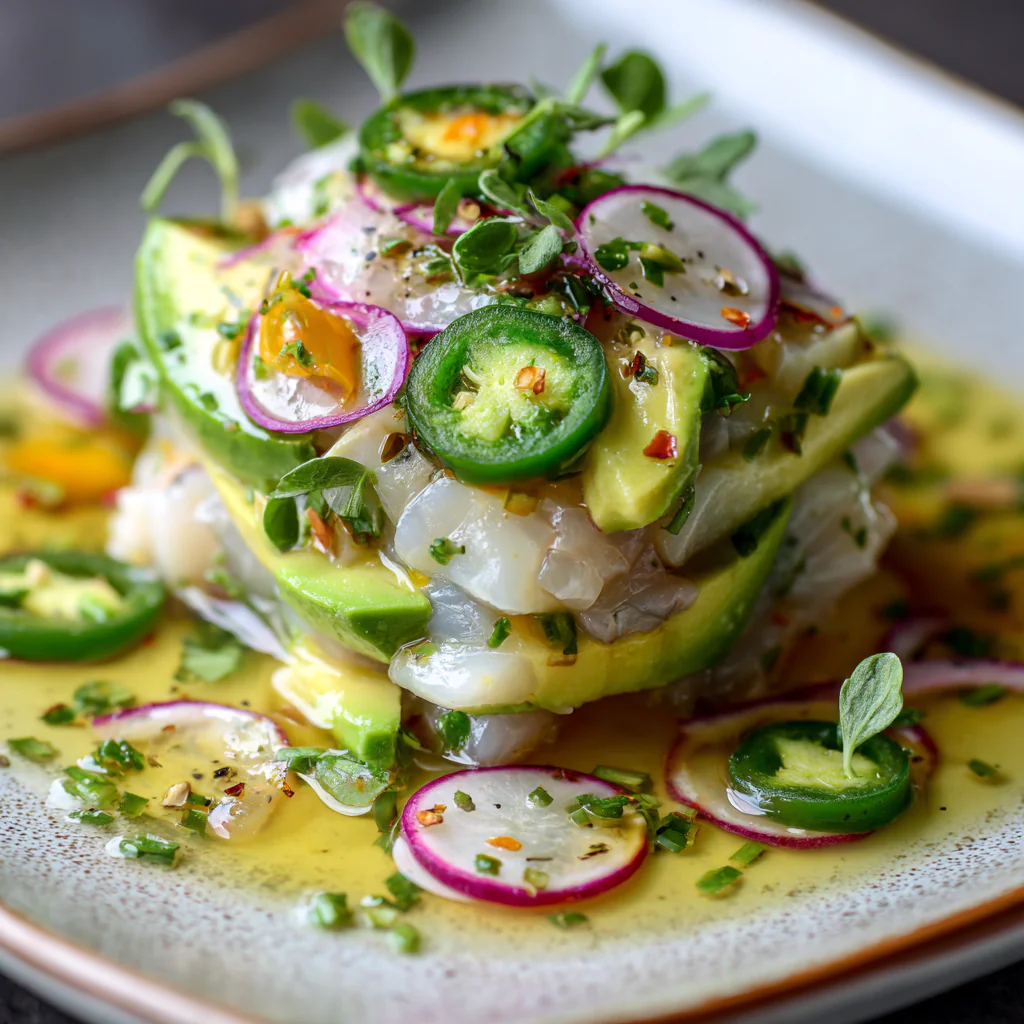
Avoiding common pitfalls is crucial for achieving the perfect dish. One major mistake is over-marinating the fish. While the citric acid from lime juice effectively denatures the fish, leaving it in the marinade for too long can lead to a mushy, chalky texture. Aim for a marinating time of 30 to 45 minutes for optimal results. Conversely, under-marinating can leave the fish tasting raw and unappealing, so striking the right balance is essential.
Another critical factor is the quality of the fish. Always opt for sushi-grade halibut to ensure safety and freshness. Using lower-quality fish may introduce unwanted bacteria, compromising the dish. Additionally, pay attention to ingredient proportions; an excess of jalapeño or lime can easily overpower the delicate flavors of the halibut and avocado. Finally, serve your ceviche immediately after adding the avocado to retain the best texture and flavor.
Variations & Customizations
Elevate your ceviche with exciting variations to suit your taste preferences. For a tropical twist, consider a Mango Ceviche, which combines the sweetness of ripe mango with the refreshing tang of lime. Alternatively, a Pineapple Ceviche adds a zesty burst that pairs beautifully with the delicate flavors of halibut.
If you’re feeling adventurous, try substituting halibut with Shrimp Ceviche or Scallop Ceviche for a delightful seafood medley. To adjust the spice level, add more or fewer Jalapeños or introduce diced bell peppers for a milder touch. Experiment with different citrus blends, such as combining lime and orange juice, to create a more complex flavor profile. The beauty of ceviche lies in its versatility—feel free to mix and match ingredients to create your perfect dish!
Serving Suggestions & Pairings
This dish shines when paired with crunchy Tortilla Chips or crispy Tostadas. These accompaniments elevate the fresh flavors, providing an excellent contrast in texture. For an added touch, consider garnishing with Avocado Slices to enhance the creaminess. To complement the acidity, serve it alongside an ice-cold Margarita Pairing, which balances the lime and jalapeño beautifully. Alternatively, a crisp White Wine Pairing or a light Mexican Beer can also enhance the overall dining experience, making it perfect for summer gatherings.
Storage & Make-Ahead Tips
Ceviche is a “eat now” dish. For short-term storage, keep the ceviche in the refrigerator, ideally consuming it within 1-2 hours of preparation to maintain optimal texture and flavor. If you need to prepare it in advance, consider storing components separately. Keep the diced halibut and jalapeños in one container, while the avocado and marinade can be stored in another. This method prevents the fish from becoming overly ‘cooked’ by the acid, which can lead to an undesirable texture. Remember, ceviche is best enjoyed fresh; plan accordingly.
💡 Pro Tips for Ceviche Perfection
To achieve a dish that delights your guests, follow these expert tips. Start with a sharp knife to ensure clean cuts of halibut, allowing for better texture and flavor absorption. Always use fresh citrus; test the acidity of your limes before juicing to ensure the right balance of tartness. Ensure all ingredients, including the fish and vegetables, are chilled to maintain freshness and enhance the overall dish.
Taste testing throughout the preparation process is crucial; adjust seasoning with salt and pepper as necessary to achieve a well-balanced flavor profile. The quality of your ceviche relies heavily on using fresh, cold ingredients, as this not only preserves the integrity of the fish but also enhances the flavors of the avocado and jalapeño. Finally, serve your ceviche immediately for the best texture and flavor.
Frequently Asked Questions (FAQ)
+How do I know if the fish is ‘cooked’ by the lime juice?
Look for a visual change. The fish should turn opaque on the outside but remain slightly translucent in the center. It should feel firm and springy to the touch, not mushy or slimy.
+Can I use bottled lime juice?
No. Bottled juice lacks the fresh aromatic oils and has a metallic taste that ruins the dish. You need fresh limes for this recipe to work.
+Why is my ceviche watery?
This happens if the fish wasn’t patted dry before marinating or if you didn’t drain the excess liquid after marinating. As the proteins tighten up, they expel moisture. Drain that liquid before serving.
+Can I make ceviche the day before?
You can prep the ingredients (diced veggies and fish) a day ahead, but do not marinate the fish until the day of serving. Over-marinated fish has a dry, cottony texture.
+Is ceviche safe for pregnant women?
Generally, doctors advise pregnant women to avoid raw fish due to potential parasites. Because the acid does not kill bacteria like heat does, it’s best to consult a medical professional before consuming.