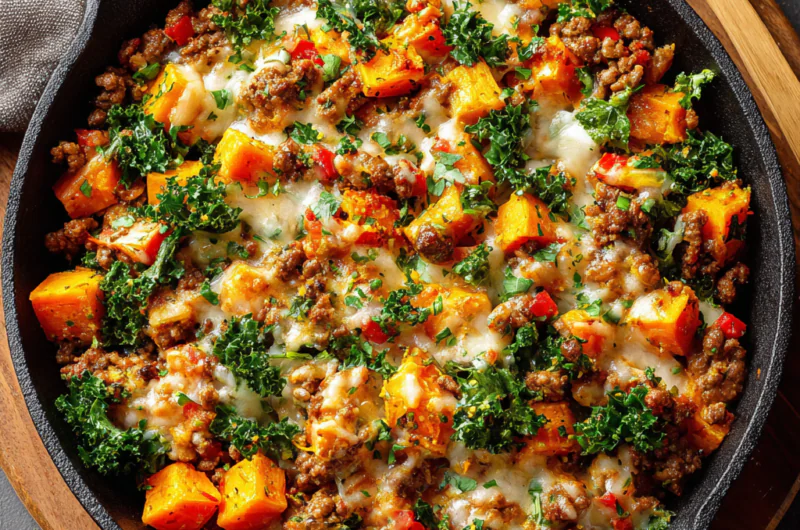
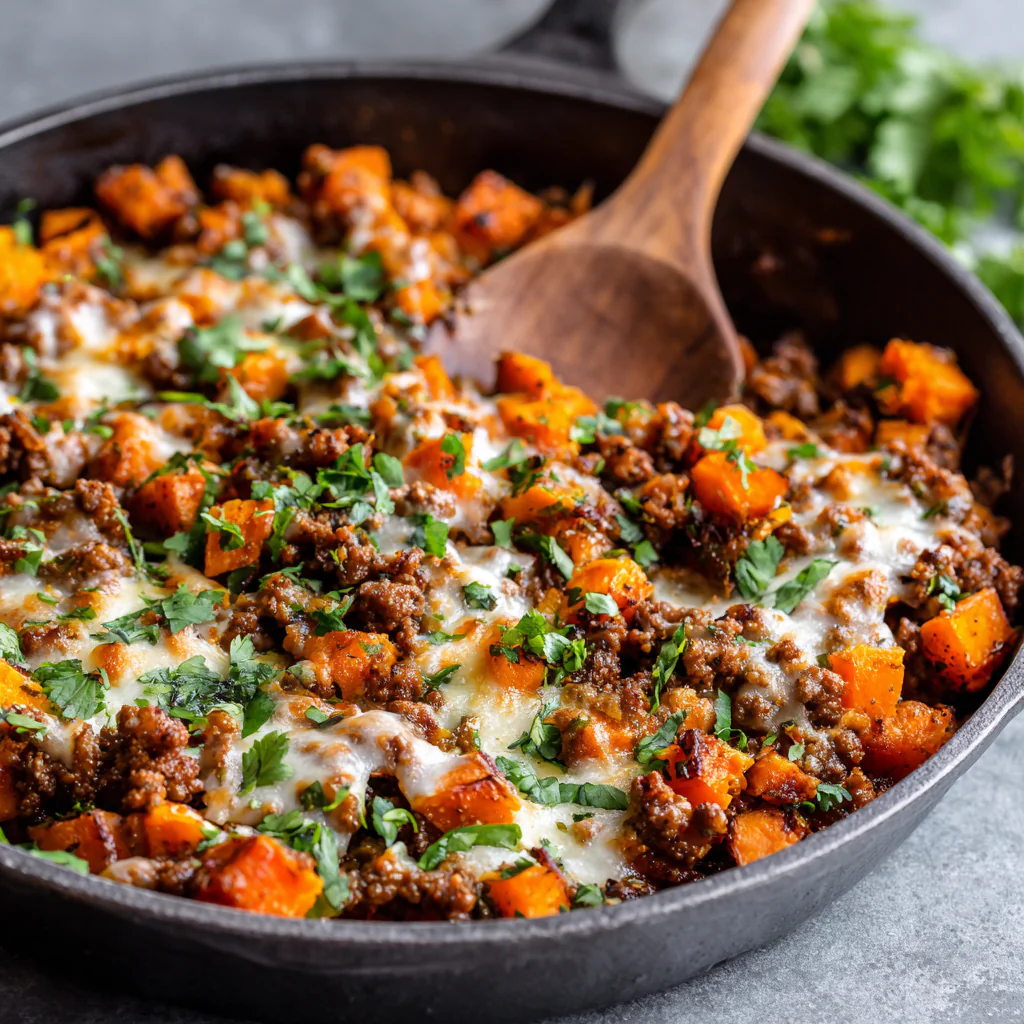
A protein-packed, 40-minute weeknight dinner with tender sweet potatoes, savory beef, and minimal cleanup — no separate pots required.
📋 In This Article
Introduction
Let’s be honest: weeknight cooking rarely goes according to plan. You start with good intentions, and suddenly there’s a sink full of dishes and a meal that barely justifies the effort. That’s exactly why this One-Pan Ground Beef and Sweet Potato Skillet exists. It’s the kind of recipe that delivers on every front — protein, complex carbs, healthy fats — without the chaos.
Ground beef brings the savory heft. Sweet potatoes contribute natural sweetness and staying power. Together? They hit your macros in a way that actually satisfies. I’ve made this dish more times than I can count, usually on those nights when “what’s for dinner” feels like a personal attack. It works every time.
Why This Recipe Works
Here’s the thing. Most “healthy” recipes sacrifice flavor for nutrition, or vice versa. This skillet does neither. The ground beef provides complete protein with all nine essential amino acids, while sweet potatoes deliver complex carbohydrates that digest slowly — meaning no blood sugar crash an hour later.
But the real magic happens in the pan. When beef hits a hot surface, the Maillard reaction kicks in. This isn’t just “browning” — it’s a chemical transformation where amino acids and sugars create hundreds of new flavor compounds. That caramelized crust on the meat? Pure umami. And when you deglaze the pan with broth, those browned bits (called fond) dissolve back into the dish, building layers of flavor you can’t fake with seasoning alone.
The fat content matters too. I use lean beef (90/10), which renders enough to cook the vegetables without needing excessive added oil. The rendered fat carries flavor throughout the entire dish.
Ingredients You’ll Need
Protein
- 1 pound ground beef (90/10 lean — not too fatty, not too dry)
Vegetables
- 2 medium sweet potatoes, peeled and diced into ½-inch cubes
- 1 medium yellow onion, diced
- 1 bell pepper, diced (red or orange for sweetness, green for mild bitterness)
- 3 cloves garlic, minced
Aromatics and Liquids
- 2 tablespoons olive oil
- ½ cup beef broth (low sodium lets you control salt)
Spices
- 1 teaspoon smoked paprika (regular works, but smoked adds depth)
- 1 teaspoon ground cumin
- ½ teaspoon kosher salt, plus more to taste
- ½ teaspoon black pepper
- ¼ teaspoon chili flakes (optional, for heat)
Finishers
- Fresh parsley or cilantro, chopped
- Lime wedges (acid brightens everything)
Step-by-Step Instructions
1. Prep Everything First (Mise en Place)
Dice the sweet potatoes into uniform ½-inch cubes. I know it’s tempting to rush this part, but inconsistent sizing means some pieces turn to mush while others stay raw. On a cutting board, the difference between ½-inch and 1-inch doesn’t look like much. In the pan? It’s the difference between perfectly tender and disappointingly uneven.
Dice the onion and bell pepper. Mince the garlic. Keep them separate — they go into the pan at different times.
Prep time: 10-12 minutes if you’re focused. Longer if you’re scrolling your phone.
2. Brown the Beef
Set a large cast iron or stainless steel skillet over medium-high heat. Add 1 tablespoon olive oil and let it shimmer — about 90 seconds.
Add the ground beef, breaking it into chunks with a wooden spoon. Don’t stir constantly. Let it sit for 2 minutes undisturbed. Flip, break up further, and let sit again. You want deep brown patches, not gray steamed meat.
This browning step takes 6-8 minutes total. The beef is done when no pink remains and you see crispy, caramelized edges. Remove the beef with a slotted spoon and set aside. Leave the rendered fat in the pan — that’s liquid flavor.
3. Sauté the Aromatics
Reduce heat to medium. Add the remaining 1 tablespoon olive oil if the pan looks dry. Add onion and bell pepper, stirring to coat in the rendered fat. Cook 4-5 minutes until the onion softens and turns translucent.
Add garlic, paprika, cumin, salt, pepper, and chili flakes. Stir constantly for 45 seconds — just until fragrant. Garlic burns fast, and burnt garlic tastes bitter. I’ve ruined more dishes than I care to admit by walking away at this step. Don’t be like me.
4. Steam the Sweet Potatoes
Add the diced sweet potatoes to the pan, stirring to combine with the aromatics. Pour in ½ cup beef broth. The liquid will bubble aggressively — that’s expected.
Cover the pan with a lid or baking sheet. Reduce heat to medium-low. Steam for 12-15 minutes, lifting the lid to stir every 4-5 minutes. The steam trapped inside cooks the potatoes evenly, while direct contact with the pan creates light caramelization on the edges.
Check doneness by piercing a cube with a fork. It should slide in with minimal resistance but not fall apart. Overcooked sweet potatoes turn into mashed potatoes. Undercooked ones are unpleasantly crunchy. You’re aiming for tender but intact.
5. Bring It Together
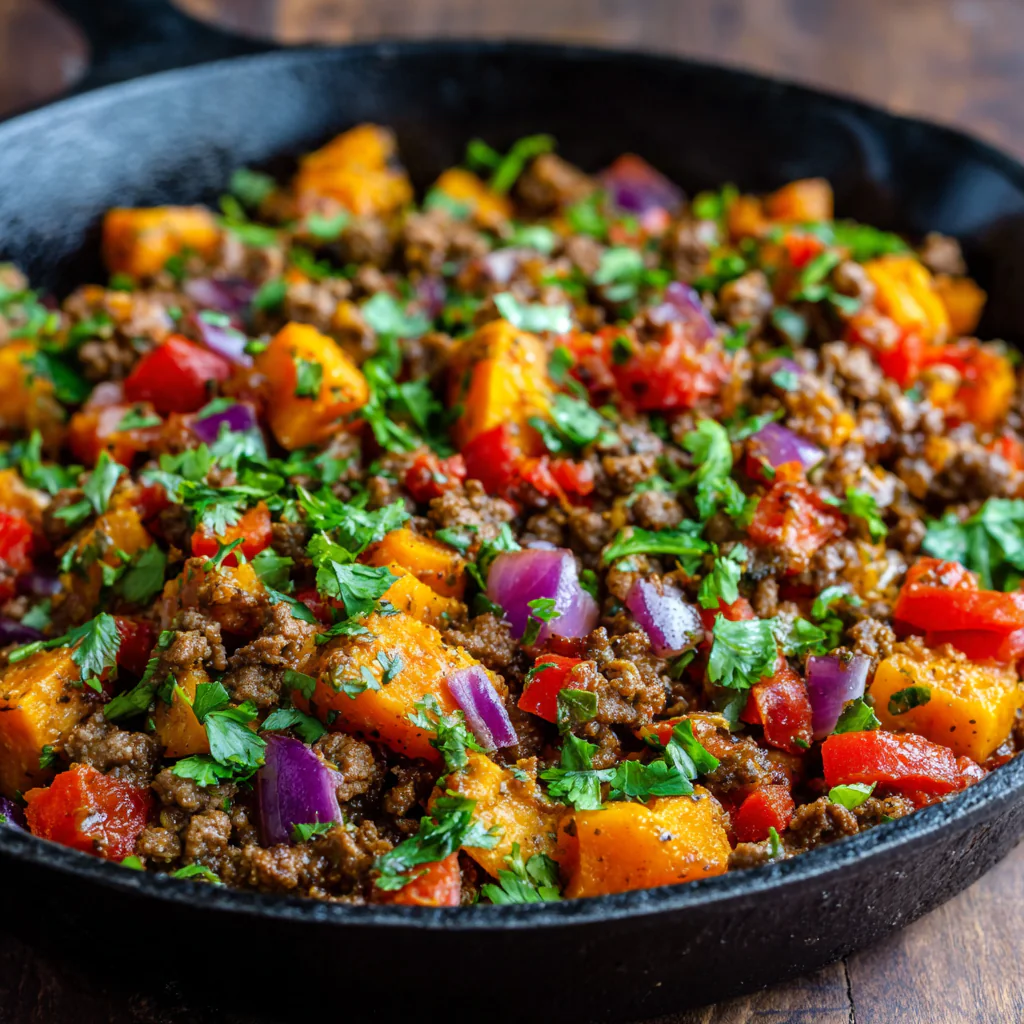
Return the browned beef to the pan. Stir to combine and heat through — about 2 minutes. Taste. Adjust salt if needed. The dish should taste savory with subtle sweetness from the potatoes.
Remove from heat. Squeeze fresh lime juice over the top. Sprinkle with fresh herbs. Serve directly from the skillet.
Total time: 35-45 minutes from start to finish.
⚠️ Common Mistakes to Avoid
Crowding the pan. This is the most common error. When too much food hits the pan at once, temperature drops dramatically. Instead of browning, everything steams in its own moisture. Work in batches if necessary, or use a 12-inch skillet minimum for this recipe.
Skipping the browning step. Gray, steamed beef tastes flat. Those crispy brown bits are where flavor lives. Take the extra 3 minutes to brown properly.
Cutting sweet potatoes too large. Large chunks take forever to cook through. By the time the center is tender, the exterior is mush. Keep pieces to ½-inch for consistent results.
Adding garlic too early. Garlic burns in seconds. Add it after the onions have softened, and keep the heat manageable.
Under-seasoning. Sweet potatoes need salt to shine. Taste as you cook, and adjust at the end. Bland food is almost always under-salted food.
Flavor Variations and Dietary Swaps
The base recipe works as written, but here’s how to adapt it:
For taco night: Add 1 teaspoon chili powder and ½ teaspoon oregano with the other spices. Top with shredded cheese, sour cream, or crushed tortilla chips. Suddenly it’s a deconstructed taco bowl.
For Mediterranean flavors: Swap smoked paprika for 1 teaspoon dried oregano and add ¼ teaspoon cinnamon. Finish with crumbled feta and Kalamata olives.
Lower fat option: Ground turkey or chicken works beautifully. Add 1 extra tablespoon olive oil since lean poultry releases less fat.
Whole30 compliant: Omit the cheese. Ensure your broth has no added sugar or preservatives.
More vegetables: Zucchini, spinach, or kale can be added with the sweet potatoes. Just know that leafy greens cook faster — add spinach in the last 2 minutes.
Storage and Meal Prep Tips
This skillet is a meal prep champion. It reheats beautifully and actually tastes better on day two, when flavors have had time to meld.
Refrigerator: Store in airtight containers for up to 4 days. Let the dish cool completely before sealing to prevent condensation, which makes food soggy.
Freezer: Portion into individual containers and freeze for up to 3 months. Thaw overnight in the refrigerator before reheating.
Reheating: Microwave covered with a damp paper towel to retain moisture. Or reheat in a skillet over medium-low with a splash of broth to loosen things up.
Meal prep strategy: Double the recipe on Sunday. Portion into 4-6 containers. You now have lunch or dinner handled for half the week.
💡 Pro Tips for the Best Skillet
Use the right pan. A 12-inch cast iron skillet retains heat beautifully and creates excellent caramelization. Stainless steel works too. Nonstick is fine, but you won’t get the same fond development.
Don’t stir so much. Constant stirring prevents browning. Let the meat and vegetables make contact with the hot surface. Stir when things are actually browning, not out of nervous habit.
Deglaze properly. When you add broth, use a wooden spoon to scrape up every browned bit stuck to the pan. That’s concentrated flavor you’re rescuing.
Taste early and often. Seasoning isn’t a one-time event. Taste the beef. Taste the potatoes. Taste the final dish. Adjust accordingly.
Let it rest. After cooking, let the skillet sit for 2-3 minutes off the heat. This allows flavors to settle and the dish to hold its shape when served.
Frequently Asked Questions (FAQ)
+Can I use frozen sweet potatoes?
Yes, but with adjustments. Frozen sweet potatoes release more water, which prevents browning. Thaw completely and pat dry before adding to the pan. Reduce the added broth to ¼ cup, since frozen potatoes contribute moisture.
+Why is my ground beef gray instead of brown?
Two likely culprits: the pan wasn’t hot enough, or the beef was crowded. Make sure the oil shimmers before adding meat, and cook in a single layer. Gray meat isn’t unsafe — just less flavorful.
+How do I know when the sweet potatoes are done?
Pierce a cube with a fork or knife. It should meet slight resistance at first, then slide through easily. If it crumbles, it’s overcooked. If the fork meets significant resistance, keep steaming.
+Can I make this ahead of time?
Absolutely. This dish reheats well and is ideal for meal prep. Store in individual portions for grab-and-go meals throughout the week.
+What can I substitute for ground beef?
Ground turkey, chicken, or pork all work. For a plant-based version, use crumbled tempeh or a plant-based ground meat alternative. Adjust cooking times accordingly — poultry cooks faster than beef.
+Is this recipe spicy?
As written, it’s mild. The chili flakes add a gentle warmth, but you can omit them entirely for a family-friendly version. For more heat, increase to ½ teaspoon or add diced jalapeño with the onions.
Final Thoughts
This One-Pan Ground Beef and Sweet Potato Skillet hits that rare sweet spot: nutritious, satisfying, and genuinely easy. No fancy techniques. No obscure ingredients. Just solid cooking that fits into real life.
The first time I made this, I was skeptical. Sweet potatoes and beef? It shouldn’t work as well as it does. But the sweetness balances the savory beef, the spices tie everything together, and the one-pan method keeps cleanup reasonable. It’s become a regular in my rotation — the kind of recipe I reach for when decision fatigue hits and I just need dinner handled.
Make it once, and I suspect it’ll land in your rotation too.